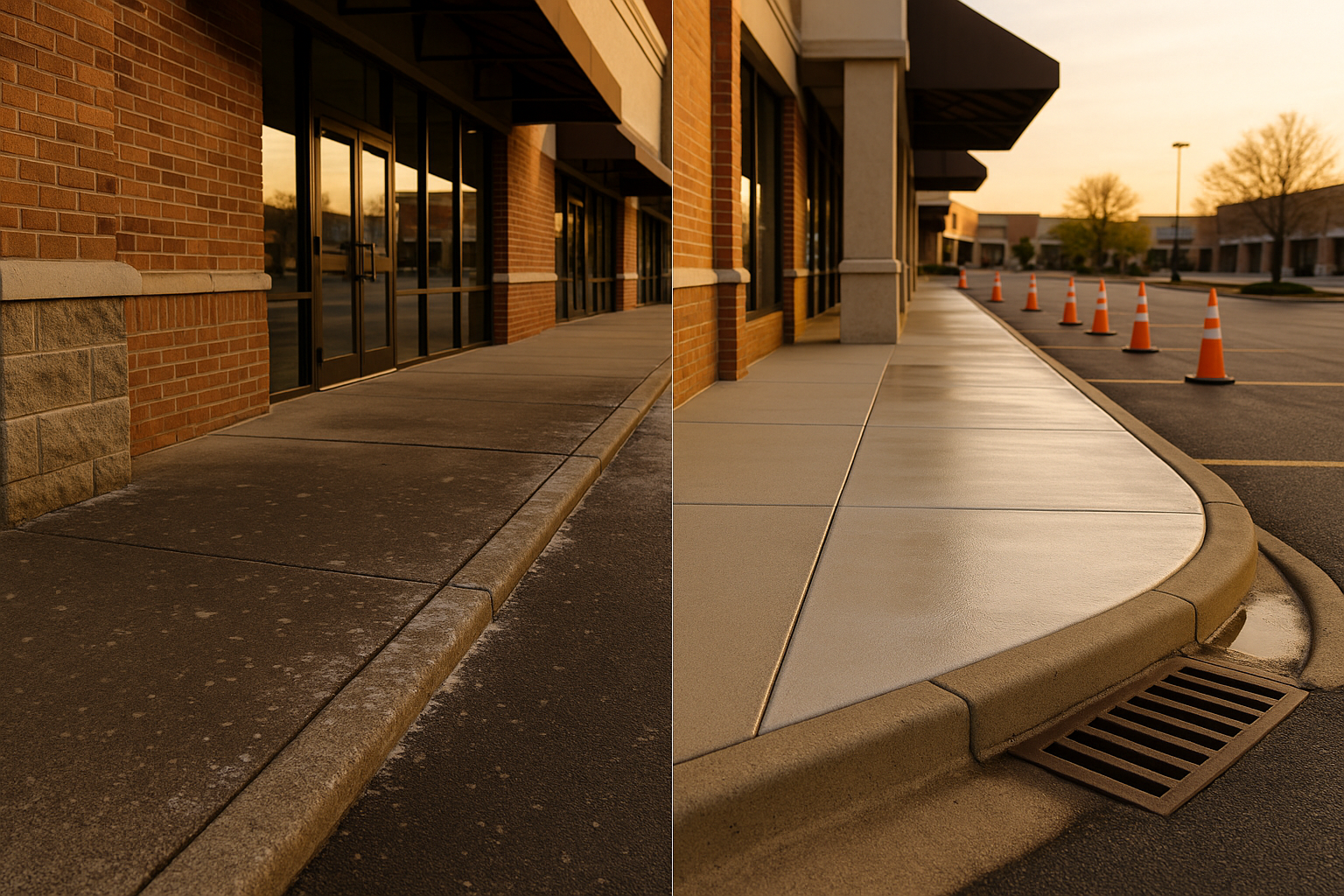
Last spring I got a call from a shopping center manager over in Castleton. She was losing it—not because of tenants or trash pickup, but because the sidewalk outside the anchor store looked like a piece of used chewing gum itself. Hundreds of black splotches from years of slush, foot traffic, and zero regular cleaning. Customers were complaining, and corporate was about to do a surprise walkthrough. She’d already tried renting a cold-water machine from a hardware store and ended up with etched concrete and sore arms. That’s the kind of panic that sticks with me.
Most property managers around Indianapolis know that a dirty lot or gum-crusted sidewalk makes a lousy first impression. But what they really need is a crew that shows up, has a solid plan, doesn’t blast wash water into a storm drain, and gets the place looking right without disrupting everybody’s day. That’s exactly what commercial pressure washing in Indianapolis should be: planned, quiet enough to work near open businesses, and tough enough to pull up the grease that Indiana winters leave behind.
What We Actually Clean (and What We Don’t)
Not every surface around a commercial building benefits from high-pressure water. Brick, for instance—especially the older stuff you see around Mass Ave or Fountain Square—needs a soft wash approach. Pavers need a gentle touch so the joint sand doesn’t wash out. Our crews match pressure, nozzle, and detergent to the job so we’re not etching storefront glass or stripping the sealer off concrete. We do sidewalks, dumpster pads, loading docks, drive-thru lanes, retail center entryways, warehouse aprons, and even HOA common areas.
If you have a restaurant drive-thru that’s gotten slippery from fryer oil mist, hot water and a degreaser can cut it. Gum removal? We heat it until it releases, no chiseling. Concrete pressure washing Indianapolis lots often need pre-treatment on hydraulic stains from delivery trucks before the surface cleaner even touches it. We’ve seen stains in loading docks along the I-465 distribution corridor that looked permanent until we put the right chemistry on them.
For building exteriors, we stay low-pressure with appropriate detergents on aluminum, vinyl, painted surfaces, or brick. No blasting off loose mortar just to get the green off.
How We Keep Your Business Running While We Work
Nobody wants a pressure washer screaming outside their café window at 10 a.m. That’s why we schedule after-hours or weekends whenever possible. For a multi-tenant center in Fishers or a mixed-use spot in Broad Ripple, we can phase the cleaning so only part of the lot is closed off at a time. Signs, cones, and occasional wet floor warnings go up before we start, and our lead tech walks the site afterward to make sure everything’s dry and safe.
We also bring water recovery when the job requires it. Stormwater-compliant pressure washing Indianapolis means we use vacuum reclaim or berms to keep wash water from heading into a storm drain. It’s not just a best practice—it’s what Marion County and IDEM expect. If you manage a property near the White River or a tributary, that’s non-negotiable. We’ll document the process and can share a COI before we even start.
Why a Written Plan Matters More Than a Quick Quote
Let’s be honest: a ballpark price over the phone rarely holds up once we see the actual soil load, the water access situation, and the level of gum or oil staining. We don’t do that. We walk the site with you, map out the trouble areas, note where landscaping or sensitive coatings need protection, and then hand you a line-item scope.
You’ll see pricing broken out by surface area, estimated hot water usage, any specialty pre-treatment for deep oil and grease stain removal Indianapolis, and whether reclaim is needed. No upsells after the fact. If you want quarterly cleanings to manage salt residue, pollen, and the tannin stains from fall leaves, we can build a maintenance plan.
Some customers ask us to prep a parking lot before sealcoating or re-striping. A clean surface means the sealer bonds better and the stripes last longer. We’ve seen freshly painted lines flake off a month later because the lot wasn’t degreased first. So if pavement work is in the pipeline, we can coordinate the timing so you’re not paying twice. (Our blog on sealcoating vs. doing nothing covers that in detail.)
Nasty Stuff the Indianapolis Weather Cooks into Concrete
If you’ve ever watched snow melt off a parking lot here in late February, you’ll notice a white crud left behind. That’s road salt mixed with de-icer, ground-in dirt, and whatever drips out of a hundred cars. It eats into concrete over time. Then spring hits and pollen coats everything yellow. By summer, the algae starts growing in the shady spots along the Monon or near building overhangs, especially on the north sides that never get direct sun. Fall brings leaf tannin stains that seep right into porous concrete.
None of this comes up with just water. You need heat, the right detergent dwell time, and often a little scrubbing on vertical surfaces. Our crews are familiar with the particular mix of gunk that accumulates around the Keystone at the Crossing area versus a warehouse park in Plainfield. Local experience matters.
Let’s Get a Plan Together
If your sidewalks are starting to look like a connect-the-dots puzzle made of gum, or your dumpster pad has an odor that’s wafting into tenant spaces, it’s time. The process is simple: you reach out, we set a walk-through, you get a detailed plan and quote. No high‑pressure sales.
You can grab a time on our schedule right from this page. We cover Indianapolis plus Carmel, Fishers, Zionsville, Westfield, Noblesville, Greenwood, Brownsburg, Avon, and Plainfield. Most of our commercial clients are surprised how quickly we can turn a grimy entry into something they’re proud to unlock in the morning.
Ready for a free lot assessment?
We walk the lot, photograph the problems, and hand you a written plan — no pressure, no obligation.