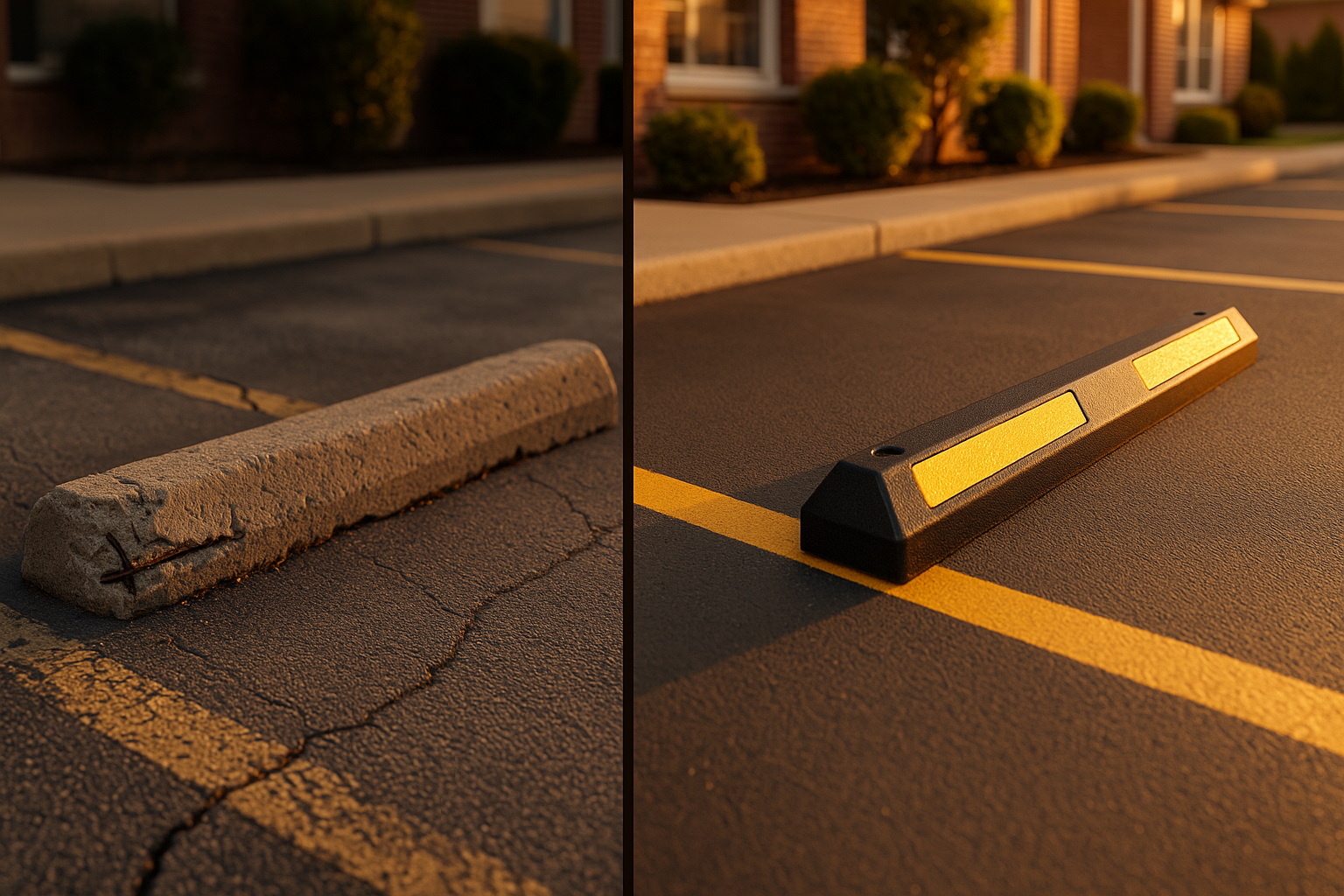
I got a call last winter from a guy in Broad Ripple. He’d just watched a delivery truck tear up his freshly striped lot because the old concrete wheel stops were busted up in the freeze. The truck driver kept on rolling, because honestly, what was the point of the stops? They weren’t doing their job. That kind of thing happens more than you’d think around Indianapolis. It’s not just about marking a spot—it's about protecting curbs, cars, and people. If your parking wheel stops are cracked, loose, or just plain missing, you know the headache of cars hanging over sidewalks or scraping signs. At PavementPros, we see this across the metro—from apartment complexes in Fishers to busy stores along Keystone. Wheel stop installation isn’t just plunking down a block; it’s about getting the spacing, material, and anchoring right so things actually stay put.
Why Wheel Stops Matter in Indianapolis Parking Lots
Without solid wheel stops, you end up with cars nosing onto sidewalks, crushing landscaping, or bumping into building walls. It’s a liability and a repair bill waiting to happen. In neighborhoods like Fountain Square or along Mass Ave, tight spaces mean a missing parking curb can turn into a nightly dispute over whose car scratched whose. We’ve also seen snowplows whack loose stops clean out of the asphalt in places like Carmel office parks. Good wheel stop installation indianapolis prevents that. Plus, fresh stops with high-visibility stripes help drivers park quicker, which matters during busy holiday shopping at places like Castleton.
Concrete, Rubber, or Recycled Plastic? What Works Best Here
You’ve got three main choices for parking bumper blocks indianapolis. Each has its place.
- Concrete wheel stops: Old school and heavy. They stay put if anchored right, but can crack over time from freeze–thaw. If a snowplow hits them, expect chunks to break off. They’re budget-friendly for big, open lots.
- Rubber wheel stops: Made from recycled tires, these are forgiving—they flex under impact and won’t chip. They’re gentler on car bumpers too. We recommend them for HOAs and residential lots, where a softer look blends better. They hold up well to road salt and wear.
- Recycled plastic parking stops: Lightweight but tough. They don’t rot, splinter, or rust. Colors stay bright for years, and they often come with built-in reflective tape. Great for lots that need high visibility around the clock, like hospital or retail parking.
For most Indianapolis properties, rubber or plastic stops win out because they handle our freeze–thaw swings without cracking. But if you’re repaving an old downtown lot that’s mostly concrete substrate, concrete wheel stop installation might make sense. We’ll walk you through the trade-offs—budget, durability, and how often you want to touch them up.
How We Anchor Wheel Stops to Survive Indiana Winters
Anchoring is the part nobody sees until it fails. Most stops come loose because the hardware wasn’t right for the surface. In Central Indiana, that surface is either asphalt or concrete, and each needs a different grip.
For asphalt, we use galvanized spikes—heavy rebar pins that drive into the pavement below the stop. We pre-drill to avoid cracking, then set the pins. For concrete slabs, we drill and use epoxy-set sleeve anchors. That way you don’t get water seeping down, freezing, and popping the stop loose. We’ve seen lots in Greenwood where someone just hammered concrete anchors into old patchwork, and every winter they had stops floating around the lot. Proper parking curb installation means matching the hardware to the substrate and checking that the surface is sound. If there’s spalling or potholes nearby, we’ll often suggest patching first (we handle that too—take a look at our asphalt patching and pothole repair page).
No matter the anchor, we torque them down tight and check for trip hazards. A wheel stop that rocks is more dangerous than no stop at all.
Layout and Spacing: It’s More Than Guessing
One of the biggest mistakes we see is a property owner buying a few wheel stops from the hardware store and spacing them where they “look right.” Then the first car that pulls in has its rear bumper sticking three feet out, or the stop lines up directly under the oil pan instead of the tires.
Proper parking block layout depends on your stall depth and what kind of vehicles use the lot. For standard cars, a wheel stop sits about two to three feet from the front of the stall, but we measure each space. At an apartment complex in Zionsville, we had to adjust for the longer overhang of pickups and SUVs—mostly pickup country out there. We also map out the stops in relation to any new striping you might be planning. Many of our customers time their spring parking lot refresh with new wheel stops, so everything lines up clean.
If you’re dealing with an older lot that’s had multiple layers of sealcoat or patchwork, we’ll account for undulations. A wheel stop that bridges a dip can snap under stress. We’ll level the area or suggest a shorter stop to avoid that. And if you already have some stops but they’re crumbling, we can handle parking stop replacement without shutting down the whole lot. We’ll also haul away the old broken concrete and hardware—no extra trip to the dump for you.
Making Sure Your Lot Is Safe and Accessible for Everyone
Accessibility isn’t optional, and wheel stops play a big part. An accessible stall needs clear side access and a path to the entrance. If a wheel stop is placed wrong, it can block that path or leave the van ramp area unusable. We follow current best practices for ADA parking wheel stops guidance—keeping the stop far enough back to allow for the full depth of a van, and never placing stops in a way that would force someone to walk around them on an accessible route. In older neighborhoods like Butler-Tarkington, we’ve retrofitted lots where the original wheel stops were right in the middle of what should be a clear landing. A little adjustment makes a huge difference.
For HOAs and condos, board members often worry about liability. That’s why we include a straightforward layout plan with each quote. You can see exactly where each stop goes, how it relates to striping, and how the path of travel around the lot stays open. If your community is thinking about a bigger upgrade, our article on HOA parking lot maintenance covers what to prioritize.
What to Expect When We Come Out for Installation
We try to keep the process simple. First, we’ll walk the lot with you—whether it’s a busy strip center in Plainfield or a small office in Brownsburg—and measure everything up. Then we send an itemized quote showing count, material, anchoring method, and any surface prep we think is needed (like patching or leveling). We’ll also lay out a schedule. If your business can’t afford to lose parking during the day, we can work after hours or on weekends. A coffee shop on Mass Ave didn’t want to mess with their morning rush, so we set up cones at 6 p.m. and were done before the dinner crowd showed up.
During the install, we’ll remove old parking stops and any leftover rebar or spikes sticking out of the asphalt. Those things are a tire hazard and a lawsuit magnet. After anchoring the new stops, we check each one for wobble. If you’re also refreshing your lot markings, we can coordinate that so the arrows, lines, and stops all match up. It’s a cleaner look and your drivers won’t be confused.
As far as drainage goes, we watch where water runs. In older lots with settled pavement, a row of stops can create small dams if placed across a low spot. We’ll shift a few inches or add a small weep gap so you don’t end up with ice patches in January. It’s the kind of detail that comes from working around Marion County for years.
Ready to Fix Your Parking Lot? Let’s Line Up a Walkthrough
If your stops are falling apart or you never had them in the first place, let’s put a plan together. We cover Indianapolis, Carmel, Fishers, Zionsville, Westfield, Noblesville, Greenwood, Brownsburg, Avon, Plainfield—basically anywhere inside the I-465 loop and a good bit beyond. Give us a call or hit the button to get a quote. We’ll come out, measure, and give you a clear proposal with no surprises. Whether you’re dealing with a five-space lot at a church or a hundred-space retail center, getting the right wheel stops in place makes the whole property feel more put-together and a lot safer.
Ready for a free lot assessment?
We walk the lot, photograph the problems, and hand you a written plan — no pressure, no obligation.