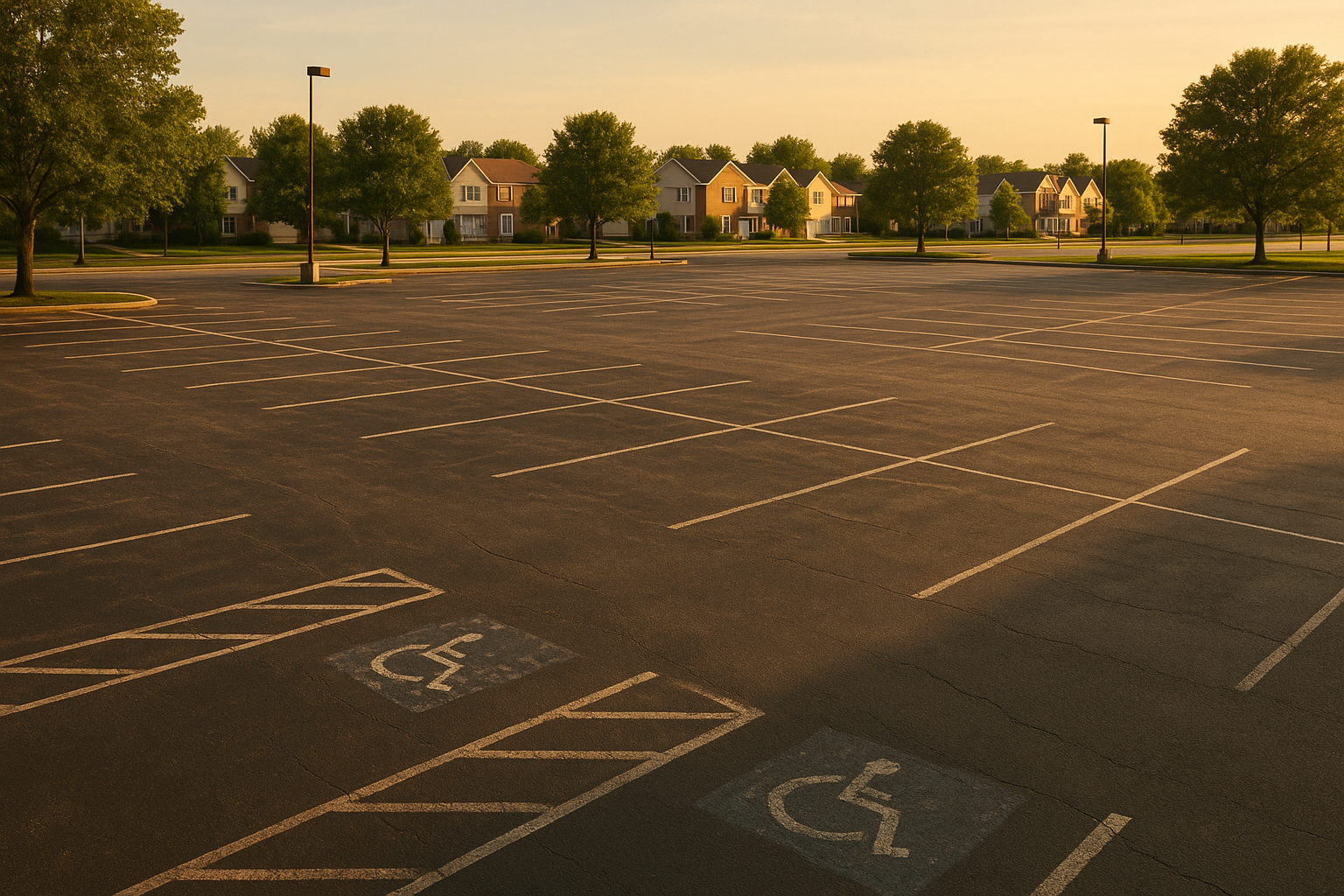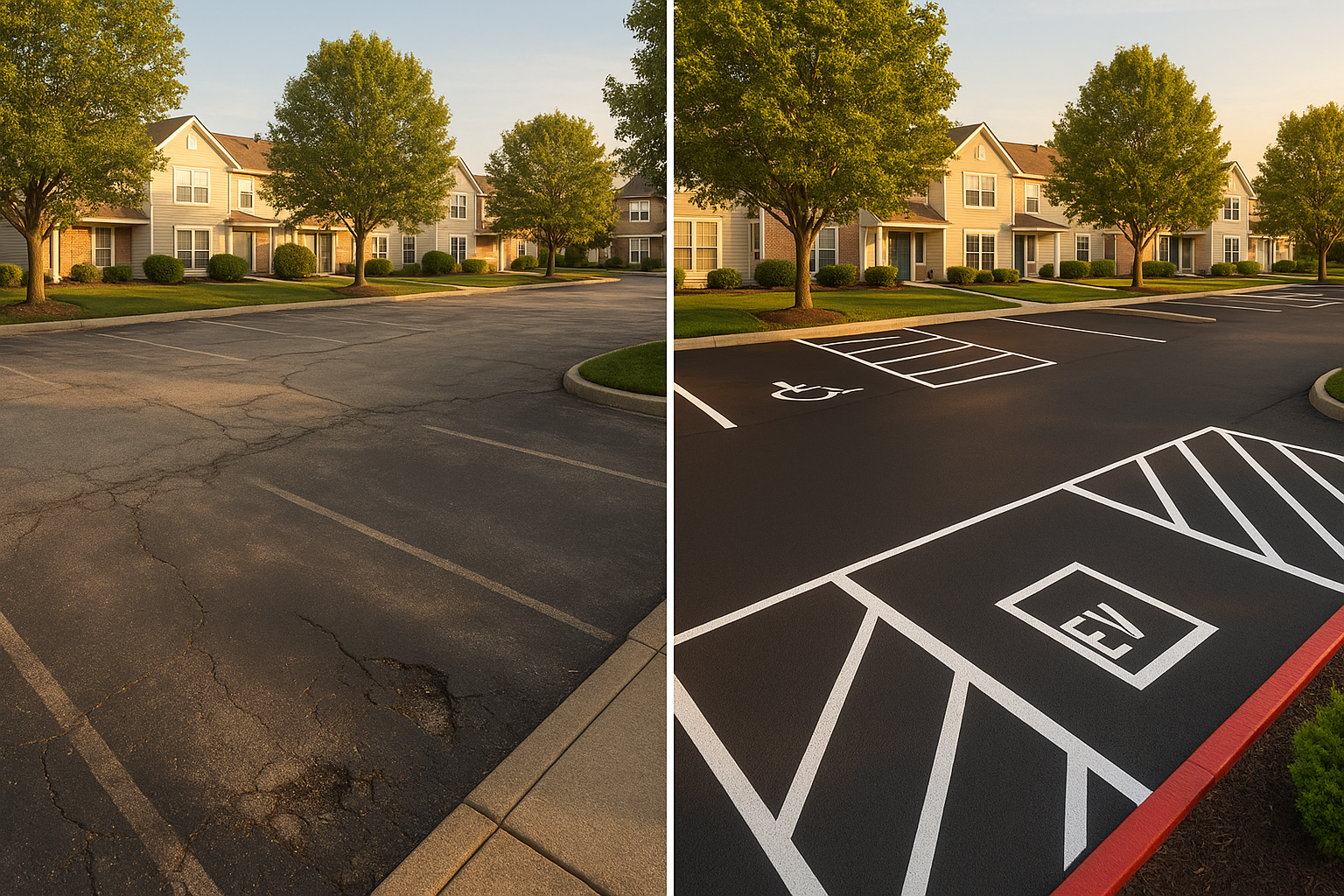
A few years back, I visited a condo community in Fishers. A resident was backing out of her space and nearly sideswiped a guest car because the stall lines had faded beyond recognition. The parking lot looked like a free-for-all. She was upset, the board was embarrassed, and everyone kept pointing fingers. Turns out, they hadn’t restriped in six years. Faded lines, missing fire lane markings, cracked asphalt—it was a liability time bomb. When we finally gave them a clear plan and fresh stripes, the transformation wasn't just visual. Residents felt safer, guest parking confusion vanished, and the board breathed a sigh of relief. That's why HOA parking lot maintenance is about more than keeping up appearances.
A well-maintained parking lot makes life smoother for everyone. It helps first responders, keeps the fire marshal off your back, and lets residents find a spot without playing bumper-car roulette. And in Indianapolis, where winter throws everything it’s got at asphalt, a little proactive work goes a long way.
Why HOA Parking Lot Striping is More Than Just Paint
Striping isn't just decoration. It’s a language everyone in your community understands. Clear lines tell people where to park, how to flow, and where not to leave their car. When those lines disappear, you get chaos—and sometimes worse. I’ve heard board members from Noblesville to Greenwood worry about ADA compliance after a fender-bender in a poorly marked accessible stall. The fines aren't worth the risk, and honestly, the fairness to residents who need those spaces is just as big a deal.
Fire lanes are another headache. Most HOAs don’t think about them until a fire marshal shows up or a resident complains that a car blocks the trash truck. Red curb painting with crisp "FIRE LANE NO PARKING" stencils takes the guesswork out. And it’s not just about avoiding tickets—it’s about making sure a fire truck can get through if something bad happens. Combine that with speed bumps, crosswalks, and EV charging stall markings, and you’ve got a lot that communicates clearly. Pair the paint with a quick check for trip hazards like raised wheel stops or heaved pavement, and you’re tackling two problems at once. Nobody wants a lawsuit because grandma tripped over a busted curb stop by the pool.
Planning Your HOA’s Parking Lot Project (Without Losing Your Mind)
Before you even call a contractor, get your ducks in a row. Walk your lot with fresh eyes—maybe even pretend you’re a new resident. Count the stalls. Check your ADA layout against current rules (hint: if your clubhouse has more than a few spaces, you probably need accessible routes and van-accessible stalls). Look at your fire lane curbs. See if wheel stops are still anchored. Picture how snow plows will interact with fresh lines. I’ve seen too many boards skip this step and end up with a half-baked job.
Then, map it. A simple satellite printout with notes beats a vague handshake any day. Mark where you want guest parking, no-parking zones for trash enclosures, and even EV spots—because more people plug in every year. This map becomes your scope of work, and it keeps bids apples-to-apples. If budget is tight, break it into phases. Maybe sealcoat and stripe the worst section this year, the rest next year. No shame in that. Just communicate it clearly.
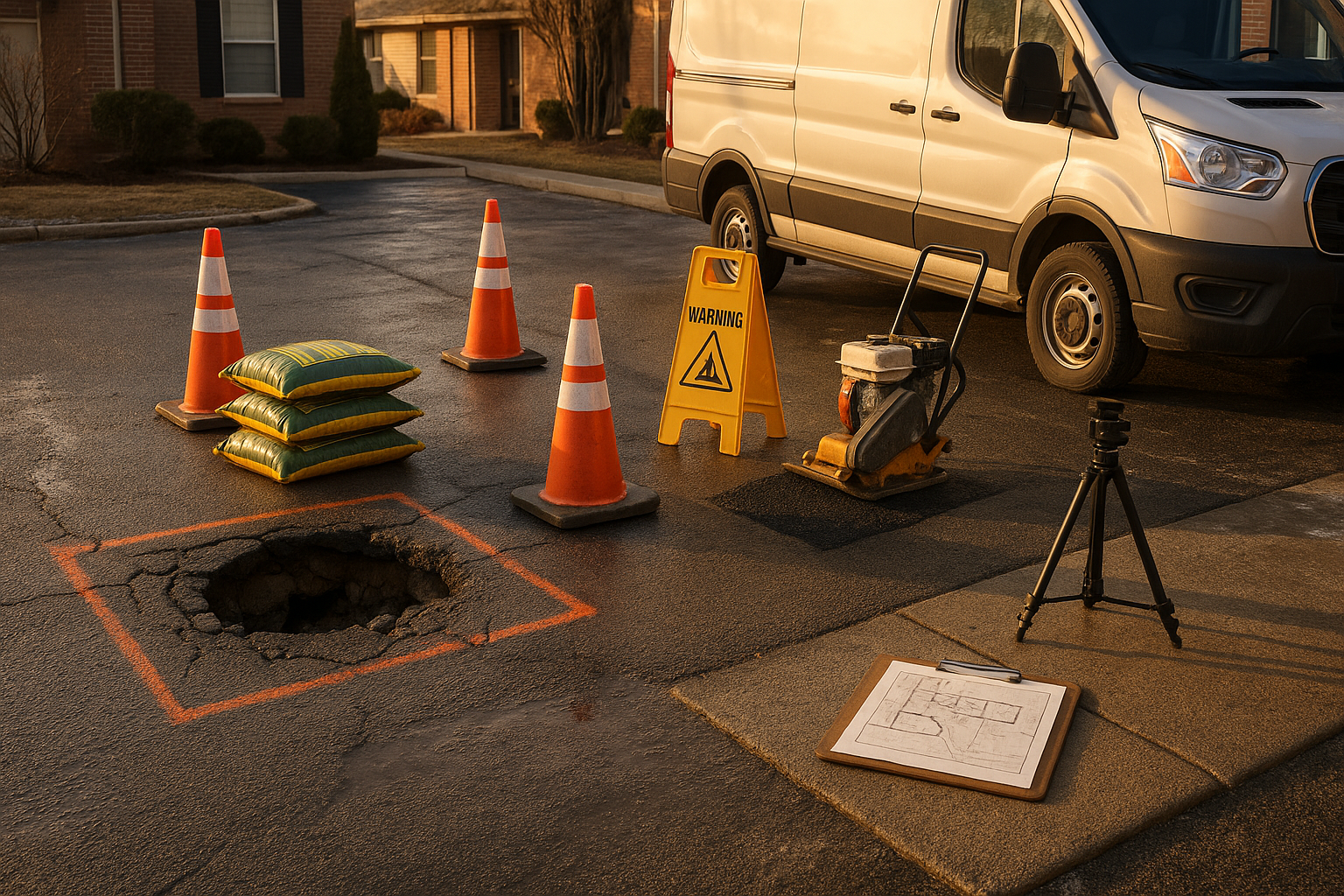
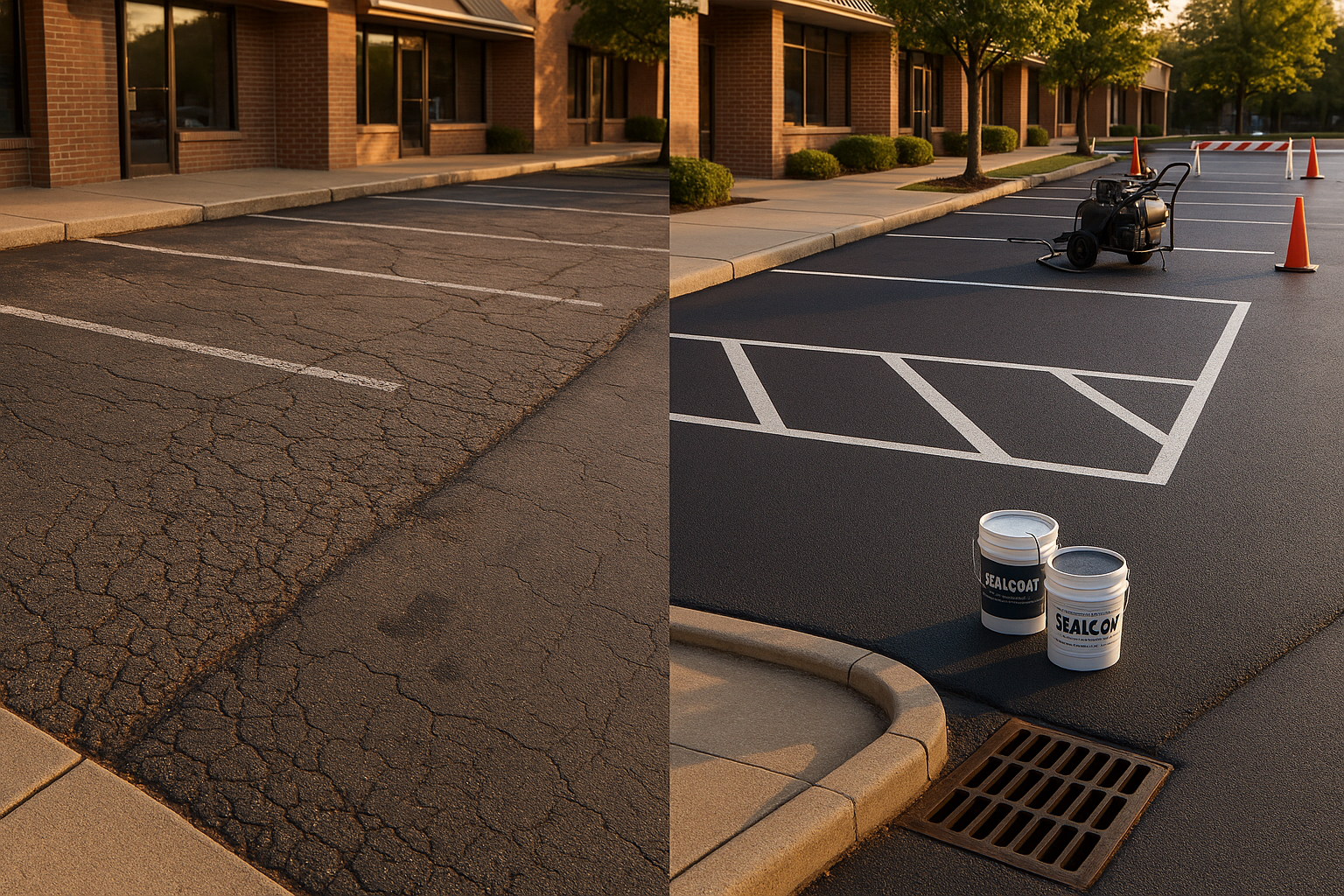
Of course, paint won’t stick to crumbling asphalt. So plan for crack filling and pothole patching before any striping. You might also need to sealcoat—and that brings us to the timing conversation. If you’re sealing first, you’ve got to wait for it to cure before striping. For more on that, check out our guide on striping and sealcoat cure times.
What Material Holds Up to Central Indiana’s Mood Swings?
Indiana weather is a drama queen. It freezes, thaws, bakes, and floods—sometimes in the same week. That’s rough on parking lot markings. For most HOAs, high-quality waterborne traffic paint with glass beads gives you the best bang for your buck. It dries fast enough for staged reopenings and stays visible for a couple of years. Solvent-based paint is stickier but stinkier—not ideal next to townhomes. Thermoplastic is the heavy-duty option, but it costs more and needs a hot application. Unless your lot sees daily bus traffic, paint is probably fine.
The beads are what make lines light up at night. Don’t cheap out here—cheap beads fade fast. We use premium beads sized for local aggregates so your lines reflect even in rain. And before the snow flies every winter, think about how your plow contractor works. Ask them to lift blades near wheel stops and fresh markings—that simple chat saves a lot of spring touch-ups.
Playing the Indiana Weather Window
The sweet spot for striping runs from late April through October, but really you want overnight temps above 50°F and low humidity for fast curing. High humidity in July and August can slow down dry times, so plan for residents to stay off fresh lines longer. Staging the work in sections helps—you can stripe half the lot while the other half stays open, then flip. Mornings with heavy dew or unexpected rain delays things, too. If Mother Nature decides to drop a cold snap or a downpour on striping day, you might have to reschedule. Flexibility wins.
Post-winter inspections in March or April catch plow scarring and frost-heaved catch basins. That’s a good time to pencil in touch-ups or a full restripe. Fresh lines also make the whole neighborhood look spruced up for spring, which lifts everyone’s mood.
Picking a Contractor Who Won’t Drive You Nuts
Ask for local references in Carmel, Westfield, Plainfield—places with similar HOA setups. Drive by their previous HOA jobs if you can. Look for straight lines, clean stencil edges, and no overspray on townhome siding. A good contractor provides a clear, marked-up site map before starting, line-item pricing, and proof of insurance. One point of contact through the whole project keeps things simple.
At PavementPros, we show up with a map that matches yours, use premium materials formulated for Indy’s weather, and communicate. A lot. We stage work so residents aren’t blocked in, and we clean up afterward. Our process is a planning-first walkthrough that ends with a mapped, line-item proposal tailored to your budget. No surprises, no pushy upsells.
Getting Residents Ready (And Keeping Them Happy)
Nobody likes a surprise when they can’t park. A few days before the crew rolls in, put notices on doors and community bulletin boards. Be specific about which areas get blocked when. Post signs at entrances. Better yet, send an email or update the resident portal with the map so everyone sees the plan. During the work, use cones and take down numbers of cars that need to move. A little courtesy goes a long way.
If you’ve got narrow courts or townhome clusters, phased striping with one lane at a time works best. Same for communities with busy swim team seasons or move-in weekends—schedule around that chaos. And yes, paint can track onto shoes for a few hours, so caution tape near freshly painted curbs saves carpets.
Ready for a Smarter Plan?
You don’t need to spend forever agonizing over parking lot maintenance. Get an expert to walk your property, point out what’s fine and what’s flirting with a lawsuit, and lay out a plan that fits your calendar and budget. Whether it’s a quick restripe or a full sealcoat-and-paint overhaul, start with a no-pressure site review.
Snag your free, mapped proposal here. We’ll walk through, measure up, and hand you a line-item quote that makes sense—no fluff, just numbers and a drawn plan.
Ready for a free lot assessment?
We walk the lot, photograph the problems, and hand you a written plan — no pressure, no obligation.