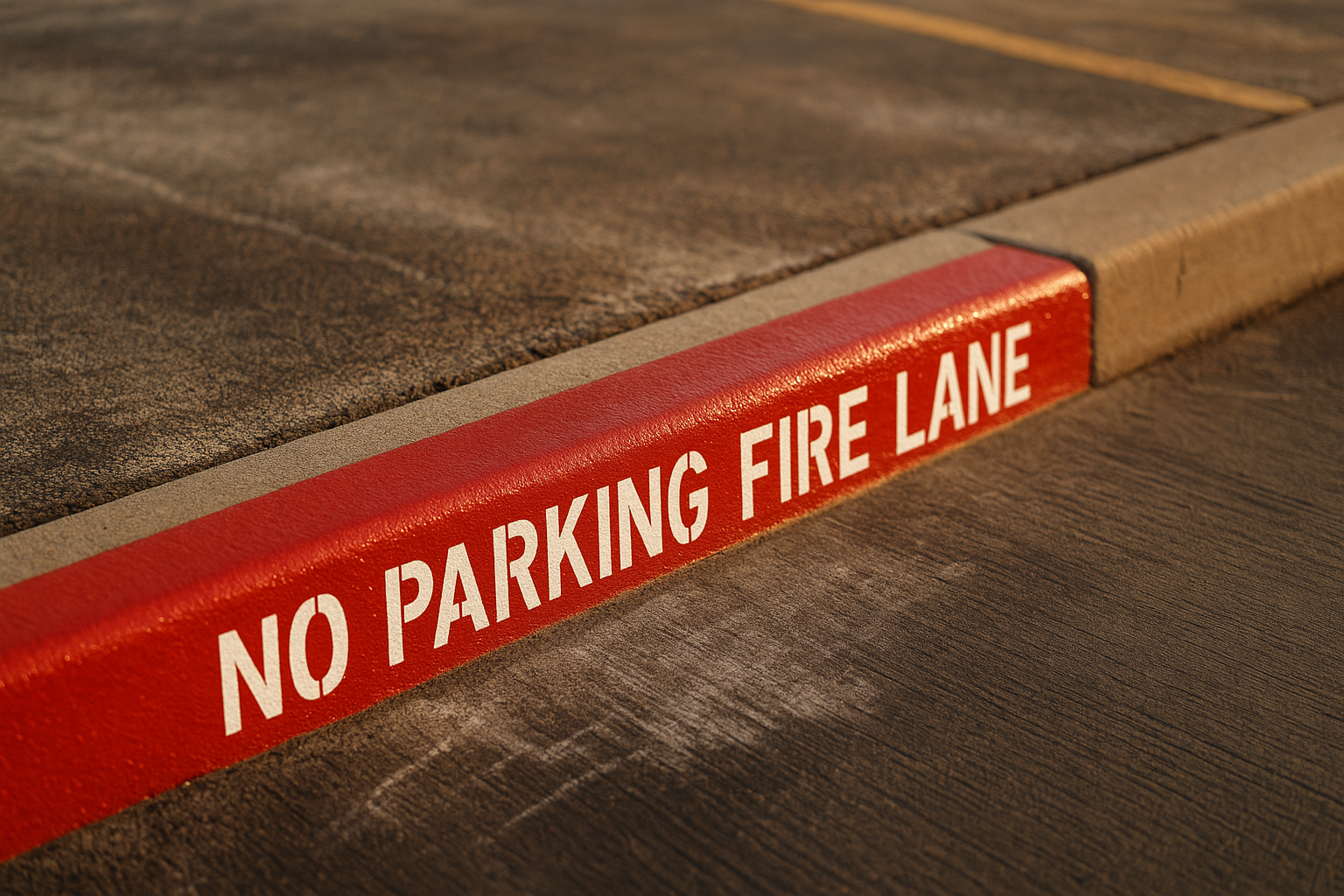
A couple years back, a property manager in Castleton called me in a panic. One of his tenants had a delivery truck block the fire lane—the driver said he couldn't tell it was a fire lane because the red curb paint was so washed out. Next thing you know, the fire marshal shows up for a surprise inspection. No fine that day, but it got real close. That faded paint almost cost thousands. It's funny how a little strip of color can cause big problems, or fix them. That's the thing about parking lot curb painting—it's one of those details nobody thinks about until it's too late. But when it's done right, it quietly keeps people safe, cars moving, and the city off your back.
The Color Code: What Those Stripes Actually Mean
Most folks just see red, yellow, blue—maybe a jumble of letters—and don't give it a second thought. But those colors are a language. And if your lot is speaking gibberish, you've got issues. Around Indianapolis, we follow the standard playbook: red for fire lanes, yellow for loading zones or no-parking areas, blue for ADA access aisles. Some lots add white for general parking boundaries or green for short-term spaces, but the big three are red, yellow, blue.
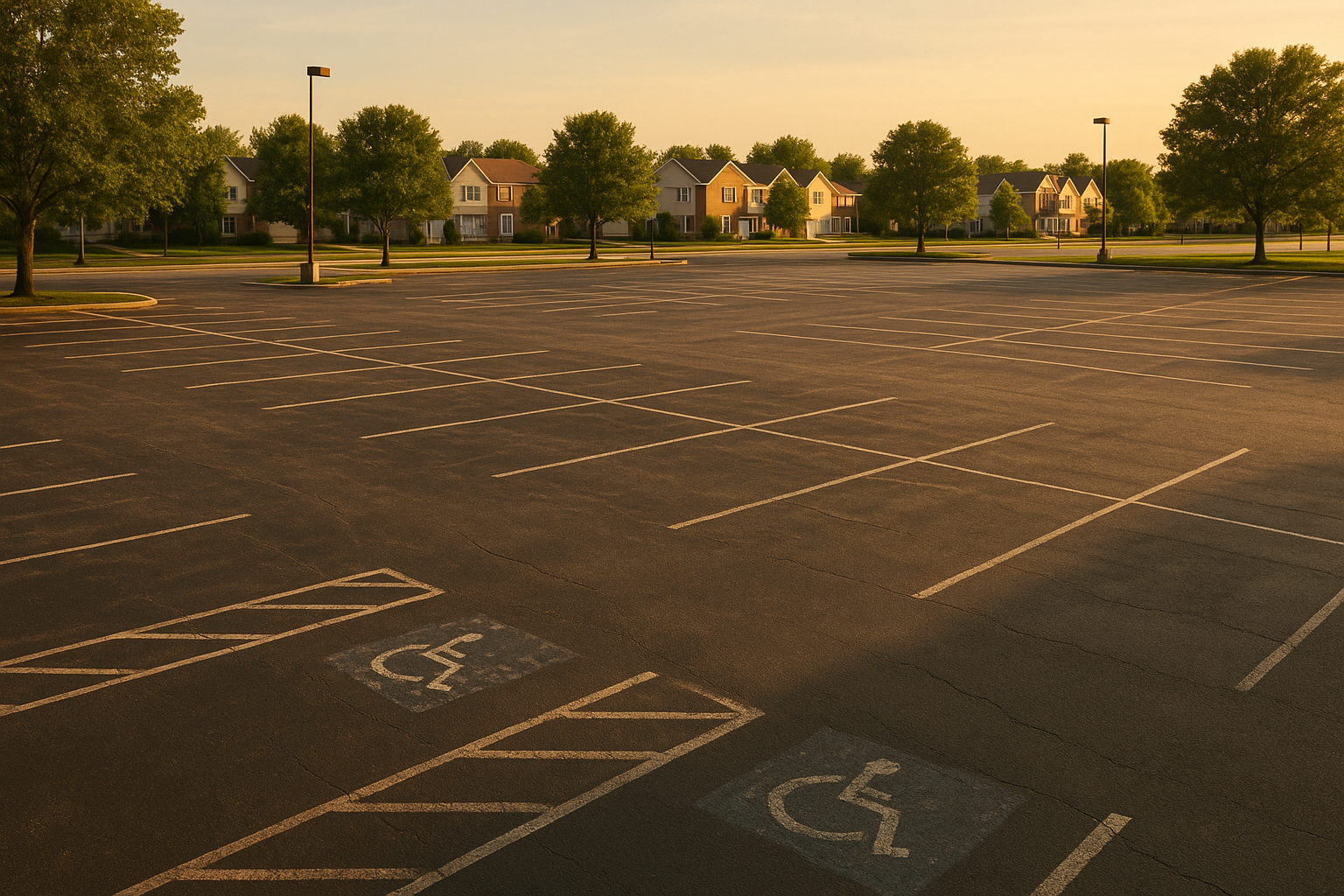
Take fire lane curb painting. Red means "don't even think about it." It's backed by local code and the fire marshal's expectations. If your red's faded, you might as well paint a target on your property for fines. Yellow sends a similar message but for different reasons: loading docks, busy entrances, anywhere a stopped car creates chaos. And blue demarcates the accessible routes—those curb cuts and aisles that let folks with disabilities get from car to door without a barrier. Get that wrong, and you're not just looking at fines; you're shutting people out. We always coordinate blue curb ADA access markings with the proper signage and ground symbols to keep everything crystal clear.
And the letters? Curb stenciling letters and symbols like "NO PARKING FIRE LANE" or "LOADING ZONE" turn a color into a command. Without crisp stencils, it's just a pretty stripe. We use templates matched to local specs, so there's no guessing. Property managers in places like Greenwood or Avon tell us the clarity of those words makes all the difference when tenants complain about towing.
More Than Slapping on Paint: Prep, Weather, and Tough Coatings
If you've ever painted a room, you know the secret's in the prep. Same goes for curbs, except you're dealing with tire grime, winter salt residue, and chunks of old flaking paint. Proper curb surface prep and priming make or break durability. We power wash, degrease, scrape loose stuff, and spot-prime bare spots—especially those older concrete curbs around Marion County that have seen decades of weather. Skip this, and the new paint peels in months.
Then there's the weather. Indiana doesn't make it easy. Freeze-thaw cycles, spring rains, sudden humidity spikes. You need a weather window for curb painting where temps stay above 50°F and the pavement's dry. Fall often works great—cool but not cold, fewer rainy days. Spring's trickier. We watch the forecast like hawks. When we get that perfect stretch, we use fast-dry traffic paint for curbs—solvent-borne acrylics that are tack-free in minutes under ideal conditions. For high-wear spots like delivery zones, we might recommend durable curb coatings MMA/urethane. These cost more but laugh at salt and plow blades. That's a conversation we have during the walk-through: do you want an affordable refresh every couple years, or a longer-term armor? Either way, we don't paint over moisture or cold surfaces. You'll just get a mess.
And let's settle asphalt vs concrete curb painting. Concrete's more porous, so it grips paint well if prepped right. Asphalt curbs can be finicky—oil-based coatings might soften them. We match the product to the material. On horizontal edges or where reflectivity helps at night, we might add glass beads. Wheel stop painting is another quick win that ties the whole safety look together, so we often bundle that in.
Keeping Business Moving: Scheduling and Traffic Control
Nobody wants a parking lot shutdown. I've heard horror stories about crews that cone off entire properties without warning. We don't roll that way. For busy retail spots like in Fishers or along the Speedway corridor, we phase the work. Maybe we tackle the east side one evening, the west the next. We'll hit loading zones before dawn so deliveries aren't blocked. Clear tenant notices go out days ahead, and we use barricades and cones to keep traffic flowing around the active area. Traffic control during painting is part of the plan from the start—no surprises.
A big concern we hear: overspray. Will it get on cars, landscaping, the building? Our crews mask off adjacent surfaces, use shields, and work with low-pressure spray systems when needed. It's precise, not a free-for-all. And we cover drains to keep paint debris out of stormwater—Marion County takes that seriously. If you're worried about tire tracking, fast-dry products cure quickly, and we cordon off the painted area just long enough. Usually we're out of your hair before lunch.
After-hours work? We do it often. Night or weekend shifts let your lot stay fully open during prime hours. It does add to the cost, but for a busy grocery or medical office, it's worth every penny.
Curb Painting Hits Your Bottom Line (In a Good Way)
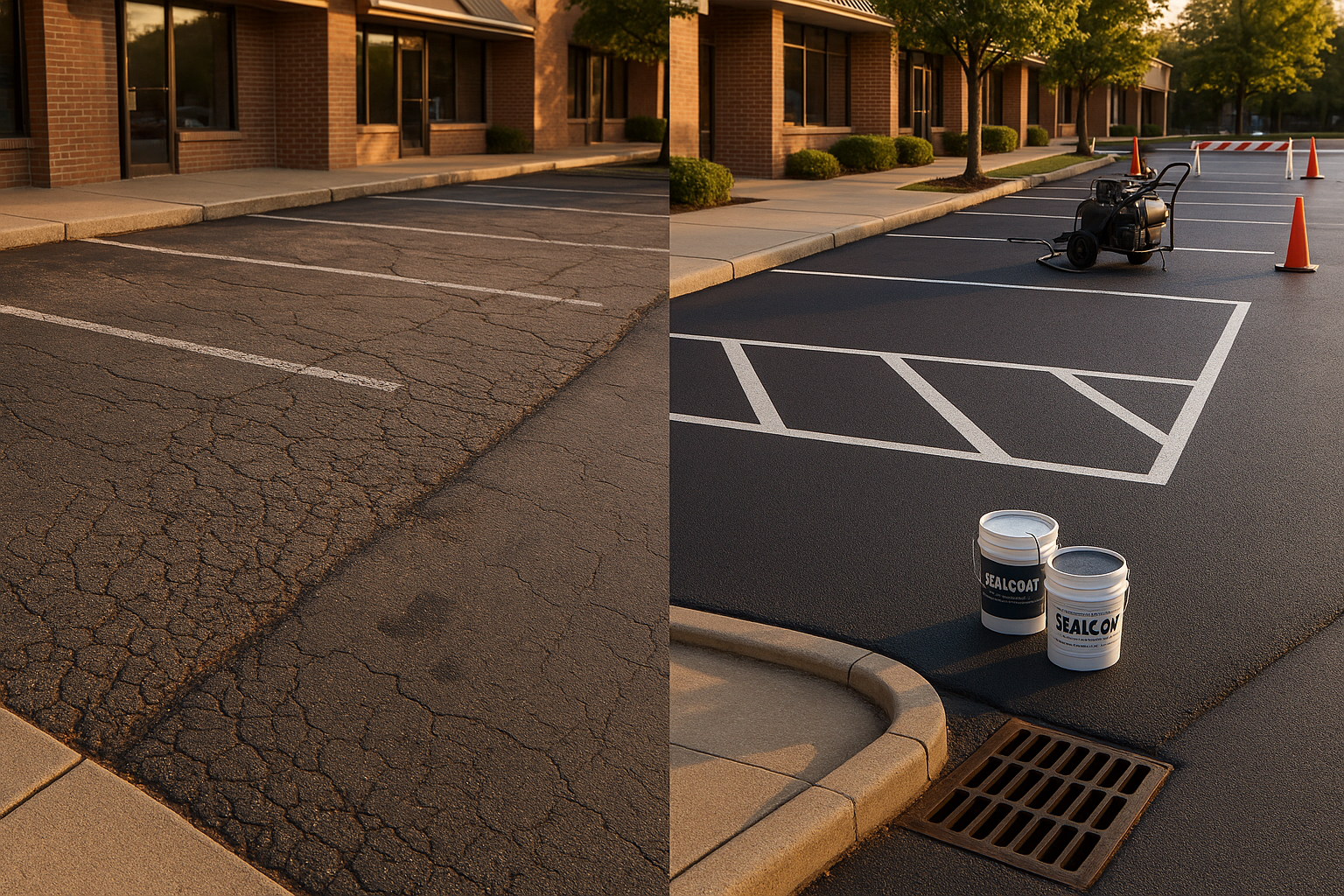
When curbs are fresh, people notice. They drive slower, they follow the rules, they feel like someone's minding the store. It's a subtle psychological nudge. And it's a lot cheaper than lawsuit settlements. We've seen property manager curb maintenance turn from an afterthought into a line item that prevents slip-and-fall claims and fire-lane fines. Faded curbs aren't just ugly; they're liabilities. Repainting faded curbs regularly—every two to three years for most lots—keeps the message loud and clear.
Cost-wise, curb painting cost factors include total linear feet, how many colors and stencils you need, surface condition, after-hours scheduling, and mobilization. Bundling it with line striping contractors Indianapolis providers like us can trim costs significantly since we're already on site with equipment and paint. Curb color standards and compliance aren't optional; they're baseline. We'll walk your lot, mark up a plan with a color legend, and give you a written scope and quote. No obligation. Just an honest look at what your property actually needs.
If you're ready to stop worrying about faded fire lanes and jumbled traffic patterns, let's talk. A quick walk-through with PavementPros can get you a clear plan and a quote. Reach out and schedule your no-obligation site assessment here.
Ready for a free lot assessment?
We walk the lot, photograph the problems, and hand you a written plan — no pressure, no obligation.