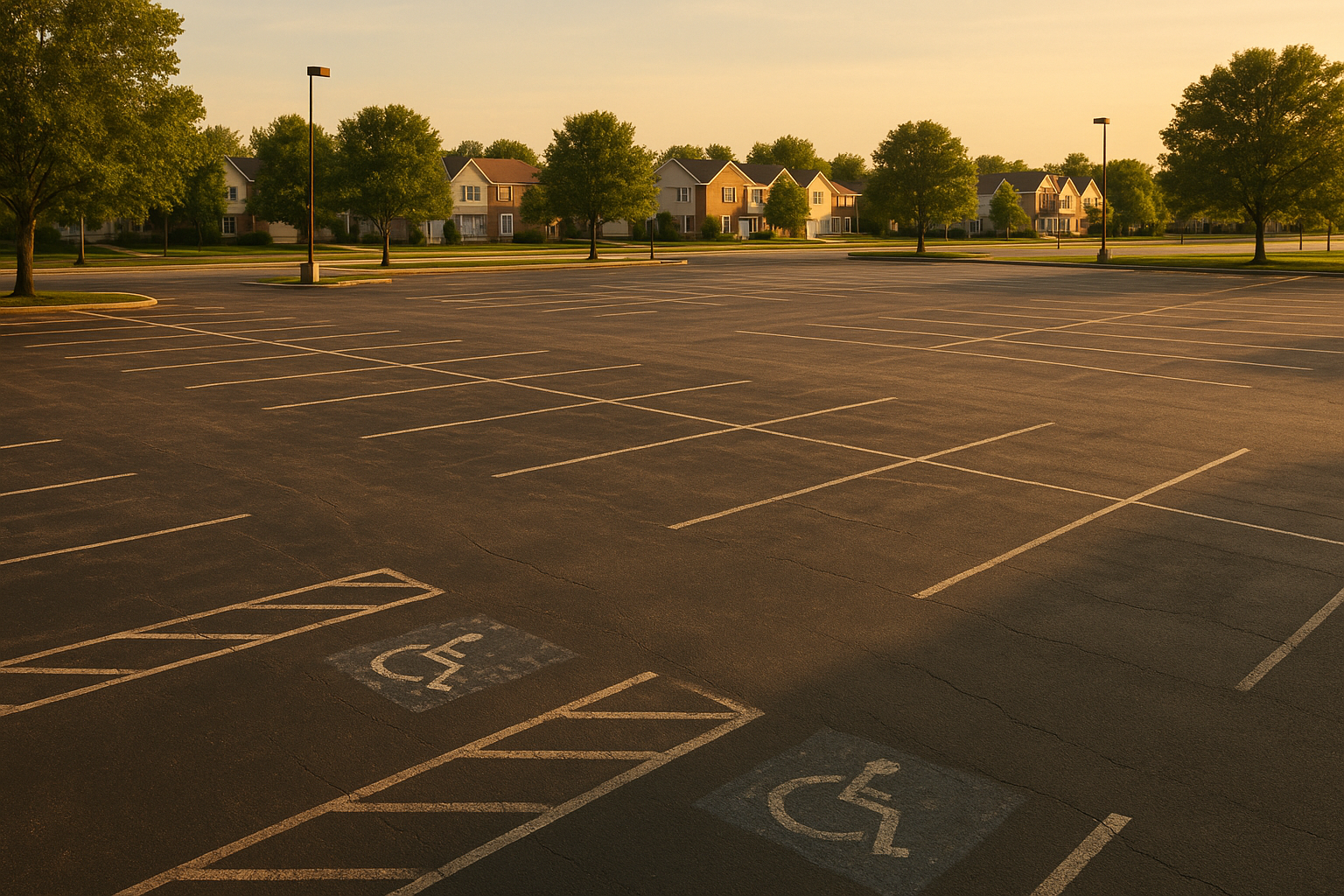
You know that sinking feeling when you walk your lot after a snowplow has been through and the stall lines look like a road map of a bad trip? I got a call from a property manager in Carmel last March. A plow driver had scraped off half the arrows and three accessible stall symbols in one pass. She wasn't just mad about the looks. She had a tenant with a wheelchair ramping complaint, and her insurance carrier was already acting like restriping was 'routine maintenance.' That's when she called us. Here's what we told her, and what you should do if you're facing a parking lot insurance claim in Indianapolis.
Why insurers push back on parking lot claims
Parking lot damage from snowplows, storm debris, or a car fire isn't always a slam dunk with insurance. Adjusters often hear 'striping' and think 'normal wear and tear.' But if a specific event caused the damage, that's different. Snowplow scarring is the big one around here. Every winter, plows catch edges and rip up paint, thermoplastic, even asphalt. Storm debris from high winds can scrape lines. Oil or chemical spills from a vehicle can dissolve markings. If you can tie the damage to one incident with a date and cause, you've got a much stronger parking lot insurance claim.
Insurance usually covers restoring damaged markings to pre-loss condition. Upgrades—like going from traffic paint to thermoplastic or adding more accessible stalls—may need code-upgrade coverage or you paying the difference. Don't assume they'll cover betterment. Document first, argue later.
Document everything before you even call your agent
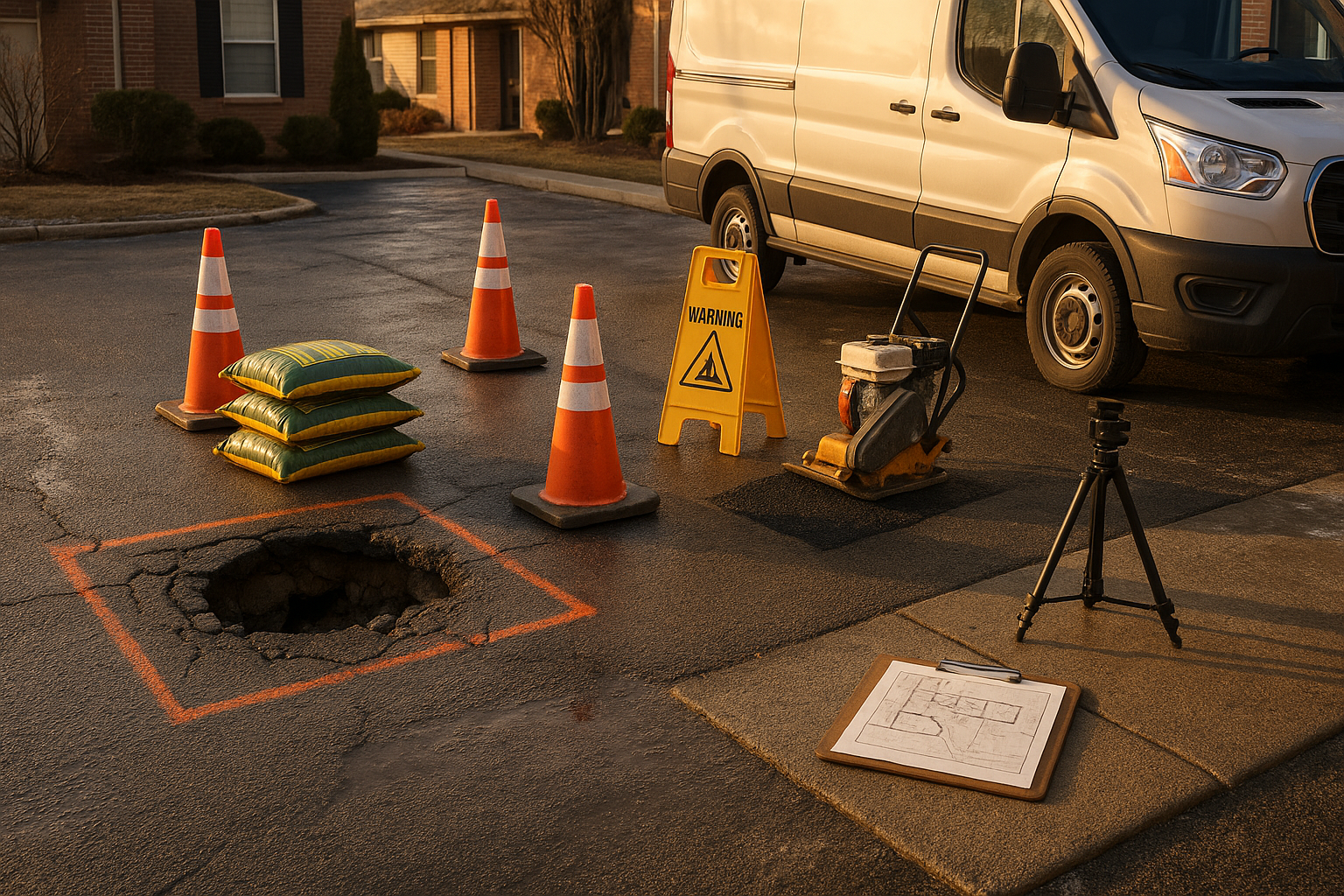
The minute you see damage, pull out your phone. Wide shots showing the whole lot, then close-ups of every scar, scrape, or missing symbol. Measure the affected area: how many stalls, how many linear feet of lines, what size are the arrows? If the accessible stalls were hit, photograph the existing ADA layout. Get incident reports from your snow removal contractor or property manager. Pull recent maintenance invoices to prove the lot was in good shape before the loss. All this goes into your claim file.
One thing people forget: write down the date and time, and what you think caused it. A vague 'it got damaged sometime in February' won't cut it. The more specific, the better.
What goes into a claim-ready striping estimate
Adjusters hate vague lump sums. They want line items. A good estimate for striping after a claim should list:
- Quantities: stall count, linear feet of 4-inch lines, 24-inch stop bars, stencil specs.
- Material type: traffic paint or thermoplastic, with bead add-ons for reflectivity.
- ADA items: number of accessible stalls, access aisles, signage height and placement.
- Surface prep: cleaning, light grinding, or crack sealing if needed for adhesion.
- Traffic control plan: cones, tape, signage, maybe flaggers.
- Schedule window: based on temperature and weather.
At PavementPros, we write estimates that adjusters can verify. We've been a general contractor on lot projects long enough to know what flies and what gets kicked back.
Paint vs. thermoplastic: what adjusters actually care about
Insurance companies love the cheapest option. But cheap paint might only last one winter. Thermoplastic costs more up front but survives plows and salt much better. If your lot was painted before, the insurer likely owes you like-kind replacement—paint. If you want to upgrade to thermoplastic, you usually pay the difference. Some policies have code-upgrade or ordinance coverage that might help if the damage forces you to meet current ADA standards. We break down the pros and cons in our thermoplastic vs paint striping guide. For an Indianapolis lot, thermoplastic often makes sense long-term, but the claim math might not cover it. Know your policy.
Indiana weather and your claim timeline
You can't stripe when it's 40 degrees and raining. Indianapolis weather is a big factor. Spring rains extend curing times for traffic paint. Fall brings a hard cutoff around mid-October for most materials. If your damage happens in December, you might be waiting until April to get permanent repairs. But that doesn't mean you can't document now and submit a claim. We often schedule work as soon as temps allow. Check out our end-of-season paving availability for what to expect. The key is to get your claim filed fast. Waiting until spring to even report it can hurt.
Keeping the lot open while you fix it
Nobody wants to shut down a retail center or medical office for striping. You can phase the work. We stripe half the lot one morning, then the other half next day. Or we do overnight work if lighting allows. Temporary cones, tape, and signage keep people moving and reduce liability until permanent markings go down. If your accessible stalls are out of commission, that's a bigger deal. You may need to temporarily relocate them and update signage. We plan this into the scope.
Working with adjusters without losing your mind
Meet your adjuster on site. Walk the lot together. Show them the photos, the measurements, and the existing ADA layout. If they question a quantity, point to the tape measure. This upfront alignment prevents supplements later. Also, if the restriping reveals cracks or potholes that need fixing before paint will stick, separate that work in the estimate. The insurer might not cover asphalt repair if it's considered pre-existing, but you need it done for the striping to last. We label it clearly so there's no surprise.
Your step-by-step claim timeline
Here's the flow: notice of loss, site assessment, estimate submission, adjuster review, approval, scheduling, execution, closeout with photos. Each step takes time. The faster you document and get a solid estimate, the faster approval comes. We've helped properties in Carmel, Fishers, Greenwood, Avon, Noblesville, and all around Marion County get through this. One tip: if you manage multiple sites, standardize your documentation. Same photo angles, same measurement sheet, same scope format. It speeds things up a lot.
Need a claim-ready assessment?
If your lot got hit and you're staring at insurance paperwork, don't guess. PavementPros can do a claim-ready site assessment. We'll document everything, measure exactly what's damaged, and put together a scope that adjusters can't poke holes in. You'll get photos, quantities, material options, and a schedule that works with Indiana weather. Then you can hand it to your carrier and get the ball rolling. Book a claim assessment and let's get your lot back to safe and compliant.
Ready for a free lot assessment?
We walk the lot, photograph the problems, and hand you a written plan — no pressure, no obligation.