Mike runs a small church on the north side of Indianapolis. Last summer, the parking lot looked faded and tired. He thought, "How hard can it be?" He rented a sprayer, bought a few buckets of sealer from the hardware store, and blocked off half the lot on a Saturday. By Sunday night, the sealer was still tacky. Monday morning, tire tracks ran through the fresh coat, the sealer was peeling in the shade, and the cracks he'd ignored were still there. Mike spent the next two weeks trying to fix the mess, then called us. That's a story we hear all the time.
A DIY parking lot sealer can save you money if you've got a small, low-traffic lot and you do everything right. But doing everything right in Indiana's weather is harder than it looks. Let's talk about the most common mistakes people make, so you don't end up like Mike.
What a DIY Parking Lot Sealer Can and Can't Fix
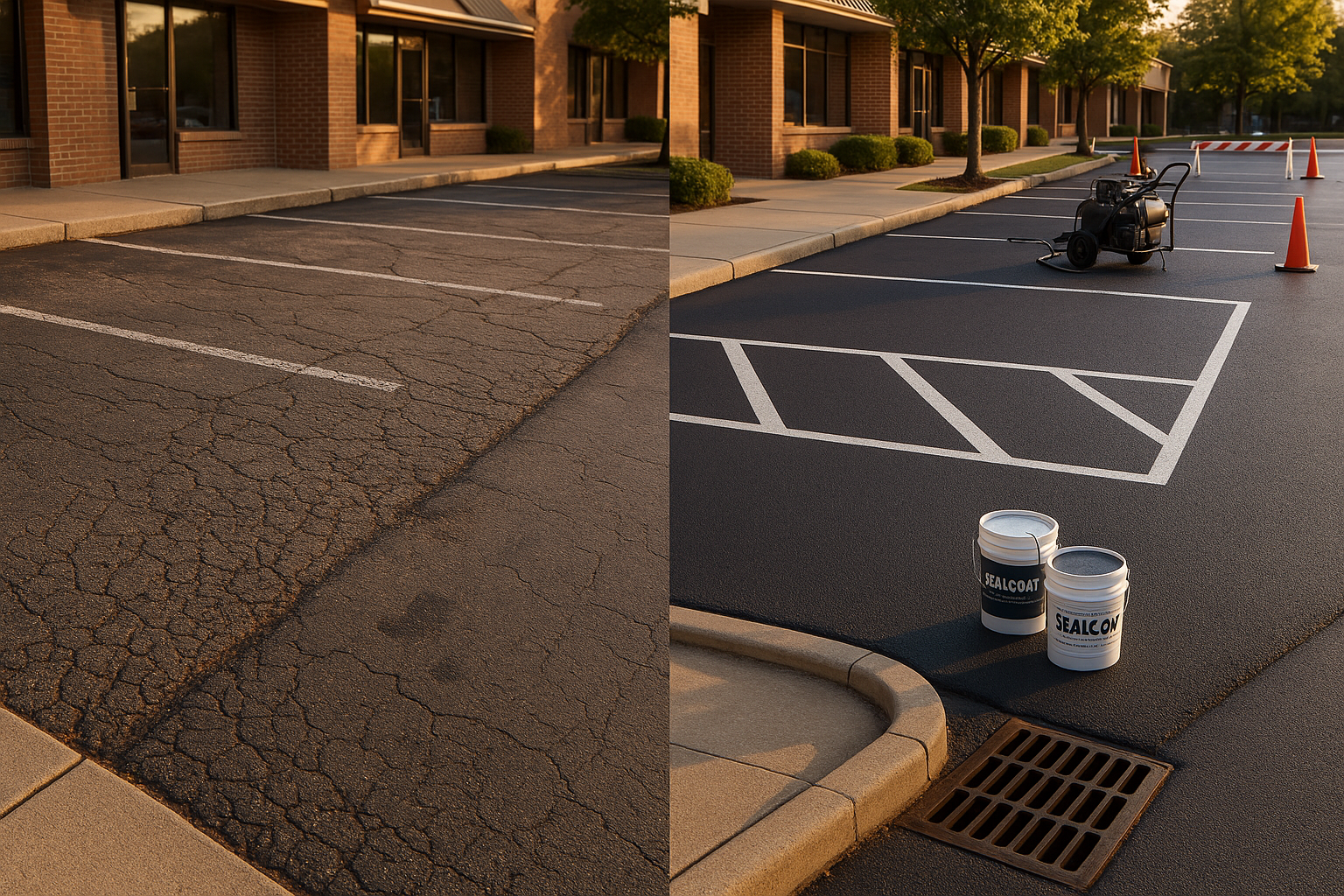
Here's the thing most people miss: sealer is like sunscreen for your asphalt. It protects the surface from oxidation, moisture, and de-icing salts. It does not fill cracks, fix potholes, or repair a failing base. If your lot has alligator cracking, standing water, or shifting pavement, a fresh coat of sealer will just make those problems look darker for a few weeks. Then they come back worse.
That's why crack filling before sealcoat is non-negotiable. Even hairline cracks let water down to the base, and in Central Indiana's freeze–thaw cycles, that water expands and breaks the asphalt apart. We wrote a whole post about crack filling, DIY vs professional. If you skip it, you're sealing in moisture, not keeping it out.
Another big mistake is sealing over oil spots or dirt. Oil breaks down the sealer bond, so those spots will peel off within a year. Dirt and dust act like a layer of powder between the asphalt and sealer. You need to clean, prime oil stains, and blow off every leaf and crumb before you even open a bucket.
How to Do It Right (If You Absolutely Have To)
Let's say you've got a small lot — maybe 20 spaces behind a shop in Broad Ripple or a tiny HOA clubhouse in Greenwood. You're on a tight budget and you've got a free weekend. Fine. Here's what you need to know.
Pick the right weather window. In Indianapolis, the best temperature for sealcoating is when the air and pavement are at least 50°F and rising, with no rain in the forecast for 24–48 hours. Overnight lows need to stay above 50°F too. That usually means May through mid-September, but be careful: summer pop-up storms are real. Shaded lots under mature trees in places like Irvington dry slower because the sun can't bake the sealer. If you seal in early spring or late fall when nights dip into the 40s, the sealer may never cure right, and you'll be left with a sticky mess that tracks everywhere.
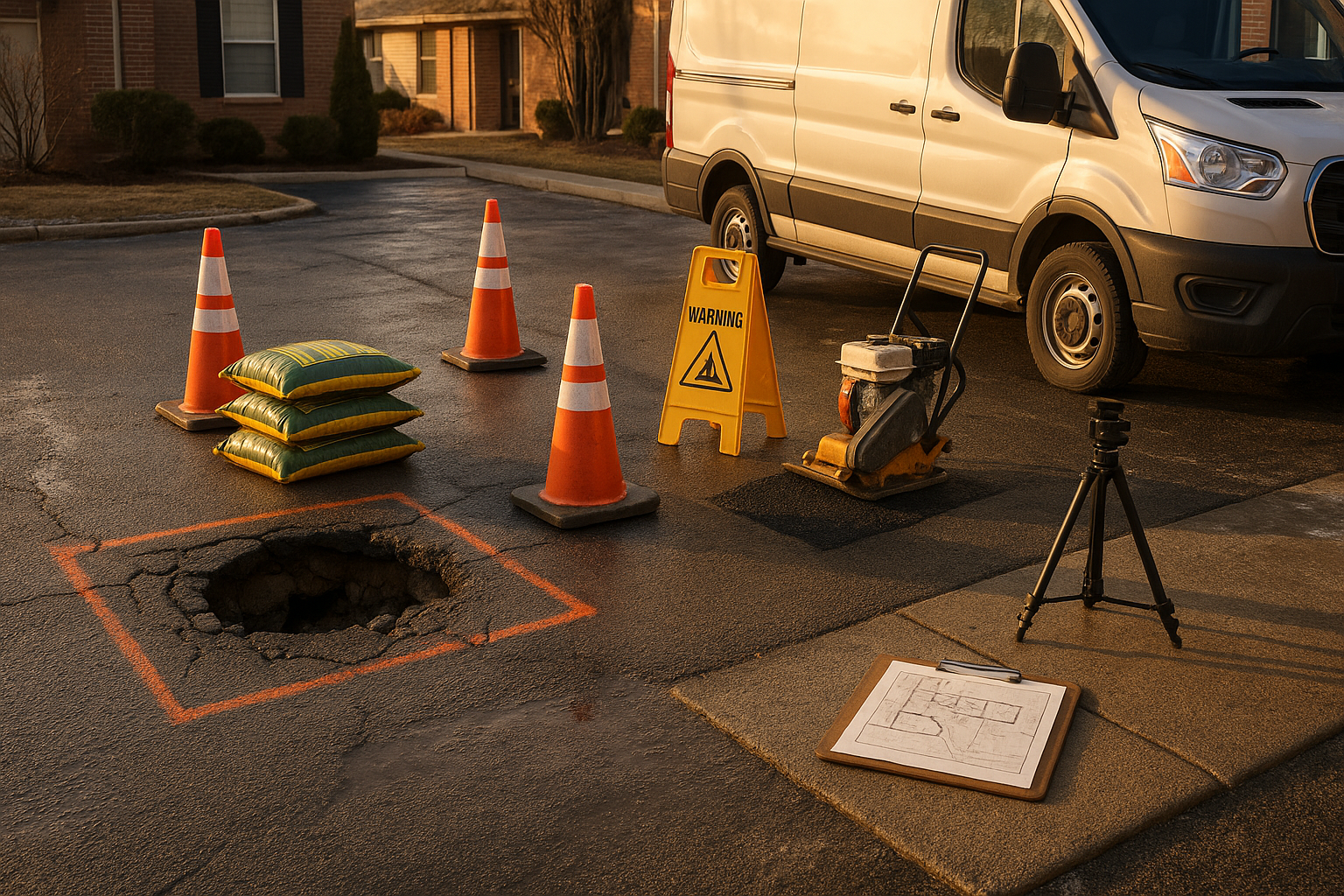
Prep the surface. This is where most DIYers fail. You need to power wash or at least sweep aggressively, remove all debris, trim grass edges, and patch any potholes. For small potholes, cold patch can work in a pinch, but for anything bigger than a dinner plate, you're better off hiring an asphalt patching pro. We do asphalt patching in Indianapolis all the time before sealcoating.
Choose the right sealer. You've got two main types: asphalt emulsion and coal tar. In our area, coal tar is still available, but it's messy, smells terrible, and has health concerns. Asphalt emulsion is safer and just as good for most lots. Look for one with sand or latex additive for better traction and wear. Don't just grab the cheapest bucket at the big box store. And don't believe that all sealers are the same — they're not.
Calculate coverage. Measure your lot's square footage. A typical gallon of sealer covers about 100 square feet per coat without sand. With sand mixed in, maybe 80 square feet. You want two coats on traffic lanes. So a 2,000-square-foot lot needs around 40–50 gallons total for two coats. Order 10% extra for edges and waste.
Application basics. You can use a squeegee or a sprayer. Sprayers are faster, but if you've never used one, you'll end up with uneven coats and overspray on cars and buildings. Squeegees are more forgiving. Mix the sealer thoroughly every time you refill. Cut in edges first with a brush or small squeegee. Apply thin, even coats — too thick and it won't cure; too thin and it won't protect. Let the first coat dry completely (usually 2–4 hours in warm sun) before applying the second.
Cure time and traffic control. After the final coat, keep foot traffic off for at least 8 hours, and no vehicles for 24–48 hours. Longer if it's humid or shaded. Use cones, barricades, and clear signs at every entrance. If your lot is on a busy street like Keystone Avenue, you might need to coordinate a phased closure so customers can still get in. And no, you cannot reopen that night. Mike learned that the hard way.
When DIY Costs More Than It Saves
Here's the reality: on a medium or large lot, or a lot that sees daily traffic from a restaurant or retail strip, DIY parking lot sealer usually ends up costing more than a pro. Add up the rental fees, materials, your time, and the risk of a bad job. If the sealer peels or tracks, you'll pay to have it stripped and redone. You also have zero warranty when you do it yourself. If someone slips on wet sealer or ruins their car's paint from overspray, that's on you.
We've seen it happen in Fishers, Carmel, Avon — everywhere. One property manager off West 86th Street tried to seal a 60-space lot with a rented sprayer and two helpers. They finished on a Sunday night, but a surprise rain shower at 2 a.m. washed half the sealer into the storm drain. The cleanup cost more than hiring us would have.
Plus, there's the striping. You need to wait until the sealer is fully cured before you paint lines, usually 24–48 hours. If you stripe too soon, the paint bleeds. And if you want the lines to last more than a season, you should use the right paint. We covered thermoplastic vs paint striping durability if you're curious.
Why PavementPros Is the Smarter Call for Most Indy Lots
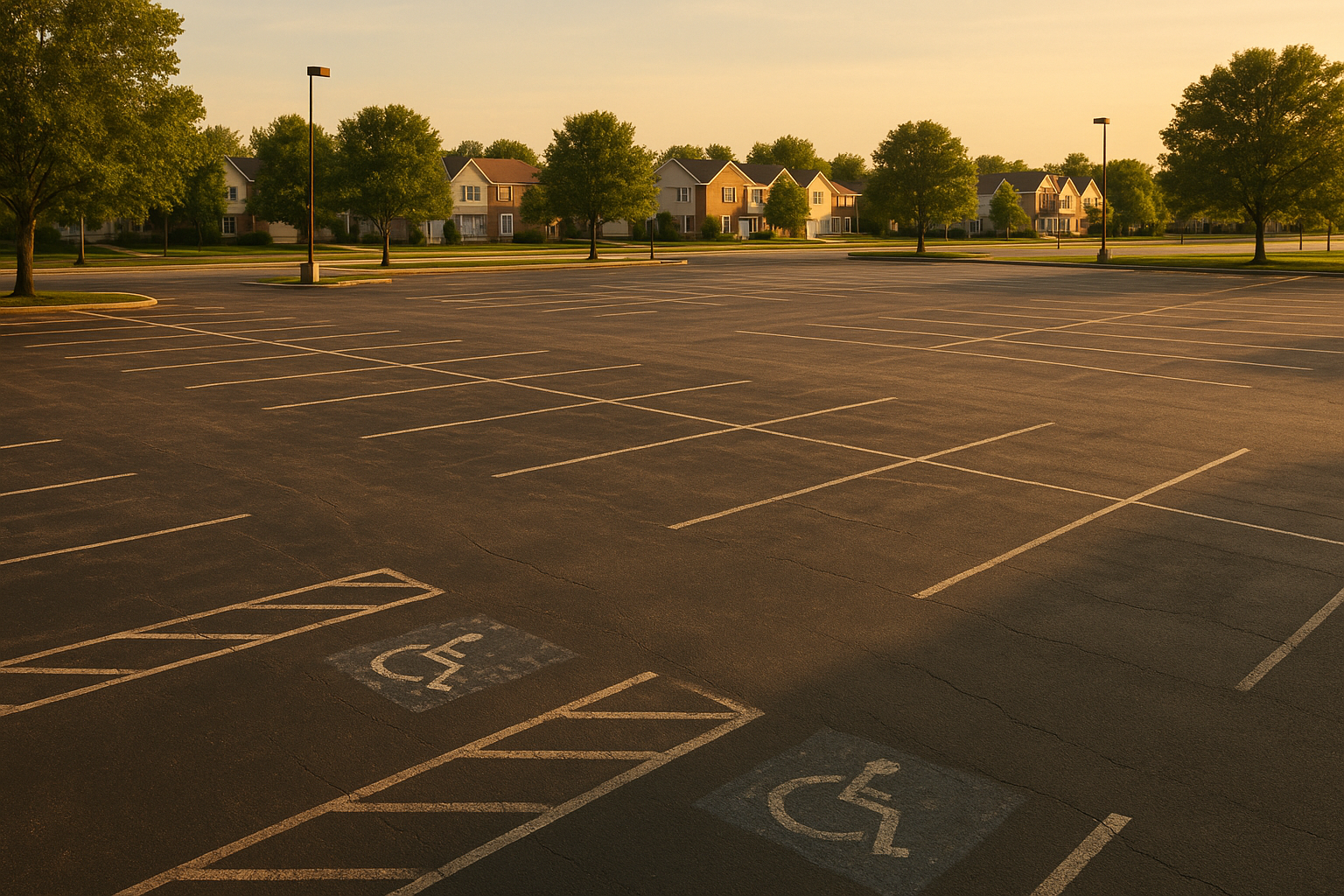
Look, we get it. Budget matters. But a parking lot is the first thing customers see, and a bad sealcoat job looks worse than no sealcoat at all. We've been sealing lots all over the Indianapolis metro — from Zionsville office parks to Plainfield warehouses — for years. We know the freeze–thaw damage, the de-icing salt, the shaded corners that stay damp until noon. We use quality asphalt emulsion with sand, we crack seal every single crack, we schedule around the weather, and we handle traffic control so your business keeps running. We even do ADA-compliant striping after the seal cures.
Instead of guessing, get a free on-site assessment. We'll tell you straight if your lot is a good candidate for DIY or if you're about to waste a weekend and a few hundred bucks. We'll give you a written plan with timing that minimizes downtime. Request a quote at PavementPros — no pressure, just honest answers.
For more on how long a sealcoat actually lasts, check out how long a sealcoat actually lasts.
Ready for a free lot assessment?
We walk the lot, photograph the problems, and hand you a written plan — no pressure, no obligation.