Last April, a friend in Broad Ripple sent me a photo of his driveway. It looked like a gray, patchy mess—barely a year after he paid someone to sealcoat it. He asked the same question every homeowner types into Google: 'how long does sealcoating last?' Because his didn't. And honestly, that's the right question. In Indianapolis, the answer depends on a bunch of things, but here's the short version: on a residential driveway, a good professional sealcoat should hold up about 2 to 3 years. On a small commercial lot with steady traffic, plan on more like 1 to 2 years. If yours died faster than that, something went wrong—and usually it's not the sealcoat itself. It's the prep, the materials, or the weather window.
Why Indianapolis weather is rough on sealcoat
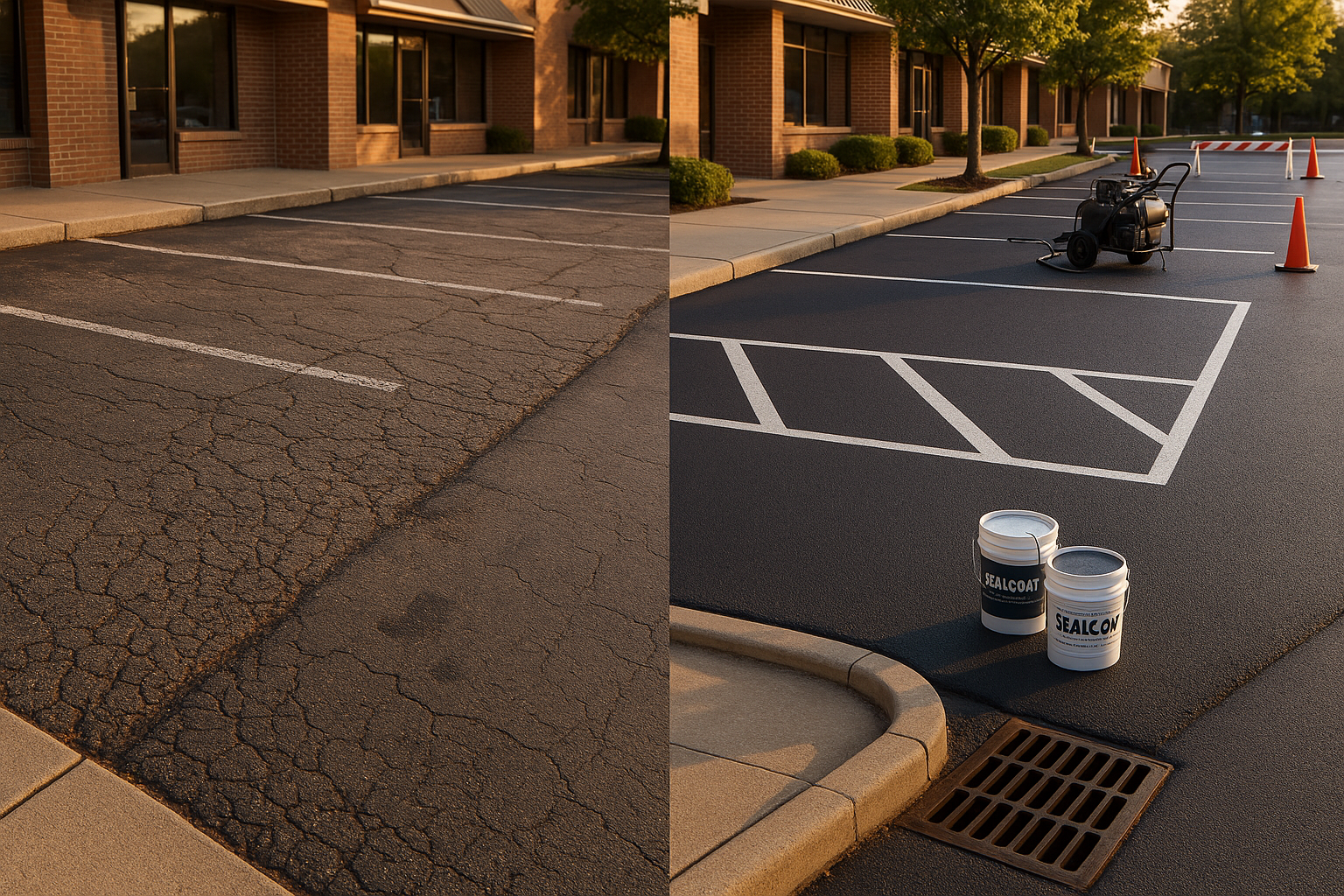
The short answer is 2–3 years for a driveway. But the real answer to how long does sealcoating last in Indianapolis is: it depends on what you park on it, how you plow it, and what the weather does. Sealcoat is basically sunscreen and a raincoat for asphalt. It slows down oxidation from UV rays and stops water from getting into the tiny voids. But central Indiana throws a lot at it. Winter is the worst. That freeze-thaw cycle—warm one day, freezing the next—forces water into hairline cracks, then expands and pops the surface. Add a snowplow scraping the driveway, and you've got mechanical wear on top of weather wear. And salt? Salt lowers the freezing point of water, which means more freeze-thaw cycles, not fewer. So even a great sealcoat can look tired after two winters in places like Fishers or Zionsville.
Shade makes a difference too. In older neighborhoods like Meridian-Kessler or Irvington, mature trees keep driveways damp and cool. That slows curing and invites moss or algae to grow into the sealer. And driveways that meet busy streets—think Keystone or 38th Street corridors—see more turning stress at the entrance because cars constantly twist and brake right there. That spot wears out first, every time.
The two things that decide sealcoat life: material and prep
Most people think sealcoat is just black paint. It's not. It's an emulsion of asphalt or refined tar, water, clay, and often sand. The ratio of those ingredients—especially the solids content and sand load—makes a huge difference. A cheap bucket from a big-box store might have half the solids of a commercial mix, so it cures thin and wears off in a year. Pros usually use an asphalt-based mix with angular sand, which adds grip and makes the coating thicker and tougher. Two thin coats generally beat one thick coat because the first coat soaks into the surface and the second builds the protective film evenly.
But even the best material fails if the surface isn't clean. Oil spots, dirt, pollen, and old leaves keep the sealer from bonding. Cracks need filled first, or water will sneak under the new sealcoat and pop it off in the first freeze. That's why we always scrape, blow, and prime oil spots, then route and fill active cracks. If you skip that, you're basically painting over rust. We wrote a whole guide on crack filling DIY vs professional if you want to compare.
Cure time and timing: why the calendar matters
After the sealer goes down, it needs time to dry and cure. Walk on it after 24 to 48 hours, but keep cars off for at least 48 to 72 hours. If it's cool or shaded—like under a big maple in Carmel—give it an extra day. If you park too soon, you'll get tire marks that never quite go away, and you'll shorten the life of the coating.
In Indianapolis, the practical sealcoating season is late spring through early fall. You want pavement temps above 50°F and rising, plus a few dry days in the forecast. Summer is usually the safest window. Fall can work, but leaves and cold snaps mess things up. We get a rush of calls every October from people who realized their driveway is gray, and then it rains for a week. If you want to avoid the bottleneck, schedule in May or June. For a deeper look at how often to reseal in Indiana, check this out: how often to seal a driveway in Indiana.
Signs your sealcoat is shot (and when to redo it)
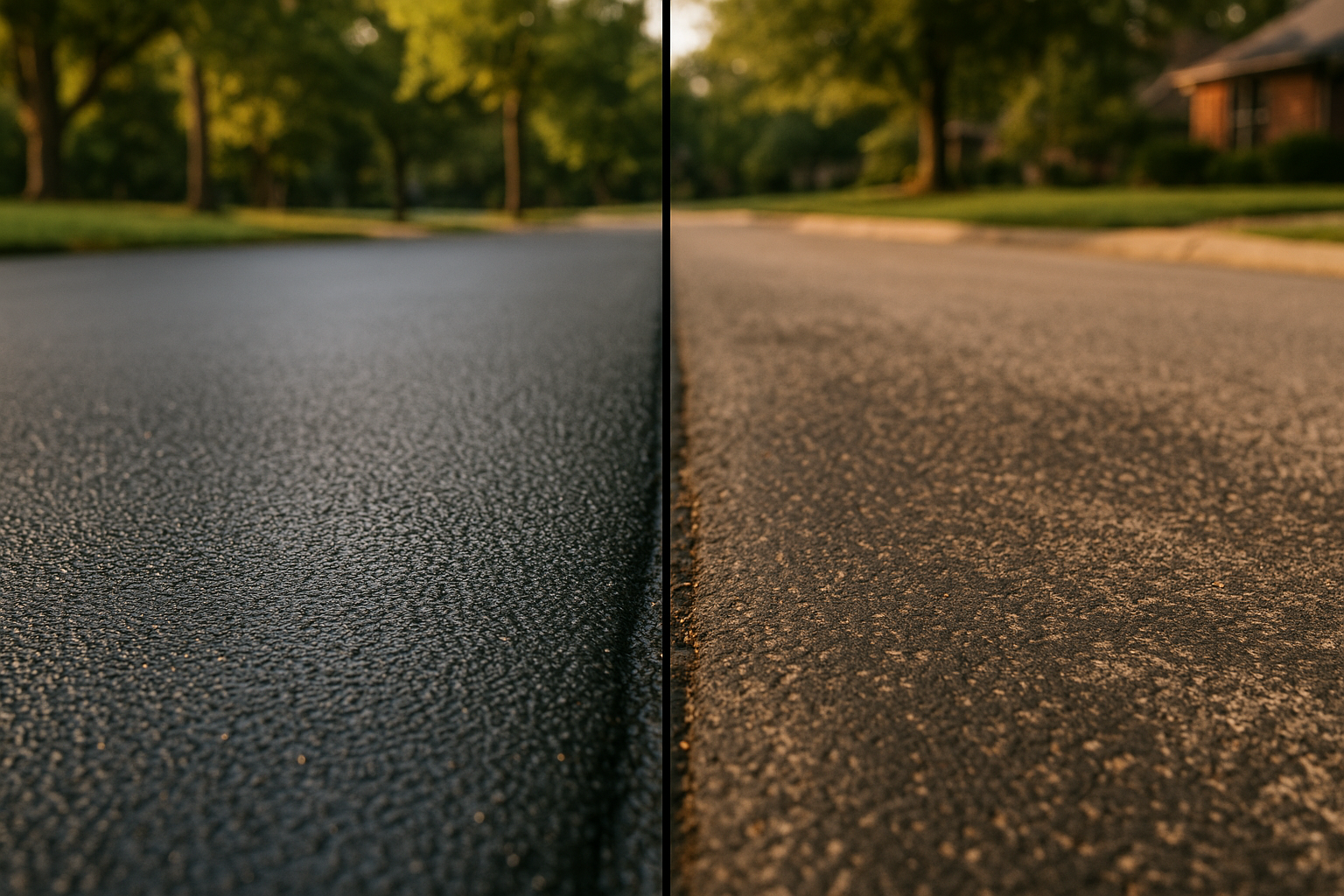
You don't need a lab test. Walk your driveway after a light rain. If the water forms dark, wet patches instead of beading up and rolling off, the sealer is no longer waterproof. If the surface looks more brown-gray than black and you can rub sand off with your shoe, the top layer has broken down. Edges near the street or garage apron fading faster? That's normal wear from turning and plowing. When those signs show up, it's time to reseal—usually every 2 to 3 years for a home driveway. Waiting too long lets the asphalt itself start to ravel, which is when small stones pop loose and the surface gets rough. That's more expensive to fix than a simple reseal.
Some homeowners in Westfield and Noblesville try the DIY route to save money. I get it—the kits are cheap. But getting the surface prep right and applying two even coats without lap marks is harder than it looks. And a bad job peels within a year, which is why people end up asking how long does sealcoating last when the real problem was the application. Pros have the right mix, the right squeegees, and the right weather sense.
What sealcoating won't do
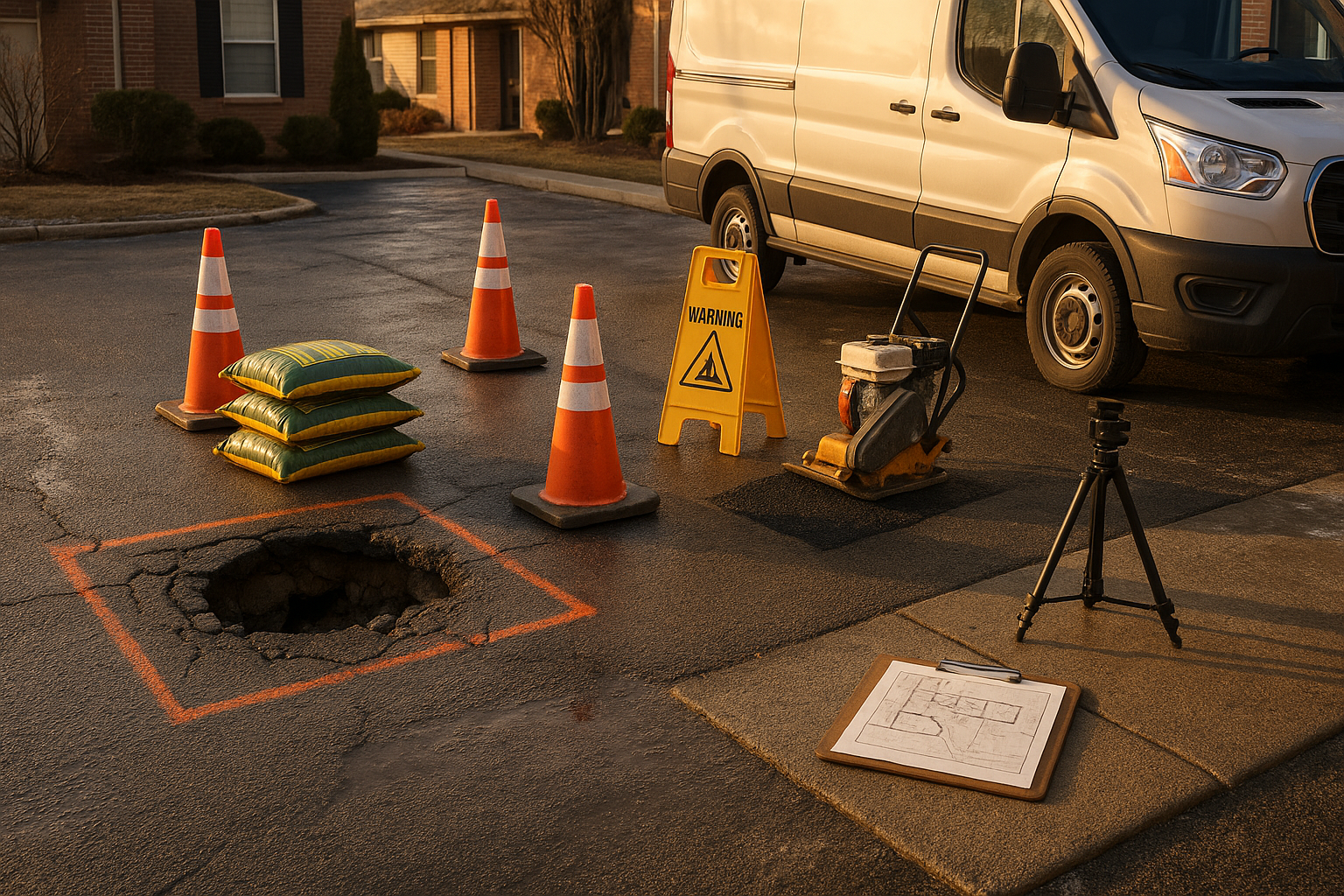
Sealcoat is not a structural repair. It will not fill potholes, it will not fix alligator cracks, and it will not firm up a soft base. If your driveway has deep cracks or sinkholes, you're throwing money away on sealcoat. In those cases, you might need crack sealing plus a heavier fix like an asphalt overlay. We explain the thickness trade-offs in this post: asphalt overlay thickness explained. And if the base is failing, no amount of black goo helps. A good contractor will tell you that before taking your money.
That's the difference between a quick-and-dirty job and a real pavement maintenance plan. At PavementPros, we start by looking at the whole surface: drainage, cracks, oil stains, traffic patterns. Then we recommend what will actually survive an Indiana winter. Sometimes that's just a two-coat sealcoat with crack fill. Sometimes it's more.
The bottom line for Indy homeowners
So how long does sealcoating last? Here in central Indiana, plan on 2–3 years for a well-applied residential sealcoat. If you're getting less than that—and you used a pro—ask about the solids content, sand load, and whether they filled cracks first. If you used a bucket from the store, well, that's your answer.
You can stretch that lifespan by clearing leaves off the driveway in fall, avoiding harsh de-icing salts (sand or kitty litter works for traction), and fixing cracks every spring. But don't overthink it. The best thing you can do is get an honest assessment from someone who works on Indianapolis pavement every day. We serve Indianapolis, Carmel, Fishers, Zionsville, Westfield, Noblesville, Greenwood, Brownsburg, Avon, and Plainfield. If you want a written scope for sealcoating and crack sealing that's tailored to your driveway or small lot, request a quote and we'll come take a look. No pressure, no jargon—just a straight answer on what your pavement needs and when to do it.
Ready for a free lot assessment?
We walk the lot, photograph the problems, and hand you a written plan — no pressure, no obligation.