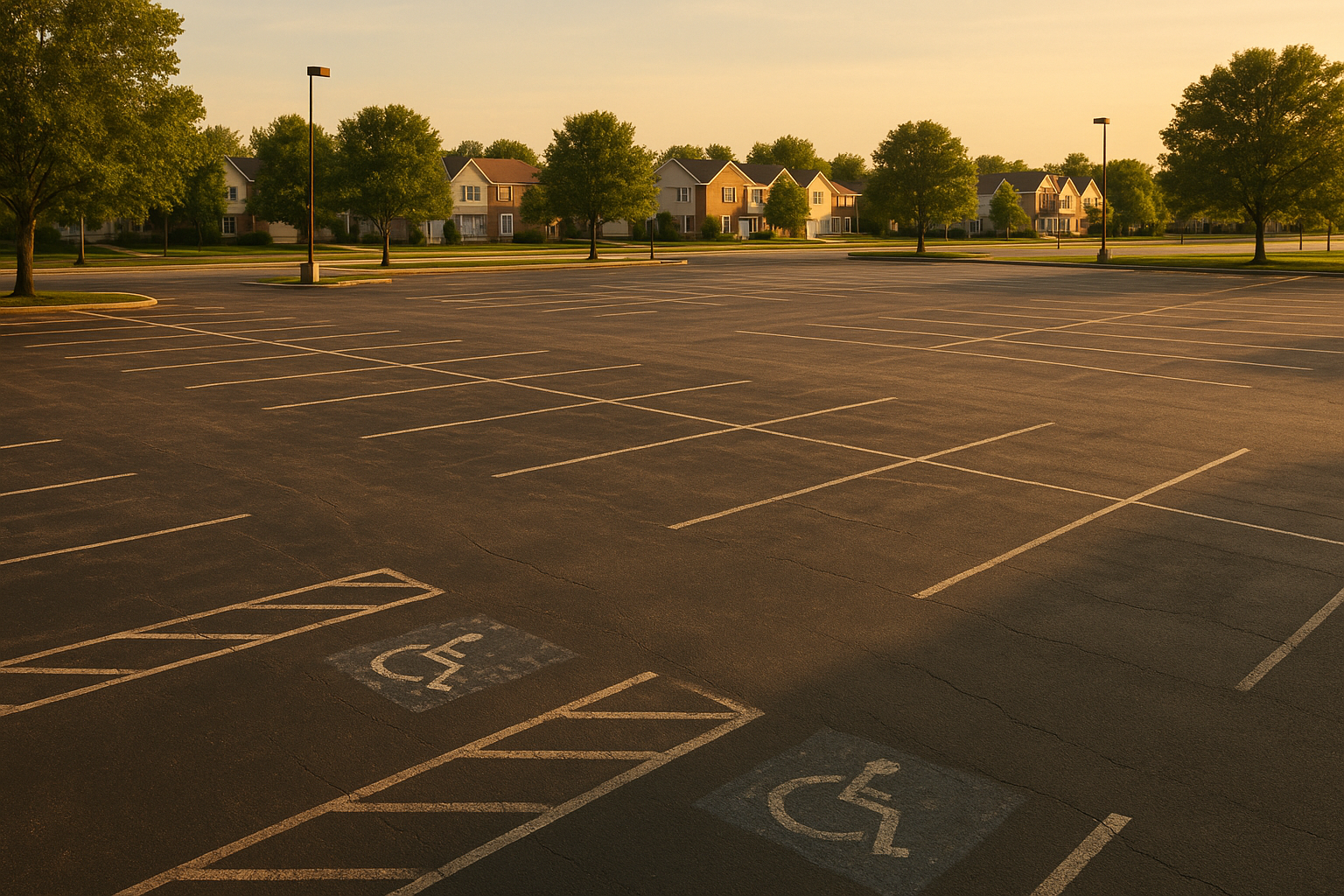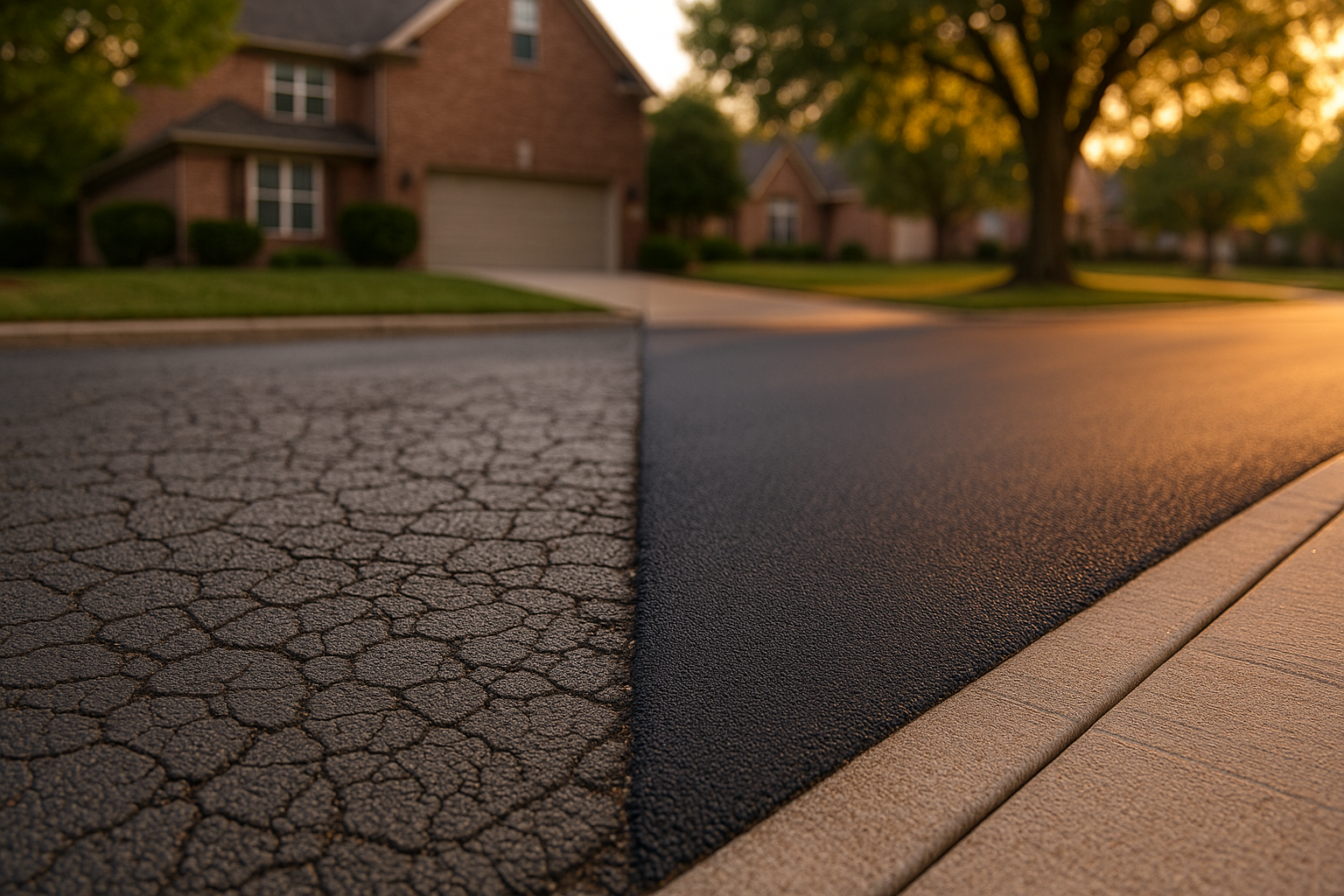
Last spring, a guy from Noblesville called me about his driveway. It looked like a cracked eggshell, but the base underneath was solid. He thought he needed a $12,000 tear-out. We did a 2-inch overlay instead for about $4,500. That's the difference knowing asphalt overlay thickness makes. If you manage a parking lot in Fishers or have a long driveway in Carmel, you've probably wondered the same thing: how thick should an overlay be? And what exactly are you paying for? Let's break it down.
What Is Asphalt Overlay Thickness Anyway?
An overlay is new hot-mix asphalt placed on top of your existing pavement after we prep the surface. The thickness is the depth of that new layer—usually measured in inches. For most residential driveways and light-duty parking lots, 1.5 to 2 inches is standard. If you've got heavy delivery trucks or a lot of turning traffic (think restaurant drive-thrus or school pickup lines), we go 2 to 3 inches. So when you hear 'asphalt overlay thickness,' that's what we're talking about: how much new asphalt we're putting down, and why it matters. But thickness isn't a number you pull from thin air. It's based on what's underneath and what's driving on top.
Why Thickness Is a Judgment Call, Not a Guess
You can't just say 'give me 2 inches' and call it a day. We look at the existing pavement's condition, the subgrade (the dirt underneath), and how water drains. Central Indiana has clay-heavy soil that holds moisture, and the freeze-thaw cycles in Indy can turn small cracks into big ones fast. If the base is soft or pumping water, a thin overlay will just trap the problem and fail in a couple years. That's why we sometimes core the pavement to see what's really going on—like we explain in our guide on what a pavement core sample tells you. The traffic matters too. A parking lot in Greenwood with weekly food truck deliveries needs more thickness at the entrance than a quiet cul-de-sac in Zionsville. And no, a 1-inch overlay to save money isn't worth it. It might look okay for a season, but it won't handle freeze-thaw or snowplow scraping. You'll be repaving sooner.
The Overlay Process: Milling, Leveling, and Compaction
Milling and Tie-Ins
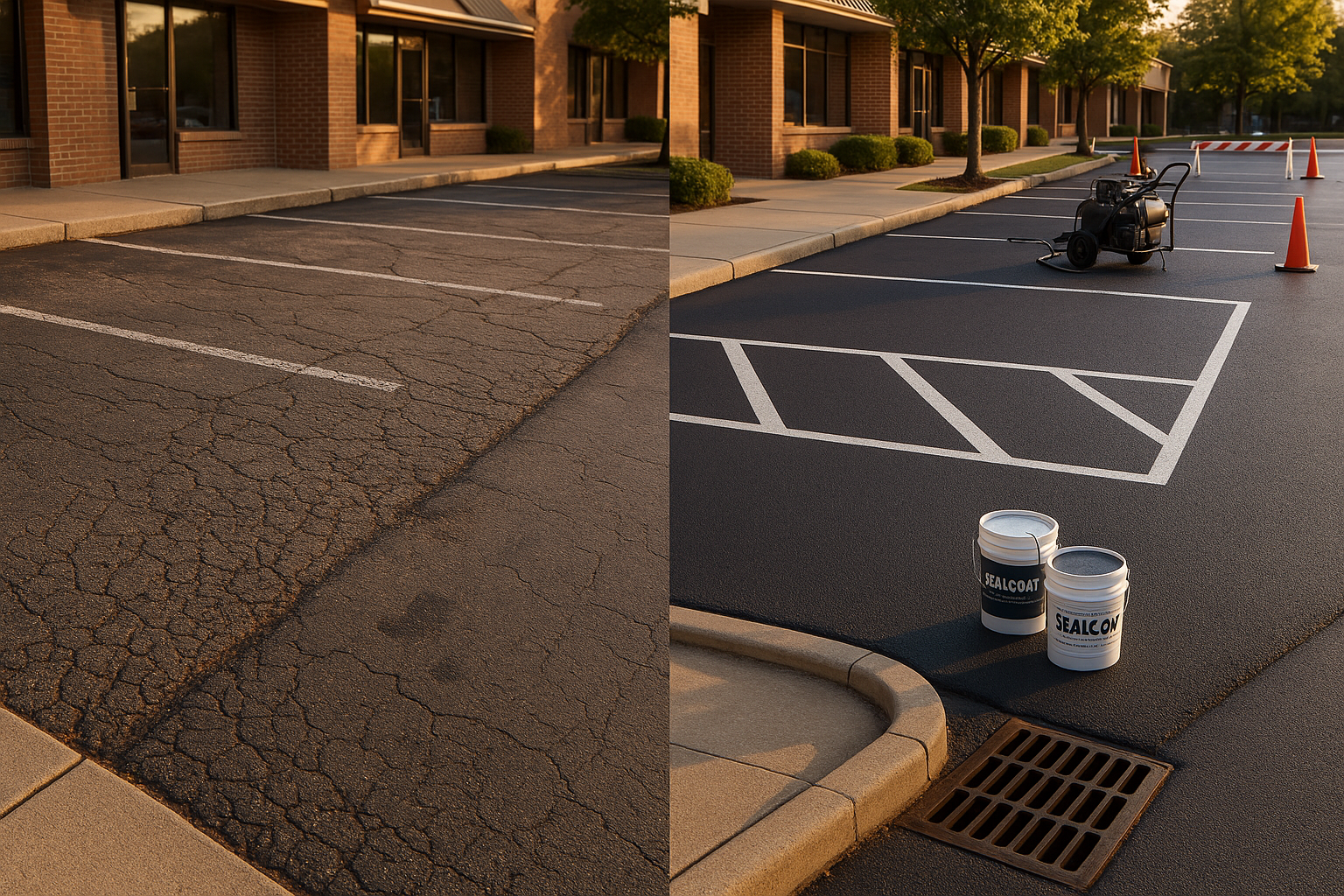
Before we pave, we often mill around edges: at garage aprons, curb lines, catch basins, and utility lids. Milling grinds down the old surface a bit so the new asphalt doesn't create a lip. In Marion County, lots are flat and curb-and-gutter systems are everywhere. If we don't mill at the gutter, you'll end up with puddles along the edge and water sitting on the new surface. That kills an overlay fast. Snowplow blades can catch the edge of an overlay if it's not milled properly, so we pay attention to tie-ins at curbs and aprons.
Leveling Course vs Structural Lift
Sometimes we need to fix low spots or ruts first. We put down a thin leveling course—maybe 0.5 to 1 inch—to fill birdbaths and smooth the surface. Then the structural lift goes on top, usually 1.5 to 2.5 inches. That's the part that actually carries the load. Both get compacted to spec, but they serve different jobs.
Tack Coat and Compaction
Between the old asphalt and the new overlay, we spray a tack coat. It's basically glue. If you skip it or go too light, the layers don't bond, and you get delamination—the new asphalt peels off in sheets. Compaction is everything. We roll the mat with the right pattern while it's still hot. In Indy, spring and fall can be windy and cool, so the rolling window is short. If we don't hit density, the surface ravels and crumbles early. You want a dense, tight finish that can handle snowplow blades.
When an Overlay Makes Sense (and When It's a Bad Idea)
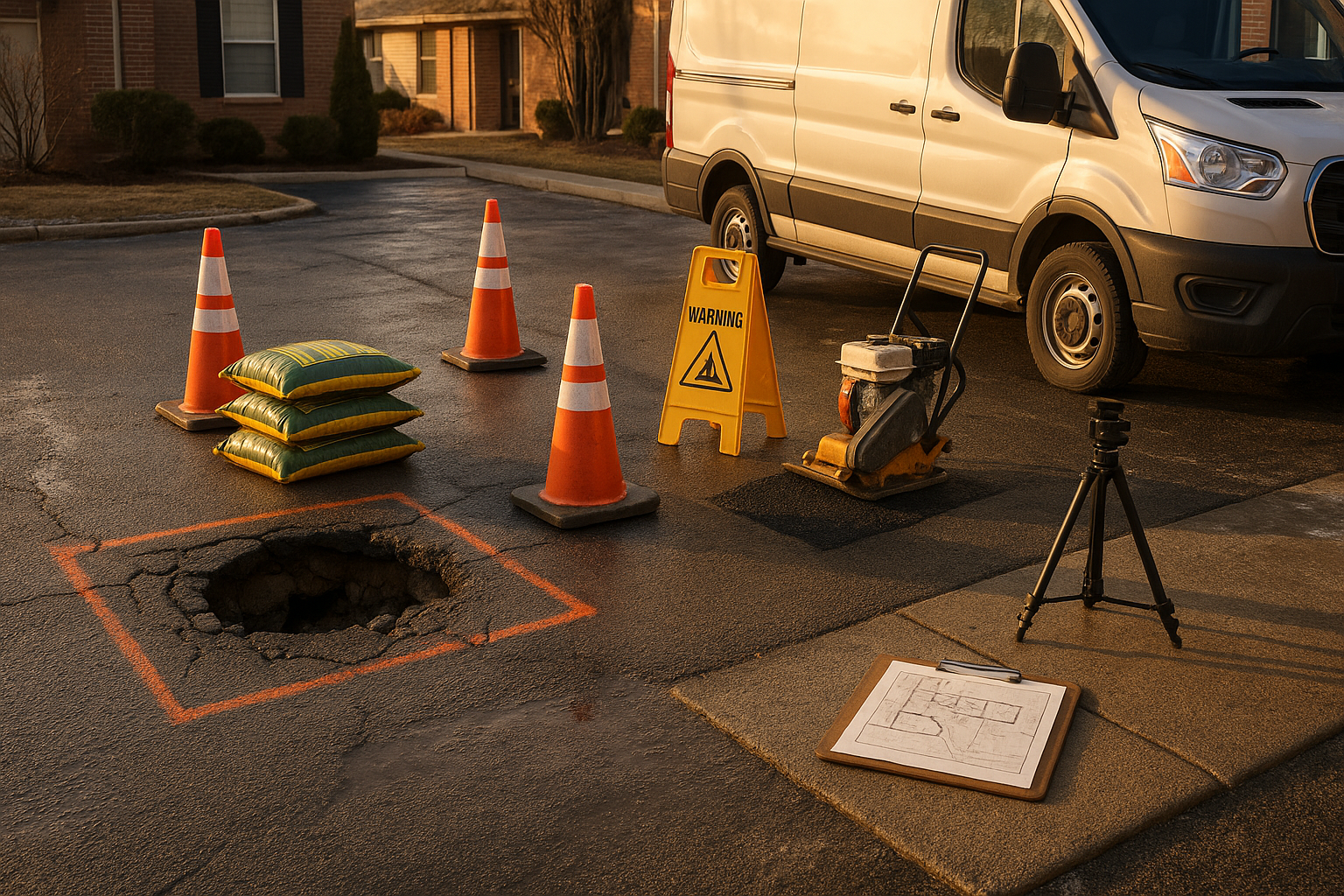
An overlay works great when at least 70% of the base is sound and the distress is mostly on the surface—cracks, minor raveling, surface oxidation. If you've got potholes, alligator cracking, or rutting that goes deep, we have to fix those first. We saw-cut and square up the failed areas, dig out the bad stuff, and put in fresh full-depth patches. Sometimes we add a fabric interlayer over chronic crack zones to slow down reflective cracking. We might also use infrared patching to heat and rejuvenate surrounding asphalt around a patch, but for structural failures, remove and replace is the way to go. If the base is shot across the whole lot, an overlay is a waste of money. That's when you need reconstruction. There's a good comparison in our post on pavement preservation vs. rehabilitation. For a homeowner in Avon with a driveway that's cracking because the subgrade failed, an overlay won't fix that. You need to address the subgrade first.
Cost, Downtime, and Keeping the New Surface Alive
The cost of an overlay depends on thickness, square footage, how much milling and patching we do, and utility adjustments. Raising manhole lids and valve boxes to match the new grade adds a bit. Some contractors will give you a quote over the phone, but that's a guess. The only way to nail down the right asphalt overlay thickness and price is to see the pavement in person. That's why we do free site visits. Most residential driveways reopen within 24-48 hours; commercial lots can be staged so customers can still get in. After the overlay is done, wait at least 6-12 months before sealing—usually the first full season. Then seal every 2-3 years, as we cover in our post on when to seal a new asphalt driveway. Keep drains clear of leaves, especially in fall. And crack seal any new cracks early. With proper thickness and care, an overlay in Central Indiana can last 10-15 years or more.
If you're tired of guessing whether your pavement needs a 1-inch patch or a 3-inch overlay, let's take a look. We'll core if needed, put together a thickness plan that fits your traffic and budget, and give you a straight quote. Get in touch for a free on-site evaluation.
Ready for a free lot assessment?
We walk the lot, photograph the problems, and hand you a written plan — no pressure, no obligation.