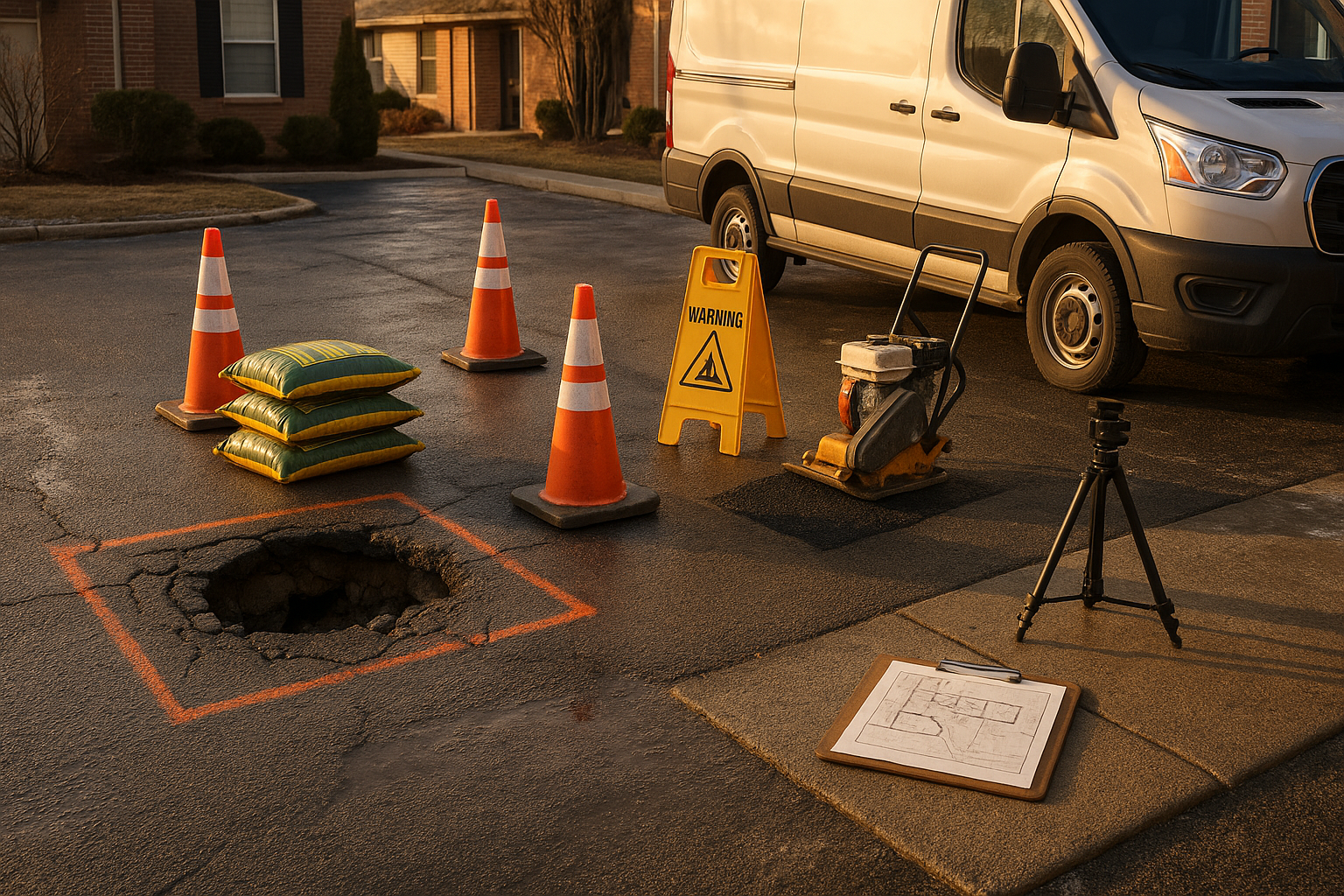
Ever have a pothole that returns like a bad penny? A few years back, a manager at a medical office in Fishers called us frustrated. They'd filled a hole in their parking lot three times with cold patch, and each time it crumbled within weeks. Finally, we took a pavement core sample — basically a round plug cut out of the asphalt — and saw the real problem: the base underneath was wet and mushy. No amount of patch was going to fix that. That core sample saved them from throwing more money away. Here's what a pavement core sample can tell you and why it matters for your Indianapolis area parking lot.
What Exactly Is a Pavement Core Sample?
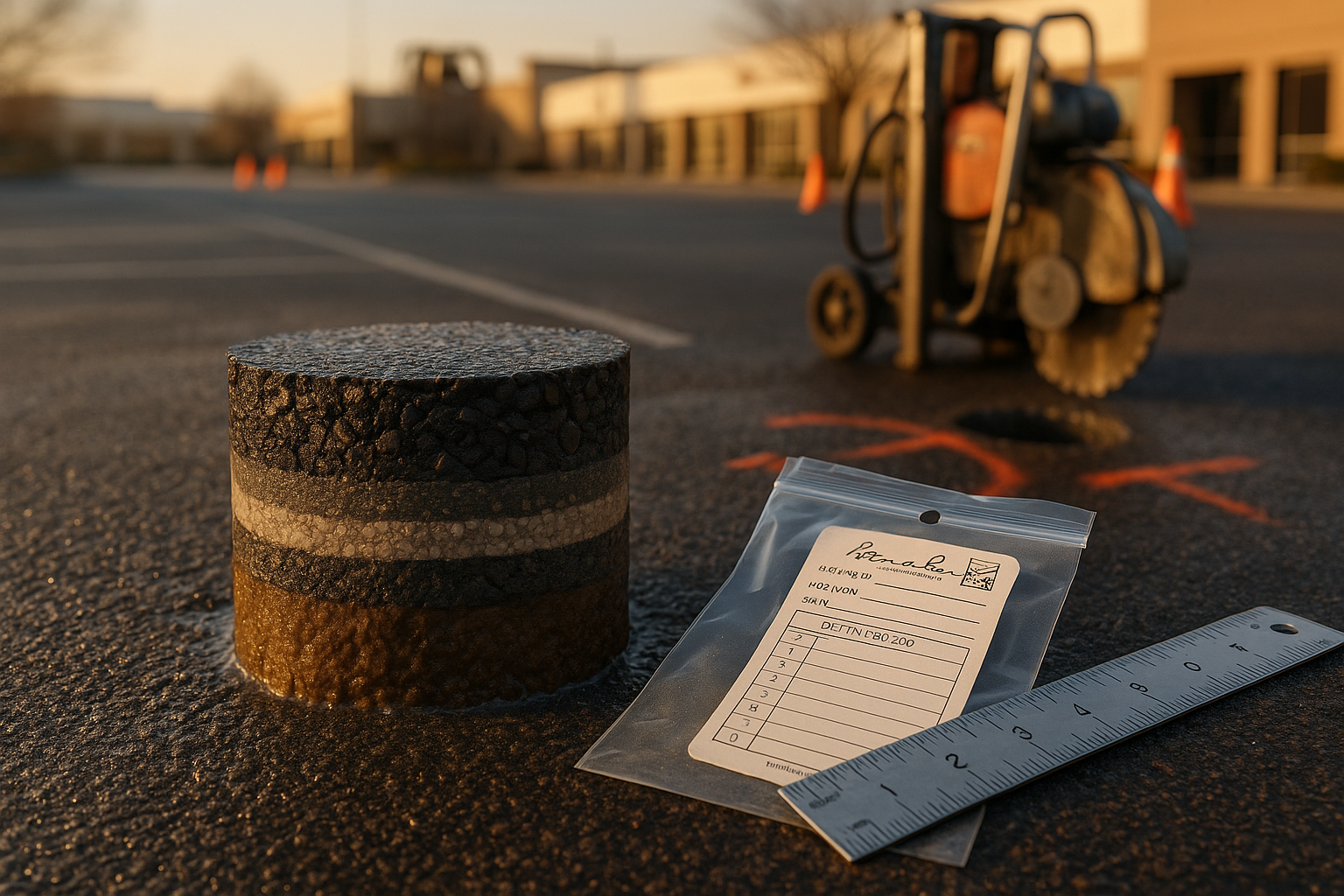
A pavement core sample is a round piece of your asphalt, usually 4 to 6 inches across, cut straight down with a wet saw. It's like a slice of a layered cake. You can see each layer of asphalt, the bond between them, the base rock, and sometimes even the soil below. We call it pavement thickness testing because it gives us real numbers, not guesses. For asphalt coring in Indianapolis, we often find surprises: three different pavement patches stacked on top of each other, or an original asphalt layer way thinner than anyone expected.
When Should You Consider Coring?
Not every pothole needs a core sample. But if a pothole keeps coming back in the same spot, if you see alligator cracking, or if a patch settles right after a utility cut, that's a sign the problem isn't just the surface. We see this a lot near catch basins in older Indy lots. Water gets trapped, saturates the base, and every freeze-thaw cycle makes it worse. A core sample gives you pothole root cause analysis instead of just patching symptoms. Might sound like overkill for a small hole, but it prevents repeat failures and wasted money. Alligator cracking is a classic symptom of base failure under asphalt — you can learn more about the warning signs in our post on subgrade failure signs.
What Can You Learn from a Core?
Here's a list of things a core tells us: - How thick the asphalt layer is (and if it's too thin for the traffic). - Whether there are multiple lifts or old overlays. - If the asphalt is dry and brittle or wet and ravelled. - Whether the bond between lifts has failed. - What the base looks like: clean stone, clay, or soup. - If subgrade evaluation shows stable soil or pumping fines.
We've seen cores where the top inch of asphalt looked fine, but the bottom lift was crumbling and the base was soaked. That's base failure under asphalt. A core is the quickest way to spot that. For commercial lot pothole repair near loading docks or drive-thrus, heavy repeated loads mean the pavement needs proper thickness and support. A core tells us if it has that. Restaurant drive-thrus in particular get hammered by turning vehicles and idling trucks — you can see the wear patterns in our drive-thru pavement wear article.
How Many Cores Do You Need?
It depends. For a standard commercial parking lot, we usually take one core per distress area, or about one per 10,000–20,000 square feet. If you've got a big transition by a dumpster pad or a cracked apron at a restaurant drive-thru, you might want an extra core there. We always do utility locate before coring — call 811, review any as-builts you have, and avoid sensitive corridors. Then we mark the spots and get to work.
The process is quick. We cut the core, log the depths right on site, bag and tag the sample if lab testing is needed, and then backfill and hot-mix patch the hole the same visit. Most cores take under 30 minutes once utilities are cleared. You might worry that the core hole becomes a new pothole, but we compact the patch immediately and drive over it before we leave. It's flush and solid.
Choosing the Right Fix: Infrared, Mill/Overlay, or Full-Depth Patch
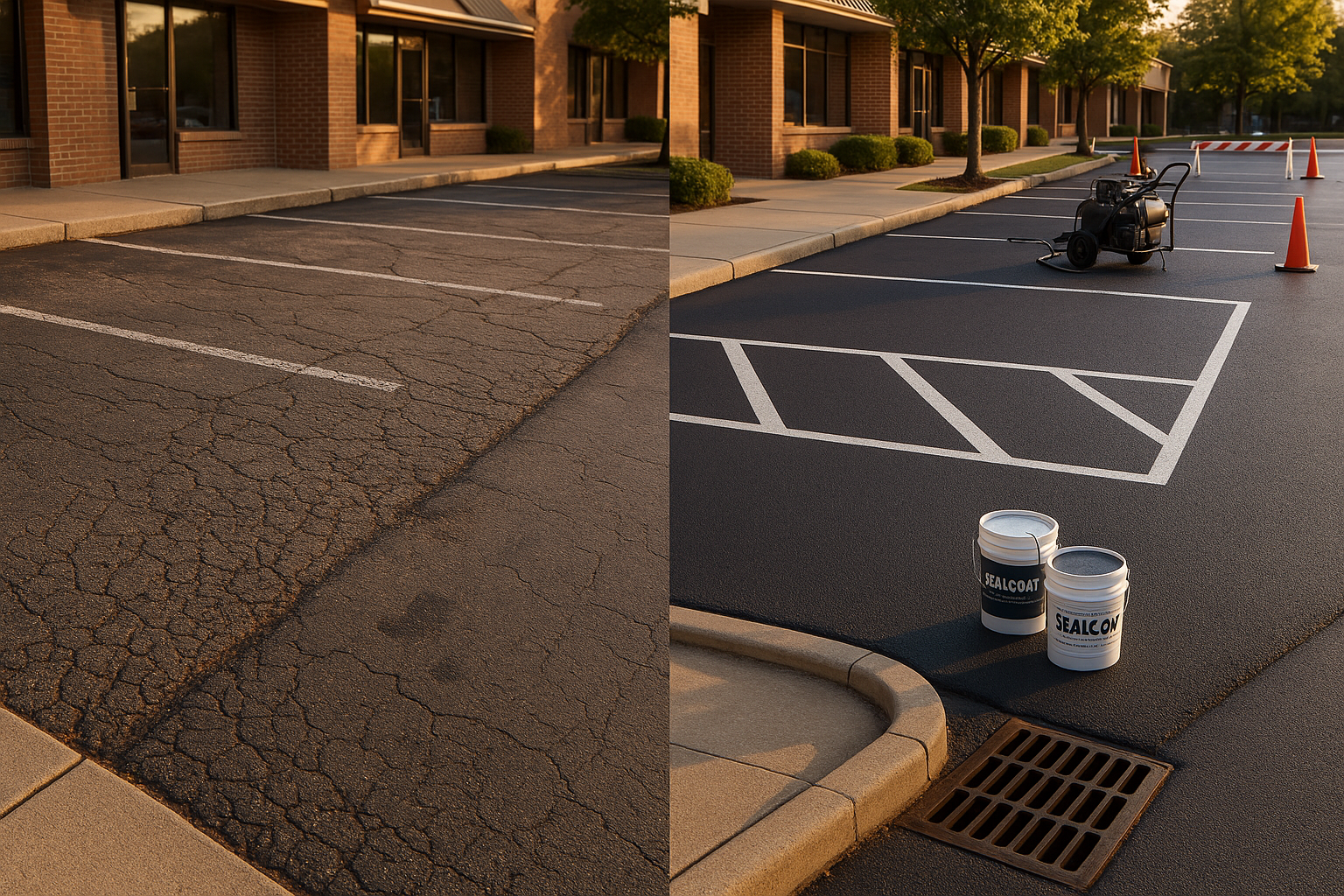
The core results decide the repair. If the asphalt is thin but the base is sound, a mill and overlay might work — grind off the top and lay new asphalt. That's usually less expensive than full reconstruction. If the base is wet or has failed, you need a full-depth patch: cut out the bad area, remove the saturated base, put down clean stone, compact it, and lay fresh asphalt in lifts. This is often the difference between full-depth patch vs surface repair. A surface repair just masks the problem.
For small, shallow defects, infrared repair vs cut-and-replace can be a good option. Infrared heats the existing asphalt and blends new material in seamlessly, with no saw-cut joints. But infrared only fixes the top couple of inches. If a core shows deeper failure, you need cut-and-replace. That's why we don't guess. Core data keeps us honest.
Asphalt overlay vs reconstruction is another decision. If your entire lot has thin pavement and aging surface but the base is mostly okay, an overlay can buy 8–10 years. If cores show widespread base failure, reconstruction might be the only long-term fix. In Indianapolis, we also have to think about winter. Freeze-thaw cycles, de-icing salts, and snowplow blades punish asphalt. A core taken in fall or winter helps plan the right spring repairs and budget phases. Many HOAs and facility managers in Carmel, Fishers, and Greenwood use winter coring to get accurate bids for spring paving. You can read more about planning ahead in our post on fall bidding season for spring paving.
What About Cost?
Asphalt core sample cost considerations are simple: you pay a mobilization fee plus a per-core price. It's usually a few hundred dollars total, depending on how many cores and the site. When you compare that to the cost of a full-depth patch that fails because you guessed wrong, coring is cheap insurance. And we bundle coring with repair work to reduce the total project cost. If you're a property manager in Avon, Plainfield, or Brownsburg, ask for a coring plan as part of your next parking lot investigation.
Next Step: Get a Data-Backed Scope
If you're tired of playing whack-a-mole with potholes, let's take a look. We'll walk your Indianapolis property, mark distress areas, coordinate 811, and take a few pavement core samples where it matters. Then we'll give you a clear report: photos, thickness logs, and a line-item proposal so you know exactly what needs doing and why. No more guessing. Book an on-site evaluation and pavement coring plan with PavementPros — tell us where it hurts.
Ready for a free lot assessment?
We walk the lot, photograph the problems, and hand you a written plan — no pressure, no obligation.