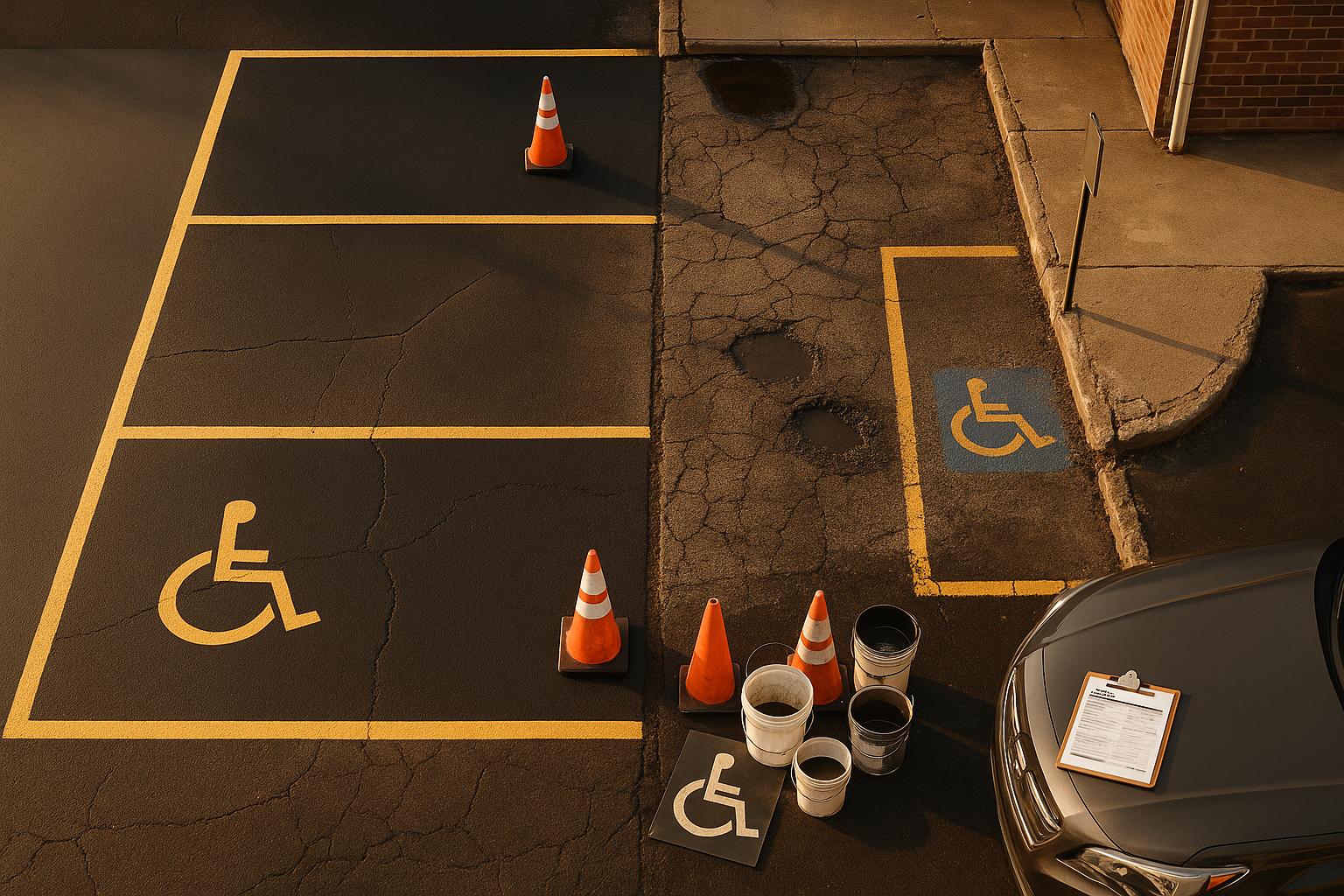
Dave over in Broad Ripple called me last March, right after the last big thaw. 'My parking lot looks like the moon,' he said. He manages a small medical office, and the potholes were so bad a patient almost twisted an ankle. He'd been patching reactively for years, but this time he wanted something different: a real plan. That's the thing about parking lot maintenance in Indianapolis—if you just wait for things to break, you'll always be chasing. But a plan? That puts you back in control.
At PavementPros, we don't just fix pavement. We help you stop the cycle of expensive surprises with a custom parking lot maintenance plan built around your property, your budget, and Indy's wild weather. These ain't cookie-cutter checklists. They're honest, clear, and based on what's actually happening on the ground.
What's Actually in One of Our Maintenance Plans?
First, we walk the lot with you. Every inch. We take photos, note the cracks that are starting to spread, the areas where water pools, the faded lines, the curb that's crumbling. Then we sit down and put a number on the pavement's condition—call it a score—and map out what needs attention now, what can wait a season, and what's a watch item.
The plan gives you line-item pricing, so there's never a 'surprise' add-on. Crack sealing? Here's the price per linear foot. Sealcoating? Here's what it'll take. Also striping, patching, ADA updates, drain cleaning—all spelled out. You decide what gets done and when. And because we've been doing parking lot maintenance Indianapolis trusts for years, we know how to phase it so your business doesn't skip a beat. (If you're still on the fence about sealcoating, our piece on sealcoating vs. doing nothing might help.)
Built for Indiana Weather (Yes, All of It)
Indy's weather is rough on asphalt. Freeze-thaw cycles pry cracks wider every winter. De-icing salts eat at the surface. Spring rains find every weak spot and turn it into a pothole. Summer sun bakes the binder right out of the top layer. A maintenance plan that works in Phoenix would fail here in nine months.
We schedule crack sealing for spring and fall, before water gets in. Sealcoating goes down in stable temps—not too hot, not too cold—so it cures tough. Our crews use hot-pour crack sealants that flex with the movement, and commercial-grade sealcoat that stands up to plow blades and salt trucks. After a big winter, we do a walk-through to catch fresh damage early. (Curious how often you should sealcoat? We break it down here.)
Bottom line: your pavement plan should breathe with the seasons. Ours does.
Keeping Your Tenants and Customers Happy
Let's be honest—when you hear 'parking lot work,' you picture blocked entrances, angry customers, and lost revenue. We hear that all the time from property managers and church admins. So we built our whole process around minimal disruption.
We section off small work areas, keeping the rest of the lot open. For busy retail or medical offices, we'll come after-hours or on weekends. Striping on a Sunday morning? Done. Crack sealing at 6 a.m.? No problem. You get one point of contact throughout, and photo reports after every visit so you know what was done—even if you weren't there. And if weather throws a wrench in the schedule (hello, Indiana spring), you'll get a heads-up, not a no-show.
Nobody wants to explain to their boss why the parking lot was closed during the lunch rush. We get that. It's why churches in Noblesville, strip centers in Greenwood, and HOAs in Zionsville keep calling us back.
Safety, ADA, and Not Getting Sued
Drive through any older part of Indianapolis—say, near Butler-Tarkington or Irvington—and you'll see lots striped before the ADA was even a thought. Faded blue paint, no access aisles, signs missing or mounted too low. It's not just a ticket risk; it's a real problem for people trying to get into a building.
Our maintenance plans include an ADA check. We count the stalls, make sure the signs are right, the access aisles are wide enough, and the route from the van spot to the front door is clear and stable. A woman in a wheelchair once told our crew she'd stopped shopping at a particular center because she couldn't get from the van to the sidewalk without rolling into traffic. That stuck with us. We never want a lot we touch to be the reason someone feels unwelcome. (Indiana's ADA rules for parking can be a little tricky—we wrote about them here.)
And it's not just ADA. Fire lanes, crosswalks, stop bars—they all matter. A fresh stripe job can literally save lives.
Why a Plan Beats Reacting to Potholes
Think of pavement like teeth. Skip the cleanings, ignore the little cavity, and before you know it you're scheduling a root canal. A pothole starts as a tiny crack. Seal it early, and you spend a couple dollars per linear foot. Let it go, and you're paying to saw-cut and patch—or worse, rebuild an entire failed section. Over time, a planned approach that focuses on preventive pavement maintenance cuts your total spend and extends the life of your asphalt by years.
Ready to Stop Firefighting?
If you're tired of scrambling every spring to patch the same spots, or you're just not sure what your lot actually needs, let's talk. We'll come out—no charge, no pressure—and walk the property with you. Then we'll put together a custom parking lot maintenance plan for Indianapolis weather, your traffic, and your budget. You'll know exactly what to expect and when to expect it.
Hit the button below or grab a time for your free site walk. First step's easy. And we cover the whole metro: from Zionsville to Greenwood, Plainfield to Fishers, and everywhere in between. If you've got asphalt in central Indiana, we've probably been in your neighborhood.
Ready for a free lot assessment?
We walk the lot, photograph the problems, and hand you a written plan — no pressure, no obligation.