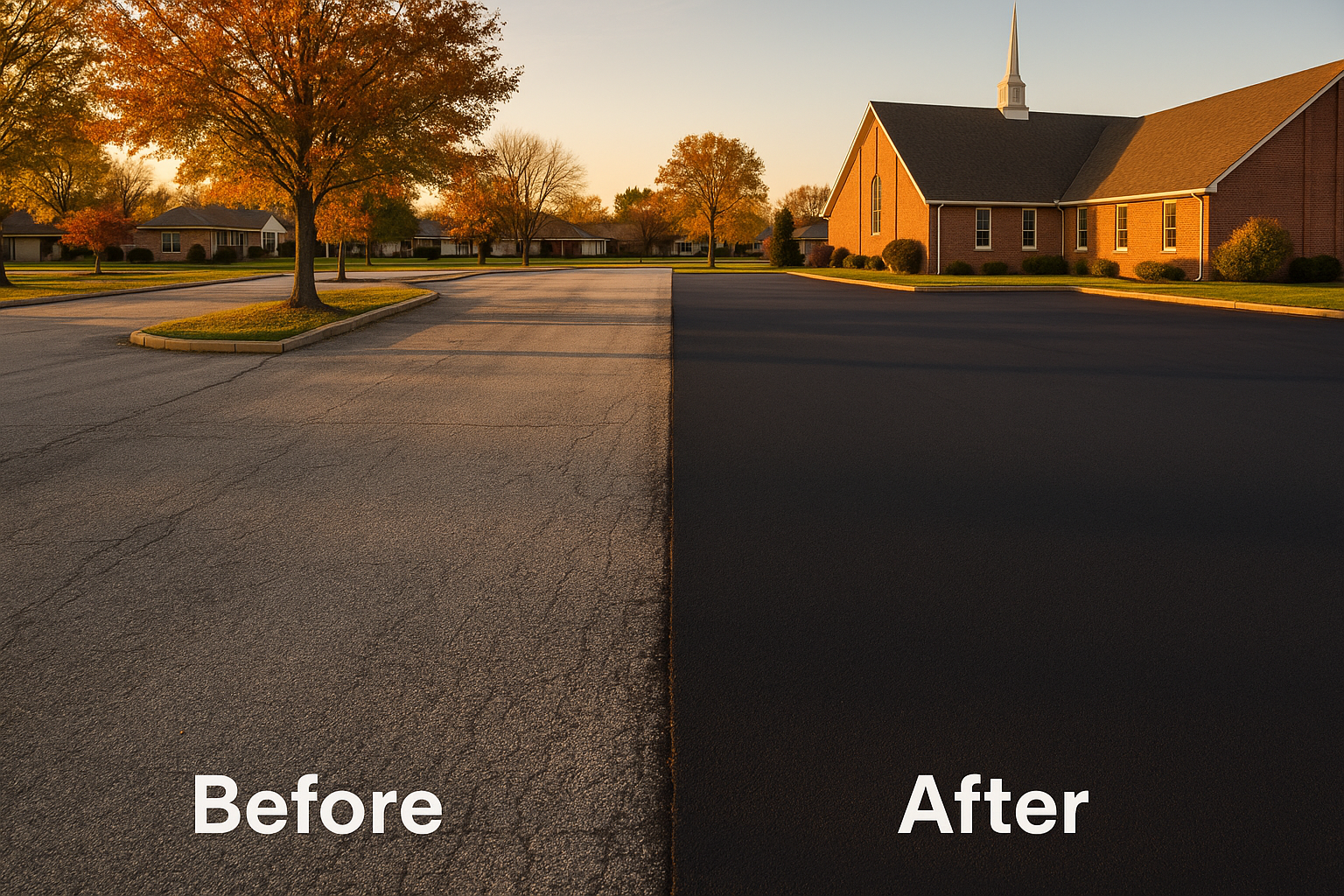
Last fall, a church business manager in Fishers called us, almost panicked. Their annual fall festival was two weeks away, and the parking lot looked… tired. Faded gray asphalt, cracks spreading like spiderwebs, and the yellow lines? You could barely see them. “Didn’t we just sealcoat this a few years ago?” she asked. They had—almost four years ago. In Indiana, that’s about a year too long.
So, how often should you sealcoat a commercial parking lot around here? The quick answer: every 2 to 3 years, after that first seal. But the real answer depends on what your lot goes through. Let’s walk through it, from a local’s perspective.
The 2–3 Year Rule (And Why It’s Not One-Size-Fits-All)
For most Indianapolis parking lots, you want to sealcoat about every two to three years after the initial treatment. That first coat usually goes on 6 to 12 months after the asphalt is laid. After that, it’s a rhythm. But a busy drive-thru lane or a lot with constant delivery trucks might need it every two years—or even sooner. A lightly used church lot where cars sit all week? Maybe three years is fine.
We’ve seen lots along US-31 and 86th Street fade faster than you’d think. Constant sun, turning vehicles, and winter salt all gang up on the surface. If your lot sees a lot of plow action, the edges get scuffed and the sealer wears thin. It’s not just about looks—bare asphalt lets water in, and that’s what causes the real damage.
What Makes Indiana Lots Age Faster
Indiana’s weather is tough on asphalt. Freeze-thaw cycles are the big enemy. Water sneaks into tiny cracks, freezes, expands, and pops the surface apart. Then comes the plow, scraping off the loose bits. De-icing salts make it worse by eating away at the sealer. If you’re near a major road like I-465, your lot might also get more traffic, including heavy vehicles scrubbing tires on tight turns. You’ll see rutting at dumpster pads and oil drips in parking stalls—those spots need extra attention before you seal.
We also notice that lots with poor drainage age faster. If you’ve got standing water after a rain, that’s a red flag. It weakens the sealer and speeds up cracking. Before you schedule a sealcoat, it’s worth fixing any drainage issues first.
How to Know It’s Time—Before Your Lot Screams for Help
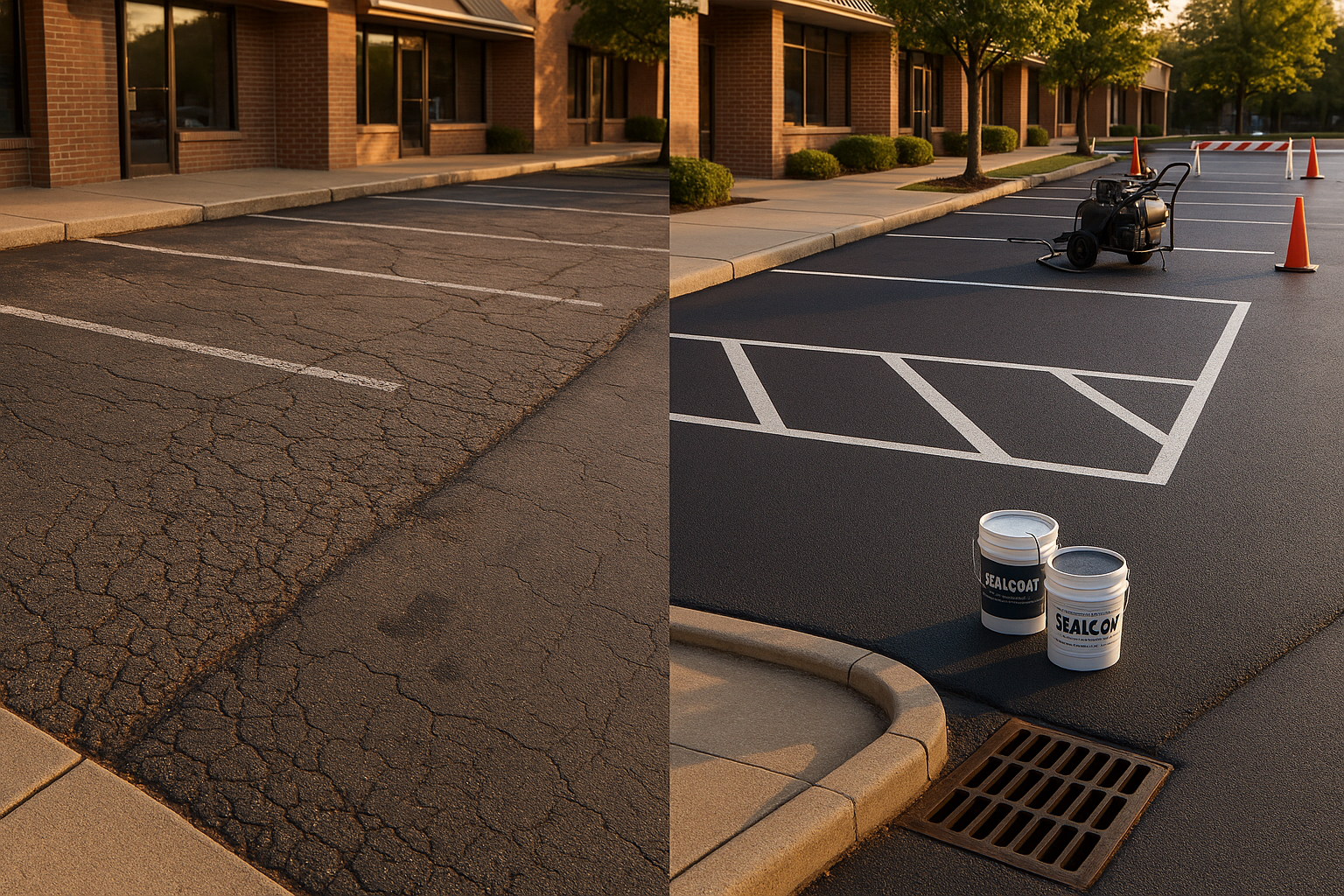
You don’t need to wait until your lot looks like a cracked desert floor. There are early signs. Grab a cup of coffee and walk the lot. Does the asphalt look gray and dried out instead of deep black? Run your shoe over it—if you see lots of little sand-like granules, that’s raveling. The surface is shedding because the binder is shot. Hairline cracks are another clue. And if water doesn’t bead up anymore, the sealer is gone.
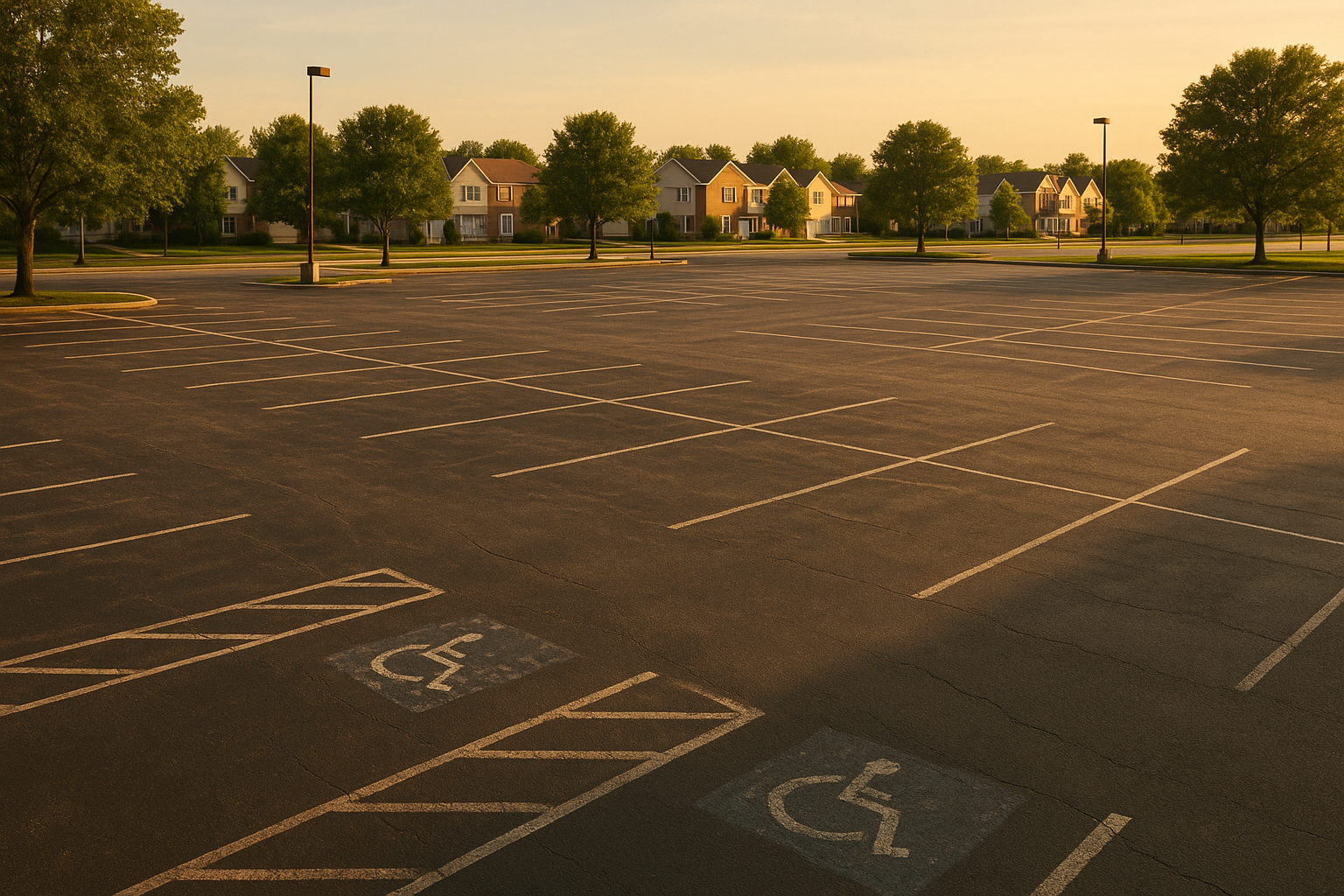
Faded striping is a big one. When the lines get faint, it’s not just ugly—it’s a safety issue. People park crooked, and you might have ADA compliance problems. Speaking of which, after a sealcoat, you have to restripe anyway. So if your lines look sad, that’s a good sign the whole lot needs some love.
Prep Work That Makes Sealcoating Last
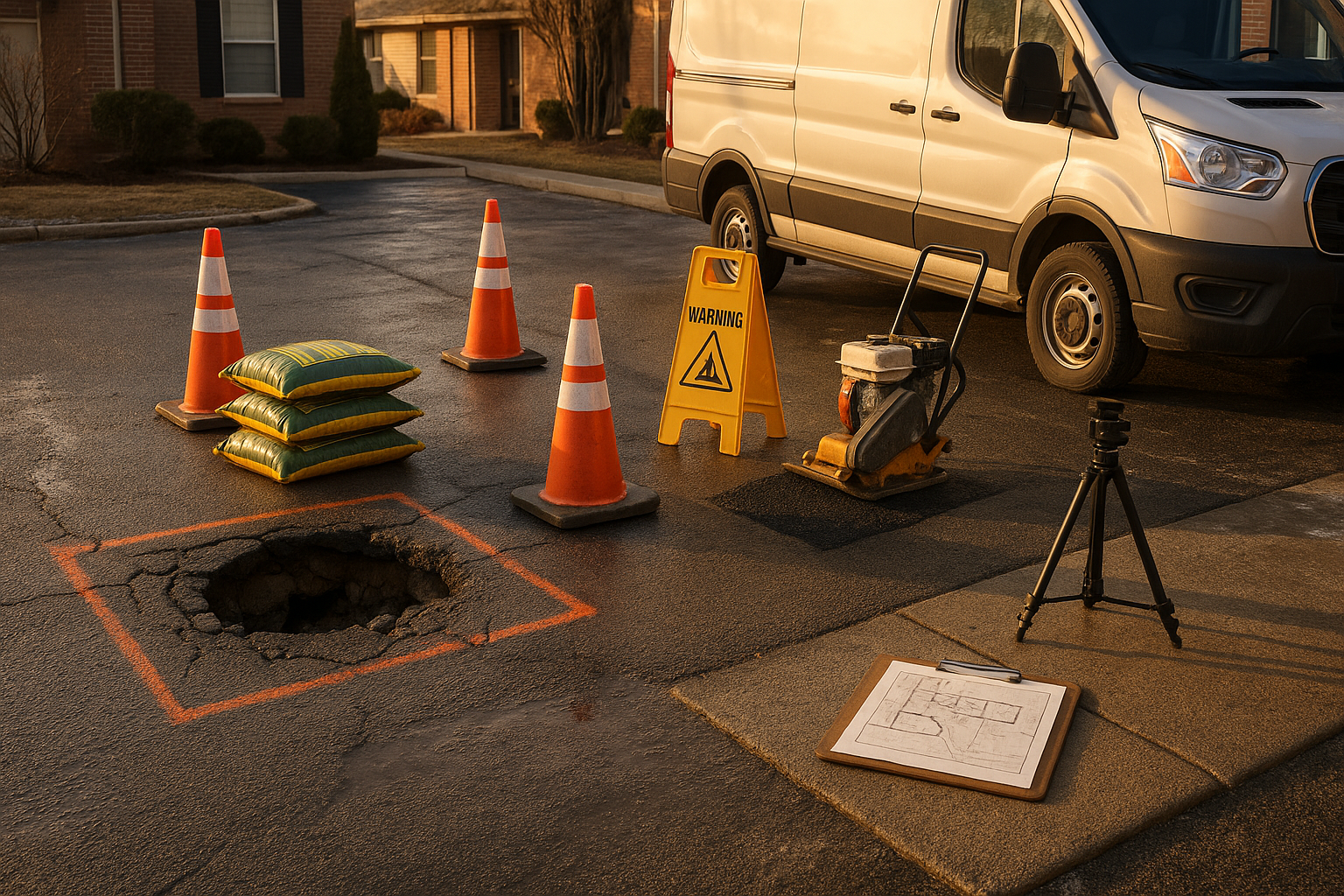
We always say: repair first, seal second. If you skip crack sealing, water gets under the new sealer and you’ll be right back where you started. We use hot or cold crack seal depending on the weather and the crack size. Any failed areas—potholes, alligator cracking—get patched. Oil spots? They need a primer so the sealer sticks. You can’t just seal over them and hope for the best.
We’ve seen lots where the last contractor didn’t do this, and the sealcoat failed in a year. Don’t let that happen. A good maintenance schedule includes annual crack inspections and touch-ups, even in the off-season.
Picking the Right Time of Year (Our Indiana Window)
Indiana’s sealcoating season is basically late spring through early fall. You need consistent temperatures above about 50°F, day and night, so the sealer cures right. Morning starts are best because the surface is cool, and you avoid afternoon pop-up storms. We usually aim for drier weeks, but Indiana weather can be fickle—one day it’s sunny in Carmel, the next it’s pouring in Greenwood.
You might wonder, can you sealcoat in late fall or early spring? Sometimes, if the temps hold, but it’s risky. A sudden cold snap and your sealer won’t cure, and then winter tears it up. Better to wait for a warm, stable stretch.
Planning for Minimal Downtime
Nobody wants to close their lot for long. We get it—businesses in Fishers and Carmel can’t have customers parking on the street for days. So we do phased closures. We’ll seal one section, let it cure, then move to the next. Light traffic can usually return in 24–48 hours, depending on the weather and how many coats we put down. Heavy vehicles might need a bit longer.
We also coordinate with you on a striping schedule. Once the sealer is dry, we restripe, often the next day. Everything from ADA stalls to fire lanes gets fresh, high-contrast paint. If you’re worried about people tracking sealer onto sidewalks or floors, we use barriers and good communication to keep things clean.
Striping and ADA: Don’t Wait to Do It Right
New sealer makes new striping pop. But you want to do it right away, before anyone parks on the bare black surface and gets confused. ADA compliance is a big deal—blue stalls, access aisles, and proper signs. After a sealcoat, it’s the perfect time to update your layout if needed. We often see lots in Noblesville and Westfield that need minor adjustments to keep up with current codes.
Line striping isn’t just about looks; it’s about function. A well-striped lot guides traffic, maximizes spaces, and keeps everyone safe. We typically apply two thin coats of a quality asphalt emulsion sealer on drive lanes—where wear is heaviest—and one to two on parking bays. Then we stripe, using paints that hold up to Indiana sun and snow.
What About Costs and Scope?
The cost of sealcoating varies by square footage, repairs needed, number of coats, and how complicated your layout is. A simple rectangular lot in Avon will cost less than a tight medical office lot in Indianapolis with lots of islands and angles. But a clear, line-item quote from a site walk beats a guess every time. We’ll look at everything—cracks, drainage, traffic patterns—and give you a number that covers prep, sealer, and striping.
Phasing also affects cost, but it’s worth it to keep your doors open. For a church, we might seal midweek when there’s no service. For a retail strip, we work around deliveries. The goal is zero surprises.
If you’re ready to stop guessing how often to sealcoat your parking lot, let’s get a date on the calendar. We’ll walk the site, check the asphalt, and put together a simple plan with clear steps. No jargon, no pressure. Just a local team that knows Indiana lots. Click here to schedule a quick assessment and we’ll get back to you fast. While you’re at it, check out our other maintenance tips to keep your property in top shape all year.
Ready for a free lot assessment?
We walk the lot, photograph the problems, and hand you a written plan — no pressure, no obligation.