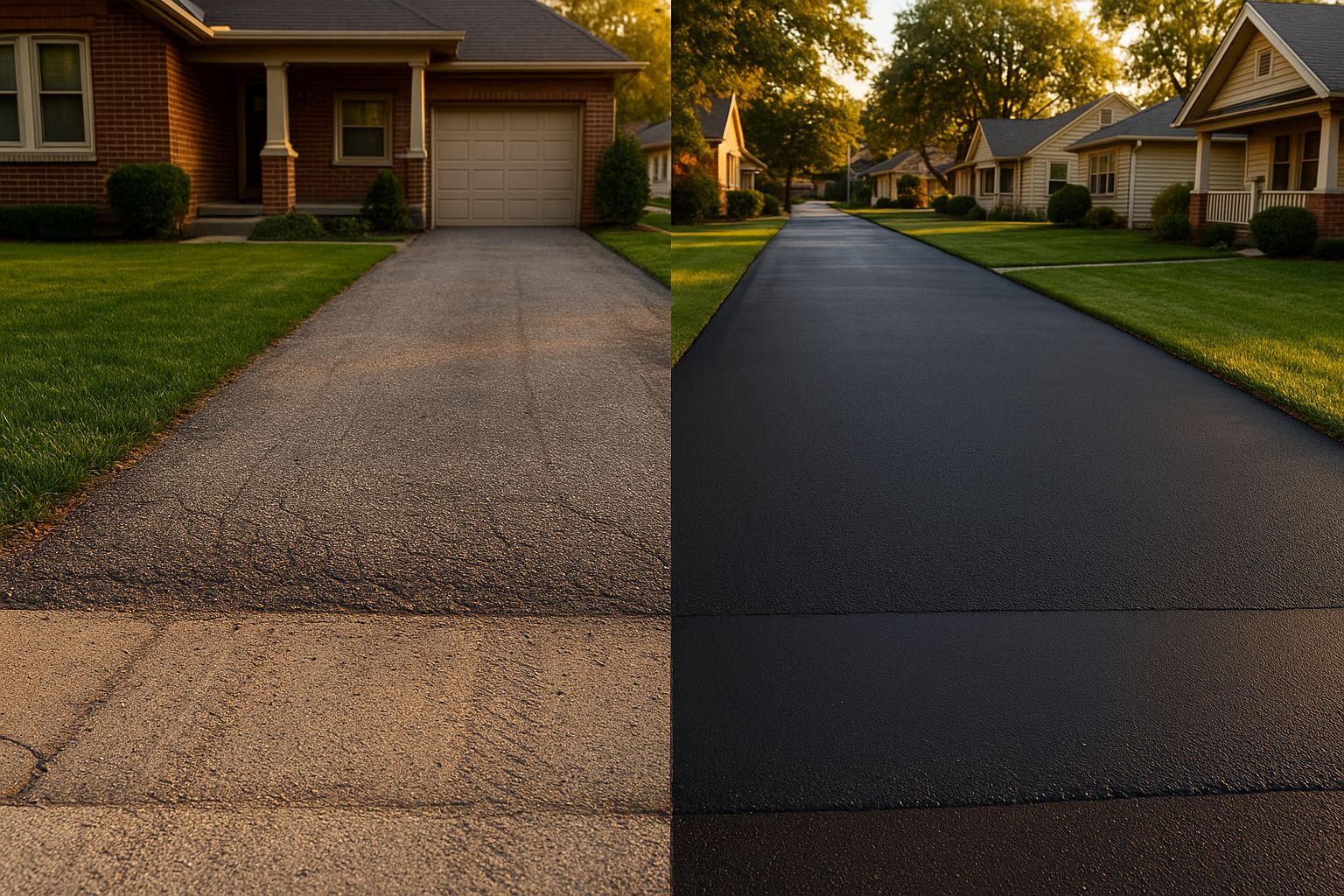
I got a call last spring from a guy in Fishers. His driveway looked like the surface of the moon—gray, sandy, and starting to crumble at the edges. He’d lived there six years and never sealed it once. "I thought you just did it when it looked bad," he said. That’s like waiting until your car’s engine seizes to change the oil. By then, you’re not maintaining; you’re paying for repairs. The question I hear most from Indy homeowners isn’t "should I seal?" It’s "how often?" So let’s talk about that, because the answer depends on a few things that are pretty specific to living here in central Indiana.
The Short Answer: Every 2–3 Years (Mostly)
For a typical residential asphalt driveway in Indianapolis, plan to sealcoat every two to three years once the driveway has fully cured. That’s the sweet spot for keeping oxidation and moisture out without overdoing it. So if you're wondering how often to seal driveway in Indiana, the simple answer is every two to three years. Sealing every year is wasteful—the old sealer hasn’t worn off, and you’re just building up a film that can track or peel. If you wait five years or more, you’re letting the sun and salt do real damage to the asphalt itself, not just the surface.
If your driveway is brand new, don’t seal it right away. Asphalt needs to cure. Usually, that’s six to twelve months, depending on the mix and how much sun it gets. A quick test: splash some water on it. If the water beads up, it’s still releasing oils and not ready. If it soaks in and darkens, you’re good to go. (We have a whole post on that: when to seal a new asphalt driveway if you want the details.)
Why Indiana Weather Is Rough on Asphalt
Freeze-thaw cycles are the big one. Water gets into tiny surface pores, freezes, expands, and snaps the asphalt binder. Do that a hundred times over a winter, and you’ve got hairline cracks and raveling. Road salt doesn’t help—it dries out the asphalt and accelerates oxidation. And if your driveway apron sits right where the plow dumps salty slush, you’ll see that area fade faster than anywhere else. That’s why we tell folks in places like Carmel and Westfield, where commuter traffic and salted arterials are common, to keep an eye on the first ten feet of the drive. It often needs a touch-up before the rest.
Then there’s the summer sun. UV rays oxidize the asphalt binder, turning it from black to gray and making it brittle. South- and west-facing drives in neighborhoods like Meridian-Kessler get hit hardest. Tree shade can help, but leaf debris and tannin stains from oaks and maples—common in Zionsville and Brownsburg—need to be cleaned off before sealing or they’ll create weak spots.
Signs Your Driveway Is Begging for a Sealcoat
You don’t have to guess. Here’s what tells you it’s time to reseal:
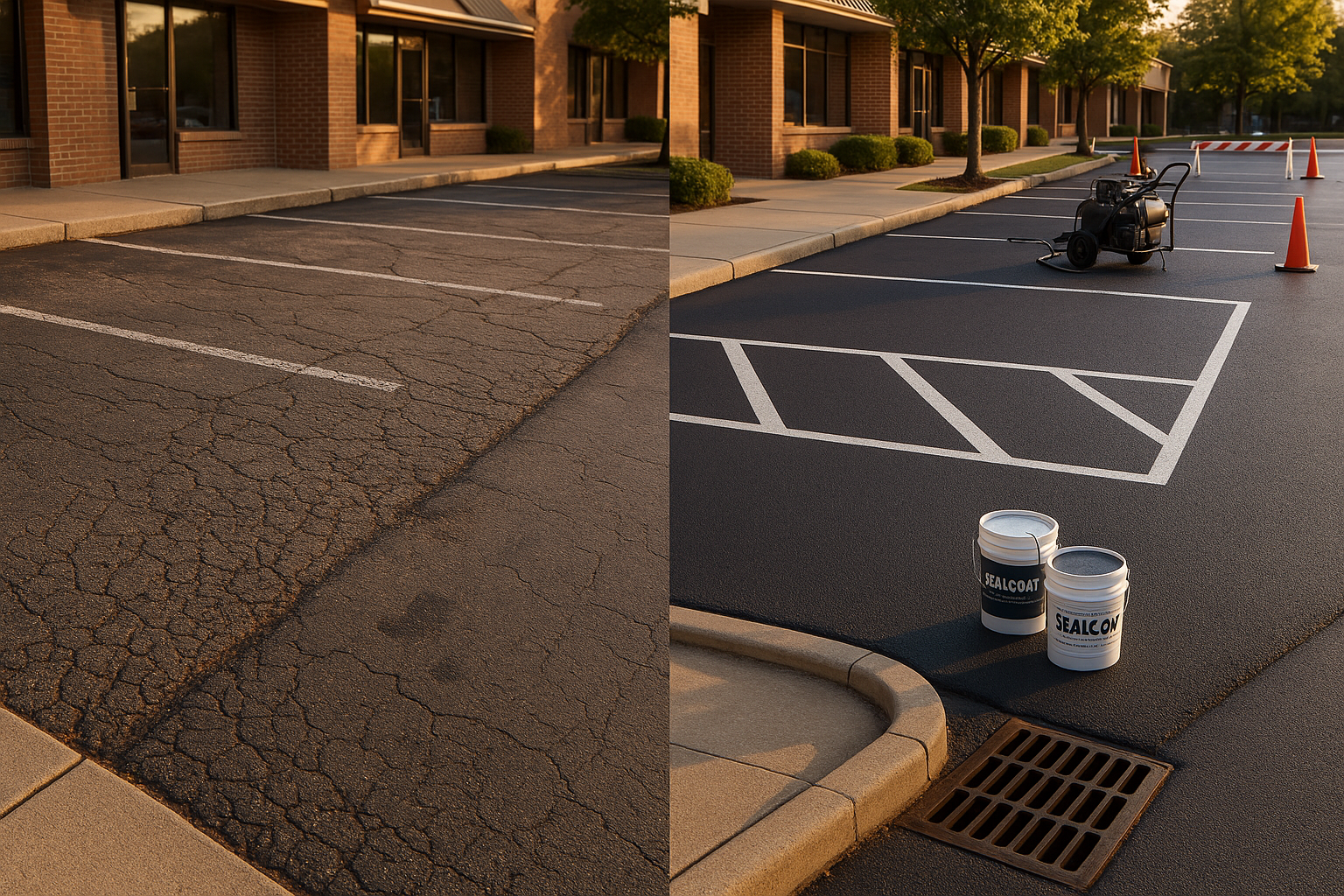
- The surface has gone from black to a dull gray. That’s oxidation.
- Fine sand and small stones are coming loose—you see them on the garage floor or in the street.
- Water doesn’t bead up when it rains; it just sits there and soaks in.
- You notice hairline cracks forming, especially near the edges or where tires track.
If you see any of those, don’t wait. The longer you let it go, the more you’ll spend on crack filling or even patching later. A sealcoat is cheap compared to asphalt replacement. So if you're seeing these signs, it's not really about how often to seal driveway anymore—it's about doing it now.
When to Schedule: The Central Indiana Sealcoating Window
Around here, late spring through early fall is your best bet. You want pavement temperatures between 50 and 90 degrees Fahrenheit and a dry forecast for at least 24 hours after application. Spring rains can be a problem, and fall brings morning dew that slows curing. In Indianapolis, the sweet spot is usually May through September. A lot of folks ask about June and July—heat is fine as long as it’s not above 90 on the pavement surface, but early morning application is best to avoid tracking. Sealcoating in October can work if we get a warm stretch, but nights are long and dewy, and cure times stretch out.
Prep Work: The Part Nobody Sees but You’ll Notice
You can have the best sealer in the world, but if the driveway isn’t clean and the cracks aren’t filled, it won’t last. Prep is honestly 60% of the job. We start with a thorough sweep and blow-off, then treat oil stains with a primer so they don’t bleed through. Vegetation along the edges gets edged back—grass and weeds hold moisture against the asphalt. Then we fill any cracks wider than a hairline with a rubberized crack filler; skipping that step means water gets under the sealcoat and freezes, popping the new surface right off. (For more on crack repair specifically, check out asphalt driveway repair Indianapolis.)
For the sealer itself, we use a premium polymer-modified asphalt emulsion—sand loaded for traction. It goes on in thin, even coats. Thick coats are actually worse: they skin over and trap solvents, leading to peeling and tracking. We do brush cut-ins at the edges and joints, then spray or squeegee the field. And no, it’s not like the big-box stuff that smells like tar and fades in six months. Polymer-modified emulsions stand up to Indiana winters better.
What Sealcoating Won’t Fix (And When to Call for Repairs)
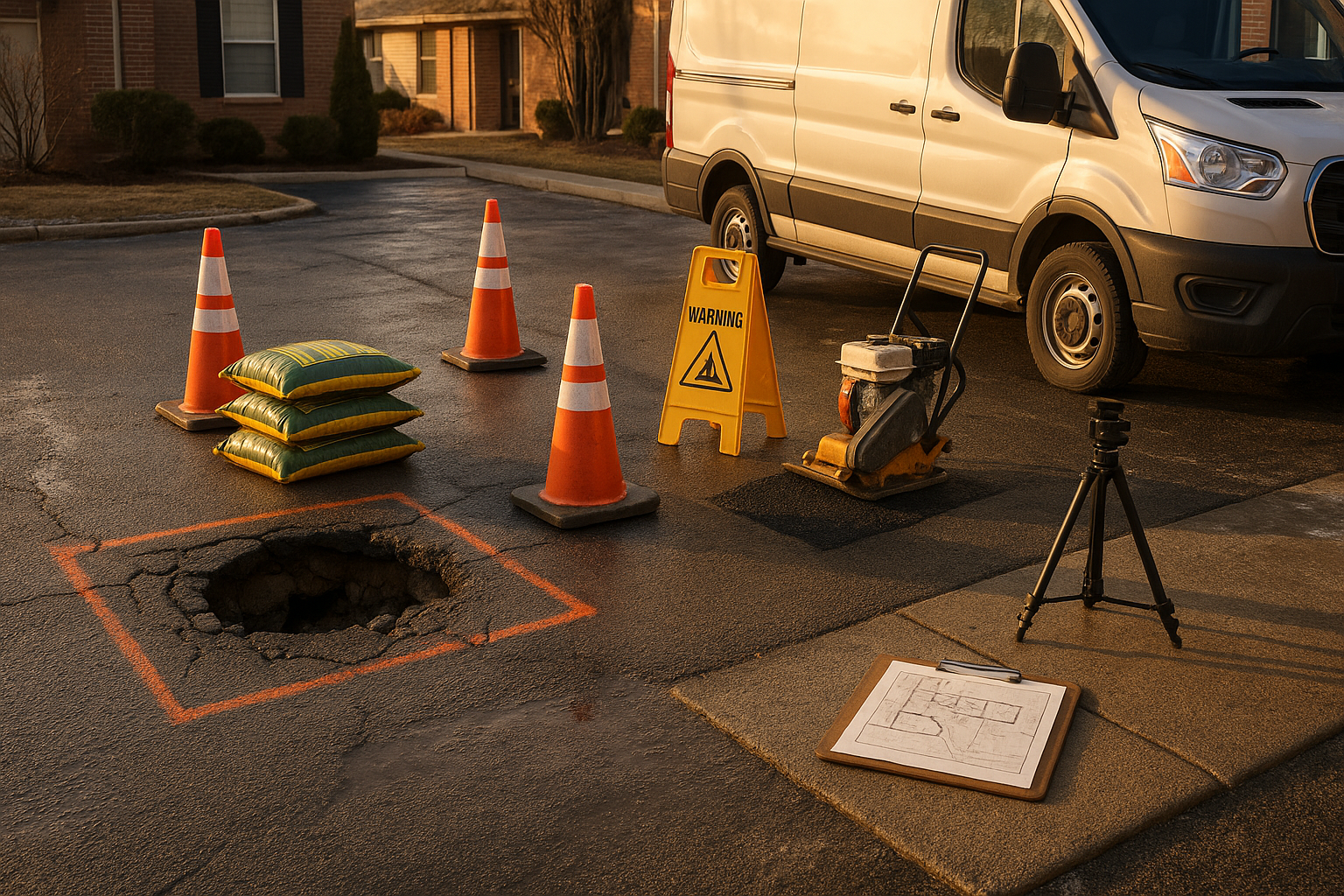
Sealcoating is a protective coating, not structural repair. It won’t fill potholes, fix alligator cracking, or level a sunken area. If your driveway has those problems, throwing sealer on top is like painting over rotten wood. You need repairs first. In central Indiana with clay-heavy soil, poor drainage can cause base failure, which leads to sinking and cracking that no amount of sealer will stop. If you’re seeing that, a proper assessment is the only way to know if you need patching, mudjacking, or a full rebuild. We’ve got a post on pavement preservation vs rehabilitation that explains the difference.
Ready to Get a Real Plan for Your Driveway?
Every driveway is a little different. The age, sun exposure, traffic (three kids, two SUVs, a boat trailer?), and drainage all play into how often to seal driveway. If you want a straight answer for your specific driveway, the best move is to have someone walk it with you. We’ll check for cracks, oil spots, drainage issues, and tell you whether it’s time to seal or if you can wait another year. No pressure, just a clear scope and a line-item quote. You can request that right here, and we’ll schedule a quick visit. After all, the best time to seal is before you see damage—not after.
Ready for a free lot assessment?
We walk the lot, photograph the problems, and hand you a written plan — no pressure, no obligation.