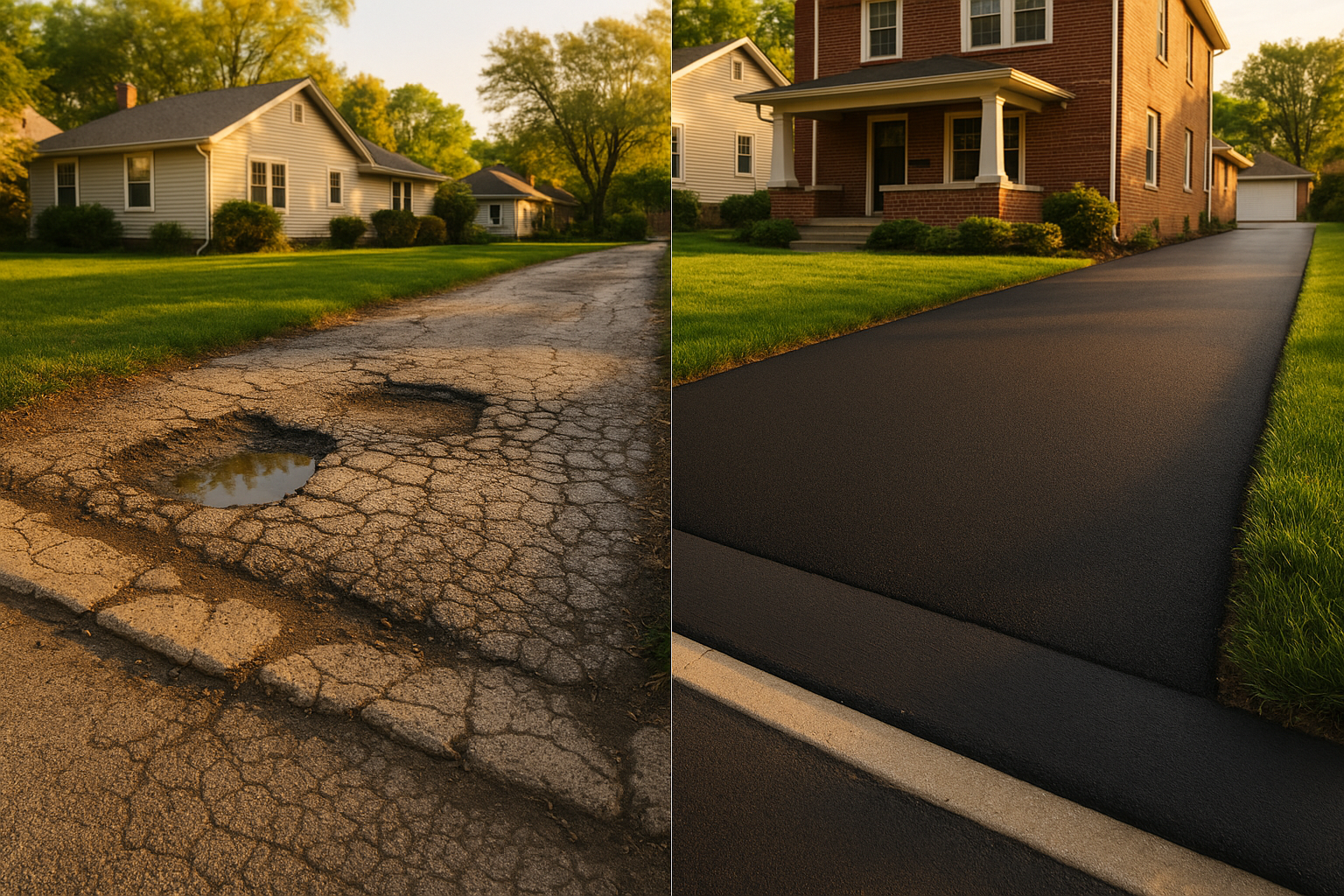
Last March, my buddy Dave in Broad Ripple backed out of his garage and felt that familiar thunk—the left rear tire dropped into a pothole the size of a welcome mat. He'd been ignoring that crack for two winters, and now it had turned into a crater. Sound familiar? If you live anywhere around Indianapolis, you've probably got a similar story. We deal with this every day at PavementPros, and the question is always the same: can you just patch it, or do I need a whole new driveway?
Why Indianapolis Driveways Fail
Central Indiana is rough on asphalt. The freeze-thaw cycle from November through March does most of the damage. Water seeps into tiny cracks, freezes, expands, and pushes the asphalt apart. Then it thaws, leaving a wider gap. Repeat that a few dozen times and you get potholes, alligator cracking, and crumbling edges.
Our clay-heavy soil makes things worse. It shifts with moisture changes, so the base under your driveway moves. Add heavy pickups, delivery vans, and the occasional snowplow blade scraping the surface, and even a well-built driveway will start to show its age after ten or fifteen years. Older neighborhoods like Broad Ripple and Meridian-Kessler often have thinner legacy asphalt, so they fail faster.
Patch, Resurface, or Replace? How to Tell
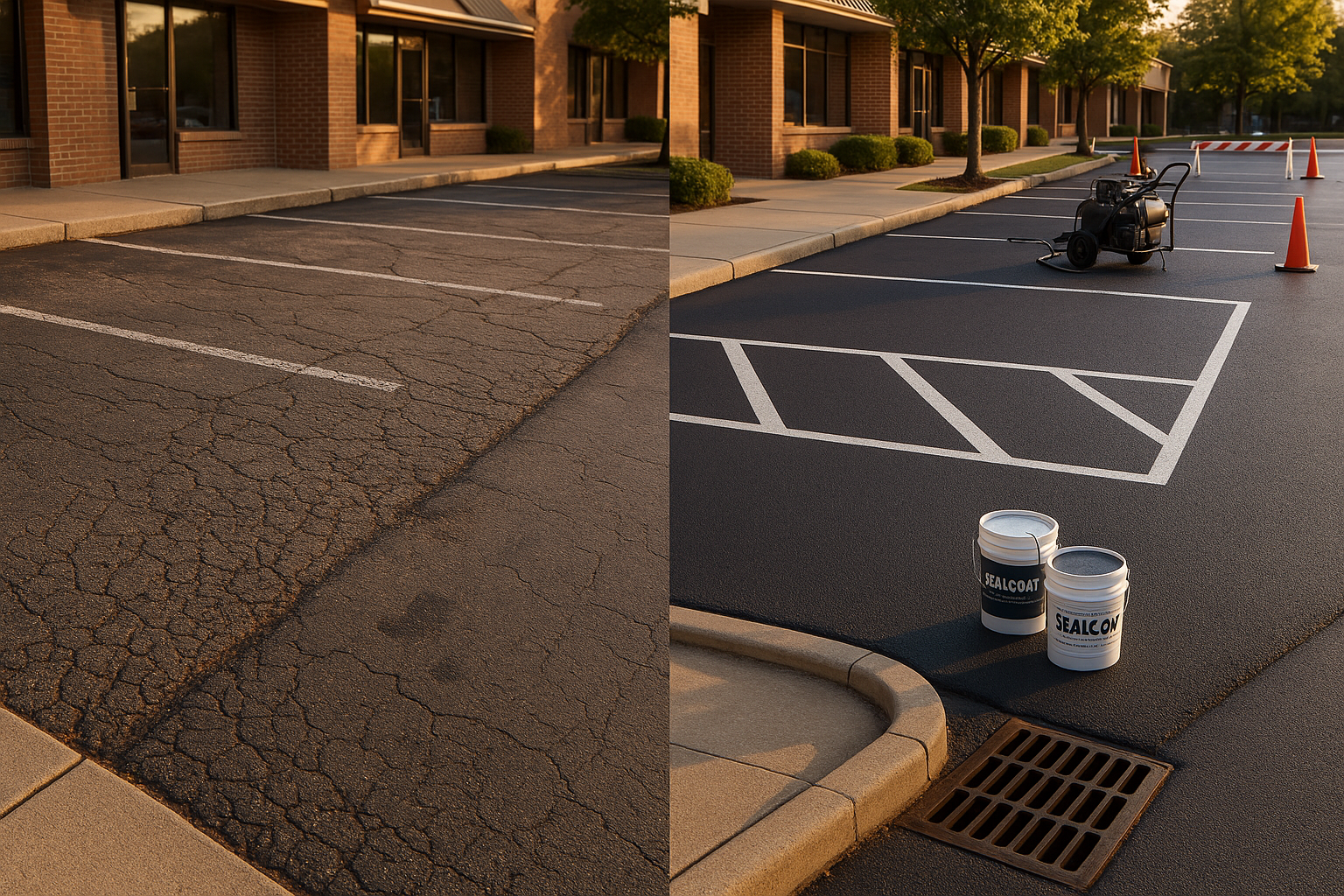
Here's the simple way I explain it to homeowners. A patch fixes a small, isolated problem—one pothole, a few cracks, or a short section of edge damage. If the base under the damaged spot is still solid, a proper patch will last for years. Resurfacing (or mill and overlay) is when the top layer of asphalt is tired and cracked all over, but the base is fine. We grind off the top inch or two and lay fresh hot mix. It's like putting a new skin on the driveway without digging it all up.
Full replacement is for when the base itself is failing. Big alligator cracking across the whole surface, deep ruts, or standing water that doesn't drain away—those are signs the foundation is shot. Yes, it costs more, but patching over a failed base is like putting a Band-Aid on a broken leg. It'll look okay for a month, then pop right out again.
Repair Methods: Cold Patch vs Hot Mix vs Infrared
If you've ever bought a bag of cold patch from the hardware store, you know it's a quick fix. Scoop it in, tamp it down, and pray. It works as a stopgap—maybe through one winter—but it won't bond with the surrounding asphalt. That's why we see so many DIY patches get kicked out by spring. For permanent repair, we use two main methods.
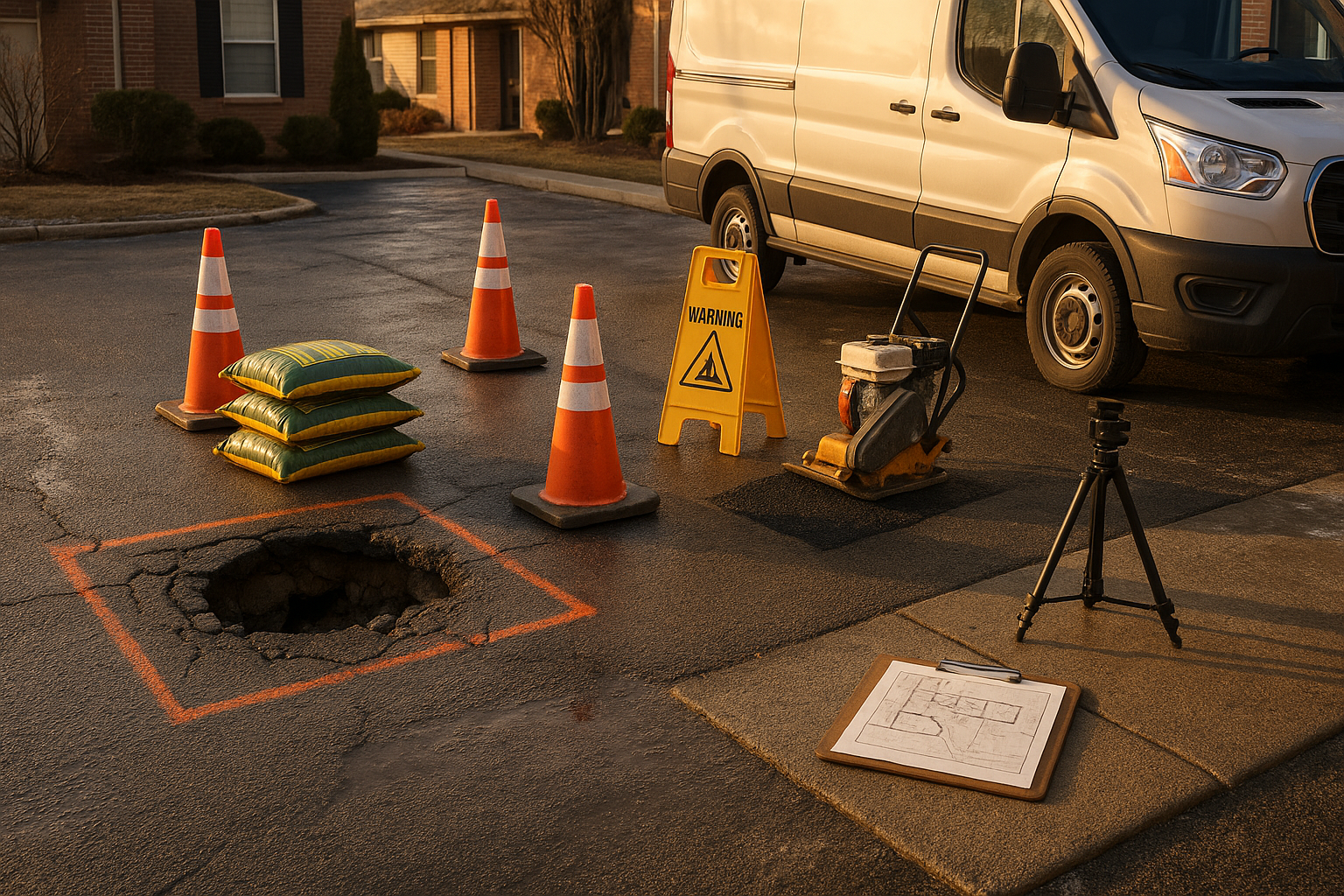
Hot mix sawcut and replace is the gold standard. We cut out the damaged area in a clean square or rectangle, dig down to solid base, add new stone if needed, then lay hot mix asphalt from a local plant. It gets compacted with a plate compactor, so it's dense and water-resistant. The seams are the weak point, but if we do it right, they're tight and sealed.
Infrared asphalt repair is a cool option for surface-level failures and shallow patches. We heat the existing asphalt until it's soft, rake in new material, and blend it together. There's no sawcut seam, so the repaired area melts into the rest of the driveway. It works great for alligator cracking that hasn't gone too deep. However, if the base is bad, infrared alone won't fix it. That's why we always check what's underneath before recommending a method. For more on why some patches fail, check out our post on asphalt patch failure.
How PavementPros Works (and What It Costs)
When you call us, we don't just show up and slap some asphalt down. We start with an on-site evaluation. We look at the damage, check for moisture or base movement, and figure out the right fix. Then we give you a written quote that spells out exactly what we'll do, what materials we'll use, and how long it'll take. No surprises.
Cost depends on size, depth, access, and whether we need to fix drainage or rebuild the base. A single small pothole repair might be a few hundred dollars. A full excavation and replacement on a large driveway could run into five figures. We'll tell you the straight numbers and let you decide. We also explain your options for temporary winter fixes if the asphalt plants are closed—though those are just to keep things safe until spring when we can do a permanent job. For more on planning ahead, see why fall is a smart time to bid spring paving.
Preventing the Next Pothole
Once your driveway is patched or resurfaced, the goal is to keep it that way. The number one thing is water control. If water pools anywhere, the repair will fail early. We can add a slight crown or adjust the grade to move water off the driveway. Second, get cracks sealed before they grow. A cold-weather crack sealing window in early winter can stop water from getting in during the worst months. Third, go easy on the salt and deicers—they eat away at the asphalt binder. For more on that, read how salt and deicer damage pavement. Once the repair has cured (usually a few weeks), you can sealcoat to protect the surface. But don't sealcoat too soon—the patch needs to breathe. For typical costs, see driveway sealcoating cost in Indianapolis.
If your driveway is looking more like a minefield, don't wait for the next tire blowout. Give us a call or request a quick on-site look at our quote page. We'll tell you straight what you need—patch, resurface, or full replacement—and give you a written plan with real numbers. No pushy sales, just a fix that lasts.
Ready for a free lot assessment?
We walk the lot, photograph the problems, and hand you a written plan — no pressure, no obligation.