Last June, my brother-in-law called me in a panic. He manages a small retail plaza in Castleton, and his parking lot looked like a cracked eggshell. 'The sealcoating guy I called last week says he's booked through August,' he said. 'And the price? Nearly double what I paid three years ago.' He'd meant to get quotes back in April, but one thing led to another. Now he was stuck shelling out for a rush job or living with a crumbling lot all summer.
That story plays out all over Indianapolis – in Fishers, Carmel, Greenwood, Zionsville, you name it. And it's why the real parking lot bidding season isn't in spring or early summer. It starts right now, in the fall.
If you manage a parking lot for a school, church, retail plaza, HOA, or car dealership, fall is when you should start planning for next year's asphalt work. Here's why.
What Does Parking Lot Bidding Season Actually Mean Around Indianapolis?
When we talk about parking lot bidding season, we're not talking about the moment you sign a contract. We're talking about the window when you gather quotes, compare scopes, and lock in a contractor – so you're ready to go when the weather cooperates. In central Indiana, that means late winter through early spring (January–April) is when the bidding heat happens. But the smart folks start even earlier, in the fall, to get ahead of the rush.
Why fall? Because by September, you've seen the damage from last winter's plowing and de-icing. You know which cracks got worse, where the potholes popped up, and whether the striping faded. You can walk your lot now and make a list. Then you can feed that list to a few Indianapolis sealcoating contractors and get real numbers back before the holiday chaos sets in.
The weather rules everything here. Sealcoating needs warm, dry conditions – overnight lows above 50°F and no rain for a decent stretch. Around Indy, that window usually opens in May and closes by late September or early October. If you wait until June to start bidding, the best contractors in Hamilton County and Hendricks County are already booked solid through August. You'll end up paying a premium for a slot, or you'll push your project to the shoulder season when rain delays sealcoating become a daily headache.
Why Fall Is the Smart Time to Kick Off Your Parking Lot Bidding Season
Think of fall as your planning season. You're not doing the work yet – you're doing the homework. And that homework pays off in three big ways.
First, you get better prices. When a contractor has a full schedule, they can be picky. They might add a 'rush' surcharge or only offer night work at a higher rate. But if you come to them in November with a clear scope and a flexible timeline for the following May or June, they'll sharpen their pencil. They want that job on the books. For you, that means apples-to-apples asphalt sealcoating bids you can actually compare.
Second, you get better scheduling. Schools and churches all want work done in June, July, and August. Retail plazas want it done before the holiday shopping rush. If you're a property manager in Indianapolis with a multi-tenant building, you can phase the project in halves or thirds, keeping one entrance open while the other gets sealed. Early planning means you can pick a time when your lot is naturally less busy – like a school's fall break for striping or a dealership's slow weekday for patching.
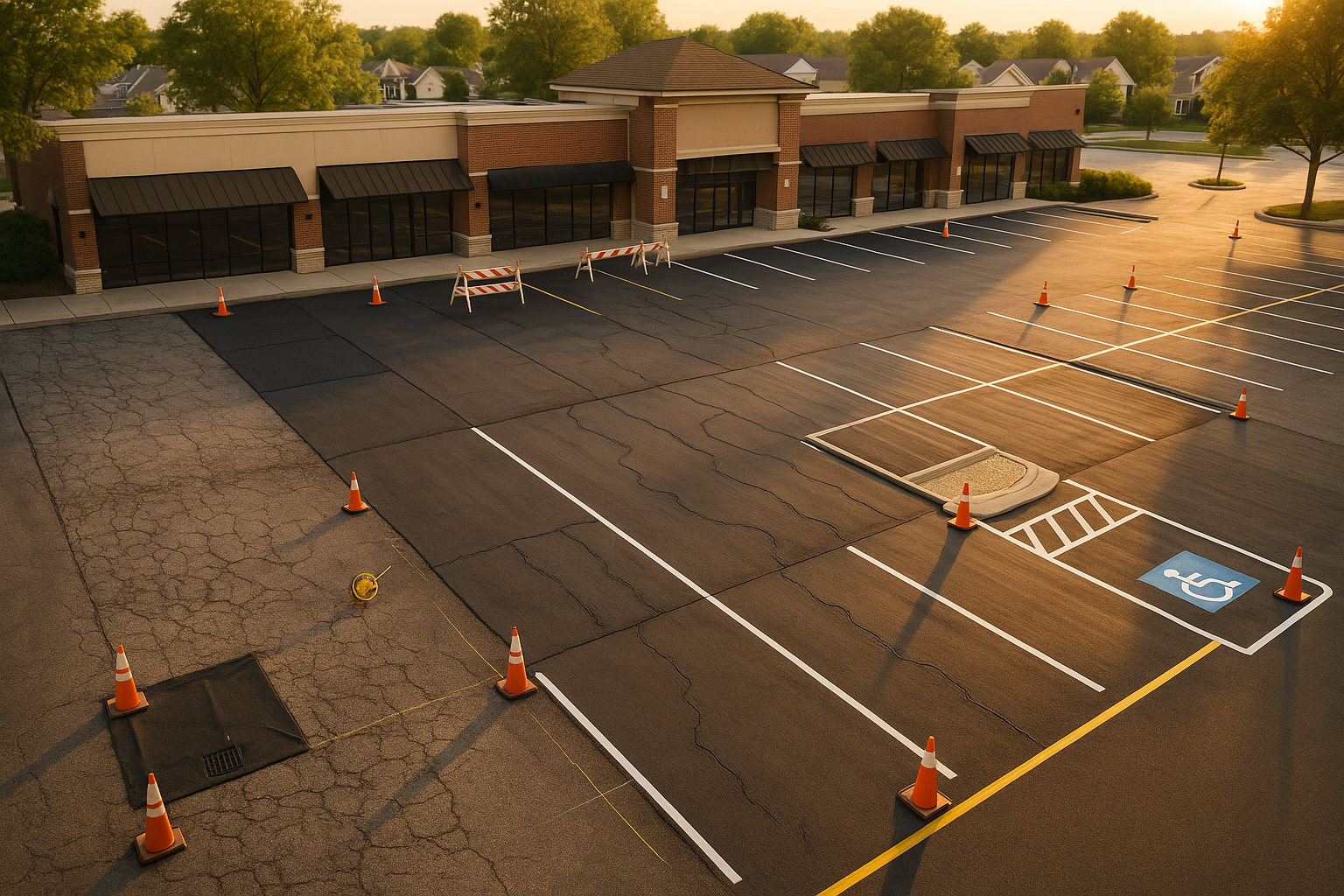
Third, you avoid the 'patch and pray' approach. When you rush in spring, you might skip crack sealing or just do a quick skin patch because the contractor is rushed. But with a proper asphalt maintenance plan, you can sequence the work: patch after winter damage, crack seal in early spring (when temps allow), then sealcoat and stripe in late spring or early summer. That way, each step builds on the last, and your lot stays solid for years. Check out our fall parking lot checklist for a good starting point.
What Actually Goes Into a Parking Lot Bid
So what are you actually bidding on? A good parking lot maintenance Indianapolis plan covers more than just sealcoating. Here's the breakdown, task by task.
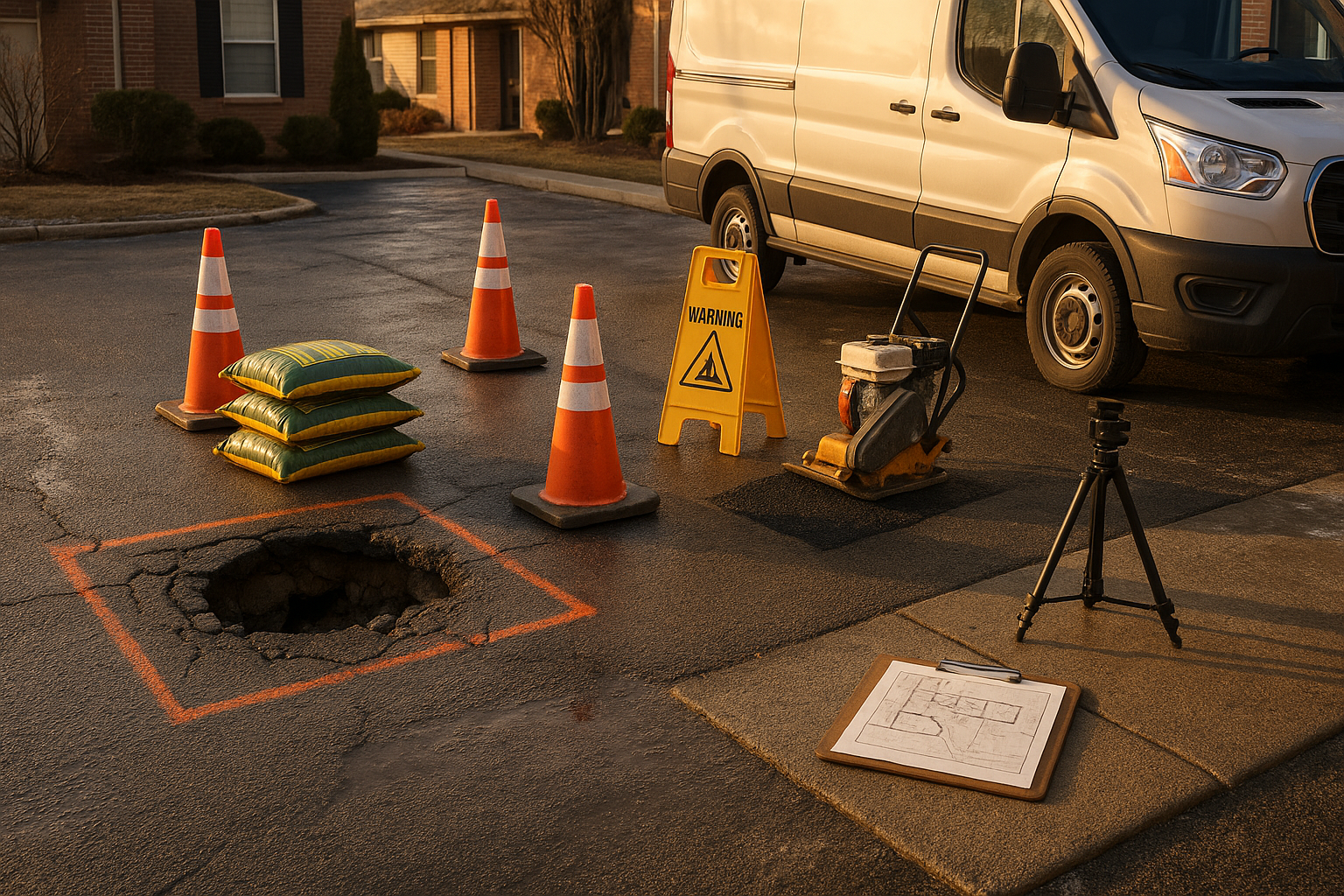
Patching and repair. Freeze–thaw cycles Indiana are brutal. Water gets into small cracks, freezes, expands, and pops out chunks of asphalt. By fall, you'll see potholes and alligator cracking. A contractor should price patching in square yards, after cutting out the bad stuff and putting down fresh hot mix. We've all seen patches that pop out because the base was bad – here's why that happens in asphalt patching and repair.
Crack sealing. This is the unsung hero of asphalt maintenance. In Indiana, the best time for crack sealing is early spring or late fall when the cracks are open and the temps are moderate. If you bid in the fall, you can schedule crack sealing for early next spring, then sealcoat a few weeks later. Make sure the bid includes routing and cleaning the cracks, then using hot-pour rubberized sealant – not the cheap cold-pour stuff that fails in a year. We go deeper on cold weather crack sealing in another post.
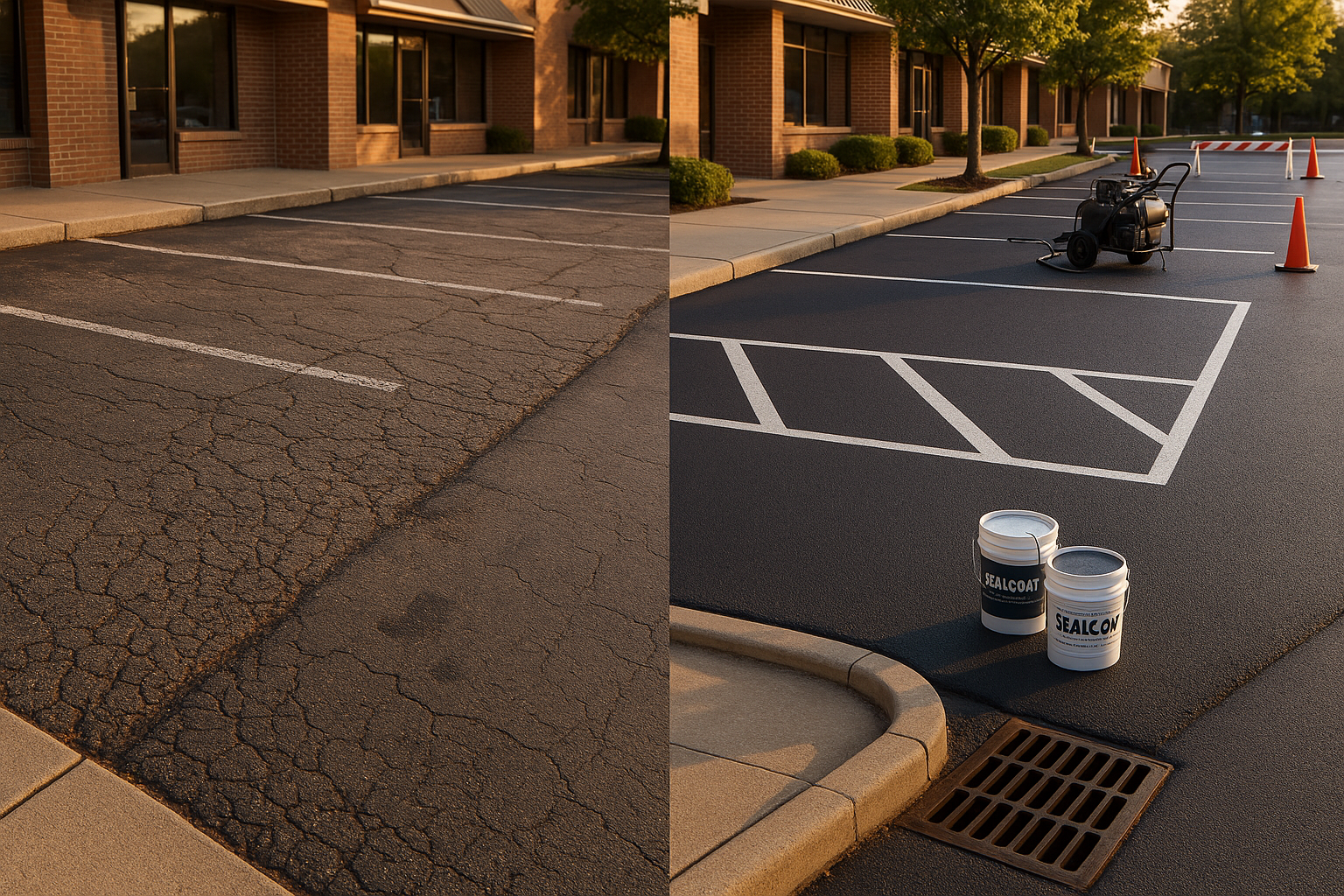
Sealcoating. This is the big one. You want a two-coat application of asphalt emulsion sealer with the right sand load and polymer additives for our climate. The contractor should specify coverage rates per gallon per square foot, edge cut-ins, and surface cleaning. And they should verify cure before reopening. Sealcoat curing time is usually 24–48 hours, but on a hot sunny day it might be less; on a cool, humid morning it could be more. Plan for that.
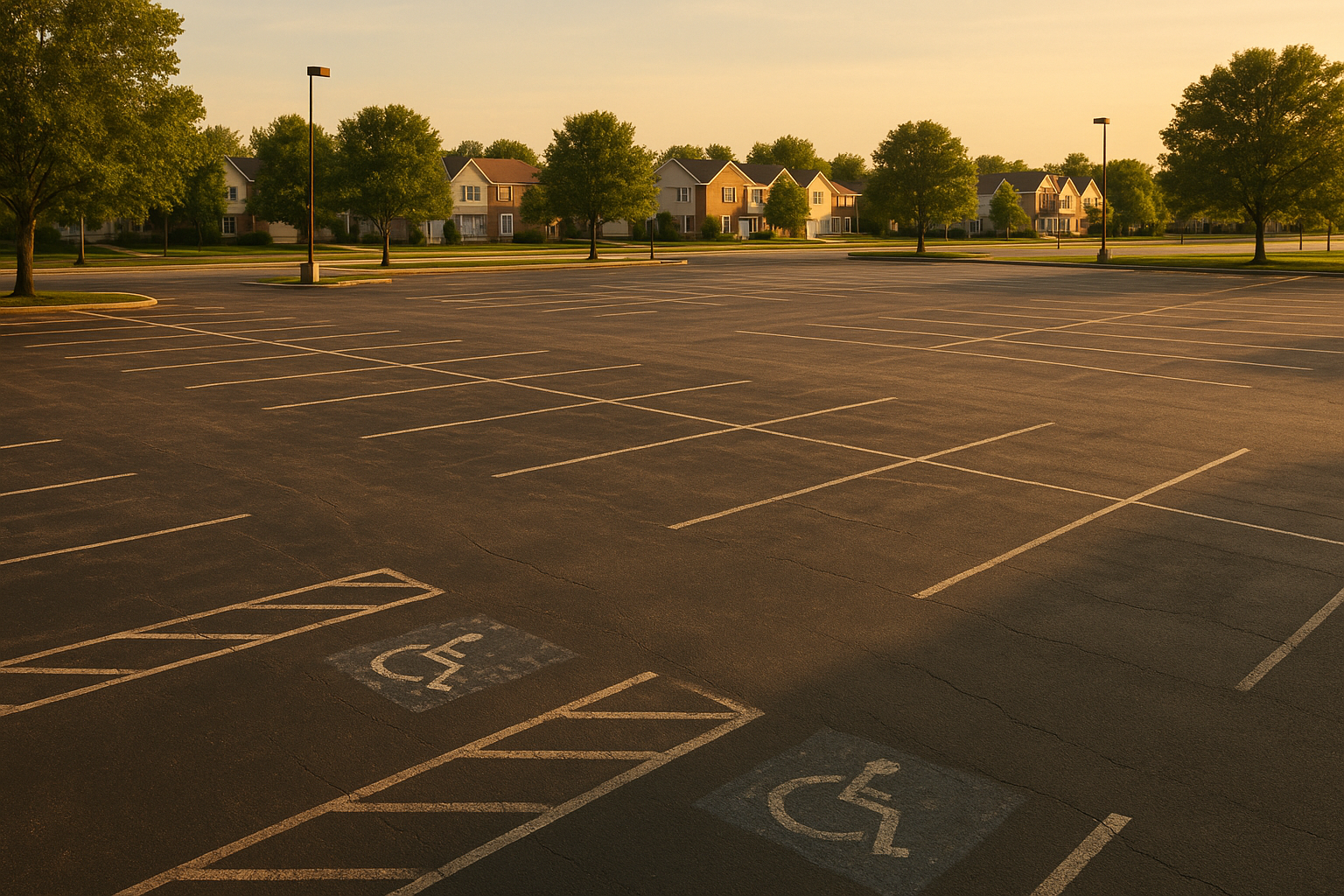
Striping. Once the sealer is down, you need commercial line striping done right. That means laying out the lot to meet ADA striping compliance, marking stalls, arrows, crosswalks, and any special zones like fire lanes or dealership display areas. Faded or incorrect striping is a liability, and the last thing you want is a van accessible stall that's 7 feet wide instead of 8. For car dealerships, the layout matters enormously – see our take on car dealership lot maintenance and striping.
All of these tasks should be in one scope of work for sealcoating, not spread across three different bids. That way, you're comparing the same thing.
How to Write a Scope That Gets You Honest Numbers
The biggest complaint I hear from property managers is 'bids aren't comparable.' One contractor quotes $0.18 per square foot, another quotes $0.25, and you don't know why. Usually it's because they're not pricing the same work.
Here's what to include in your scope of work for sealcoating so you can compare apples to apples:
- Measured square footage of the lot (not including islands or planters).
- Linear feet of cracks that need sealing (or an estimate based on condition).
- Square yards of patching with an allowance for extra if they find more damage.
- Number of parking stalls and type (standard, ADA, compact).
- Traffic control and phasing plan: will the lot be closed entirely or half at a time? Will you need night work? Include barricades, cones, and signage.
- Materials spec: type of sealer (asphalt emulsion), number of coats, sand load, additives.
- Cleanup: power washing before application, protection of storm drains, and site housekeeping.
- Warranty terms: how long do they stand behind the sealcoat and striping?
If you write all this down, any good contractor can give you a line-by-line bid. And you can see exactly why one quote is higher – maybe they included more patching or a premium for after-hours work. That's a whole lot better than guessing.
Weather, Curing, and Keeping Tenants Happy
Once you've picked a contractor and scheduled the work, the real dance begins. Weather will mess with your schedule. It's just a fact in the Midwest. So build in rain days. If you plan for a three-day sealcoat job in July, assume you might lose a day to a pop-up thunderstorm. Contractors who've been doing parking lot maintenance in Indianapolis for a while will already pad their schedules.
Curing time is another thing to plan around. After the final coat goes down, you need to keep vehicles off for at least 24 hours, ideally 48. That means your tenants or customers need to know. Send a notice a week ahead, and again the day before. If you manage a retail plaza parking lot, consider doing half the lot one weekend and the other half the next. If it's a school campus parking lots project, schedule it during summer break or a long weekend. School campuses have their own quirks – school campus parking lot maintenance covers that.
And don't forget ADA entrances – you can't just close the only accessible route for two days. That's where traffic control and phasing really matter. A good contractor will phase the work so you always have one accessible entrance, even if it means moving cones around every few hours.
Why PavementPros Does It a Little Differently
We're a small, local outfit. We live in the same freeze–thaw cycles you do. We've seen what salt and de-icer do to a parking lot in Carmel and Westfield. And we've fixed enough patches that popped out because the base was bad to know when to recommend full-depth repair instead of a skin patch.
When you reach out to us in the fall, we don't just email you a price. We come out and walk the lot with you. We measure, we poke at cracks, we look at drainage. Then we write a proposal that's line-by-line, with unit prices for everything – sealcoat per square foot, crack fill per linear foot, patching per square yard, striping per stall. No lump sums that hide what you're paying for. And we'll give you schedule options: maybe early June or late August, maybe phased over two weekends.
Planning ahead also helps with budget season facilities. If your HOA or church board approves the budget in December, you'll already have numbers in hand. That's a lot easier than scrambling in April with a blank checkbook.
So if you're looking at your lot right now and seeing the damage from last winter, don't wait. Kick off your parking lot bidding season this fall. Request a site visit, get a detailed scope, and lock in a spot for next spring. Your future self – and your tenants' tires – will thank you.
Ready for a free lot assessment?
We walk the lot, photograph the problems, and hand you a written plan — no pressure, no obligation.