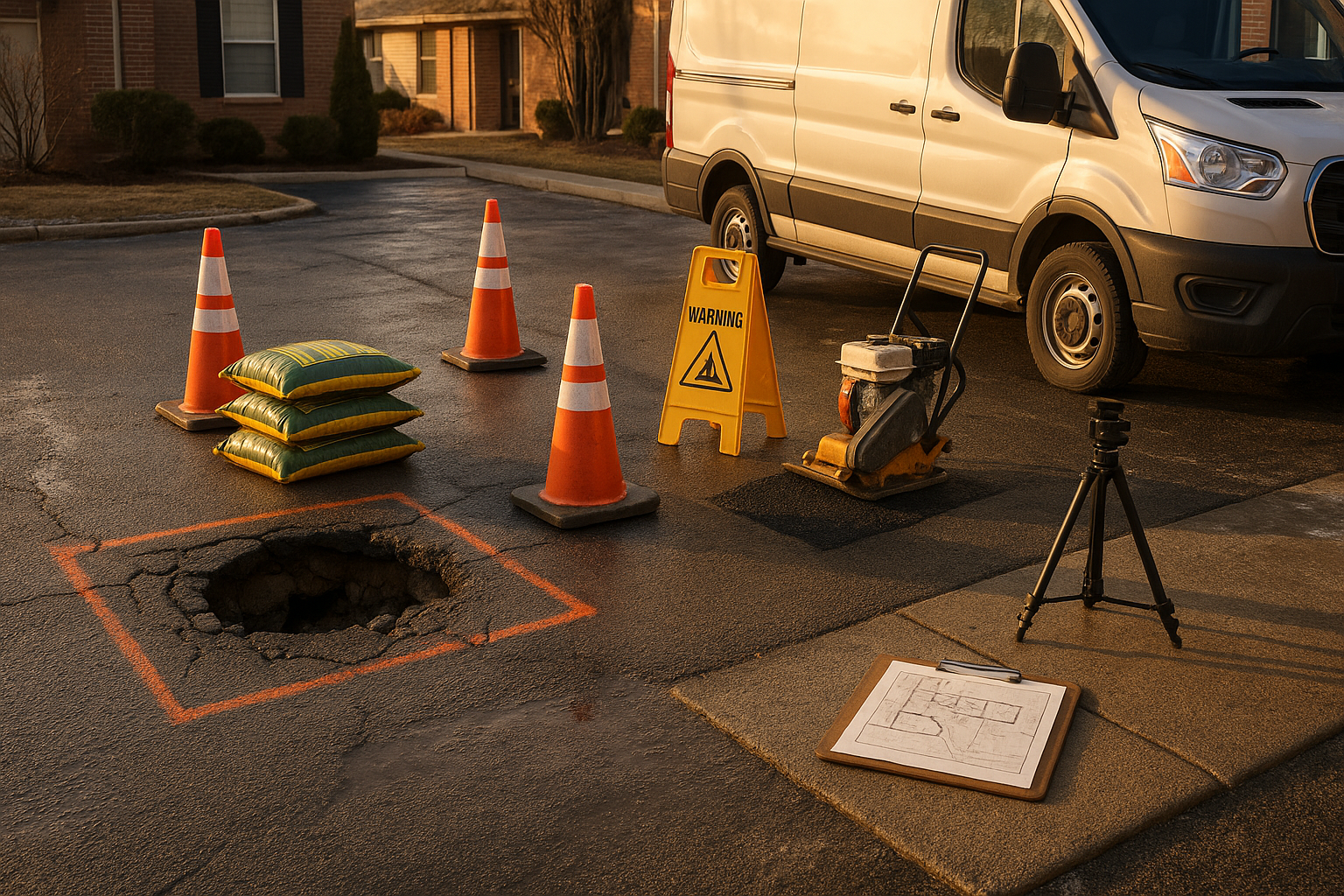
Last March, a property manager in Broad Ripple called us about a pothole that had been patched three times in two years. Each time, the patch looked fine for a month. Then the edges started crumbling, water pooled in the same low spot, and by April the pothole was back – bigger and meaner. He was frustrated. He'd spent money with two different contractors and still had angry tenants and a tripping hazard. That's when we started talking about why asphalt patch failure happens so often around here.
Turns out, a patch isn't just a blob of black stuff in a hole. It's a small engineering project. And when it fails, there's always a reason – usually more than one.
The Usual Suspects: Why Patches Give Up
A patch can fail for a pile of reasons, but they mostly come down to four things: bad base, bad edges, bad compaction, and bad water management.
Bad base. If the subgrade under the patch is still soft or wet, the patch is sitting on a sponge. Cars drive over it, the base gives, and the patch sinks or cracks. We see this a lot with clay-heavy soils in Indianapolis and surrounding counties. Clay holds water. So if you don't excavate down to solid material and put in compacted stone, the patch is doomed from the start.
Bad edges. This is huge. A lot of guys just slam cold patch into a ragged hole and call it done. The edges are feathered – thin and weak. Plow blades catch them in winter, water works into the seam, and the patch starts raveling at the seams. A proper repair uses saw-cut full-depth patch – clean vertical sides, square or rectangular. Then you put tack coat on vertical faces so the new asphalt bonds to the old. Skip that tack, and the joint opens up like a zipper. I've seen patches fail in weeks just from that mistake alone.
Bad compaction. If you dump in six inches of hot mix and just tamp it once, you get a lumpy patch that settles. Under-compaction causes poor compaction in patches, which leads to settlement, raveling, and pothole patch failure. The right way is to place hot mix in thin lifts – maybe 2 to 3 inches each – and compact each lift with a plate tamper or roller. That's how you get density.
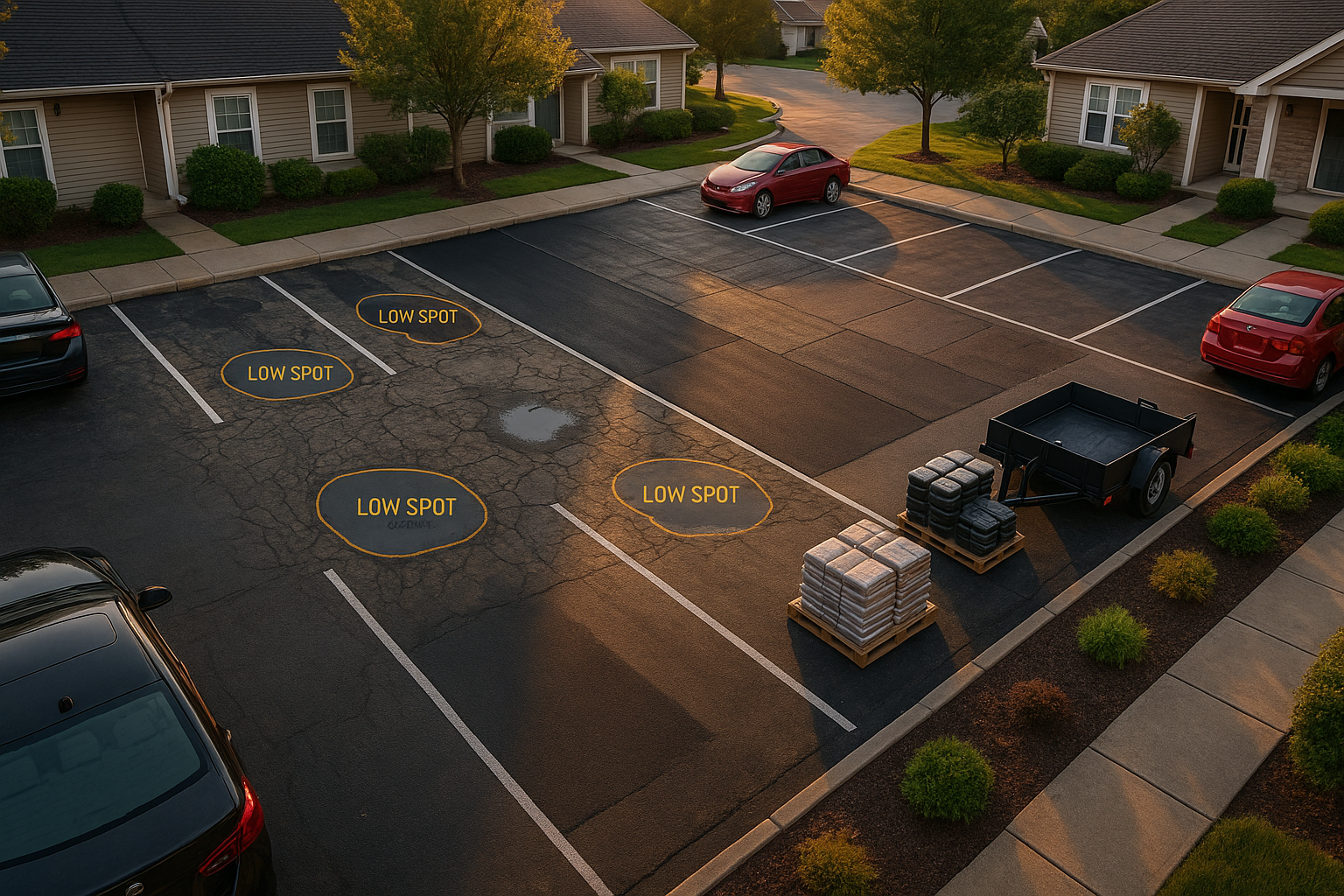
Bad water management. Water is the enemy. If the patch holds water or the surrounding lot drains toward it, the base gets soaked, freezes, expands, and blows the patch apart. That's why drainage and standing water are the first things we check. Sometimes the fix isn't just the patch – it's regrading or adding a catch basin or fixing a downspout that dumps water right onto the pavement.
Local Stressors: Why Indy Is Hard on Asphalt
Indianapolis weather is a patch's worst nightmare. We get those aggressive freeze-thaw cycles Indiana is known for. Water gets into a tiny crack, freezes overnight, expands, and pries the asphalt apart. Then it thaws and does it again. Over a winter, that cycle can turn a small crack into a crater.
Deicing salts and sand don't help either. They wear down the surface and break down the asphalt binder. And snowplows – especially the ones with metal shoes set low – scrape the edges of patches and rip them up. If you've ever seen patches with edge cracking around patches after a snowy winter, that's usually the cause. That's why we recommend checking your snow removal contract to make sure plow blades have proper shoes and aren't set too low. A good contractor will know how to protect fresh patches.
And let's talk about hot mix availability seasonal. In deep winter, most asphalt plants around Indy shut down or limit production. That means you can't always get hot mix for a permanent repair. That's when a cold patch is the right call – just to keep the lot safe and get you through winter. But cold patch is temporary. It's not a permanent fix. If you put cold patch in a busy parking lot pothole and expect it to last all year, you'll be disappointed. Cold patch vs hot mix isn't even a fair fight. Hot mix, placed correctly, will outlast cold patch by a mile.
Temporary vs Permanent: When to Do What
So what should you do when a pothole shows up in February? Don't ignore it. That's how you get liability issues and bigger holes. Put in a clean, compacted cold patch to keep people safe. Then plan for a permanent repair once the plants open up and temps are right – usually April through October around here.
A permanent repair for a parking lot or driveway asphalt patch repair in Indianapolis means: saw-cut beyond the damaged area, excavate to solid base, address any drainage issues, apply tack coat to all vertical faces, place hot mix in compacted lifts, and seal the joints with asphalt joint mastic or crack sealer. Infrared asphalt repair is another option for blending edges – it heats the existing asphalt so the new and old fuse together without a cold seam. That works great for smaller areas and gives a clean, seamless look. But it still requires a sound base. If the base is mush, infrared won't save you.
Why Patches Fail in the Same Spot Over and Over
Ever see a patch fail, get patched again, fail again? That's usually a sign that the root cause wasn't fixed. Maybe it's a utility cut restoration that wasn't done right – the trench settled or the backfill wasn't compacted. Maybe it's a subgrade and base failure from a spring under the lot. Maybe it's a drainage issue – a low spot that collects water no matter how many times you fill it. Or maybe the original patch was too thin for the traffic loading and rutting it gets.
If you've got repeated failures, don't keep throwing patches at it. Call for a real diagnosis. We'll dig a core, look at the base, check the grades, and figure out what's actually wrong. Sometimes the answer is a deeper excavation and a full-depth patch. Sometimes it's a larger mill-and-replace job. But you won't know until someone looks.
Planning Around Weather and Traffic
Timing matters. We can't do a hot-mix patch in the rain or when it's freezing. That's just asking for asphalt patch failure. So we watch the forecast and schedule accordingly. For busy retail lots in Castleton or Greenwood, we phase the work – do a section at a time, keep traffic flowing, and stripe it back when we're done. For residential driveways in Meridian-Kessler or Irvington, we coordinate so you can still get in and out of your garage.
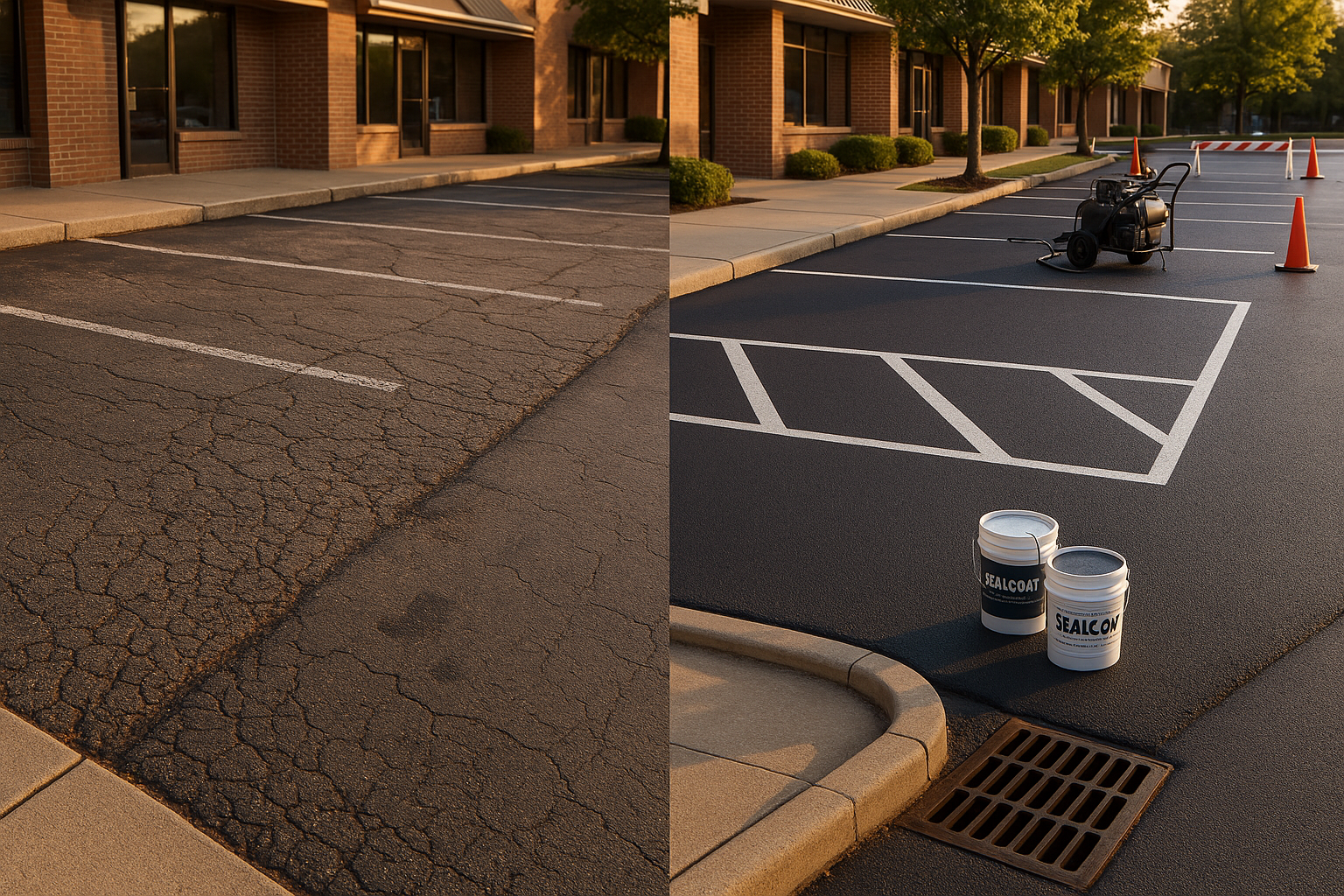
And yeah, the patch color won't match perfectly at first. Fresh asphalt is black, old asphalt is gray. Over a few months, it weathers and blends in. If you want a more uniform look, sealcoating the whole lot after the patch cures is the way to go. That also protects the patch and the surrounding asphalt from further water and UV damage.
What a Long-Lasting Patch Looks Like (From the PavementPros Playbook)
Our process isn't magic. It's just doing the basics right.
- Site walk and root cause. We walk the lot with you, mark the bad spots, and talk about what we see – drainage, base issues, traffic patterns.
- Saw-cut and excavate. We cut back to solid asphalt, square off the edges, and dig out anything soft or wet. If the base is bad, we replace it with compacted stone.
- Tack and place. We spray tack on the vertical faces, then place hot mix in lifts – compacting each one. We use an asphalt mix design for Midwest conditions – designed for our temperature swings and clay soils.
- Seal the seams. After the patch is compacted and flush, we apply asphalt joint mastic or crack sealer around the edges. That keeps water out and stops raveling at seams.
- Clean up and communicate. We leave the site clean, tell you when you can drive on it (usually a few hours for light traffic, longer for heavy), and send photos and a report.
Post-Repair Care: Make It Last
After a patch is done, don't just forget it. Keep heavy turning traffic off it for a day or two if you can. Avoid dropping snowplow blades right on the edges – ask your plow guy to lift blades over patched areas or use shoes. And if you see small cracks forming around the patch, seal them early with crack filler. That's cheap insurance. And if your whole lot is aging and patched up, consider sealcoating or even a mill-and-replace on the worst sections. Sometimes a patch is a band-aid on a bigger problem.
Ready to Stop the Patch Cycle?
If you're tired of filling the same pothole every year in Fishers, Zionsville, Noblesville, or anywhere around Indy, let's figure out what's actually going on. We'll come out, do a no-pressure assessment, and give you a line-item quote for a repair that sticks. No jargon, no upselling – just a straight answer and a plan. Reach out and schedule a site visit. Your lot (and your tenants) will thank you.
Ready for a free lot assessment?
We walk the lot, photograph the problems, and hand you a written plan — no pressure, no obligation.