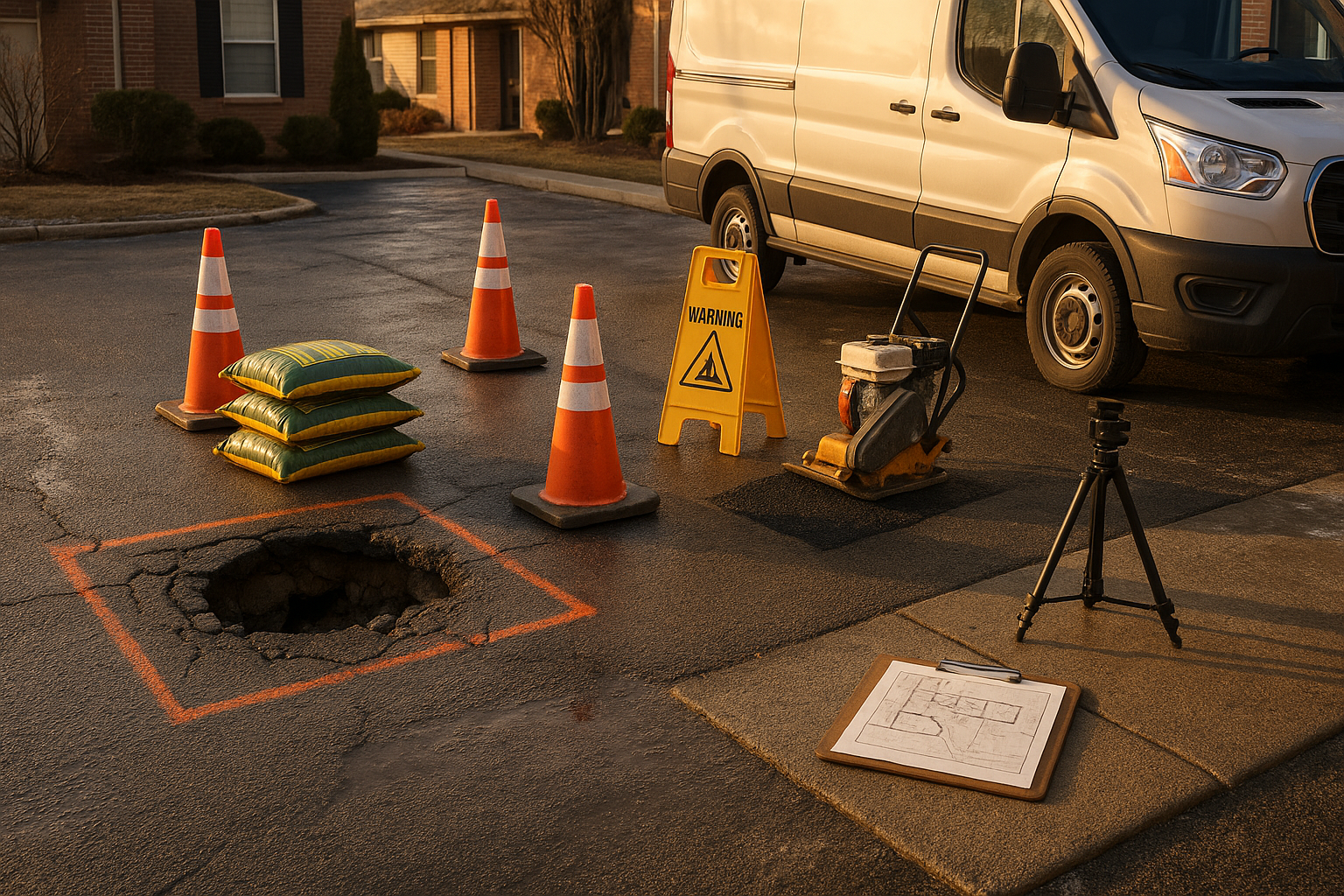
Last October, a property manager in Zionsville noticed hairline cracks spreading across the back corner of his lot. He told me he’d “get to them in spring.” By January those cracks had widened, water got in, froze, thawed, and by March he had a pothole the size of a trash can lid. That fix cost him nearly three times what crack sealing would have. Fall parking lot maintenance isn’t just about curb appeal—it’s about locking in small problems before Indiana’s freeze-thaw cycle turns them into expensive ones.
Why Fall Is the Right Time for Parking Lot Work in Indianapolis
In central Indiana, fall gives us a sweet spot. Daytime temps from mid-September through late October usually sit in the 60s and 70s, with lower humidity than summer. That’s perfect for crack sealant, sealcoating, and paint to cure properly. Once we hit the first hard freeze—typically late October to early November around the I-465 corridor—you lose that window. Materials applied in too-cold temps won’t bond right and you’ll end up redoing work in spring. For parking lot maintenance in Indianapolis, fall is when the physics work in your favor.
That gray, chalky look on your asphalt isn’t just age—it’s oxidation eating away at the surface. The summer sun breaks down the binder, making the lot brittle and prone to raveling (those little stones popping loose). We’ve got a whole breakdown on asphalt oxidation and why it fades. Catching oxidation in fall, before winter moisture gets in, can buy you an extra season or two.
As a general contractor focused on parking lots, we handle everything from asphalt to concrete to drainage, so you don’t have to juggle five different vendors. That coordination makes fall scheduling a lot easier.
Start with a Clean Sweep: Leaves, Drains, and Catch Basins
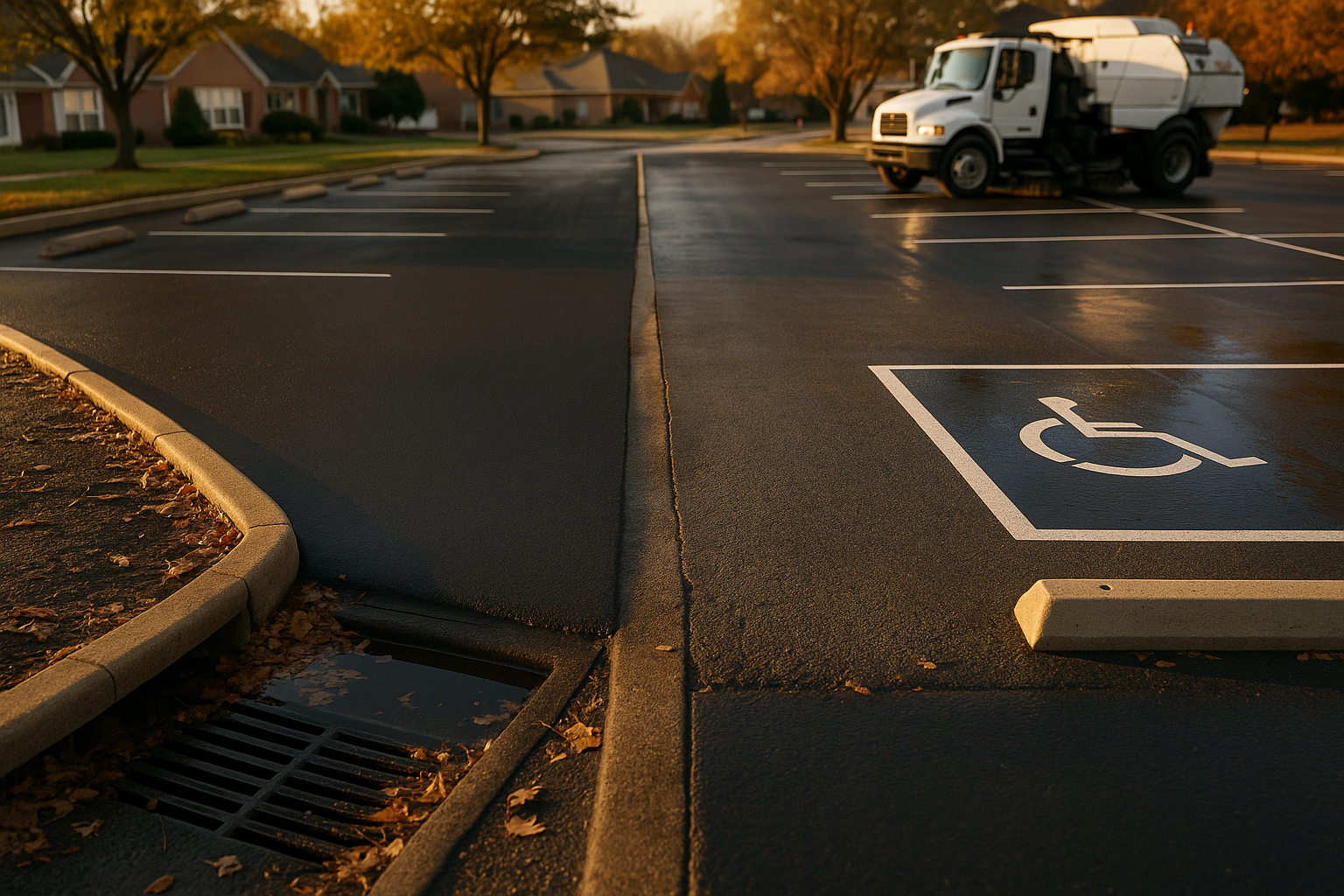
Before you seal or stripe anything, the lot has to be clean. In Indianapolis, fall means leaves, and leaves are sneaky—they clog curb inlets and catch basins, trap moisture against the asphalt, and stain the surface. I’ve seen lots where a single clogged drain turned a small low spot into an ice rink by December. That’s why parking lot sweeping and leaf removal is step one, not an afterthought.
Catch basin cleaning is just as important. If water can’t drain, it pools, freezes, and then expands, popping the asphalt apart. For drainage maintenance for parking lots, make sure every inlet is clear before the first freeze. A little time with a rake and a vacuum truck now saves a lot of pothole patching later.
Crack Sealing: Cheap Insurance Against Freeze-Thaw
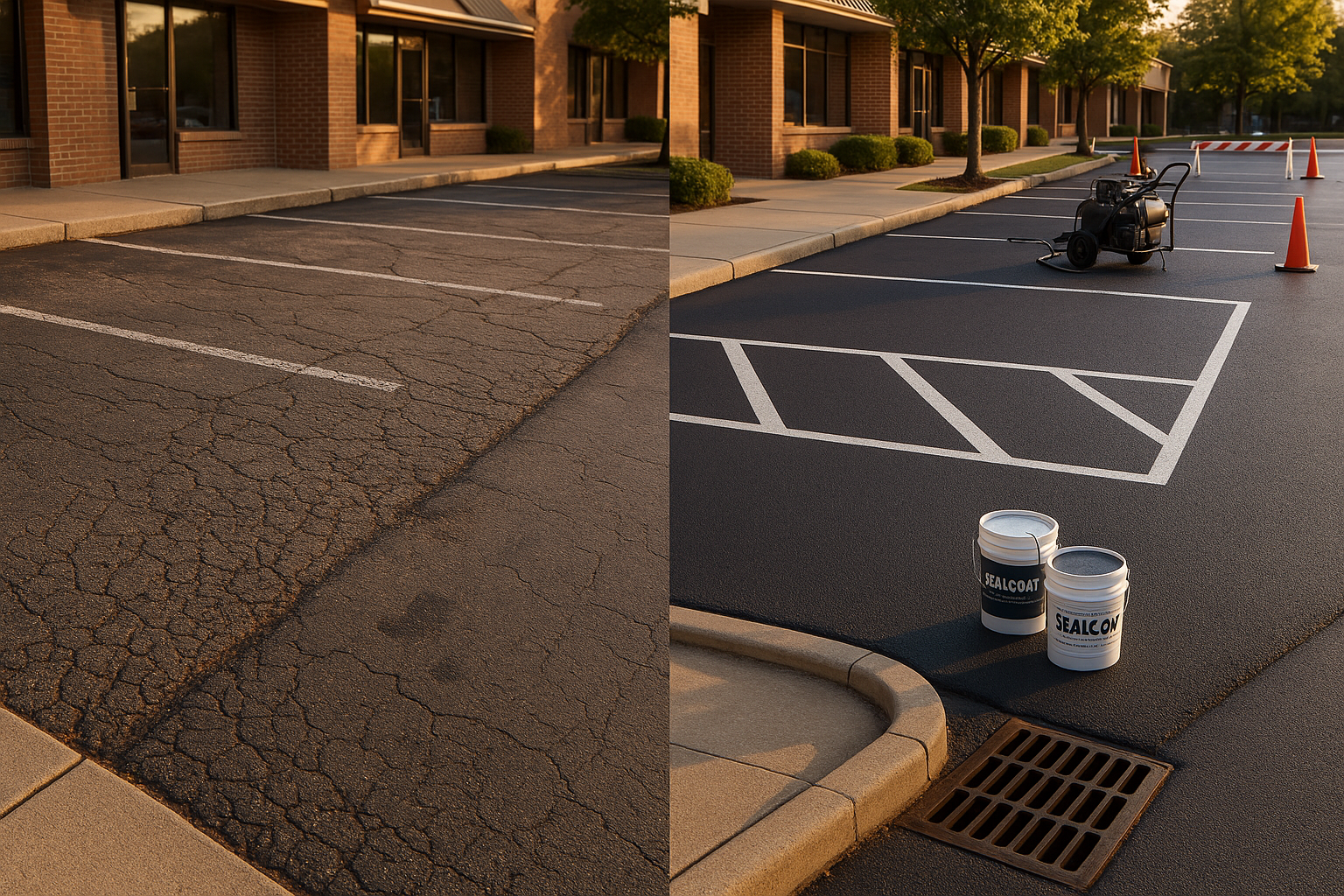
Water is the enemy. When it gets into a crack and freezes, it expands by about 9%, pushing the crack wider. Over a winter of freeze-thaw cycles, a hairline crack becomes a quarter-inch fissure, then a pothole. That’s why hot-pour rubberized crack sealant is worth its weight in gold this time of year. Asphalt crack sealing in Indianapolis is especially important because our winters are relentless. We recommend sealing any crack wider than 1/8 inch.
Edge cracking is often the first to show up, especially along the perimeter where traffic is lighter but water sits longer. Don’t let those edges unravel—check out our guide on edge cracking and how to protect your lot’s perimeter. It’s a cheap fix that prevents big chunks of pavement from breaking off next spring.
Patch Potholes and Low Spots Before the Plows Hit
Now’s the time to fix potholes, utility cuts, and “birdbaths” (low spots that hold water). A proper patch isn’t just throwing cold mix in a hole and hoping. It means sawcutting clean edges, compacting the base, adding a tack coat, and using hot mix. That way the patch survives plows and de-icers.
For pothole patching in Indianapolis, we see a lot of utility cuts that were never restored correctly—the edges crumble, water gets under, and the whole thing sinks. A quality utility-cut patch restoration can double the life of that section. Read more about what goes into a real utility cut patch restoration. And if you have heavy trucks turning in one spot, you might see rutting and shoving—that’s a sign the asphalt wasn’t designed for the load. Fixing those areas now prevents bigger failures later.
Sealcoating: If the Weather Cooperates
Sealcoating is the best way to protect asphalt from oxidation, oil, and water. But it only works if temperatures meet the product’s specs—usually above 50°F and rising, with no rain for 24–48 hours. In Indianapolis, you can often get a sealcoat done through mid-October. After that, it gets risky. If you miss the window, don’t force it. A bad sealcoat job will peel by spring and you’ll pay twice.
We’re picky about sealcoating fall temperatures because a failed sealcoat is worse than no sealcoat. If your lot is too far gone, we might recommend crack sealing and patching now, then sealcoating next spring. That’s a smart, phased plan.
Re-Stripe for Safety Before the Sun Drops
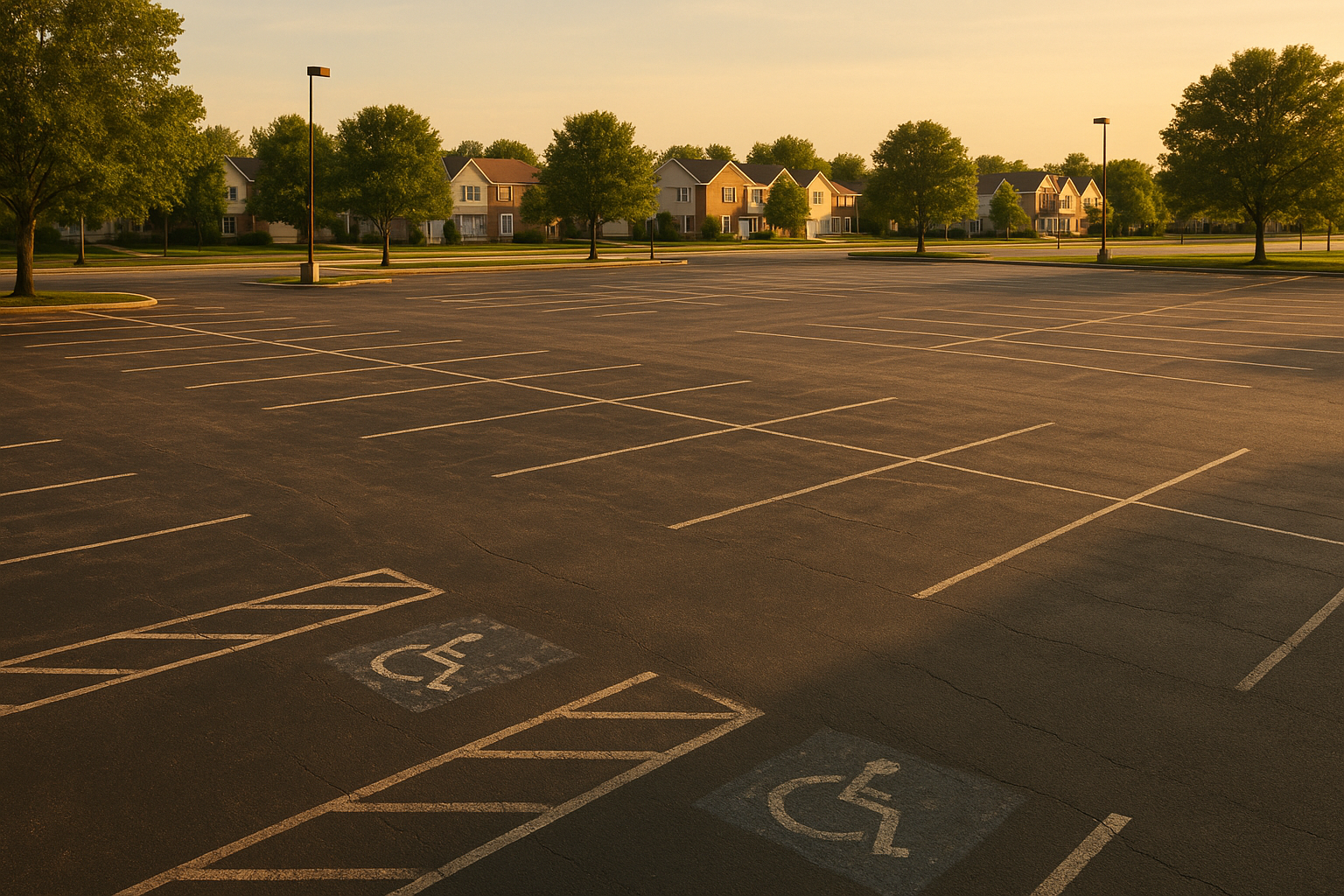
Shorter days mean low sun angles and more glare, especially on wet pavement. Faded stall lines and ADA markings make parking a guessing game. Fresh paint also helps plow drivers see edges and islands. Line striping before winter is a cheap safety upgrade. Use paint that cures in cooler temps—waterborne acrylics designed for fall application. We can stripe in sections at night or on weekends so your business stays open.
Prep the Perimeter for Snow and Ice
Snow plows are rough on parking lots. They catch wheel stops, scrape curbs, and drag across islands. Anchor wheel stops properly, mark curb edges with reflective posts, and document plow routes. Talk to your snow contractor about where to pile snow—ideally not in low spots that already hold water.
As for de-icers, stick to calcium chloride or magnesium chloride. Avoid rock salt if you can—it’s rough on new asphalt and sealcoat. De-icer best practices for asphalt mean using the least amount needed and cleaning up residue in spring. That’s part of a full parking lot winterization plan.
A Phased Plan That Fits Your Business
You don’t have to shut down your lot for a week. We can phase the work: crack seal and patch one area while traffic uses another, then stripe after hours. For multi-site properties, we can build a parking lot winterization plan that spreads costs across fall and spring.
Budget is tight? Prioritize crack sealing and drainage first—those prevent the most expensive damage. Sealcoating can wait if the budget says so. Check out our approach to parking lot asset management for multi-site owners. And before you sign any bid, make sure you understand the line items—here’s how to evaluate a paving bid like a pro.
Common Objections, Answered
“We’ll just do it in spring.” That’s the most expensive thing you can say. Water damage doesn’t take a break over winter. “Temperatures are too unpredictable.” We monitor forecasts and only schedule work when conditions are right—we won’t risk a bad cure. “We can’t disrupt parking.” We phase everything to keep you open. “Sealcoat smell bothers tenants.” We use low-odor, fast-curing products and can schedule for weekends. “Budget is tight.” We’ll give you a prioritized list so you can tackle the critical stuff now and the rest later.
Get a Same-Week Walk-Through
The best way to know what your lot needs is to walk it together. We’ll point out cracks, drainage issues, oxidation, and tripping hazards. Then we’ll give you a written, line-item plan with pricing—no pressure, no upsells. If you’re in Indianapolis, Carmel, Fishers, Zionsville, Westfield, Noblesville, Greenwood, Brownsburg, Avon, or Plainfield, we’ll come out this week. Schedule your fall parking lot walk-through here.
Ready for a free lot assessment?
We walk the lot, photograph the problems, and hand you a written plan — no pressure, no obligation.