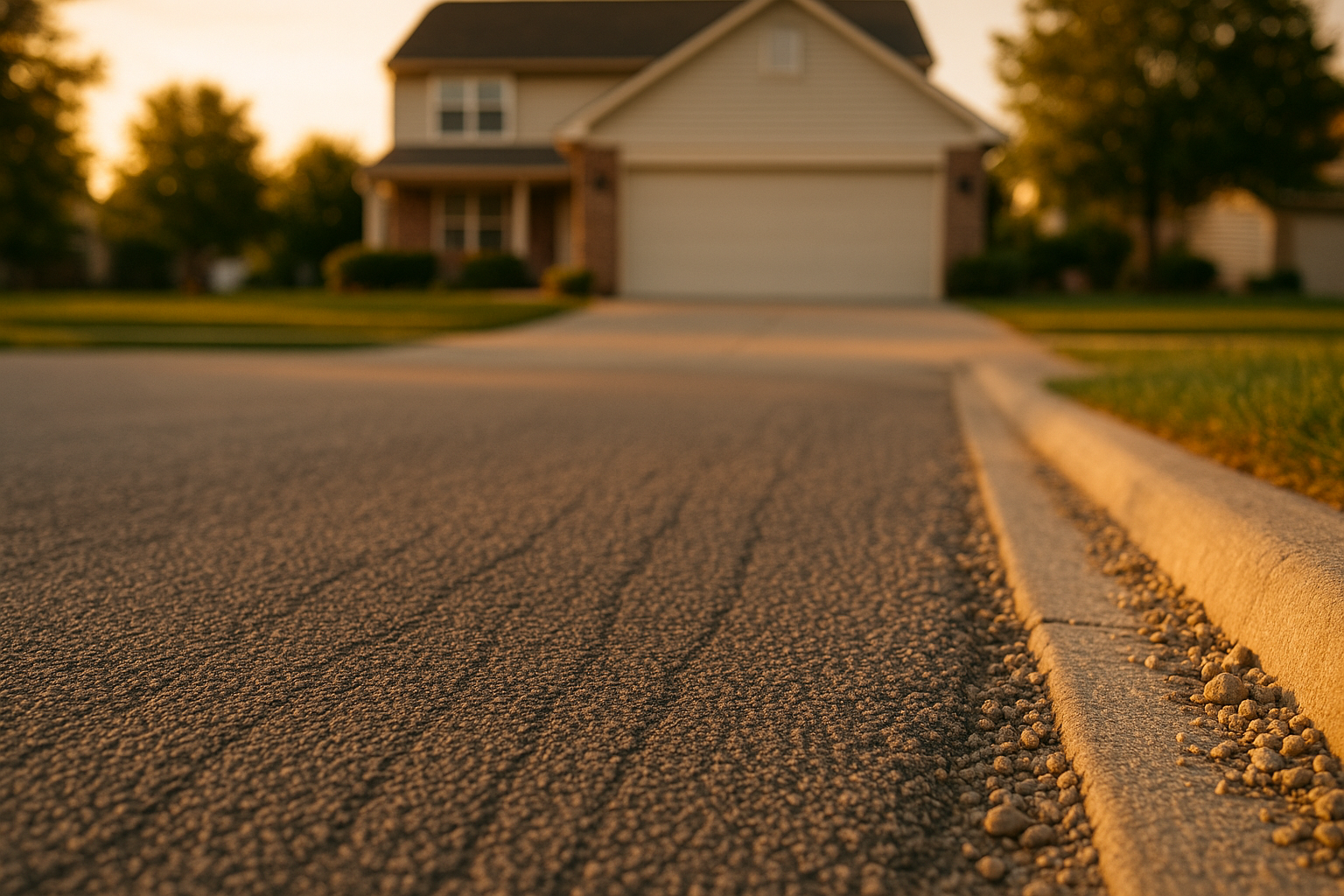
Last March, I got a call from a guy in Zionsville. His driveway edge looked like a half-eaten saltine cracker. Every time the trash truck rolled by with its back tire on the grass, another chunk broke off. He'd already patched it twice with cold patch from the hardware store. Both patches crumbled before the next mow. He finally asked, "Why does the edge keep falling apart when the rest of the driveway looks fine?" That's the moment a lot of people realize asphalt edge cracking isn't just a cosmetic issue. It's a structural problem that starts at the outermost inch and works inward.
If you manage a parking lot or driveway anywhere from Carmel to Greenwood, you've probably seen the same thing. Edge cracking in asphalt is one of the most common failures we get called about in the Indianapolis metro — and one of the most misunderstood. Let's talk about why it happens, how to tell if it's serious, and what actually fixes it without wasting money.
What Asphalt Edge Cracking Actually Is
Asphalt edge cracking means linear cracks or crumbling along the outside boundary of the pavement. It usually shows up as a jagged line parallel to the edge, sometimes with raveling (loose aggregate) next to it. People often confuse it with alligator cracking, but they're different. Alligator cracking is a fatigue failure from too much load or a weak base in the middle of the mat. Edge cracking is more about lack of side support. The pavement edge has nothing holding it in place from the side, so it's the first part to break under pressure.
Why Edges Fail First: The Physics of an Unsupported Edge
Think of an asphalt slab like a tabletop. If the legs sit on solid ground and the edges hang over, the overhang will crack off when you put weight on it. Edge cracking is that overhang. The base under the edge is often thinner or less compacted than the center. Heavy vehicles — delivery vans, school buses, trash trucks — tend to ride close to the edge, especially on narrow driveways or lot perimeters. That repeated loading causes pavement edge failure over time.
In Indianapolis, we add another villain: water. Rain and snowmelt run to the edges, and if there's no curb or good shoulder, water seeps into the base. Once the base gets soft, the asphalt has nothing to sit on. Then freeze-thaw cycles do the dirty work. Water infiltrates the crack, freezes, expands, and pops the edge apart. Come spring, you see the damage from all those freeze-thaw asphalt damage cycles.
The Freeze-Thaw Punch in Central Indiana
Our winters are rough on pavement edges. One night it's 15 degrees, next day it's 40 and sunny. That's a classic freeze-thaw cycle. Water gets into edge cracks, freezes, and acts like a wedge. Do that 20 or 30 times over a winter and a hairline crack becomes a crumbling edge. Add the clay-rich soil around Indianapolis (which doesn't drain well) and you've got a recipe for base failure at pavement edge.
How Bad Is It? Severity Levels for Edge Cracking
Before you call a contractor, do a quick inspection. Look at the edge for:
- Hairline cracks running parallel to the edge: early stage. You can usually fix these with crack sealing.
- Cracks wider than 1/4 inch with raveling or loose aggregate: moderate. This is where driveway edge crumbling often starts. You'll need more than sealant.
- Broken edges, chunks missing, or a pothole-like depression at the edge: severe. This is a structural failure. The base under the edge is likely gone or saturated. Sealing won't help.
A good rule: if you can stick a screwdriver into the crack and it goes deeper than 2 inches, you have water infiltration cracks. The base is compromised.
Repair Options: Sealing vs. Patching vs. Sawcut and Replace
Here's where people get frustrated. They pay for crack sealing, and six months later the edge crumbles again. Why? Because crack sealing only addresses the surface crack, not the missing support underneath. If the base is soft or eroded, sealing just traps water below.
For narrow, early-stage edge cracks, hot-pour crack sealing is fine. Use a polymer-modified sealant that flexes with temperature changes. But if the edge is raveling or broken, you need to remove the damaged asphalt and rebuild the edge.
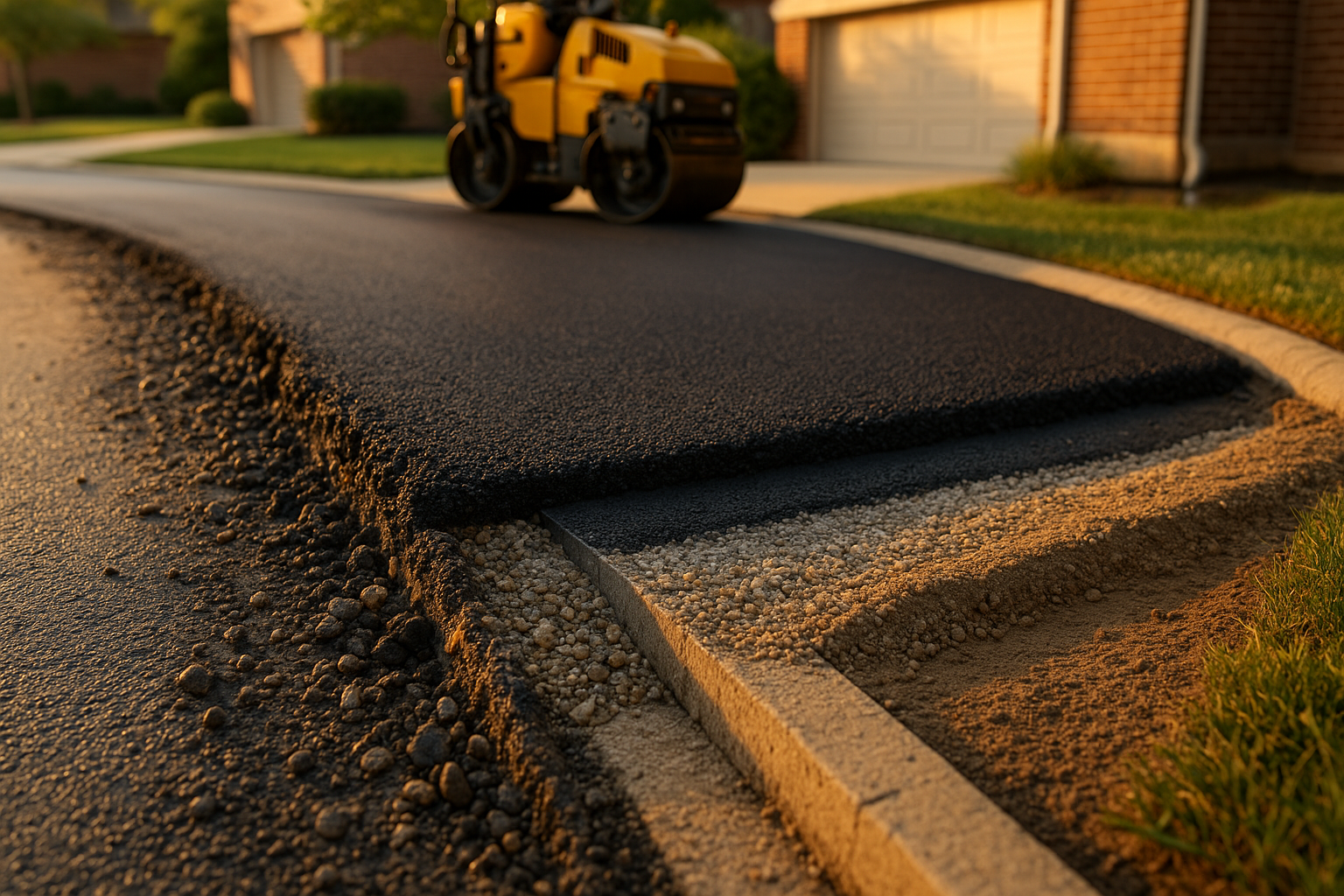
That's where sawcut and replace edge comes in. The contractor sawcuts a straight line back into sound pavement (usually 12 to 24 inches from the edge), removes the broken asphalt, recompacts the base (adding stone if needed), then installs fresh hot-mix asphalt. This is a full-depth edge patch. It's more expensive than sealing, but it actually lasts because it restores the support.
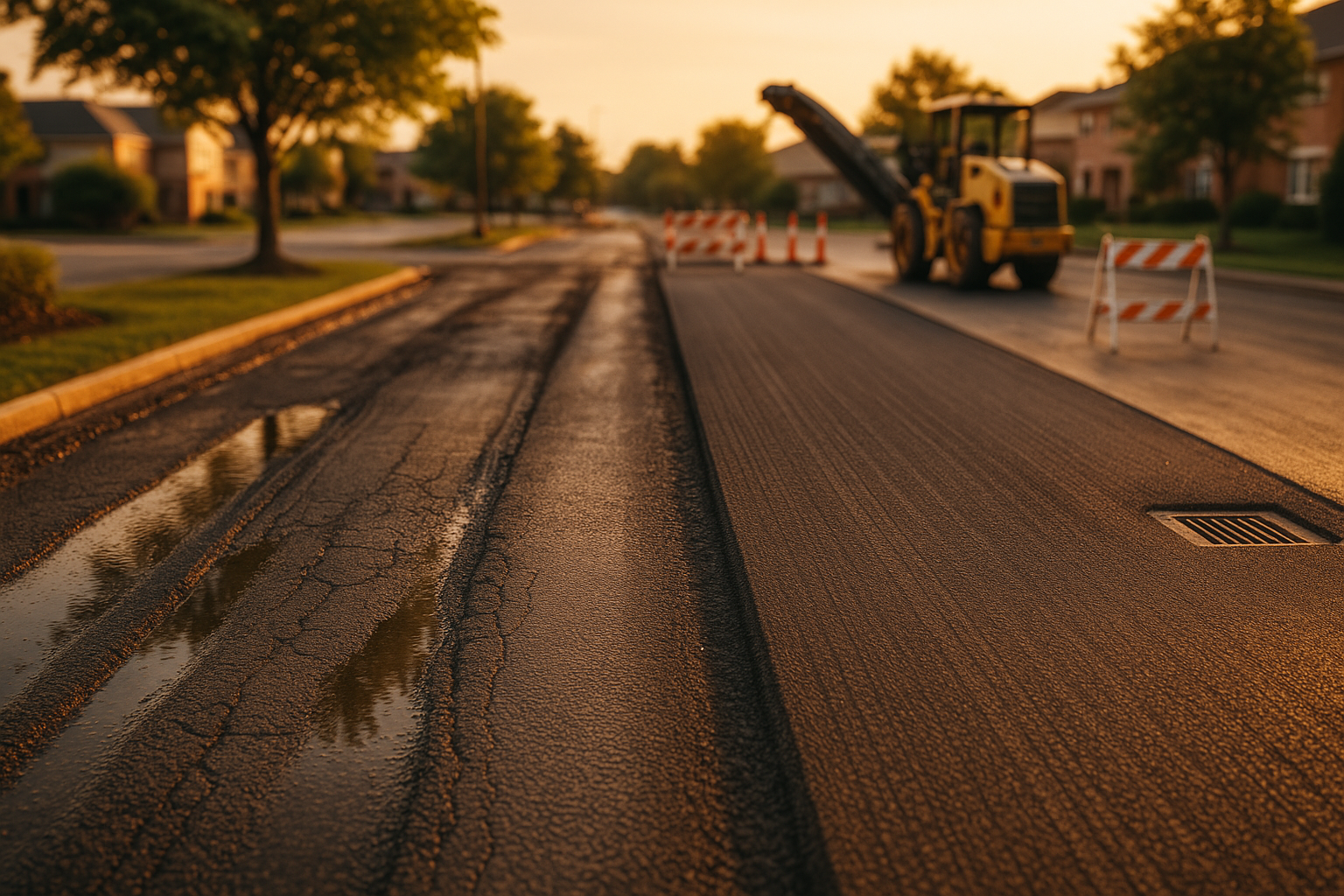
For widespread edge damage along a parking lot or long driveway, mill and inlay along edge might be a better option. You mill off the top layer along the edge, fix the base in spots, and lay down a new strip of asphalt. This is often used when the edge cracking is tied to global base deficiencies or when you're already planning an overlay.
Adding Support That Lasts: Curb, Aggregate Shoulder, or Geotextile
Sometimes the best repair is to give the edge something to lean on. If the pavement edge is right against grass or soil with no shoulder, it will always be vulnerable. Options include:
- Widening the asphalt by 6 to 12 inches beyond the original edge, then compacting the base under the new width.
- Installing a compacted aggregate shoulder along the edge. This gives lateral support and channels water away. Many HOAs in Hamilton County use this for private drives.
- Adding curb and gutter support. In commercial lots in Carmel or Fishers, curb-and-gutter is common. It locks the edge in place and directs runoff to drains.
- Using geotextile reinforcement at chronic edges. A layer of paving fabric under the edge patch separates the base from soft subgrade and prevents future base failure at pavement edge.
For residential driveways in neighborhoods like Westfield or Avon, we often backfill the new edge with topsoil and sod so the turf comes right up to the asphalt. This gives a clean look and some side support. But it's not as strong as a gravel shoulder, so it works best when traffic stays off the edge.
Drainage and the Indianapolis Clay Problem
Around here, the soil is heavy with clay. Clay holds water. If your downspout dumps right at the edge of the driveway, that water soaks into the base and softens it. Same with low spots that puddle next to the edge. Over time, you get pavement edge failure that no amount of sealing fixes.
The fix is usually simple: redirect downspouts away from the pavement edge, regrade the adjacent soil so water flows away, or add a shallow swale or edge drain. For commercial lots, drainage and subgrade stabilization go hand-in-hand with edge repair. If the subgrade is mushy, no asphalt will last. Sometimes we compact in a layer of crushed stone before paving the edge patch. That's not overkill — it's what keeps the edge from coming back.
Prevention: What Smart Property Managers Do
Once you've repaired an edge, you want it to stay fixed. Here's what actually works:
- Keep heavy vehicles off the very edge. Tell delivery drivers not to park with tires on the grass.
- Maintain a supported shoulder. If you have gravel or sod along the edge, keep it filled and compacted. If it erodes, the edge loses support.
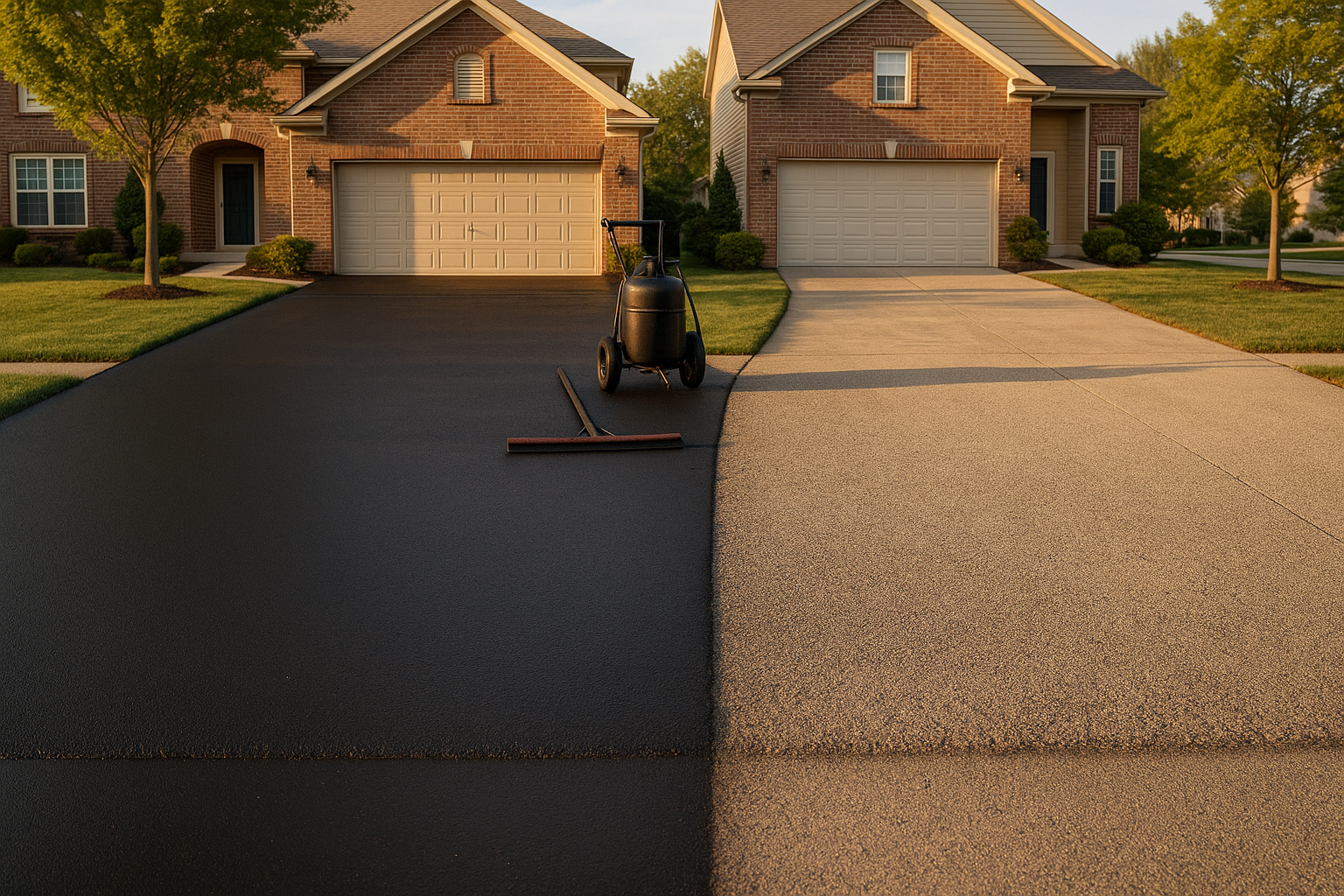
- Sealcoat after structural repairs. Sealcoating won't fix edge cracking, but it will protect the new asphalt surface from oxidation and minor water intrusion. Check out our post on asphalt raveling to see why surface protection matters.
- Adjust snowplow practices. Snowplow edge damage is common. Ask your plow contractor to raise the blade slightly at the edges or use a rubber edge. Scraping the asphalt edge with a steel blade chips away at the surface every winter.
- Fill narrow cracks as soon as you see them. Catch them before they widen.
Getting a Bid That Doesn't Leave You Guessing
When you ask for quotes for parking lot edge repair, make sure the contractor is specific. A vague "we'll patch the edges" isn't enough. You want to know:
- How many lineal feet of edge will be sawcut and replaced?
- What's the patch depth? (At least 2 to 3 inches of hot-mix, plus base stone if needed.)
- What's the base prep? Will they compact the subgrade? Add geotextile?
- What about traffic control and cleanup?
- What's the warranty? Not all warranties cover edge repairs the same way. We wrote about warranty expectations for asphalt work if you want to dig deeper.
Here in Indiana, timing matters. You can't properly compact hot-mix asphalt when it's below 40 degrees and dropping. That's why most edge repairs happen from April through October. If you have a bad edge in January, you can do a temporary cold patch to get through winter, but plan the real fix for spring. We have a full post on asphalt paving weather and temperature limits if you're curious about the science.
The bottom line: edge cracking isn't a mystery. It's a predictable failure with a fixable cause. If you catch it early, sealing might buy you a few years. If you wait until the edge looks like a broken cookie, you're looking at sawcut and replace. But either way, a good contractor will tell you why it failed and how to keep it from coming back — not just throw sealant at it.
If you're tired of patching the same crumbling edge every spring, let's walk the lot together. We'll check the base, the drainage, and the traffic patterns, then give you a line-item plan with real numbers and no pressure. Request a no-obligation edge assessment here. And if you want to compare bids, our guide on how to evaluate paving bid line items will keep you from paying for fluff.
Ready for a free lot assessment?
We walk the lot, photograph the problems, and hand you a written plan — no pressure, no obligation.