A friend of mine manages a small retail center off 96th Street in Fishers. Last spring he got three asphalt paving quotes. One came in $12,000 lower than the others. He took it. By October, the new overlay had cracked along the old joints. The contractor had used one thin lift and skipped the milling. My friend paid again. That's why reading a paving bid line by line is worth your time, and why a careful paving bid comparison can save you thousands.
If you manage a parking lot in Indianapolis, Carmel, or Greenwood, you've probably noticed that Indianapolis paving contractors rarely give you the same scope. When you sit down to compare paving bids, you might see one at $35,000, another at $52,000, and a third at $61,000. Your first instinct is to pick the lowest. But those numbers don't tell you what's missing. A cheap bid might leave out base repairs or a proper tack coat. An expensive bid might include premium materials and a full traffic plan. An apples to apples paving bid is the only fair way to compare. But most bids aren't written that way. They're vague. That vagueness hides risk. Later, the contractor says, "That wasn't included." And you're stuck writing another check.
The Must-Haves in Any Solid Paving Bid
A good bid spells out the work line by line. Here's what to look for.
Demolition and Milling
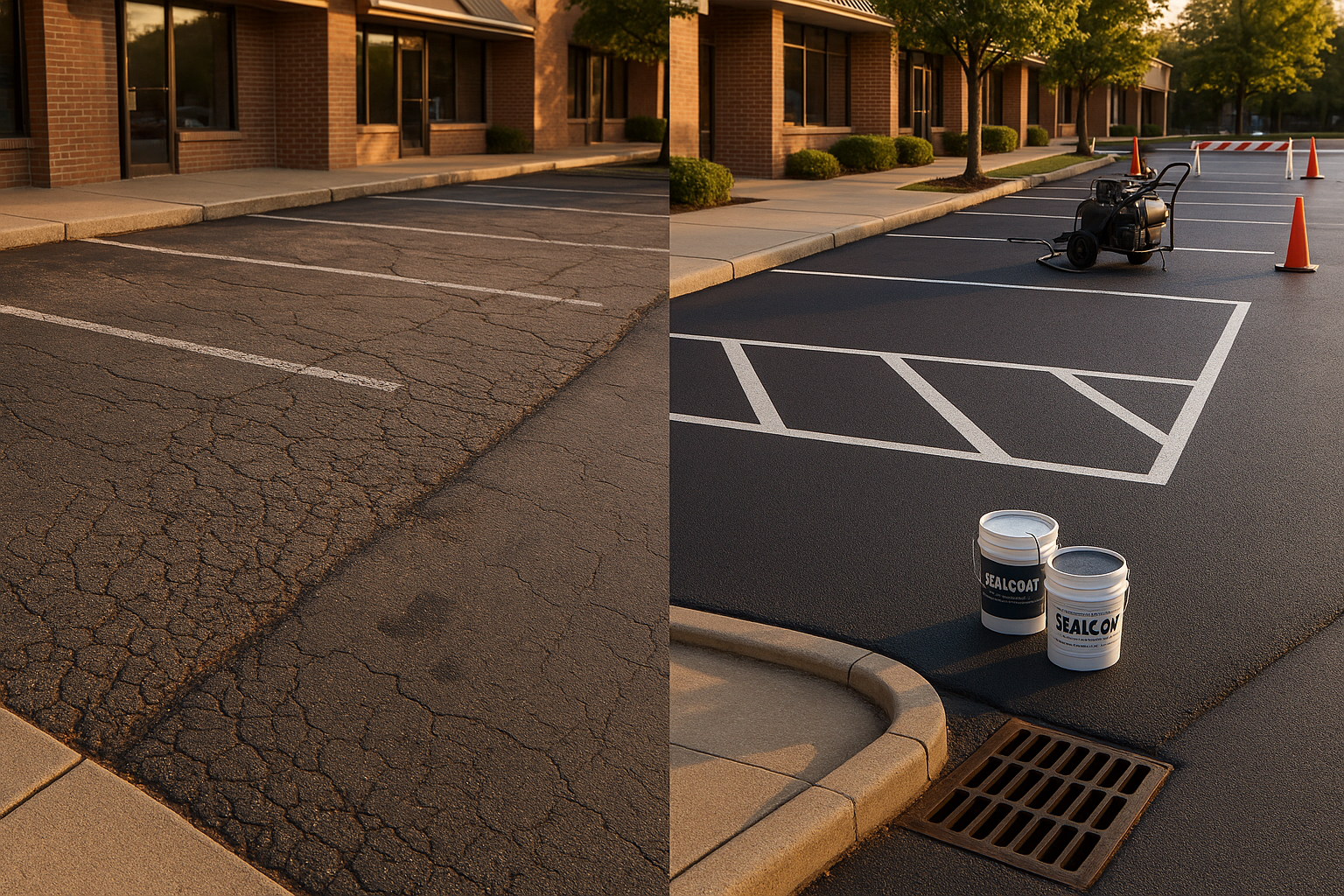
If your lot has alligator cracking or old asphalt that's failed, you need milling before overlay. The bid should say how deep. A typical asphalt overlay vs milling cost comparison shows that skipping milling saves money today but costs you tomorrow. Milling removes the old surface so the new layer bonds to a clean, stable base. Without it, cracks reflect right up within a year. Check our breakdown of asphalt milling and RAP for more detail.
Base Repair and Thickness
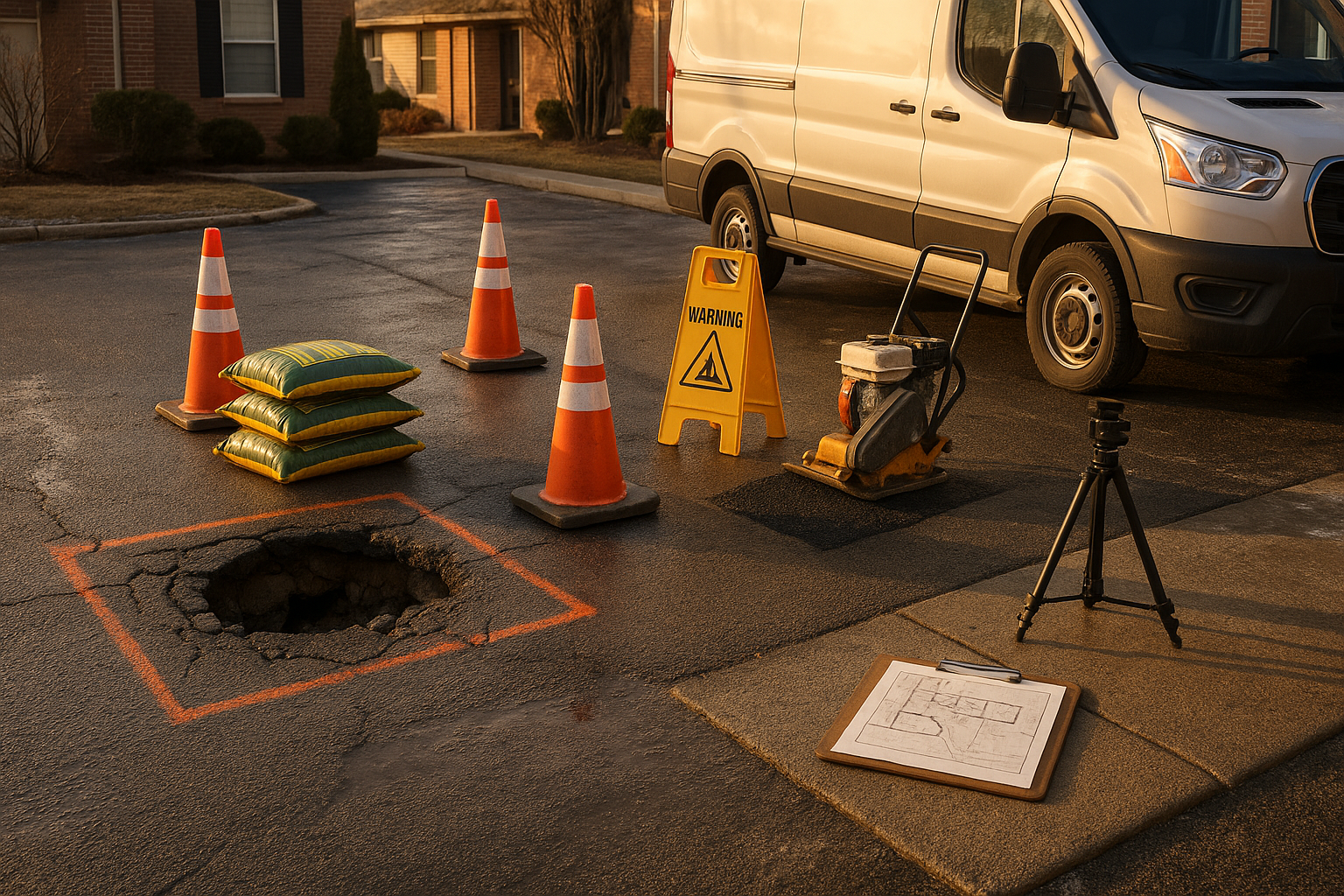
Most parking lots in Indianapolis sit on clay. Freeze-thaw cycles push and pull the ground. That's why base repair square yards must be in the bid. If the contractor finds soft spots during construction, the unit price should be clear. The asphalt thickness spec should also be explicit: 1.5 inches? 2 inches? Two lifts of 1.5 inches each? A single thin lift might look fine on paper, but it won't last.
Materials and Mix Design
Ask about the material mix design INDOT. Indiana contractors often follow INDOT-style HMA mixes for binder and surface courses. The bid should name the mix type, the lift sequence, and whether they use recycled asphalt (RAP). RAP is fine for many lots, but the percentage matters. Too much RAP can make the surface brittle. Local plants around Indianapolis keep haul times short, but the mix still needs to arrive hot enough to compact properly.
Drainage and Base Problems Nobody Sees
A parking lot that doesn't drain will fail, no matter how good the asphalt looks. During the bid walk-through, a sharp contractor checks the slope to catch basins and inlets. If water ponds, the base weakens. The bid should include catch basin and drainage repair if needed. That might mean resetting a frame, fixing a broken pipe, or adding a small swale. Proof-rolling the subgrade before paving is another line item. If the ground flexes under the roller, you need geotextile fabric or deeper undercuts. Our post on catch basin repair explains why drainage is the first thing to fix.
Quantities and Unit Pricing Save You from Surprises
When you compare asphalt paving quotes, the quantities matter. Some contractors pad their square yard totals. Others under-measure to make the lump sum look competitive. Ask for unit pricing in paving bids. That means the bid shows a cost per square yard for overlay, per ton for base stone, per linear foot for curb, and so on. Then if the crew uncovers three more bad spots, you pay a fair price for the extra work—not whatever the contractor decides that day. Core samples can help if the lot condition is uncertain. And if you have small potholes or edge damage, ask about infrared asphalt repair pricing. That method heats the surrounding asphalt for a seamless patch and often costs less than cutting out a square.
Traffic Control, ADA, and Striping
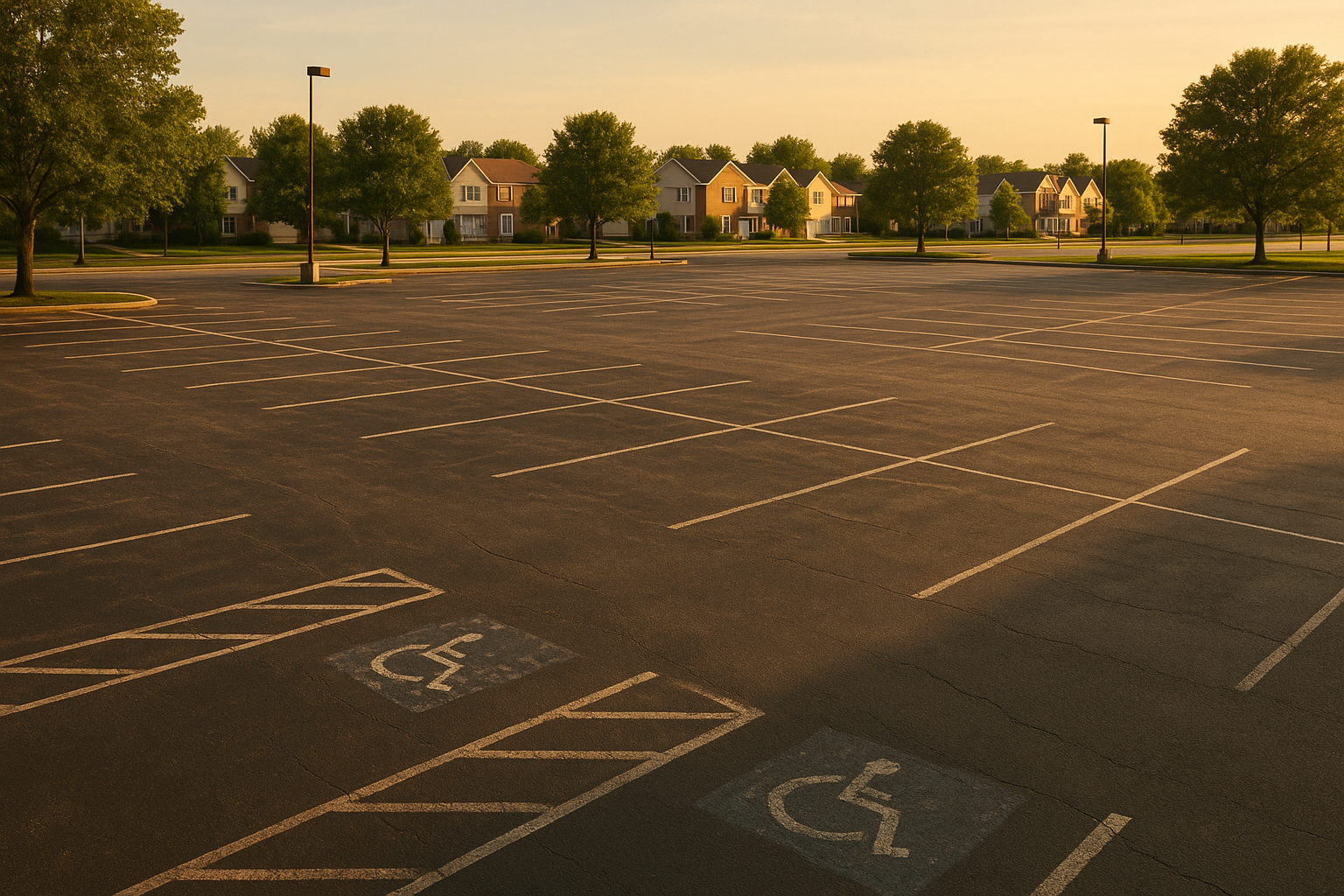
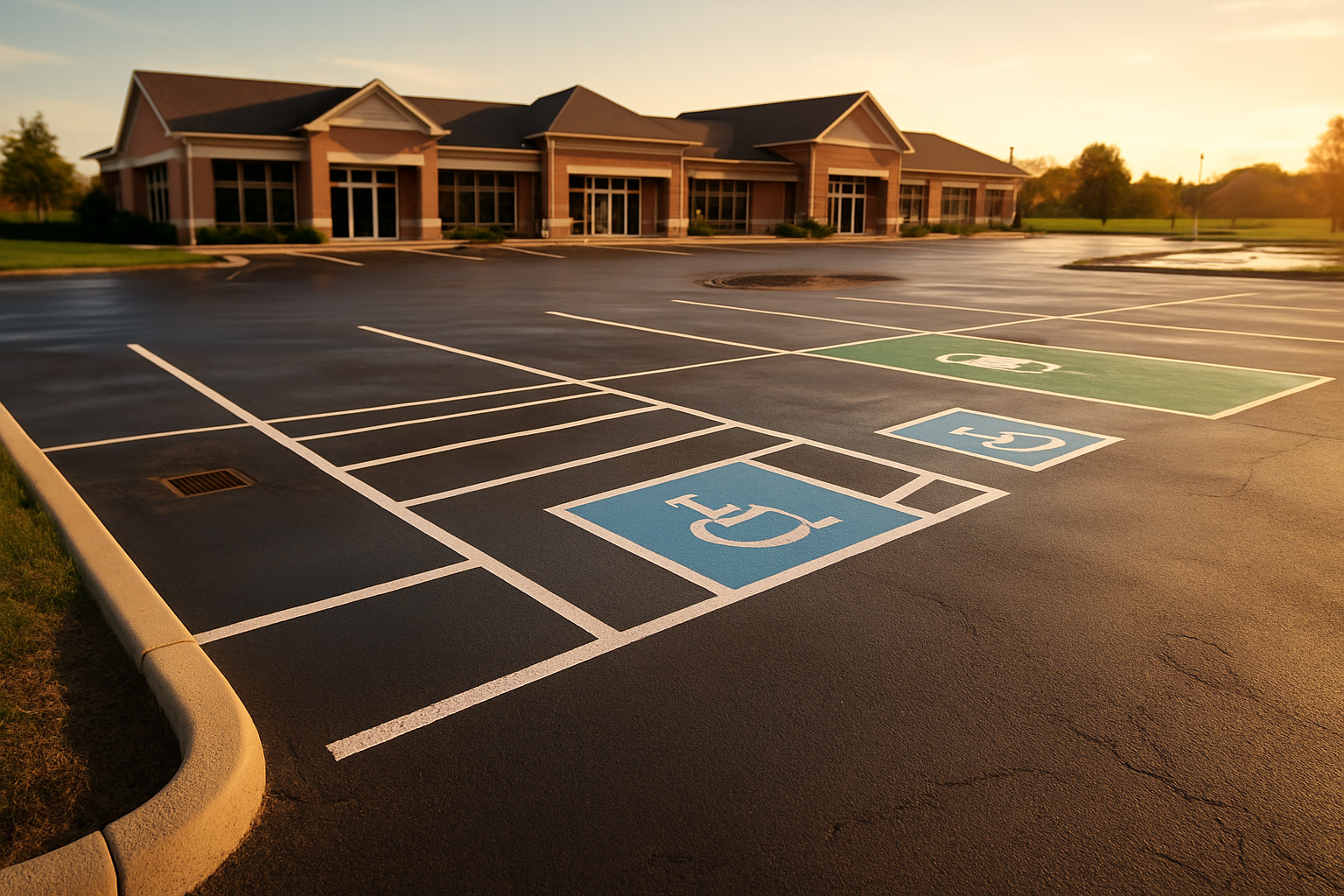
If your lot stays open during paving, you need a traffic control and phasing plan. That's not just cones. It's a written sequence: pave section A on Monday, move to section B on Tuesday, keep the drive lane open all day. Retail centers in Carmel and Greenwood can't afford to lose access. The bid should include barricades, signage, and maybe a flagger. Then there's ADA parking compliance. When you restripe, the number of accessible stalls, the width of access aisles, and the slope must meet current standards. If you're adding EV charging stall striping, that's another line item. Green paint or thermoplastic for EV symbols costs extra, but it's required in some municipalities. We wrote a whole post about EV charging striping if you want the details.
Sealcoating, Warranty, and Weather
Some bids include sealcoating and striping pricing as an add-on. Sealcoating should wait 6-12 months after new asphalt cures. If a contractor wants to sealcoat right away, that's a red flag. The bid should list the type of sealer, the sand load, and number of coats. Then look at the warranty for asphalt work. A typical warranty covers defects in materials and workmanship for one or two years. It won't cover settlement from poor base work or stains from oil. Read the fine print. Our guide to asphalt warranties can help you ask the right questions. Finally, weather limits for asphalt paving matter. Asphalt needs ambient and surface temperatures above about 50°F and rising. In Indiana, that usually means April through mid-November. Paving in late November on a cold day is a gamble. We wrote more on that in our weather limits article.
Red Flags That Scream "Walk Away"
If a bid doesn't mention milling before overlay, that's a problem. If it lumps everything into one line with no unit prices, that's a problem. If it says "traffic control as needed" without a plan, that's a problem. If the compaction spec is missing, how do you know the asphalt is dense enough? If drainage isn't addressed at all, the lot will fail from the bottom up. A good paving bid comparison checklist should score each bid on scope completeness, material quality, safety plan, schedule, and total cost—not just the bottom line.
Let's Walk the Lot Together
You don't have to figure this out alone. At PavementPros, we've helped property managers in Indianapolis, Fishers, Zionsville, and Plainfield sort through bad bids and find the right one. We'll walk your lot with you, measure the problems, and give you an itemized parking lot maintenance estimate that's easy to compare. If you already have bids, we'll review them line by line and tell you what's missing. No pressure, just straight talk. Schedule a bid review or on-site assessment on our quote page.
Ready for a free lot assessment?
We walk the lot, photograph the problems, and hand you a written plan — no pressure, no obligation.