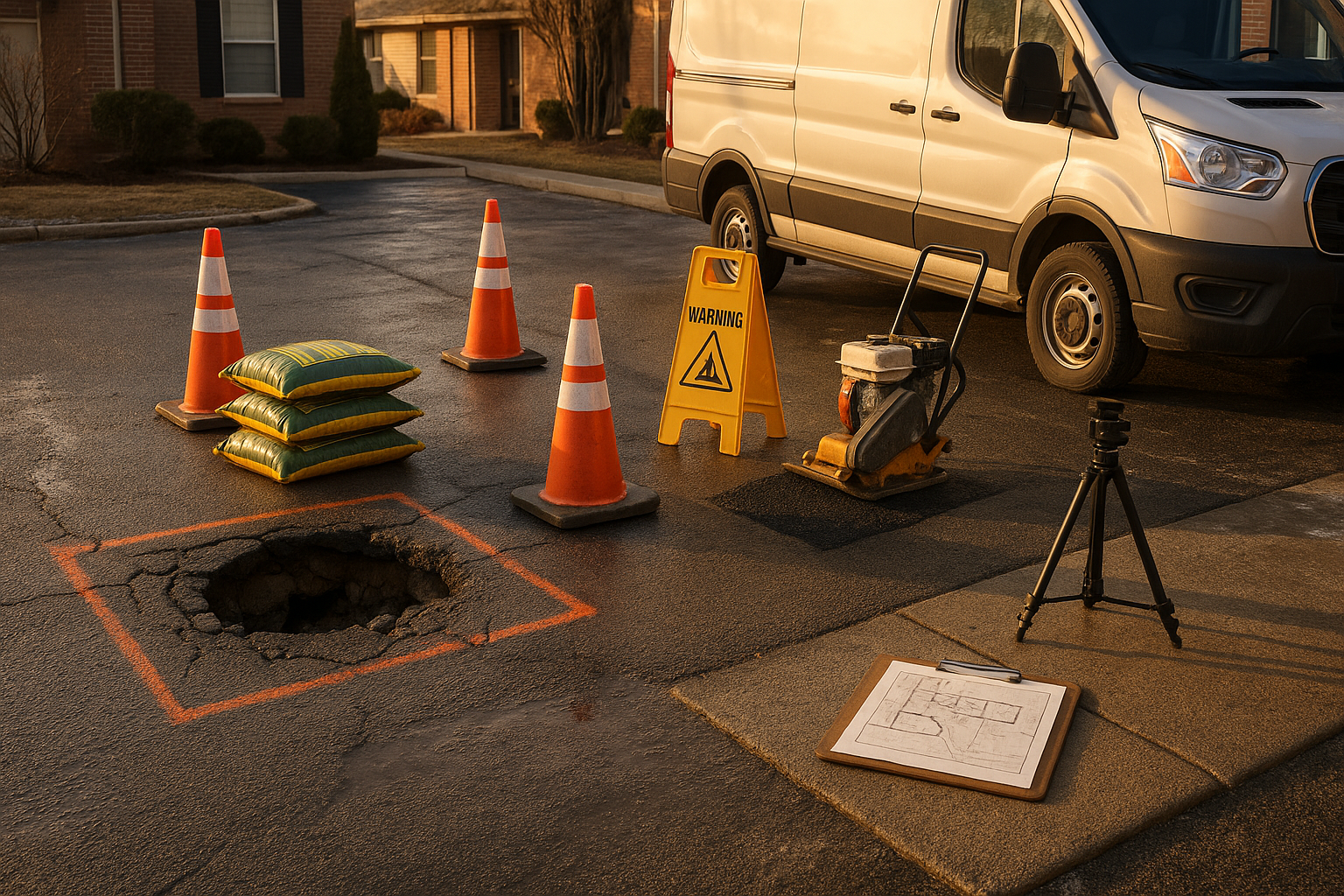
Last fall, a manager at a small office park in Fishers called us. His two-year-old parking lot was already showing alligator cracks near the dumpster corral. The contractor who paved it said, "Sorry, that's base failure. Not covered." The manager had a warranty, sure. It just didn't promise much.
That story isn't rare. I hear versions of it all over the Indianapolis area — from a homeowner in Greenwood with a crumbling driveway edge, from a church board in Carmel dealing with potholes after one winter, from a strip mall owner in Avon whose lot is sinking near a catch basin. Everyone thinks they have a warranty until they need it. Then they find out what's actually in writing.
An asphalt warranty isn't magic. It's a piece of paper that says: if this work fails in a specific way within a certain time, we'll come back and fix it. That's it. The good ones spell out exactly what's covered, what's not, and what you have to do to keep it valid. The bad ones are a few sentences that sound impressive but promise almost nothing.
What Should an Asphalt Warranty Actually Cover?
There are two main types of coverage you'll see from paving companies.
Workmanship warranty — this covers how the crew installed the asphalt. Did they compact it right? Are the seams tight and not unraveling? Did the surface cure without raveling or premature cracking? A typical workmanship warranty in Indianapolis might last one to two years. Sometimes three if the contractor is confident and the site prep was solid.
Materials warranty — this covers the asphalt mix itself. If the supplier delivered a bad batch (wrong temperature, bad aggregate, too much or too little binder), the material fails no matter how well you install it. The paving company usually passes through a warranty from the asphalt plant. This might run a year or so, but it only covers defects in the mix, not installation mistakes.
Some contracts talk about a "limited performance warranty" — that's a fancier way of saying the pavement should hold up under normal traffic and weather for a certain number of years, as long as you do your part. But read carefully. Many of those exclude the things that actually go wrong in central Indiana.
What's Almost Never Covered (And Why That Matters Here)
Here's the frustrating part. The failures that drive Indianapolis property owners crazy are the ones most warranties exclude.
Base and subgrade failure — alligator cracking, potholes from below, sinking spots. These happen when the stone base wasn't thick enough, wasn't compacted right, or the soil underneath shifted. Around here, we have heavy clay soil that expands and contracts with moisture. Add a few freeze-thaw cycles, and you get movement. A standard asphalt warranty rarely covers base problems because the contractor can't control what's underground. That's why a good contractor will test the base, maybe add geotextile fabric, and recommend a thicker stone layer before paving. If they skip that step, a paper warranty won't save you later.
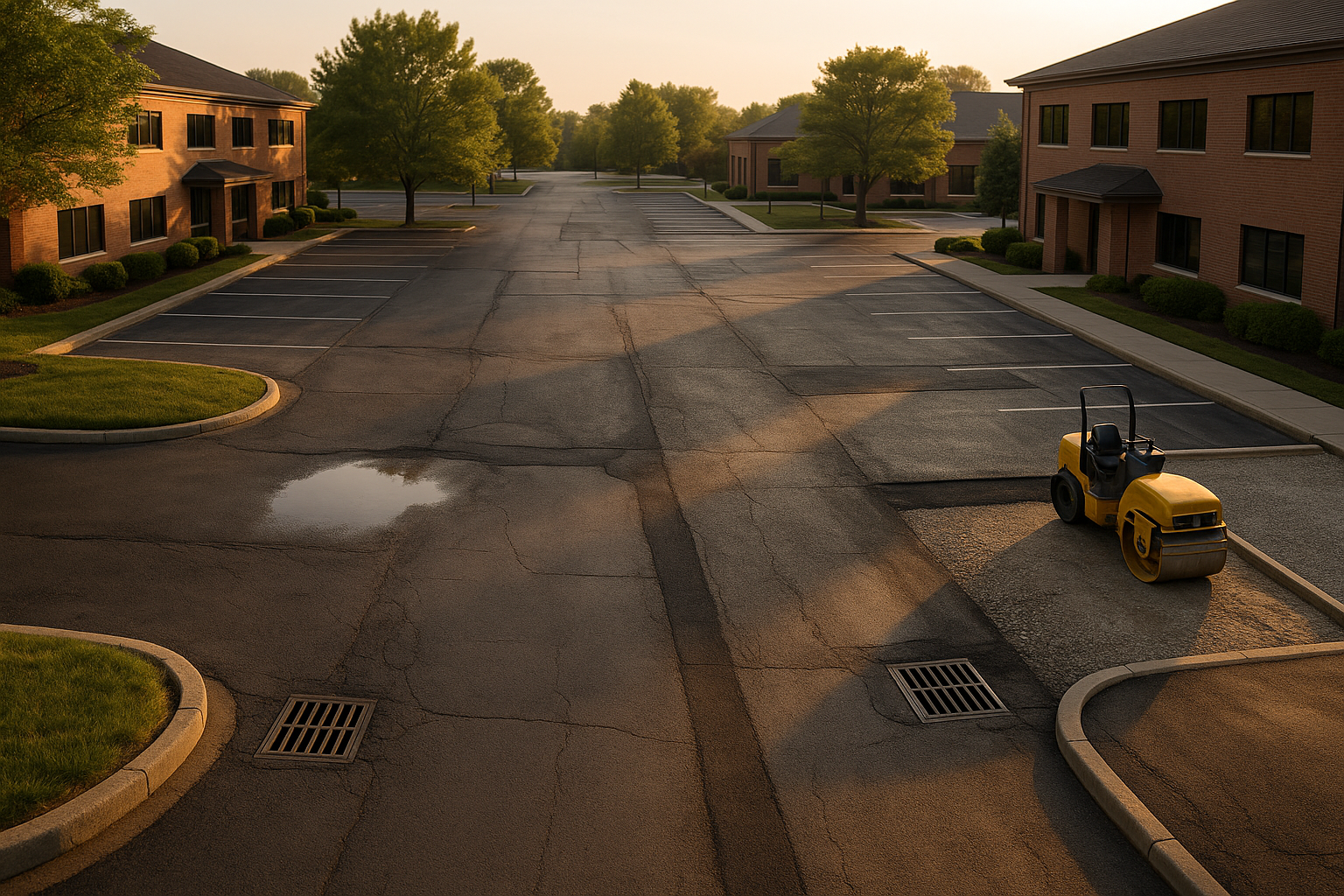
Drainage issues — standing water on asphalt shortens its life. If your lot doesn't slope toward a catch basin or swale, water pools, seeps into cracks, freezes, and pops the surface. Most warranties specifically exclude damage from poor drainage unless the paving contractor also installed the drainage system. In neighborhoods like Zionsville or Westfield, where spring rains come hard, getting drainage right is half the battle. A warranty won't cover a lake in your parking lot if the grade was bad from the start.
Snow plow and chemical damage — Winter is rough on asphalt. Steel plow blades gouge the surface. Ice melt and de-icing salts can eat away at the binder. Many warranties say up front: if you use metal plow edges or let salt sit, any damage is on you. That doesn't mean you can't plow — it means use a poly or rubber cutting edge, clean up salt after the freeze passes, and don't let plow drivers scrape the pavement. Snow removal is a fact of life in Indianapolis, but you can do it without voiding your coverage.
Utility cuts and repairs — If the water company digs up your lot to fix a main, that patch is not the paving contractor's problem. Same with oil spills, gas stains, or construction traffic on a new driveway. Exclusions are part of any honest warranty. The key is that they're spelled out in plain language, not hidden on page three.
Maintenance Obligations: The Part People Forget
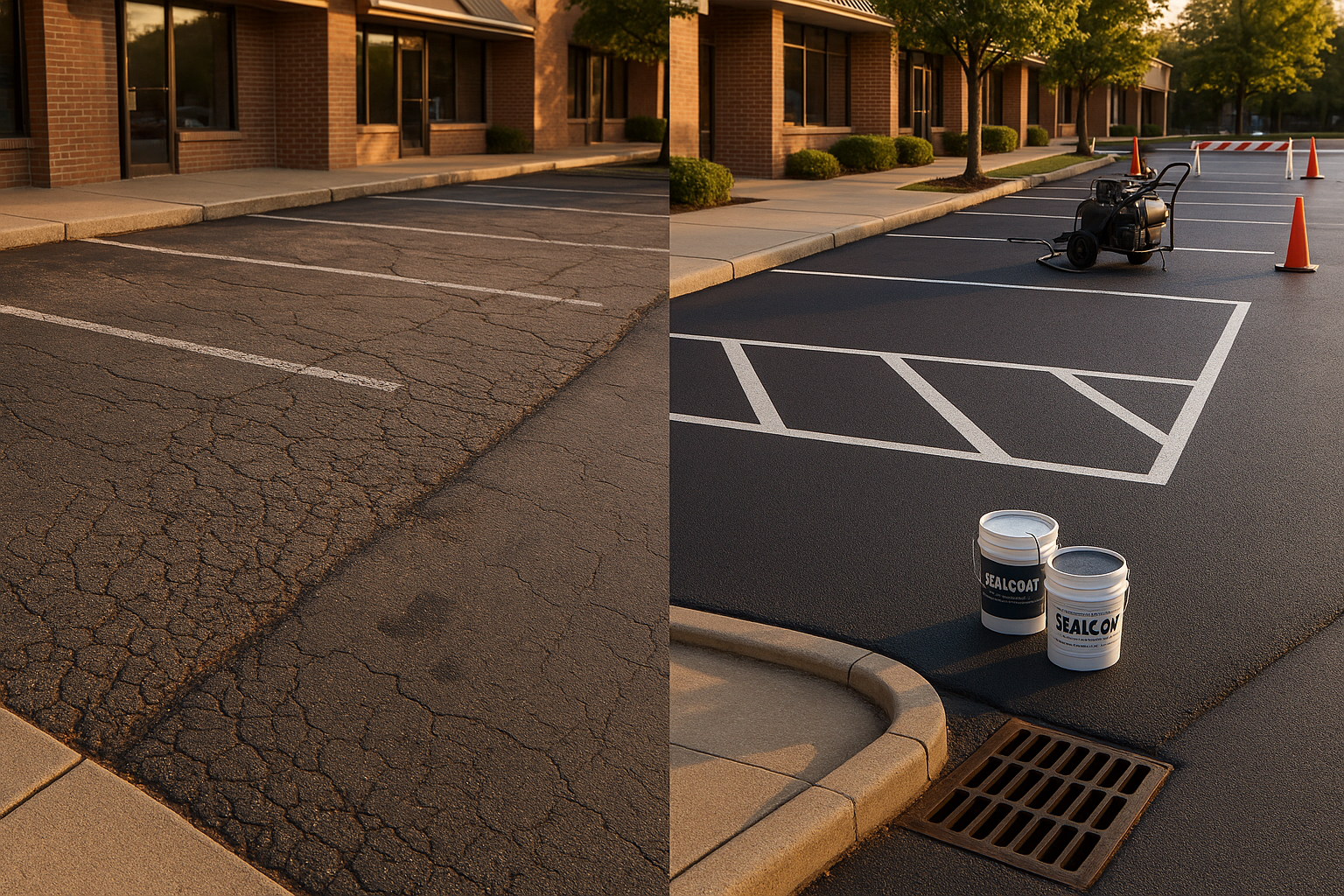
An asphalt warranty usually has a "you must maintain the pavement" clause. That's not a trick. Asphalt needs care, like a car. If you never change the oil, the engine fails. If you never crack seal or sealcoat, the surface breaks down faster.
Typical maintenance requirements to keep a warranty valid:
- Fill cracks that appear wider than a quarter inch, usually within 30–60 days.
- Apply sealcoating every two to three years if specified in the contract.
- Clean up oil, gas, and other fluid spills promptly.
- Keep the surface free of debris that can trap moisture.
- Avoid heavy vehicle traffic during the first 30 days after paving.
- Use rubber or poly plow edges and remove ice melt residue after thaw.
If the contractor says "crack sealing is optional" but the warranty says "timely crack sealing required," guess which one wins in a claim? Document everything. Take photos, save invoices from your sealcoating company, keep a simple log. I've seen property owners win claims because they had a folder full of receipts and pictures. I've seen others lose because they couldn't prove they did anything.
How the Claim Process Actually Works
If you notice a problem — say, raveling along a joint in a three-month-old driveway in Brownsburg — call the contractor. Most reputable companies have a process.
Typical steps:
- You contact them in writing (email is fine) and describe the issue.
- They send someone to look at it, usually within a week or two.
- They determine if it's covered under the warranty terms.
- If yes, they schedule a repair. That might be an infrared patch, a small overlay, or crack routing and sealing.
- If no, they explain why — in writing, citing the specific exclusion.
Response time matters. A good contractor won't make you wait three months for a pothole repair in a busy lot. Ask about timelines before you sign. Some companies promise 48-hour emergency pothole fixes during business hours for warranty claims. Others will get to it "when we're in the area." You want the first kind.
Ask About Transferability Before You Sign
Selling your house or business? If the warranty doesn't transfer to the new owner, it dies at closing. Some companies allow a one-time transfer for a small fee if you notify them within 30 days of sale and provide the new owner's info. Others don't allow transfers at all. This matters in places like Plainfield or Noblesville where property turns over regularly.
When you compare paving quotes, ask: "Is the warranty transferable? What proof do I need?" If the answer is vague, that's a red flag.
How PavementPros Handles Warranties
We don't write warranties that sound good but mean nothing. Before we pave, we walk the site, check the base, look at drainage, measure traffic, and talk about what you actually need. That's why our proposals include a clear scope: lift thickness, mix design, joints, striping specs, drainage tie-ins. If the base needs work, we say so — even if it costs more. A three-year warranty on a failing base is worthless.
Our written warranty uses plain English. It says what we cover (workmanship defects, premature raveling, seam failure) and what we don't (base failure from existing conditions, standing water, plow gouges). It also includes a maintenance checklist. Seal your cracks, sealcoat on schedule, and we'll stand behind the pavement. If something goes wrong, you call us. We inspect. We fix it — often with infrared asphalt repair for small areas, which is faster and cleaner than saw-cutting.
We also know that in Indianapolis, the weather window for paving is short. Check out our post on asphalt paving weather and temperature limits to understand why we won't pave in February. And if drainage is a problem, read about catch basin repair and parking lot drainage. These things all tie together.
The Bottom Line
Don't fall for a longer warranty as a sign of a better job. A five-year warranty with a dozen exclusions is worse than a two-year warranty with clear coverage and a contractor who actually answers the phone. Ask for the written warranty before you sign anything. Read it. Underline the exclusions. Ask what maintenance you need to do. Then decide.
If you're in Indianapolis, Carmel, Fishers, Zionsville, Westfield, Noblesville, Greenwood, Brownsburg, Avon, or Plainfield, we'll come out, look at your driveway or lot, and give you a straight answer. We'll also hand you a sample warranty and a maintenance plan tailored to your site. No pressure, no fine print games. Just schedule an on-site assessment through our quote request page and we'll take it from there.
Ready for a free lot assessment?
We walk the lot, photograph the problems, and hand you a written plan — no pressure, no obligation.