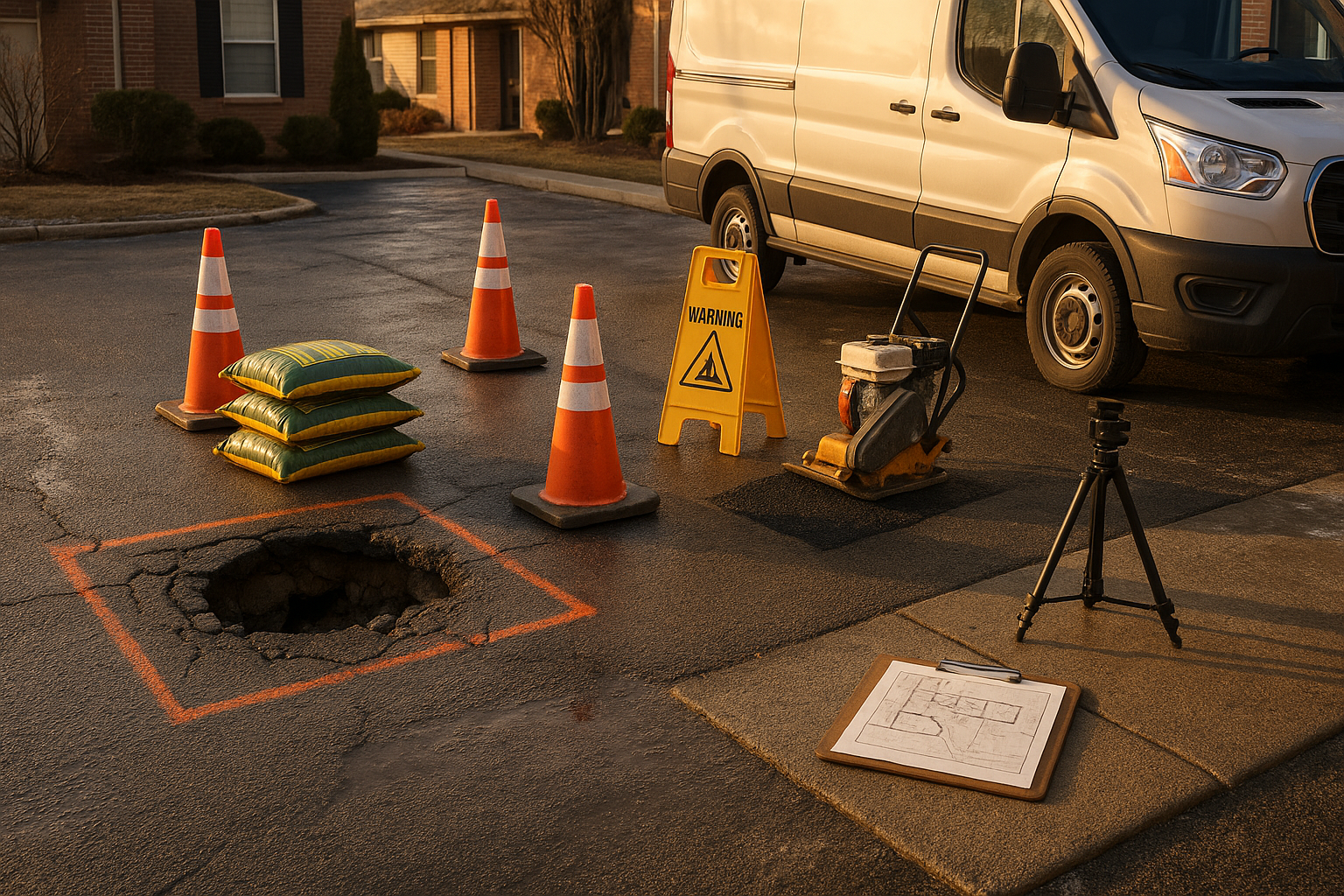
Last March, a facilities manager at a small office park in Fishers called us about a pothole the size of a kiddie pool right by the front door. Snowplows had chewed up the edge of the lot all winter, and now water was pooling and tenants were complaining. He’d gotten a quote for sawcut-and-replace that meant closing half the parking lot for two days. That’s when we told him about infrared asphalt repair. He laughed—“You can fix asphalt with heat?” Yep.
It sounds like magic, but it’s actually pretty simple. And for a lot of the potholes, seams, and crusty patches we see around Indianapolis, it’s the smartest fix out there.
What Is Infrared Asphalt Repair, Anyway?
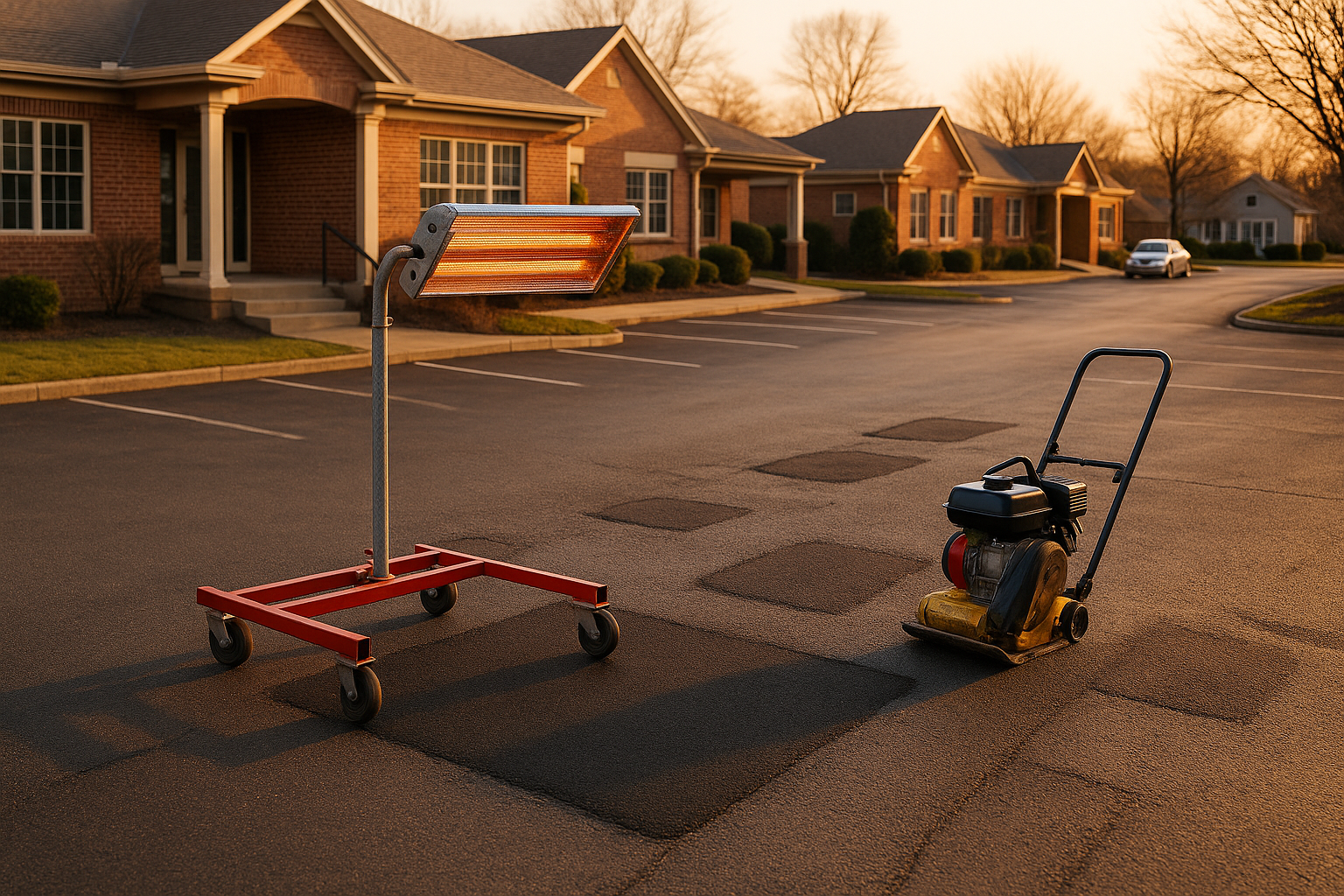
Think of it like welding, but for your parking lot. Instead of cutting out the bad section with a saw and tossing it, we bring a big infrared heater over the damaged area. The heat softens the existing asphalt so it’s workable again. Then we rake it around, add fresh hot mix asphalt, and blend the old and new together into one piece. When it cools, there’s no cold joint—no crack or seam where water can sneak in later.
We call it thermally bonded asphalt repair because the edge between old and new basically disappears. You can’t feel a ridge with your foot or tire. That’s a big deal in a freeze-thaw climate like ours.
Where It Shines (and Where It’s a Band-Aid)
Infrared isn’t a cure-all, but it’s perfect for a long list of common parking lot problems:
- Potholes, especially the ones that open up after a rough winter.
- Seam separations, like where an old patch meets the original asphalt.
- Utility cuts—you know, when Duke or Citizens digs up a street or lot for gas or water work and leaves a messy square of cold patch that looks terrible.
- Settled areas around catch basins or curb lines that hold water.
- Birdbaths—those low spots that collect a puddle after every rain.
- Snowplow scrapes and scars from a long Indy winter.
- Raveling—when the top layer crumbles away and leaves loose gravel.
We fixed a row of utility cuts on a residential street in Broad Ripple last year. Each one was a different shade of gray from old cold patch. The infrared process blended them all so well you couldn’t tell where the cuts had been. The neighbors were pretty happy.
But here’s the honest part: if the base under the asphalt is failing—like you’ve got alligator cracking, pumping water, or a soft spot that sinks when you drive over it—infrared alone won’t fix that. You can heat and patch the surface, but it’ll just crack again because the foundation is shot. In those cases, we might recommend base stabilization or even milling and resurfacing. We’re not going to sell you a band-aid if you need surgery.
Why Indianapolis Drivers (and Property Managers) Keep Coming Back
The biggest reason is downtime. A typical sawcut-and-replace means sawing out the area, hauling away old asphalt, bringing in new, compacting, and often waiting for it to cure. That can shut down part of a lot for a day or two. With infrared, many small to medium patches are open to traffic the same day. For a busy retail center or a church parking lot, that’s huge.
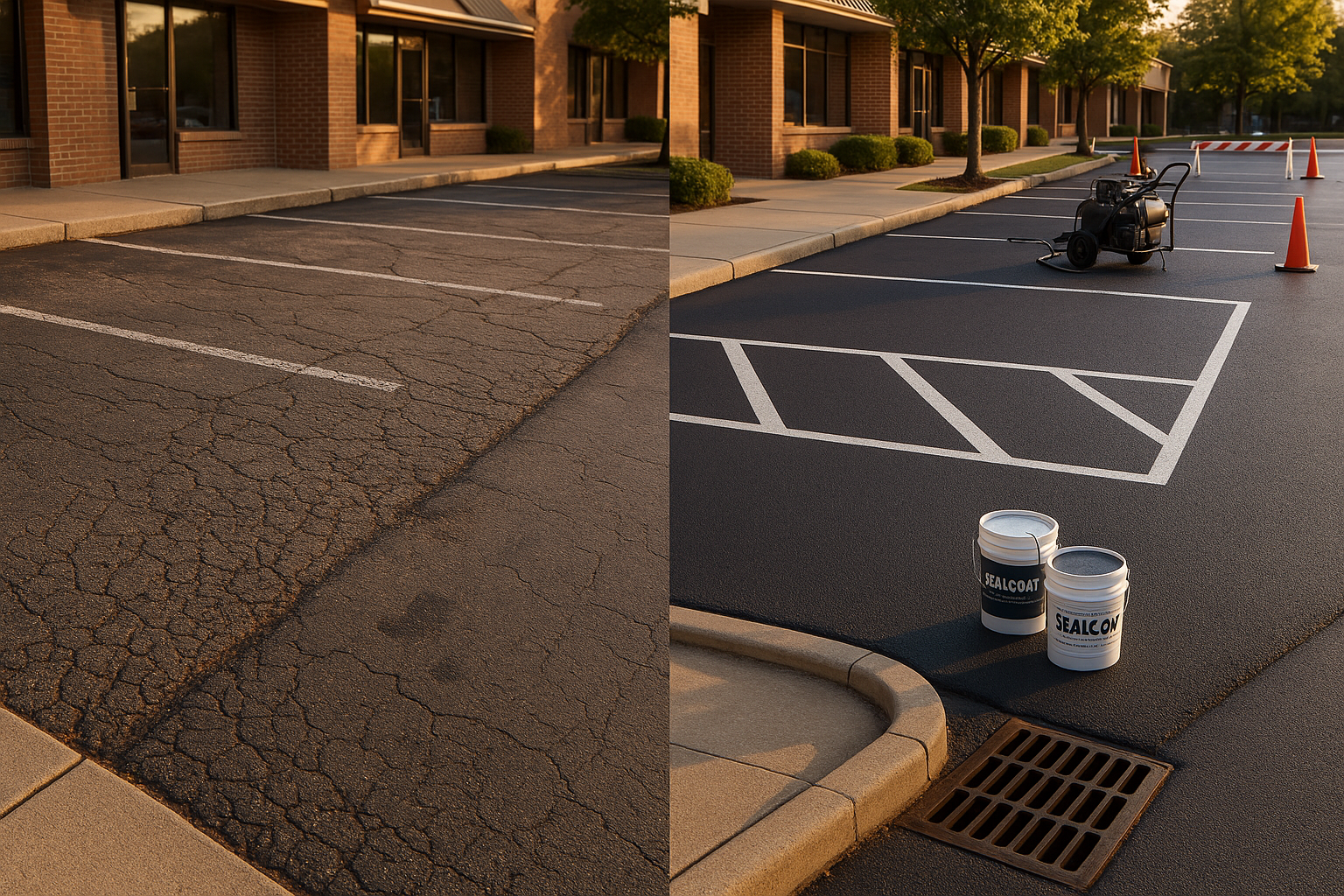
There’s also the look. Nobody wants a patch that stands out like a square bandage on their parking lot. Thermally blended edges mean the repair almost disappears. Color match is way better than cold patch, which always looks like a gray blob. And because the old and new asphalt are fused together, water can’t get in at the edges—so the repair lasts longer in our freeze-thaw cycles.
We did a driveway patch in Zionsville one February. It was 35 degrees and dry, and the homeowner was worried it couldn’t be done. We told her we could, it’d just take a bit longer to heat the pavement. She watched the whole thing and kept saying, “That’s it?” It reopened before dinner.
Speaking of weather: infrared works best on dry pavement. Cold temps just mean we have to run the heater longer. So we can do repairs in late winter or early spring, as long as there’s no standing water or ice. But most of our heavy work happens spring through fall, when the local hot-mix plants are running and we can match the exact aggregate gradation used in Marion County.
Our Process: From Site Walk to Sealed Edges
When you call PavementPros, we don’t just show up with a heater. We start with a site walk. We look at the damage, check for drainage issues (especially around inlets and curb lines where water ponds), and probe the base to see if it’s solid. If we suspect a drainage problem, we might talk to you about catch basin repair because fixing the pothole without fixing the water source is just spinning your wheels.
Then we put together a written proposal with a clear scope and a traffic control plan. We know a lot of our clients run small retail centers, churches, schools, and HOAs—so we stage work to keep access open during peak times.
The infrared repair itself goes like this:
- Heat the repair area until the asphalt is soft and workable.
- Scarify (rough up) the surface and lute (rake) the softened material.
- Add fresh hot mix asphalt to bring it up to grade.
- Compact it in lifts, so it’s solid all the way through.
- Seal the edges with a bituminous sealant to lock out moisture.
- Check drainage and clean up the site.
We use local hot-mix and rejuvenator/tack as needed, so the patch bonds strong and blends in.
What It Costs and How to Decide
Infrared repair isn’t the cheapest option—a cold patch will always cost less upfront. But cold patch is temporary, and you’ll be out there again next spring. Infrared is often cheaper than sawcut-and-replace for small to medium patches, especially when you factor in lower labor and less material waste. If you’ve got a lot of scattered damage, doing multiple infrared patches at once can be very cost-effective.
But there are times when we’d steer you toward something else. If the damage is widespread, or the base is shot, we might recommend milling and resurfacing for a longer-term fix. That’s a bigger project, but sometimes it’s the right call.
The bottom line: infrared asphalt repair is a great tool for the right job. If you’ve got potholes, seams, utility cuts, or birdbaths that keep coming back, it’s worth a serious look.
If you’re tired of patching the same pothole every spring, let’s talk. We’ll come out, take a look, and give you a written plan and quote—no pressure, just straight answers. Schedule a site walk here and we’ll get you on the calendar.
Ready for a free lot assessment?
We walk the lot, photograph the problems, and hand you a written plan — no pressure, no obligation.