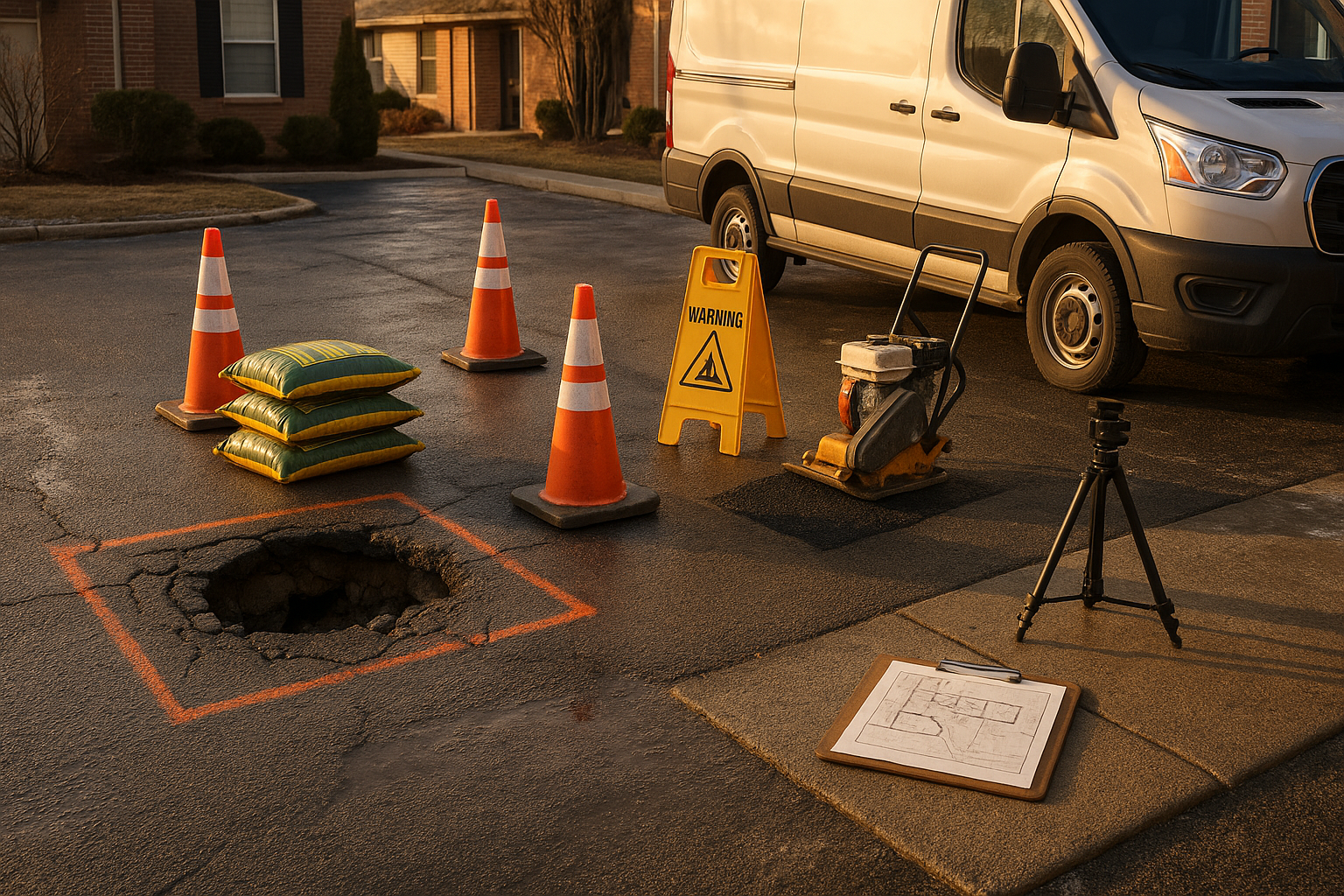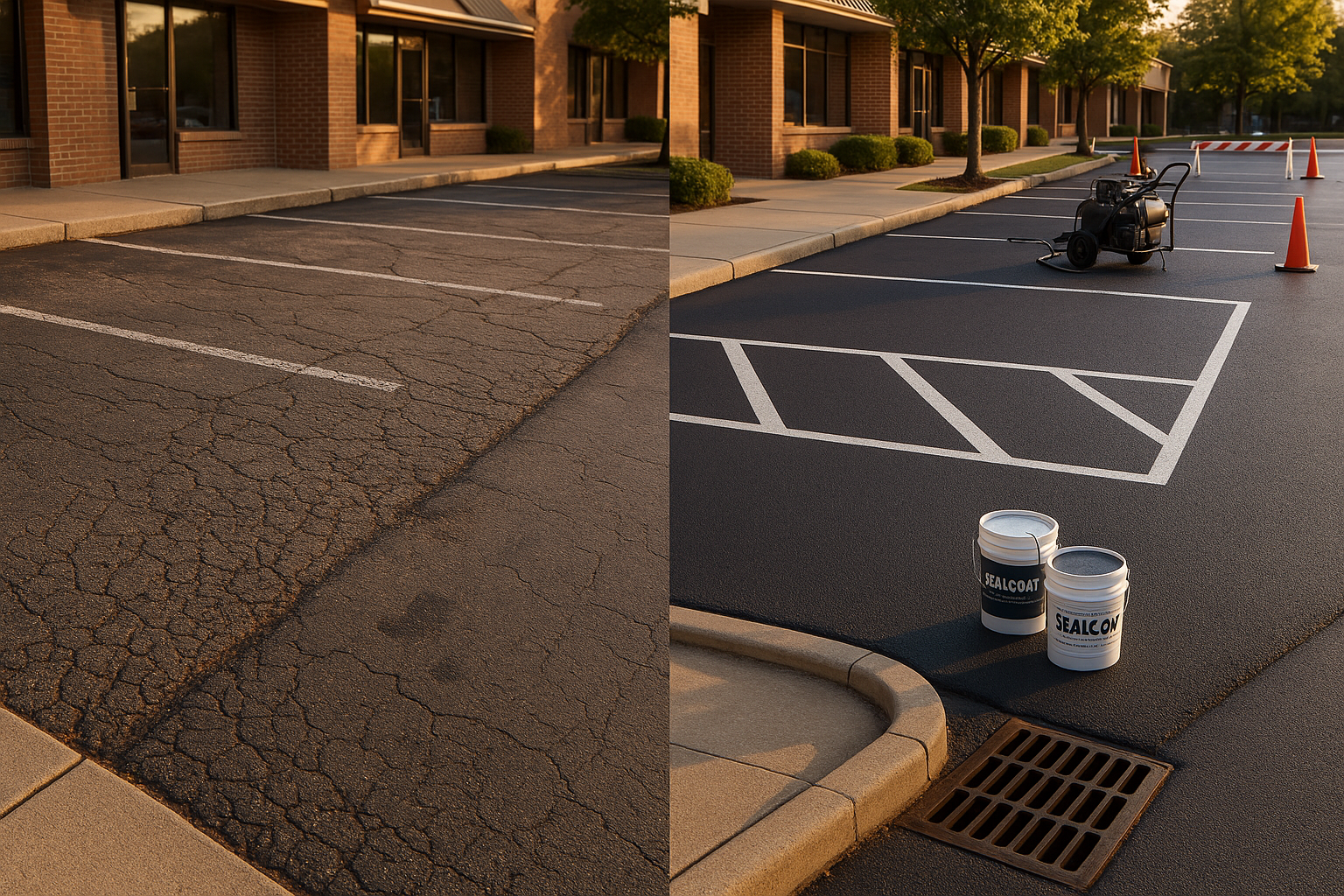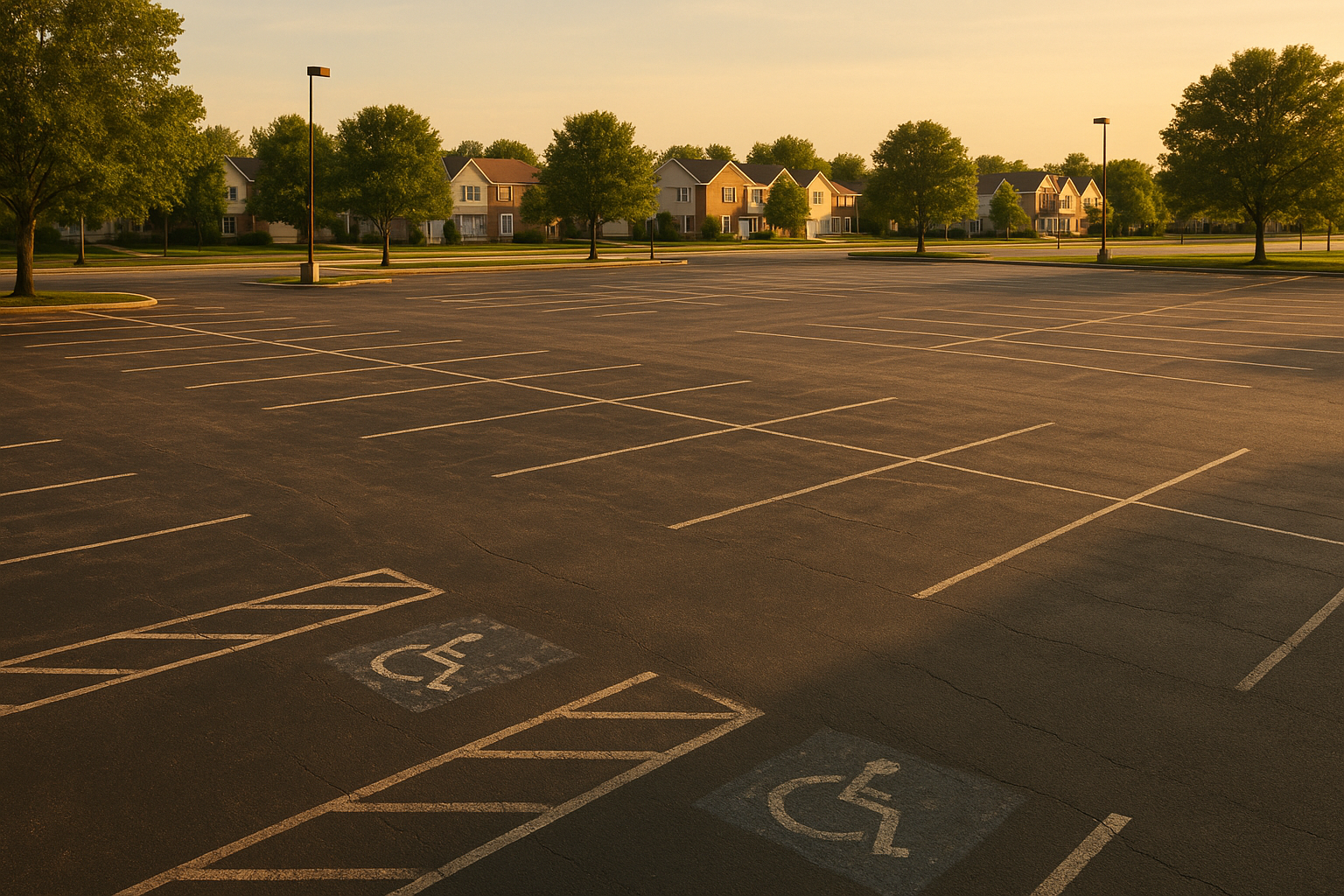
Last spring I got a call from a facilities guy in Fishers. His office park lot had ruts deep enough to hold water after every rain. The curb line? It was getting buried under years of old patches. He asked if we could just lay another 2 inches of blacktop on top. But that's a bad idea when doors, drains, and ADA ramps are already close to the pavement height. That's when I told him about asphalt milling.
What is asphalt milling, really?
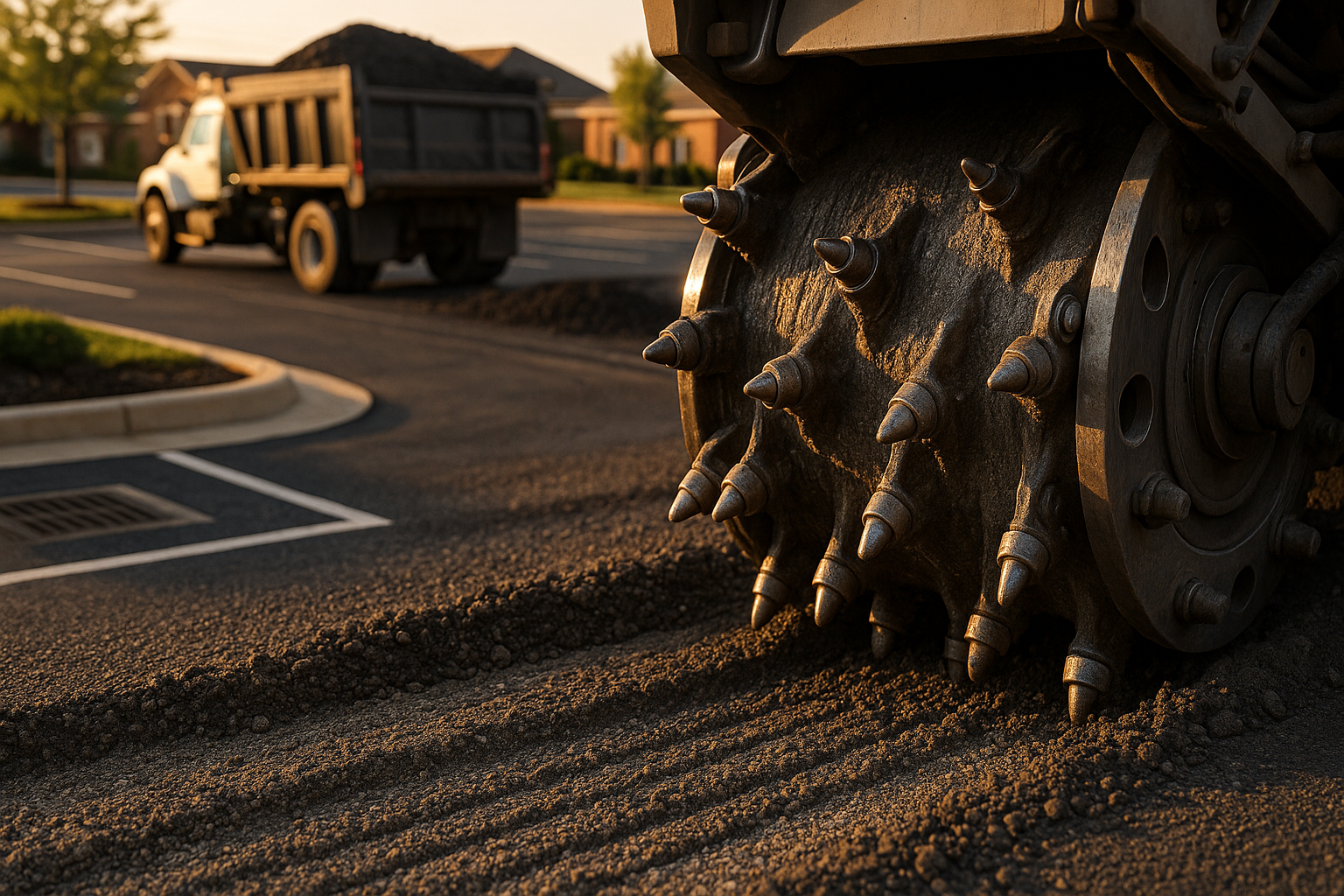
Asphalt milling is a process where we grind off the top layer of pavement to a set depth. Some folks call it cold planing, because we don't use heat. It leaves a textured surface that's ready for a new layer of asphalt. The machine uses sharp teeth on a rotating drum to chew up the old top. The milled stuff gets loaded into trucks and taken away to be recycled.
We usually pair milling with an overlay, so the whole job is called mill and overlay. Sometimes people say asphalt grind and pave, which is the same idea. This is a form of asphalt resurfacing, but it's not just slapping a new layer on top. It corrects the profile.
Why mill instead of just paving over?
Milling is great for surface-level problems. If your lot has shallow potholes, raveling (where the rocks come loose), or ruts from snowplows and delivery trucks, milling can take those down. It also fixes the slope. A flat lot in Greenwood or Plainfield that ponds water near the building needs profile milling to get water moving toward catch basins. We talk more about that in our post on catch basin repair.
If the base under the asphalt is shot, milling won't fix it. That's when we look at full-depth reclamation or reconstruction. But for most parking lots and driveways around Carmel and Westfield, the top 1 to 2 inches are the problem. Even residential driveways with sunken wheel tracks can benefit from driveway milling before a thin overlay.
How the milling and paving process works
First we mark out utilities and set the milling depth. Typical asphalt milling depth for a parking lot is 1 to 2 inches. On a driveway, maybe 1 to 1.5 inches. The mill has a control system that lets us match the existing grade or cut a new slope. We make several passes, overlapping so there are no high ridges. While we mill, we stage traffic to keep businesses open. Dust and noise? Yeah, there's some. We use water on the drum to keep dust down, and we schedule the loudest part for off-hours if possible.
After milling, we sweep the surface clean and spray a tack coat. That's a thin layer of sticky asphalt emulsion that helps the new overlay bond. Then we pave. The overlay thickness usually is 1.5 to 2 inches, depending on traffic. We compact it while it's still hot. You can usually drive on it within a few hours after we finish rolling.
Recycled asphalt pavement (RAP) — what happens to the milled stuff?
One cool thing about milling: the old asphalt doesn't go to a landfill. It becomes recycled asphalt pavement, or RAP. We load it into trucks and take it to a plant where it gets crushed and mixed into new asphalt. In Indiana, RAP is a big part of new mixes. That keeps costs down and cuts waste. For a small HOA lot in Noblesville, using RAP in the new surface might save a few bucks per ton, and it's just as durable if the plant does a good job.
Milling fixes drainage and those annoying height problems
Old lots in Indianapolis and the near north side often have manholes, catch basins, and valves that stick up or sink after years of overlays. Milling lets us lower the pavement around them so they sit flush. We also adjust the structures after milling to match the new grade. This is called manhole and catch basin adjustments. If a catch basin is too high, water can't get in. If it's too low, plow blades hit it. Milling gives us the room to fix that.
Curb reveal and ADA ramp heights are a big deal. Add too much asphalt on top and you create a bump at the sidewalk. Milling preserves the right height. We cover that in our sidewalk and ADA ramp repair post.
At the edges where new meets old, we cut smooth butt joints so the transition isn't a trip hazard. Snowplow blades and heavy delivery traffic on regional distribution routes create ruts. Profile milling can remove those without rebuilding the base.
What does asphalt milling cost, and is it worth it?
Asphalt milling cost factors include the depth of the cut, how many truckloads of RAP we haul off, and how many manholes or basins need adjusting. On a typical commercial lot in Avon or Brownsburg, milling and overlay might run 20-40% less than full reconstruction. It's a good value if the base is still solid. A thin overlay without milling might cost less upfront, but it won't fix drainage or ruts, and you'll be back in a few years.
Wondering about base condition? Read our aggregate base parking lot explained article for the lowdown.
Weather, access, and what to expect in Indianapolis
Indiana weather matters. We can mill in cooler weather, but paving needs the surface to be dry and warm. Most jobs around here run from April through October. If a cold snap hits mid-project, we might mill one day and wait a few days for warmer temps before paving. That's okay. As for access, we phase the work so at least one entrance stays open. For small office lots, we can often do the whole thing over a weekend.
We follow Indiana asphalt specs for mix design and density. That means the new surface won't fall apart after the first freeze-thaw cycle. Deicing salts and snowplow blades love to eat weak asphalt. A properly milled and overlaid lot holds up better.
Quick answers to common milling questions
Will milling just cover up deeper problems?
No. Milling removes the top layer and lets us see the base. If the base is cracked or pumping, we'll tell you before we pave. Sometimes we need to dig out soft spots and do a patch first.
How noisy or dusty is milling?
It's not silent, but it's not a jackhammer. The machine has water sprays for dust. We can schedule the noisiest part before your business opens or on a Sunday.
How soon can we drive on it after milling and paving?
Usually within a few hours after the final roll. In hot summer sun, we might ask you to wait until evening so the new asphalt hardens a bit.
Get a plan that makes sense for your lot
If your lot is getting rutted or water is pooling where it shouldn't, don't just guess. We'll come out, take a few core samples if needed, and give you a straight answer on asphalt milling depth, overlay thickness, and a phased schedule. Request a site assessment at /#quote.
Ready for a free lot assessment?
We walk the lot, photograph the problems, and hand you a written plan — no pressure, no obligation.