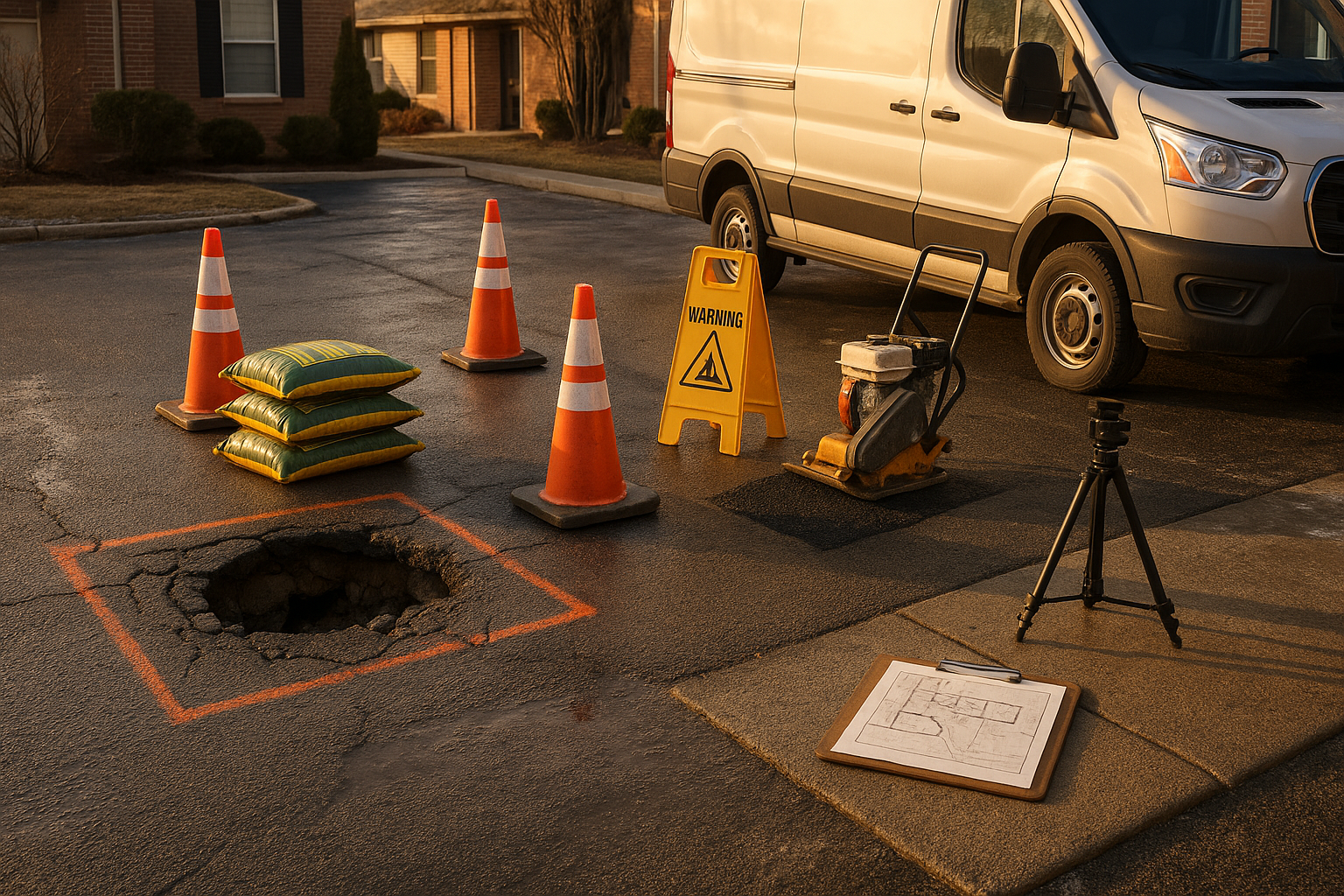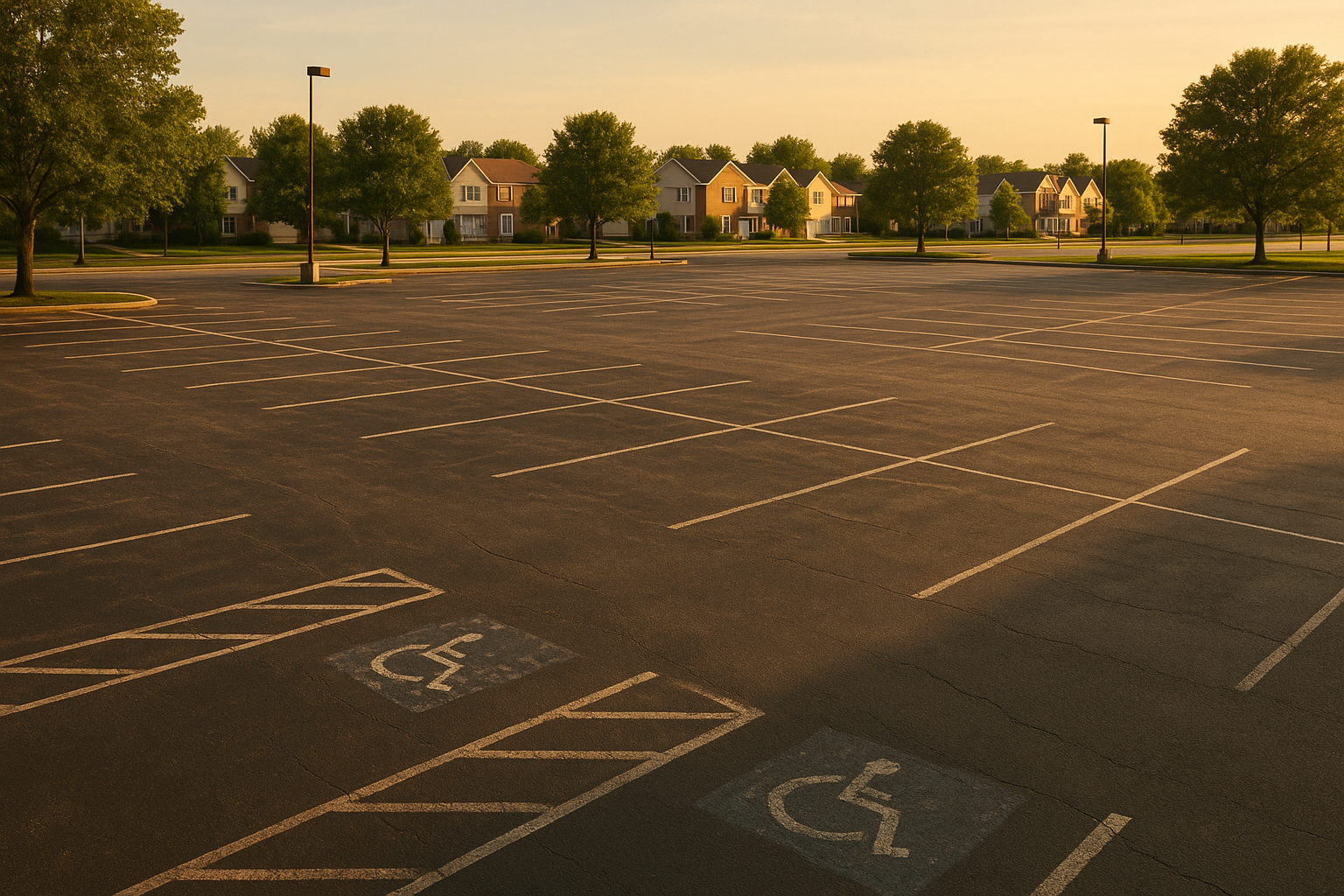
I was on a call with a property manager up in Fishers last spring. His lot was barely five years old, but it looked like a relief map of the moon. Cracks everywhere, spots where the asphalt was sinking like a slow-motion crumble. He thought he just needed a fresh overlay. Turns out, the base underneath was a handful of gravel on good days and a soupy mess after every rain. Poor guy had spent a fortune on a surface that had no solid backbone.
That’s the thing about parking lots. They fail from the ground up, pretty much every time. So if you’re planning a new lot or trying to save the one you have, you’ve got to start where it counts: the parking lot aggregate base. That layer of stone under your asphalt isn’t just filler—it’s the skeleton of the whole pavement.
What’s Under Your Asphalt Really Matters
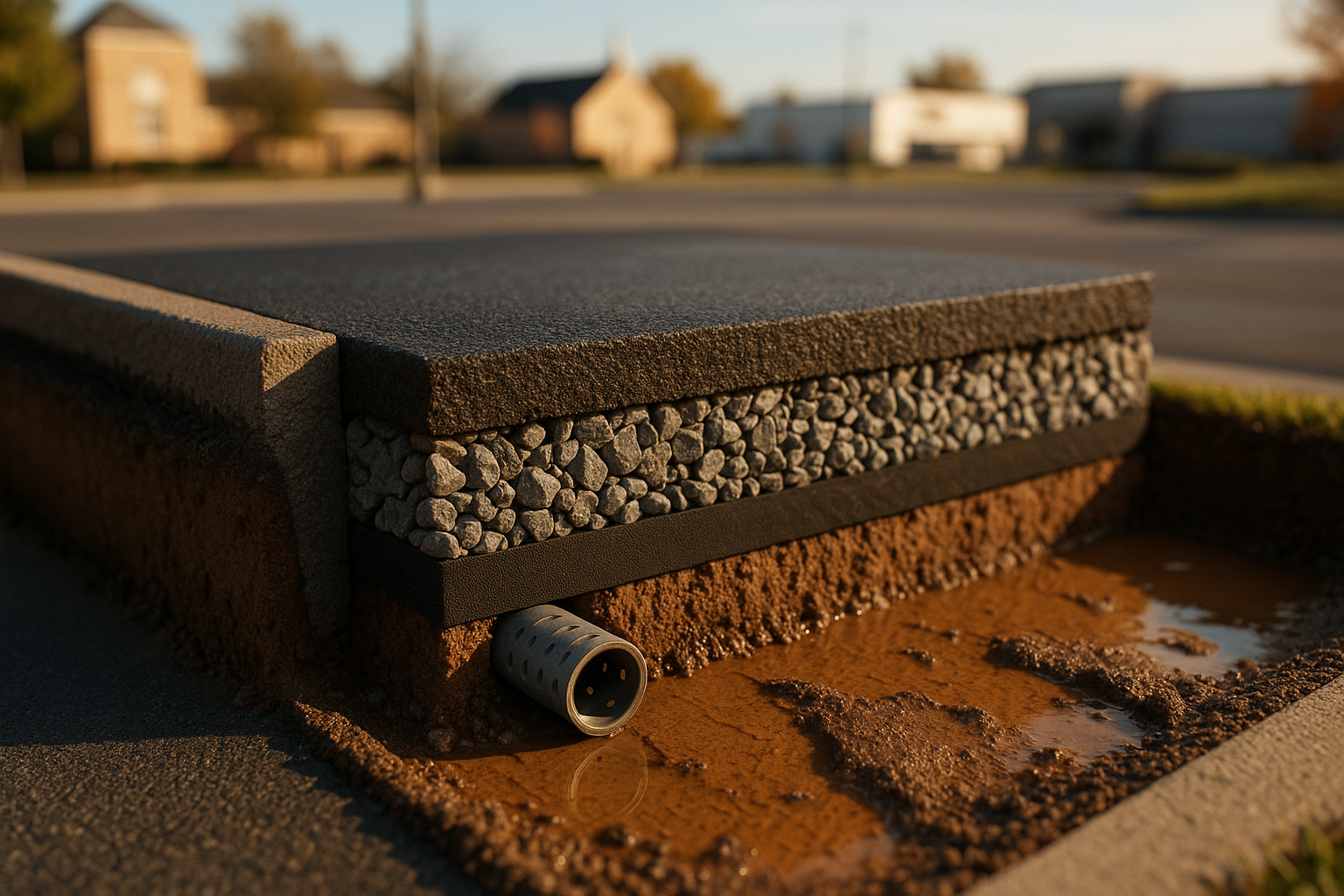
Think of your pavement like a sandwich. The asphalt on top is the bread (a thin, crispy slice). The aggregate base underneath is the meat and cheese—it’s what gives the whole thing structure and carries the weight. If the base is weak, wet, or too thin, the asphalt will crack and squirm under traffic, no matter how thick you pour it.
A parking lot aggregate base does four jobs: it spreads out the weight from cars and trucks so the soil below doesn’t deform, it drains water away, it bridges weak spots in the subgrade, and it fights frost heave in our freeze-thaw Indiana winters. Without it, you’re basically paving over a mud pie.
The Indianapolis Stone Standard: INDOT #53 and Friends
Around here—Indianapolis, Carmel, Greenwood, all the way to Plainfield and Avon—most contractors reach for INDOT #53 stone. It’s a crushed limestone mix with angular pieces and a careful amount of fines (the little dusty particles that lock it all together). When you moisten it and compact it just right, it becomes almost concrete-hard. It’s our local workhorse, and the quarries around central Indiana keep it in steady supply.
Sometimes, if we’re watching pennies, we’ll talk about recycled concrete aggregate (RCA). It’s old concrete crunched down to gradation specs. It can be just as solid, but you have to be picky about the source—some loads carry too much debris or fines that make it harder to drain. I’ve seen it work great in a lot in Brownsburg for a distribution center that needed a lower-cost base under heavy truck lanes. But for most retail shops or churches in Noblesville or Westfield, I’d still steer you toward limestone.
How Thick Should That Base Be?
“How thick?” is the first question everybody asks. The answer: it depends, and no honest contractor will give you a one-size number over the phone. A light-duty car lot behind a small office? You’re probably looking at 6 to 8 inches of compacted base. But if you’ve got dumpster trucks rumbling in twice a week—like behind a restaurant in Broad Ripple—you need 10, maybe 12 inches under those lanes. A delivery lane for a warehouse in Greenwood? Same thing. The real design should come from a soil test (called a CBR test) and an estimate of how many heavily loaded trucks you’ll see over the life of the lot. We call that traffic loading ESALs, and it matters more than you’d think.
And don’t forget the stuff you can’t see. A big box store lot might have car areas at 6 inches and the fire lane at 10 inches, because that ladder truck is heavy. Most parking lot failures I fix are just undersized bases in the high-load zones.
When the Ground Beneath is Wet or Weak
Here in central Indiana, we’re sitting on a lot of clay—glazed, sticky clay that holds water like a sponge. If you build a base right on top of that without some kind of separation, the mud pumps up through the stone every time it rains. You end up with a wavy, cracked mess that no overlay can fix.
Before any stone goes down, a good contractor does a proof roll. They basically drive a heavily loaded dump truck over the graded subgrade and watch for any bounce or shoving. If the ground moves like a waterbed, you’ve got a problem. Options: dig out the bad stuff (undercut), chemically stabilize it with lime or cement, or lay down a geotextile separator fabric—a tough fabric that keeps the stone from mixing with the muck. I recommend fabric under every lot we build in places like Avon or Zionsville where the soil stays wetter longer. It’s cheap insurance.
Building It Right: Compaction and Proof Rolls
Once the stone arrives, it goes down in lifts—layers no thicker than 6 or 8 inches at a time. Each lift gets moistened and then compacted with a heavy roller until it hits at least 95% of the maximum dry density (per a Proctor test). The crew checks it with a nuclear gauge or sand cone—quick density spot checks—and then we proof roll it again. If there’s any deflection, we rework it. I’ve seen too many jobs where the base looks flat but hasn’t been truly compacted, and within two winters, it’s like a washboard.
A second proof roll after the base is done tells you everything. You can actually hear a hollow sound if there’s a soft spot. It’s one of those things that seems picky but saves you tens of thousands down the road.
Indianapolis Weather and Your Base: Freeze, Thaw, Repeat
Our weather here is a circus. Freezing one week, 50 degrees and raining the next. That freeze-thaw cycle is murder on pavement because water trapped in the base or subgrade expands when it freezes, lifting everything. Then it melts and the material turns to mush. A good base with proper drainage—positive slopes, maybe edge drains or underdrains if the site is flat—keeps the water moving out. An open-graded aggregate base (cleaner stone with fewer fines) acts like a French drain and is sometimes the right call if you’re building on a site with high groundwater or a slope that traps runoff.
I’ve seen a church lot in Noblesville that had a base just about 4 inches thick with no drain. Every spring, it heaved and sank in random spots. We ended up tearing it out and putting in 8 inches of stone with a fabric separator, and now it’s solid through the worst of March.
Base Problems or Surface Problems? Know the Difference
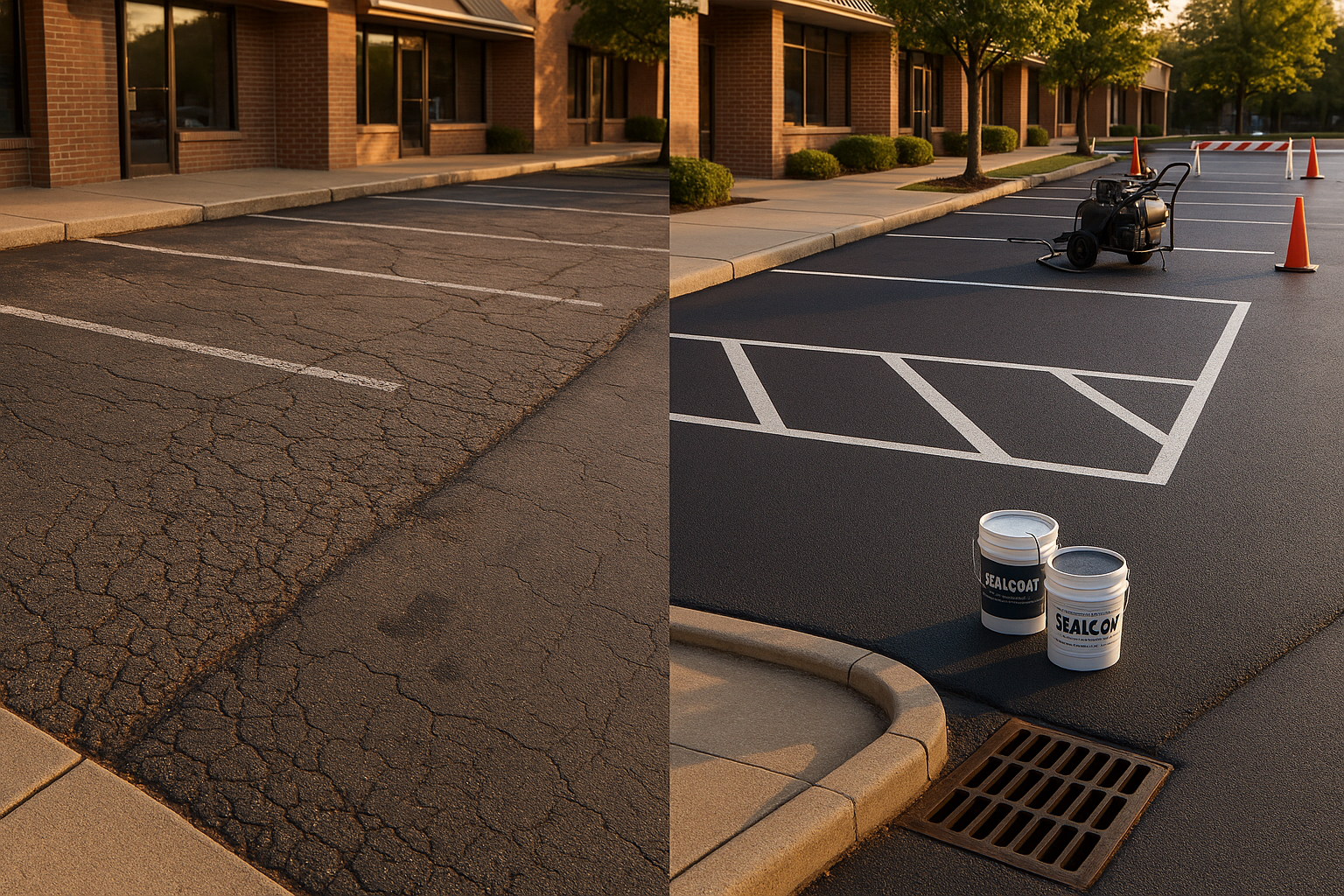
If your lot has long, wandering cracks that look like dry skin, or if you’ve got ruts in the driving lanes where the asphalt has dipped, that’s a base problem. Alligator cracking is the classic sign—it looks like a reptile’s back and means the base has lost its strength underneath. Surface-only issues like shallow cracking or slight raveling can often be fixed with a sealcoat or thin overlay. But if you see standing water after a light rain, that’s a drainage and base red flag. Fix the surface without fixing the base, and you’ll waste your money. A quick article on preventive vs. reactive maintenance might help you read the signs.
Fixing or Rebuilding: Options When the Base Fails
Not every bad base means a total gut job. Sometimes we can do full-depth reclamation—grind up the existing asphalt and mix it with the stone underneath, then recompact. In other cases, we undercut just the failed areas and repack them. If you’re adding truck lanes to an older lot, we might build up the base thickness specifically where the heavy loads travel. The tough call is when someone asks, “Can’t we just add more asphalt?” The answer: if the base is cooked, adding asphalt is like putting a new roof on a house with a failing foundation. It looks nice for a minute, then it all collapses. For commercial lots, planning the right asphalt thickness goes hand in hand with a solid base.
Planning a Lot Overhaul Without Closing Your Business
At PavementPros, we know you can’t just shut down a store or a church for two weeks. In places like downtown Indianapolis or the busy retail strips in Carmel, we phase the work. Maybe we do the back half first, keep the front open, then flip. We communicate every day with the property manager. We handle permits and drainage approvals—Indy DPW has its own stormwater requirements, and we know them. A written scope that breaks the lot into zones by load (car area, loading dock, dumpster pad) keeps everyone on the same page. We even provide compaction test reports and photos, so you have a record of what’s under there.
Get a Real Look at Your Base Before You Spend
You can guess about your lot or you can know. We’ll come out, walk the pavement with you, maybe take a core sample or dig a test pit if needed. We’ll talk about what you’re seeing—ruts, cracks, ponding—and check the subgrade with a proof roll if things look iffy. Then we’ll give you a down-to-earth plan with local materials, a practical phasing schedule, and numbers that reflect what’s actually needed, not some copy-paste estimate. If you’re ready to stop worrying about your lot and start building it right, reach out for a site assessment. We’ll help you figure out the base that’ll keep your pavement solid for years.
Ready for a free lot assessment?
We walk the lot, photograph the problems, and hand you a written plan — no pressure, no obligation.