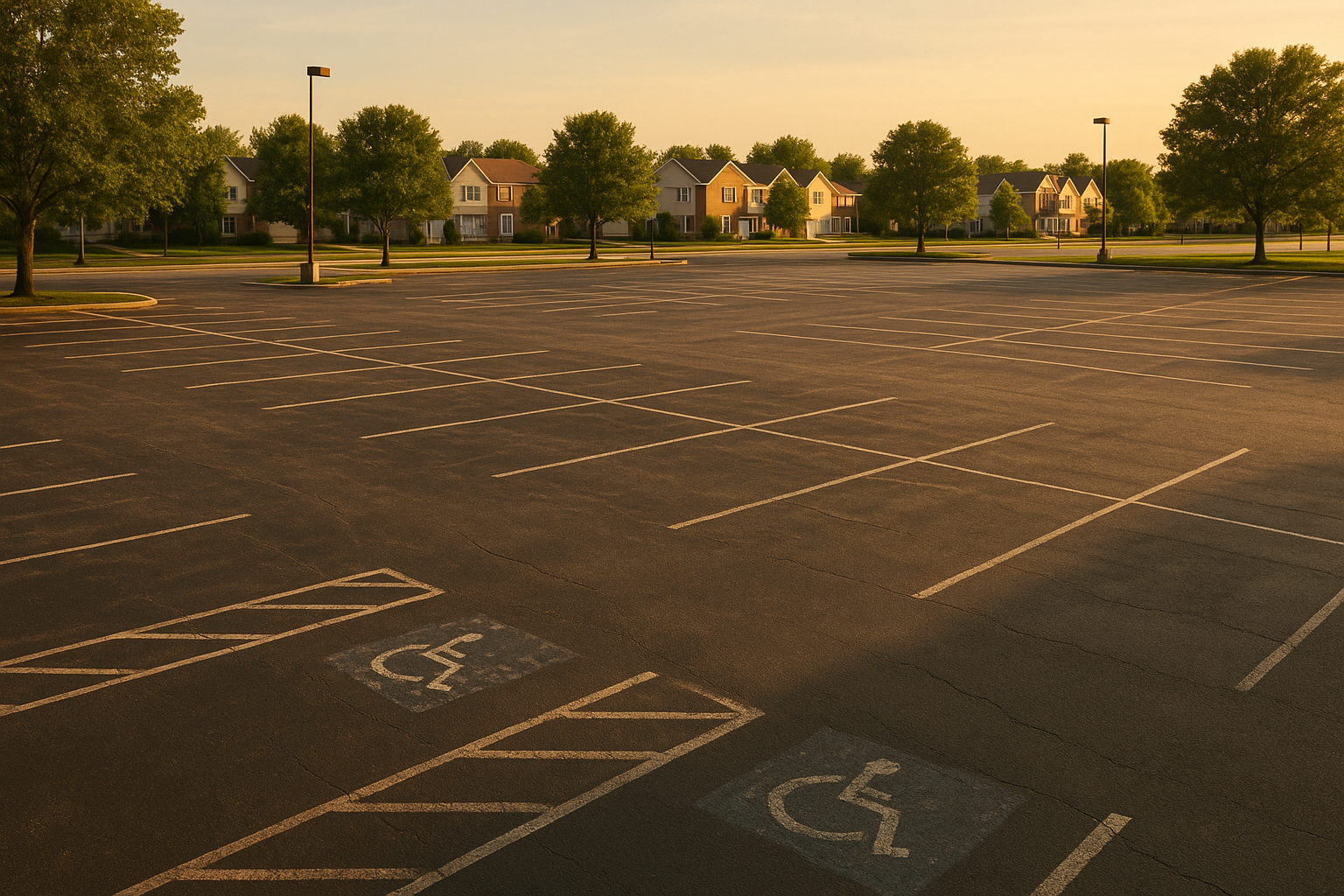
A friend of mine manages a strip mall over in Fishers. Last spring he called me, frustrated. He’d just spent a chunk of change repaving the parking lot two years ago, and already cracks were spreading like crazy, one corner had a pothole you could lose a Prius in. “I thought asphalt was supposed to last ten years,” he said. I asked him how thick the contractor had put down. He shrugged. “I don’t know—some. It looked good when they finished.” That right there is the problem. If you don’t know how thick your commercial parking lot asphalt is, and why that thickness matters, you’re basically hoping the Indiana weather won’t beat it up. Hope is not a strategy.
So let’s dig into what actually makes a parking lot stay solid for a decade or more in our part of the Midwest. It ain’t just about the black stuff you see on top.
It’s Not Just Asphalt—It’s a System
When we talk about asphalt thickness commercial, we’re really talking about a sandwich. A good one. The pavement you drive on is just the top. Underneath you’ve got layers that do the heavy lifting. The whole system is three parts: a compacted stone base, a binder course (the heavy-duty middle), and the surface course (the smooth top you stripe). Skimp on any of these, and the whole thing comes apart way sooner than it should.
The stone base—often INDOT #53 crushed stone around here—is what spreads out the weight of cars, delivery trucks, and the occasional overloaded garbage truck. The binder course is a coarser asphalt mix, about 19 mm stone size, that adds structure. The surface course is finer, maybe 9.5 mm, so it’s tight against weather and looks clean. You need all three working together.
What Drives How Thick You Need to Go?
So how do you figure the numbers? It’s not a one-size-fits-all deal. We look at a few things on every commercial parking lot asphalt thickness job:
- Traffic mix: Mostly cars at a doctor’s office? That’s light-duty. But a grocery store or a warehouse off I-70 with semis making right turns all day? That’s heavy-duty, and the truck lanes need more asphalt and more base.
- Subgrade strength: The soil under the stone base. In central Indiana, we’ve got a lot of silty clay—some call it “Indiana gumbo.” It gets soft when wet. So you might need a thicker stone base to bridge over weak spots, or even geotextile fabric to keep the rock from mixing with mud. We do proof-rolling with a loaded truck to see if the dirt bounces or ruts before we commit to paving.
- Freeze–thaw cycles: Our winters aren’t the harshest, but we get plenty of days bouncing above and below freezing. Water gets under the pavement, expands when it freezes, and that heaving can crack thin asphalt in no time. A solid base with good drainage keeps that damage minimal.
- Drainage: If your lot holds water, you’re asking for trouble. We need 1–2% slope to drains or inlets. Flat spots that pond will soften the subgrade and cause potholes. Here in Indianapolis, many older lots were built on flat ground with nowhere for water to go, so we often have to re-grade or add catch basins.
Real-World Thickness Sections for Indianapolis Lots
Based on what we’ve seen hold up around Carmel, Greenwood, and downtown Indy, here are the typical pavement section designs we recommend:
- Light-duty (mostly cars, maybe an Amazon van): 6–8 inches of compacted #53 stone, plus 2 inches of binder and 1–1.5 inches of surface. Good for quiet office parks or residential overflow.
- Mixed-use (retail with occasional delivery trucks): 8–10 inches of stone base, 2–3 inches of binder, 1.5 inches of surface. This handles daily small trucks and weekend shoppers without rutting.
- Heavy-duty (truck terminals, loading docks, warehouse approaches): 10–12+ inches of base, 4–6 inches of binder, 1.5 inches of surface. For dumpster pads, we might even push the asphalt thicker or switch to a small concrete pad because garbage trucks pivot and crush. And in high-turn areas, like where semis brake and twist, you want every bit of that beef.
Some folks ask, “Can’t we just put more asphalt and less stone?” Not really. The base is cheaper than asphalt per inch, and it does a better job of distributing loads. A thick asphalt slab on thin base can crack from underneath. Stone is your friend.
The Ground Underneath Matters More Than You Think
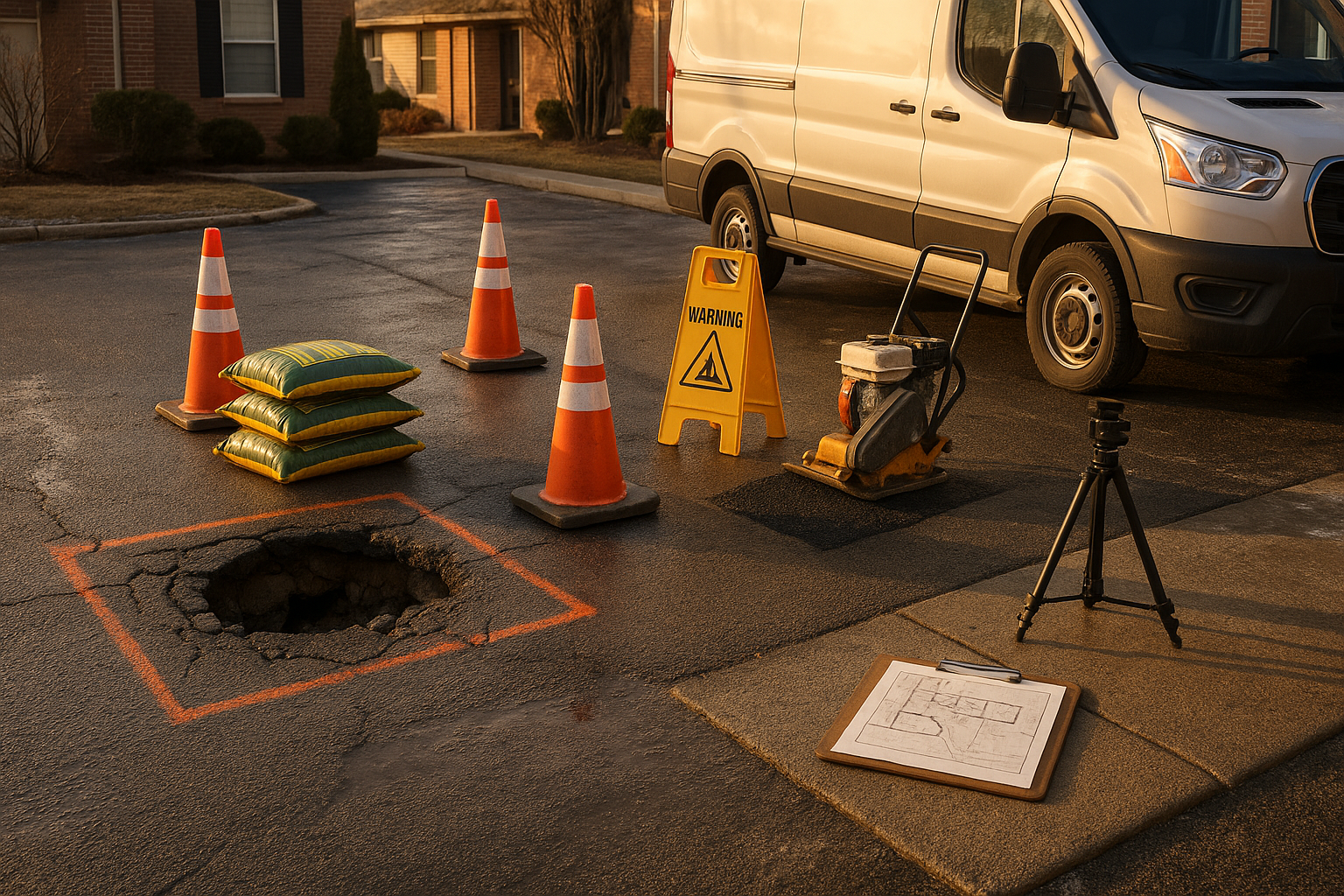
Before we even order the mix, we’ve got to make sure the subgrade is solid. On one job in Brownsburg, the developer had scraped off topsoil and hit what looked like firm clay. But when we proof-rolled, the ground pumped and rutted—just couldn’t support heavy trucks. We had to undercut about a foot deep in spots, replace it with compacted stone, and lay a geotextile separation fabric. That cost a few extra grand upfront, but the alternative was a parking lot that would settle and crack within two years.
Compaction is non-negotiable. We test the stone base and each asphalt lift with a nuclear gauge. The base needs to be dense, and the asphalt mat needs to hit 92% or more of theoretical max density, or you’ll get ruts. Snow plows are especially brutal on poorly compacted surfaces around entrances and corners.
When a Simple Overlay Works (and When It Doesn’t)
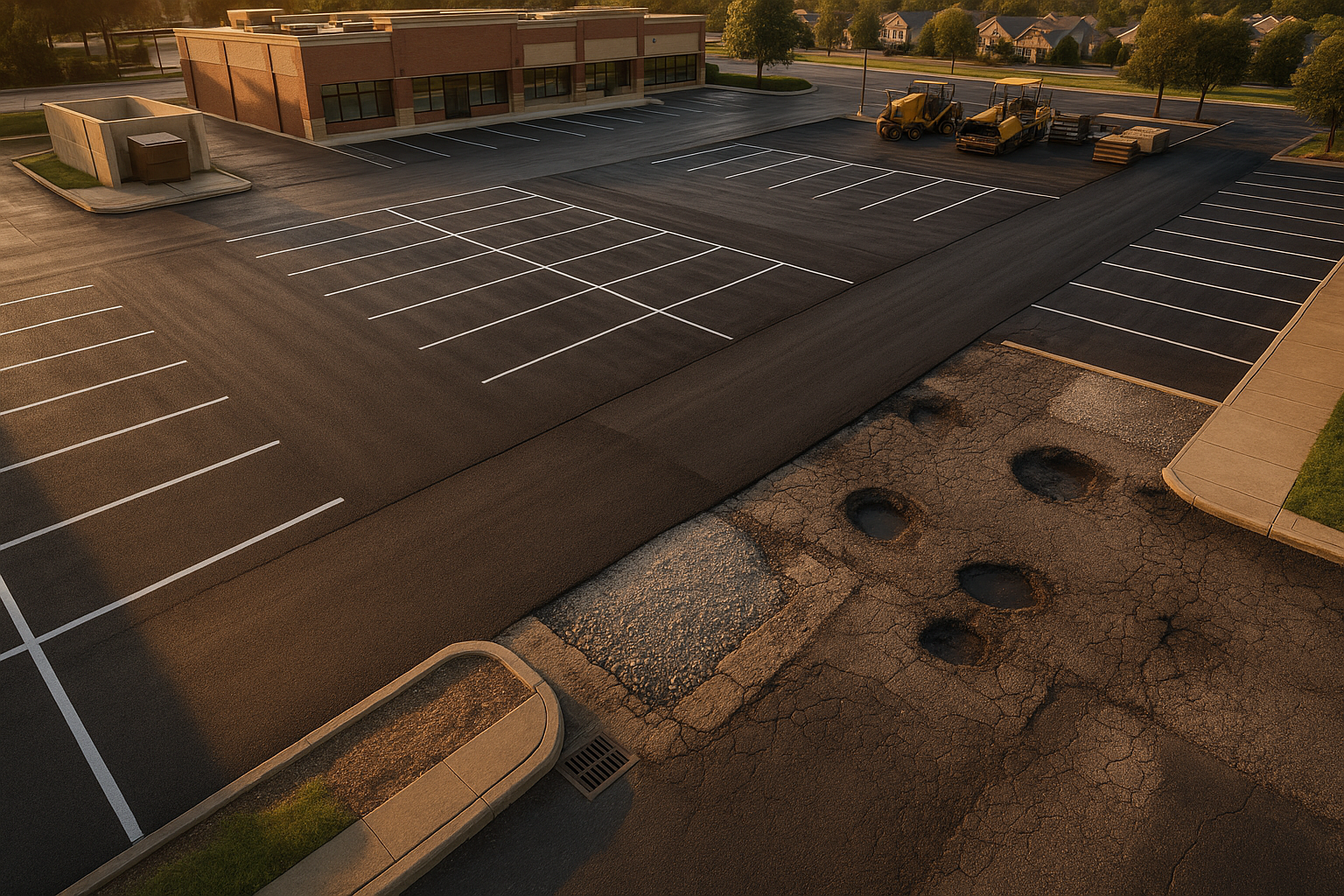
If your lot looks ugly but isn’t falling apart, you might get away with an asphalt overlay. A standard mill-and-overlay is typically 1.5–2 inches of new surface after grinding off the old top layer. That can fix surface cracking and poor drainage for a few years. But if you’ve got alligator cracking, wide seams, or potholes that go into the base, an overlay is like putting a bandage on a broken leg. You’ll need a structural overlay (2–3 inches of binder plus surface) or even a full-depth asphalt reconstruction where we dig out the bad sections and rebuild from the stone up.
I see some property managers wince at the price of full-depth, but consider this: a properly built heavy-duty asphalt thickness section can last 20 years with routine maintenance. An overlay on a failing base might be toast in three.
Mix Matters: Why What Goes in the Truck Counts
In Central Indiana, we usually run a PG 64-22 binder in our HMA (hot mix asphalt). That grade handles our hot summers and cold winters without getting too soft or too brittle. The surface mix is finer, like INDOT’s 9.5 mm surface, which gives a smooth finish and resists plow wear. For binder, a 19 mm mix fills the middle with strength. Lift thickness matters too—you never want to lay a lift thicker than about 3 inches or thinner than 1.5 inches, because compaction gets wonky. So for a 4-inch binder course, we do two 2-inch lifts.
Drainage goes hand in hand with mix design. We cut back curbs, tie into existing storm drains, and make sure water leaves the lot fast. In flat areas like Plainfield, we might need extra inlets to stop ponding.
Special Zones: Loading Docks, Dumpsters, and Tight Turns
The damage in a commercial lot rarely spreads evenly. The worst spots are where trucks idle and turn—loading dock approaches, dumpster pads, and around tight corners near the front door. We’ve torn out busted asphalt at a retail center in Noblesville where the garbage truck would twist in place, leaving a crater after a year. For those areas, we spec thicker asphalt (often 6 inches total binder + surface) or a concrete pad. Concrete handles point loads and oil drips better. It’s worth the extra coin for a dumpster pad that won’t crumble.
Phasing Paving So You Stay Open
We get it—closing a busy restaurant or pharmacy lot for a week is a nightmare. That’s why we phase projects: stripe one section, move cars, work the other side overnight. For a grocery store in Avon, we paved half the lot, let them use it for a few days, then flipped. Asphalt can be opened to traffic within 24 hours if we do it right and the weather cooperates. In late fall or winter, though, cold temps make compaction a challenge; we can still pave if we adjust mixes and use tarps to hold heat, but it’s riskier. I’d say, if you can avoid scheduling between December and February, do it. Spring and early fall are ideal.
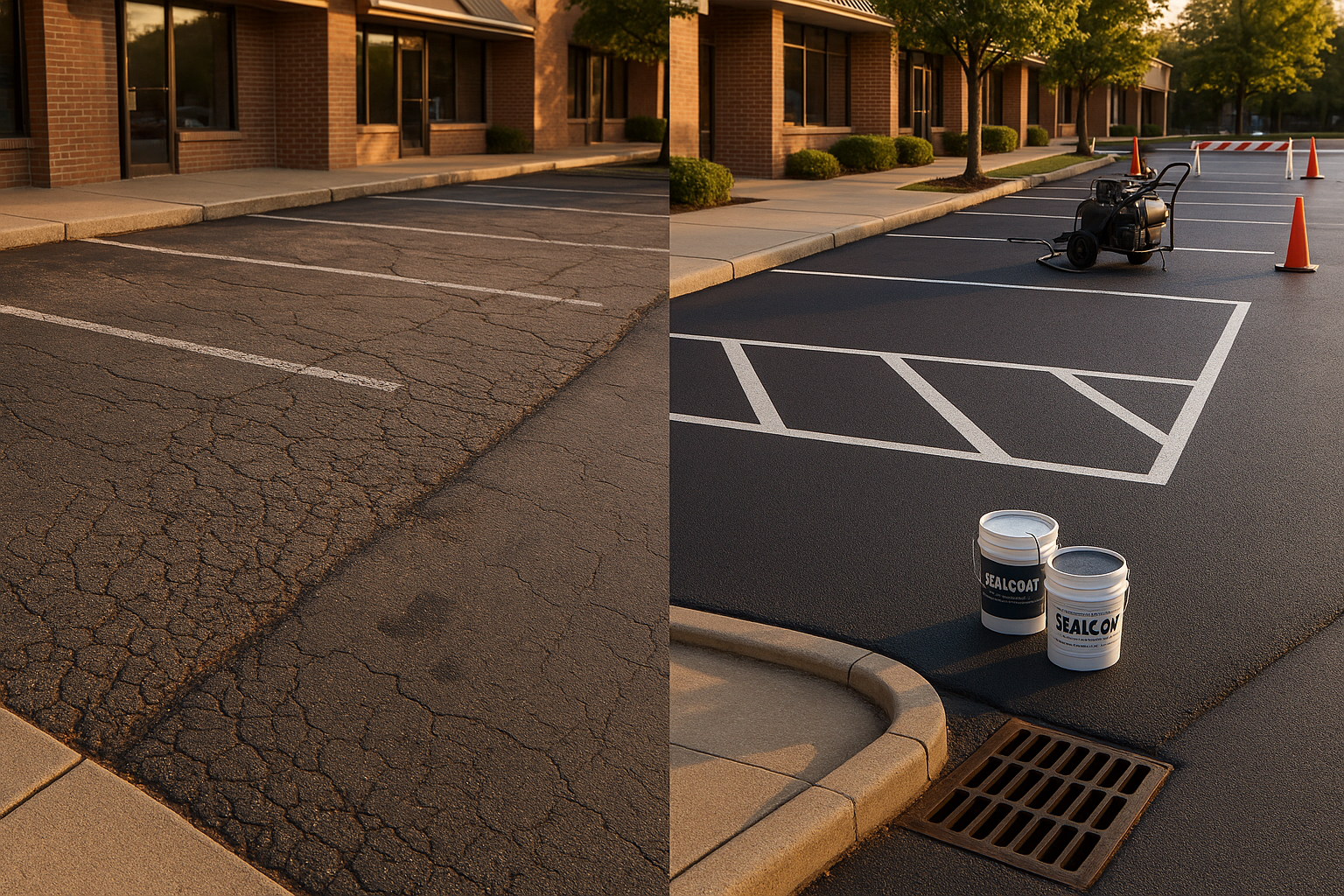
Sealcoating and crack sealing after a year or two will protect that investment. It’s cheap compared to repaving. A sealcoat every 3–5 years, crack fill when needed, and fresh striping keep your lot looking sharp and extend the life of that carefully designed asphalt thickness.
Talk to Us Before You Get Burned
I’ve seen too many Indianapolis-area properties pay twice because the first job was built too thin. Whether you’re over by the airport, up in Westfield, or right on Meridian Street in Carmel, the same rules apply: understand your traffic, respect the subgrade, and build a system that handles Indiana weather. If you’re not sure what your lot needs, let’s walk it together. We’ll check the base, talk about your traffic patterns, and recommend a practical design that doesn’t waste money but also doesn’t cut corners. You can get the ball rolling with a free thickness assessment at PavementPros. Meanwhile, if you’re curious about how maintenance keeps your lot healthy, check out our preventive maintenance guide or read up on retail parking lot specifics.
Your parking lot is the first thing your customers see—and the last thing they think about until it’s falling apart. Let’s make sure it stays invisible for the right reasons.
Ready for a free lot assessment?
We walk the lot, photograph the problems, and hand you a written plan — no pressure, no obligation.