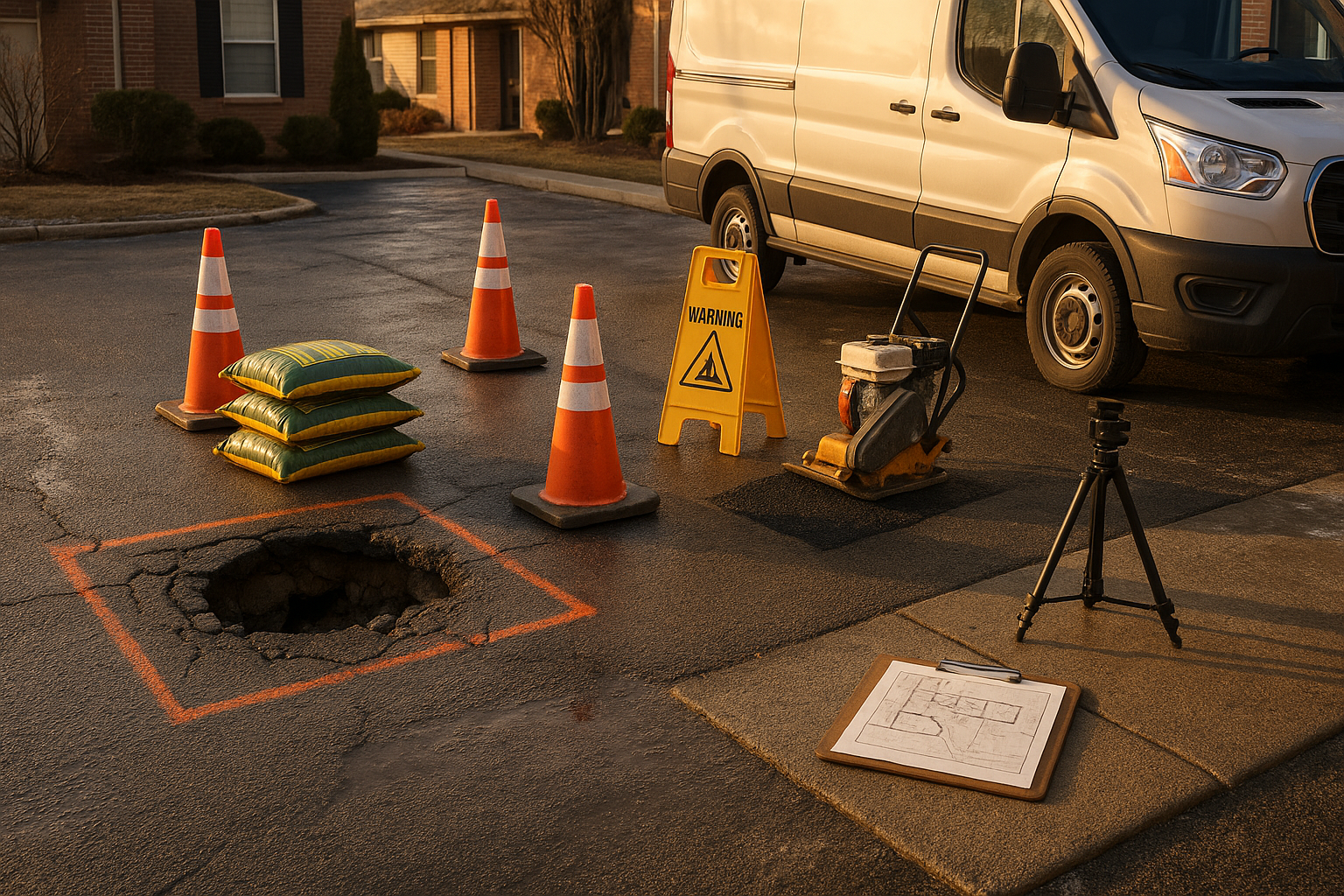
I’ll never forget what a facility manager in Castleton told me last December. We were standing in his shopping center lot, staring at a crack that had turned into a pothole the size of a carryout pizza, right in front of the anchor tenant’s door. A car had just bottomed out, and the driver was not happy. “I knew I should’ve sealed that last spring,” he said. “But budget said wait, and now it’s costing me customer complaints and a rush repair.” He’s not alone. For retail parking lot maintenance, waiting is the most expensive choice you can make.
That story plays out all over Indianapolis—Carmel, Fishers, Zionsville, Westfield, Noblesville, Greenwood, Brownsburg, Avon, Plainfield. Our freeze-thaw cycles, the salt we throw down every winter, and the non-stop traffic at retail plazas chew up asphalt like a wood chipper on a wet branch. If you manage a shopping center, a strip mall, or even a single big-box outparcel, your parking lot is the first thing customers see and the last place you want them to remember for a pothole or a trip-and-fall.
The Real Cost of Putting Off Lot Repairs
When you skip crack sealing or delay sealcoating, water gets into the pavement base. Freeze it, thaw it, repeat—it’s like nature’s jackhammer. In Indy, we get that cycle dozens of times each winter. Then spring rains pour, and suddenly you’ve got standing water in front of your stores because the catch basins are clogged or the grade has settled. That water means potholes, raveling, and a beat-up look that tells customers you don’t care. And let’s be honest, a rough lot also means liability. Trip hazards at ramps, loose wheel stops, faded ADA striping—they’re an open invitation for a lawsuit.
I’ve seen property managers try to save a buck by skipping maintenance, only to pay triple for a mill-and-overlay just three years later. Asphalt lots need a rhythm: crack fill every year in spots, sealcoat every 2-4 years, and restripe when the lines get so faint that two SUVs can’t figure out where to park. There’s no magic, just consistency.
What a Smart Maintenance Plan Actually Includes
A real retail parking lot maintenance plan isn’t just a guy with a bucket of sealer. It starts with a walk-through to map every crack, every birdbath puddle, every sign that’s tilted. PavementPros does that for free—we look at traffic patterns, where the delivery trucks idle, and how to keep the main retail access clear. Then we build a phased list: what needs to happen now, what can wait till fall, and what fits into next year’s budget.
Here’s what usually makes the cut.
- Crack sealing: Hot-applied rubberized filler that flexes with temperature shifts. Without it, every crack becomes a pothole in a year.
- Pothole repair: We use infrared asphalt repair when possible—it blends smoother and lasts longer than cold patch, especially in customer walkways.
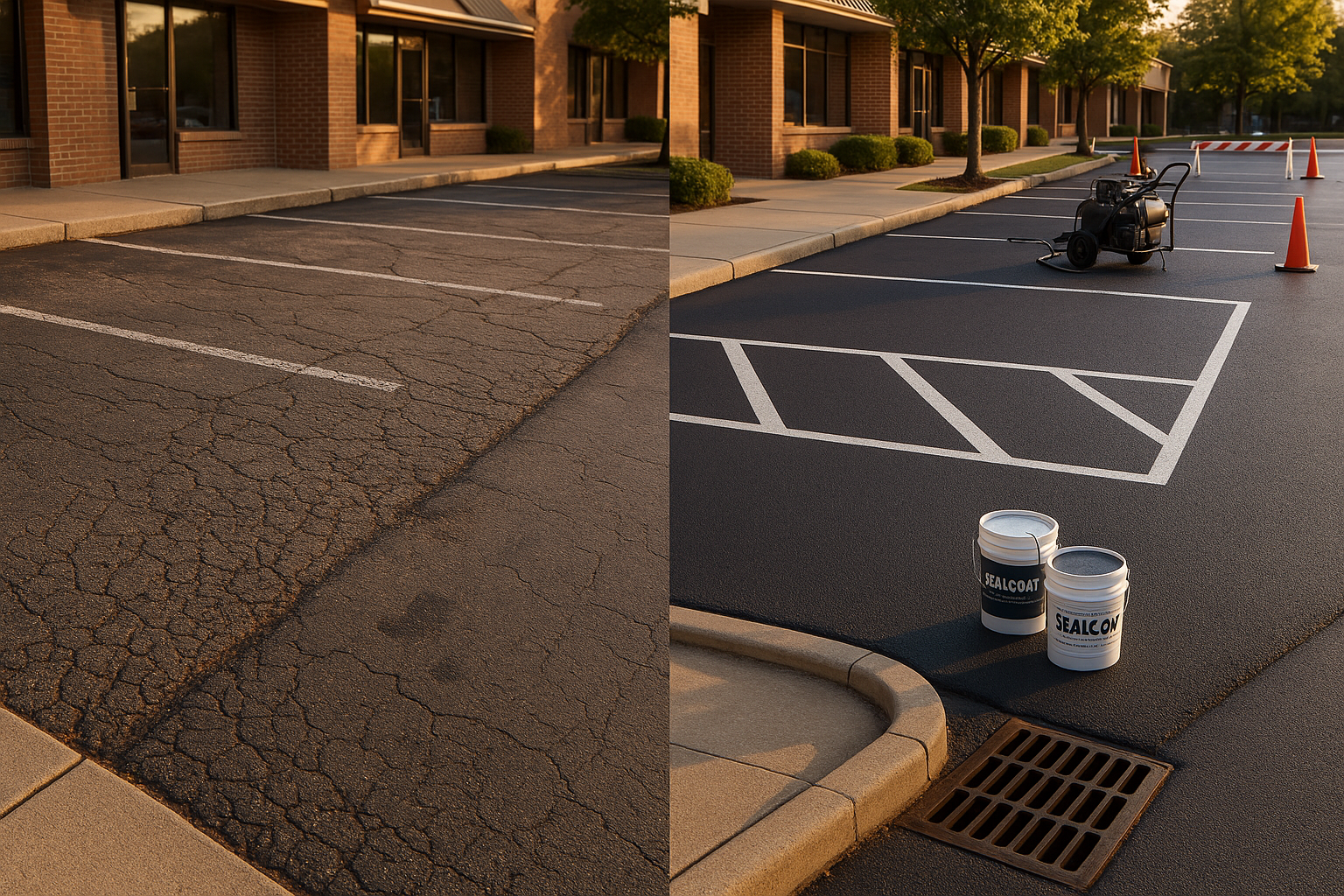
- Sealcoating: A commercial-grade sealer that locks out UV, oil, and salt. In Indy, you want a sealcoat that can handle de-icing chemicals without peeling off after one season.
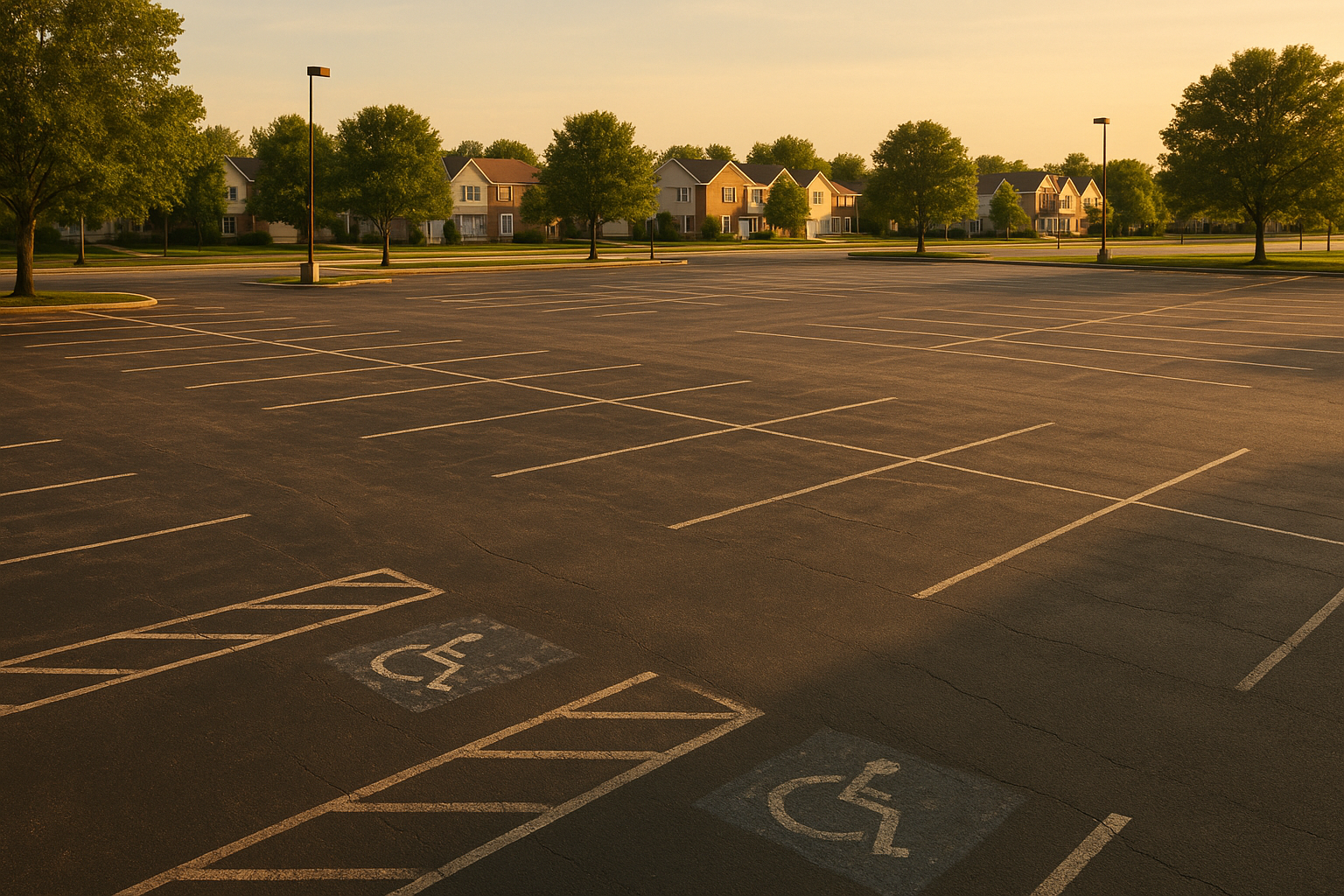
- Line striping and ADA updates: Re-striping stalls, crosswalks, loading zones, and refreshing the blue accessible markings. Curbside pickup spots need clear paint too.
- Drainage fixes: Cleaning catch basins, regrading small areas, or repairing broken curbs and gutters. A little milling can stop standing water that eats your base.
- Wheel stops and bumpers: We’ve written a whole comparison here because loose ones are trip hazards, and nobody wants a car touching the storefront.
And if you’ve got a mix of asphalt and concrete on your site, we can handle both without bringing in three different subs.
Keeping Stores Open While We Work
“Can you do this without killing my weekend business?” That’s the question we hear most from retail managers in Greenwood and Fishers. The answer is almost always yes—if you plan right. We’ve done overnight sealcoating at Keystone at the Crossing, phased chip-seal on Sundays near I-69, and early-morning striping at a strip mall in Brownsburg before the baristas even turned on the lights.
We use clear cone kits, tenant notices a week in advance, and we never block all the access points at once. For anchor tenants, we schedule around their delivery windows and peak hours. There’s a whole approach to minimizing disruption that covers temporary walkways, keeping ADA routes open, and making sure no customer walks through wet sealer. And about that sealer smell—commercial-grade materials cure faster and off-gas less than the cheap stuff, so the odor is gone by morning.
If you’re worried about snow plow damage later, we can also recommend striping paints and wheel stop installations that hold up better. Some managers in Zionsville and Westfield have learned the hard way that the wrong paint or a poorly anchored curb stop gets ripped out by the first plow driver in a hurry.
Why Indianapolis Weather Demands a Tight Schedule
Our local climate doesn’t give you a big window. Sealcoating needs nights above 50°F and dry pavement, so from May through September is prime time. Crack sealing is more flexible—you can do it through fall to button up the lot before snow flies. Fall crack fill is huge in Carmel and Noblesville, where lots sit at higher elevations and catch wind that freezes any water inside the cracks.
Then come spring, you’re looking at post-winter repairs: fixing plow scrapes along curbs, replacing knocked-loose wheel stops, and re-striping where salt and blades erased the paint. I remember a plaza in Plainfield where the winter plow left a 10-foot gouge down an entire aisle. We had to mill and patch in April, re-stripe in May, and the store manager told me the before-and-after was like night and day—customers actually commented on how much nicer the lot felt.
Heavy spring rains also expose drainage issues. Clay-heavy subsoils around Indy don’t drain well, so any low spot becomes a pond. We tackle standing water problems a few different ways, from flushing underdrains to installing new catch basins. If you ignore it, that water turns into a pothole factory.
Making the Budget Work Without Panic
I hear it all the time: “Too expensive, can we push it another year?” Truth is, preventive maintenance is cheaper than pavement reconstruction. If you patch a crack now for $0.50 per linear foot, you avoid a $300 pothole next spring. Sealcoating costs a fraction of replacement and can double your lot’s life. A phased retail plaza maintenance plan spreads the cost over 2–3 years so you’re not writing a giant check at once. We’ll give you line-item pricing and a schedule that fits your fiscal year.
Here’s a real example from a shopping center in Avon: they split the work into three phases—year one was drainage and critical pothole repairs, year two was sealcoat and restripe the east half, year three was sealcoat the west half and update all ADA striping. Their property manager told me the tenants never complained about access, and their insurance company noted the improved slip-and-fall risk.
Let’s Walk Your Lot and Build a Plan
Every lot tells a story—cracks, worn arrows, sun-faded paint, a dip that collects leaves. I’ve done hundreds of retail parking lot maintenance visits across the Indy metro, and I can usually spot the biggest bang-for-buck fix within ten minutes of walking the site. But a proper plan takes a little conversation: what hours work for your tenants, what’s the max downtime you can handle, and what’s the budget look like over the next couple of years.
Don’t let another season of freeze-thaw turn a small crack into a big liability. Reach out here to schedule a free on-site assessment. We’ll email you a phased maintenance plan with clear pricing—no surprises, just a lot that works for your stores and your shoppers.
Ready for a free lot assessment?
We walk the lot, photograph the problems, and hand you a written plan — no pressure, no obligation.