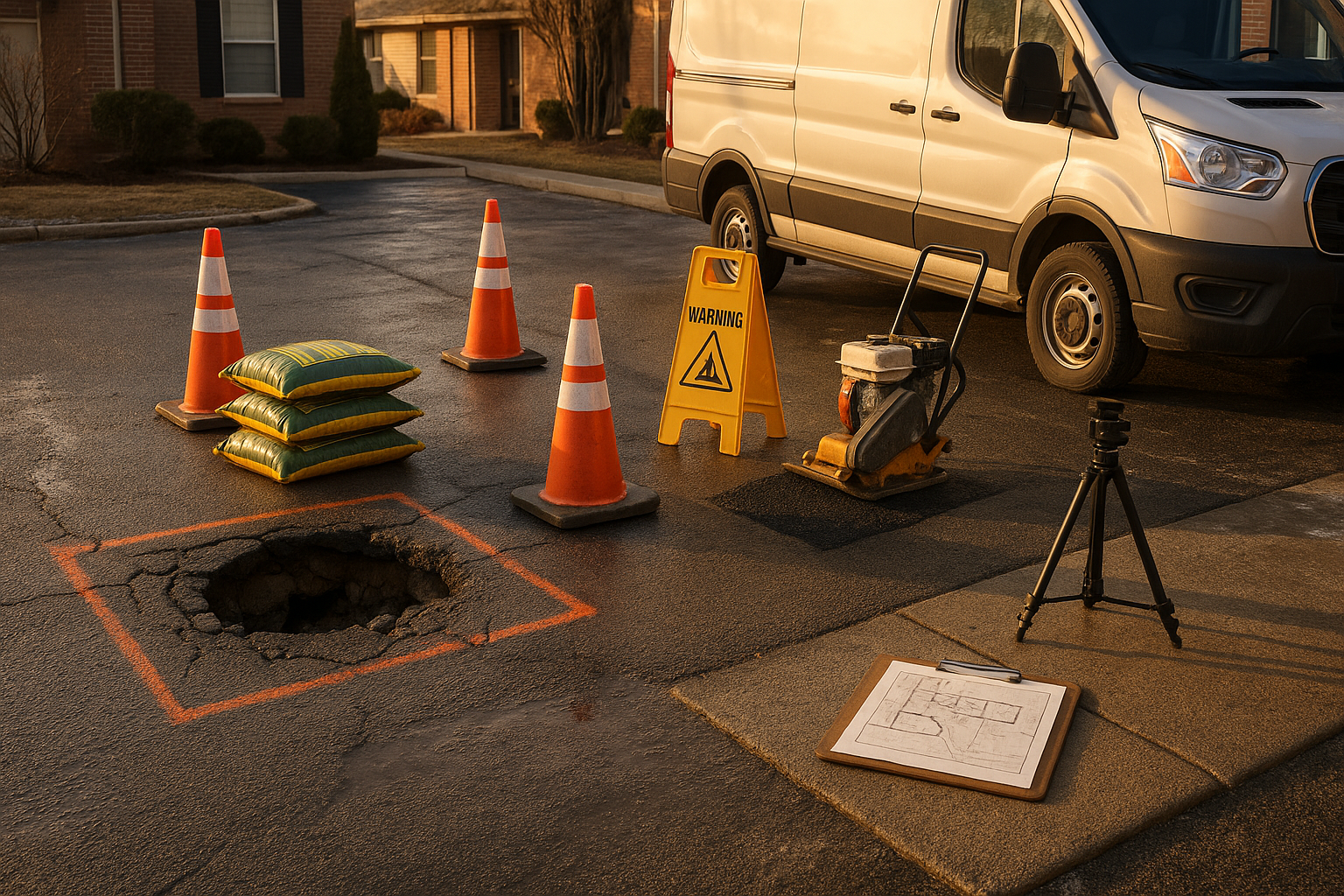
A friend of mine manages a medical office over in Carmel. Last spring, their parking lot looked like a war zone—cracks everywhere, potholes you could lose a Prius in. They needed a new lot, fast. But the big question was: asphalt or concrete? I remember him pacing, saying, “I just don't want to get this wrong.” That’s the thing—for property managers around Indianapolis, the asphalt vs concrete parking lot decision isn’t just about upfront cost. It’s about how the lot survives our wild freeze-thaw cycles, the salt we dump on it all winter, and whether it can handle delivery trucks without turning into a washboard. So let’s break it down, plain and simple, no contractor-speak.
The Real Cost: It’s Not Just the Price Tag
Upfront, asphalt usually runs cheaper—sometimes 30-50% less than concrete. But that’s just the first check you write. Concrete can go 25-30 years if you treat it right, while a well-built asphalt lot might need a major rehab at 15-20 years. What really matters is lifecycle cost: what you spend over 20-30 years on installation, annual maintenance, and eventual replacement. In our market, where asphalt plants shut down in cold months, scheduling a spring or summer pour can affect pricing too. And don’t forget drainage—if you skip good base prep, both materials turn into a money pit.
Indy Winters Are Brutal on Pavement—Here’s What Happens
We get dozens of freeze-thaw cycles every year. The ground heaves, pavement cracks, water gets in, and it repeats. Asphalt flexes a little, which helps. Concrete? It’s stiff. Without properly sealed joints, it can spall or crack wide open. Then there’s salt. Road salt and cheap deicers eat into concrete—especially newer pours. Asphalt isn’t immune, but it holds up better under typical Indy plowing and salting. If your lot sees a constant parade of snowplows, you’ll want to spec a dense-graded asphalt mix and keep up with crack sealing and sealcoat. Honestly, most commercial lots I see that fail early? It’s because someone ignored the joints or let water sit.
How Much Downtime Can You Afford?
Picture this: a church in Fishers wants a new lot before Easter. A retail center in Greenwood can’t close for a week in summer. Asphalt usually wins on speed—from prep to open for light traffic can be a couple of days. Concrete needs a week or more to cure. For busy spots, that’s lost revenue. Asphalt also phases nicely: you can pave one section, keep the rest open, then move traffic. Concrete pours need bigger continuous slabs and more cure time between phases. If your business can’t pause, asphalt’s flexibility (pun intended) is a life-saver.
Heavy Trucks? Tight Turns? There’s a Sweet Spot
One objection we hear: “Asphalt ruts in summer heat with heavy trucks.” It can, if you spec it thin. But for a lot in Noblesville that sees daily semis, we might go with a thicker asphalt section—say 4 inches of base plus 2 inches of surface—or even a hybrid design. Concrete works great in loading zones and drive lanes where trucks turn sharp, because it doesn’t shove under heavy point loads. Then use asphalt for the parking bays. That hybrid approach is common around I-65 and I-465 corridors where distribution centers pop up. You get durability where you need it and cost savings where you don’t.
Drainage: The Silent Killer of Any Lot
Central Indiana isn’t exactly known for sandy soil. We’ve got clay, and clay plus water equals a mess. If your lot doesn’t drain, the base gets soft, and the pavement fails—asphalt or concrete, doesn’t matter. We always check for standing water during site walks. Proper slope, crown, and inlets are non-negotiable. A lot in Avon might need a subdrain if it’s flat as a pancake. Budget for base work—proof-rolling, maybe some stone—or you’ll be patching potholes in two years.
Maintenance: What You’ll Actually Do Year After Year
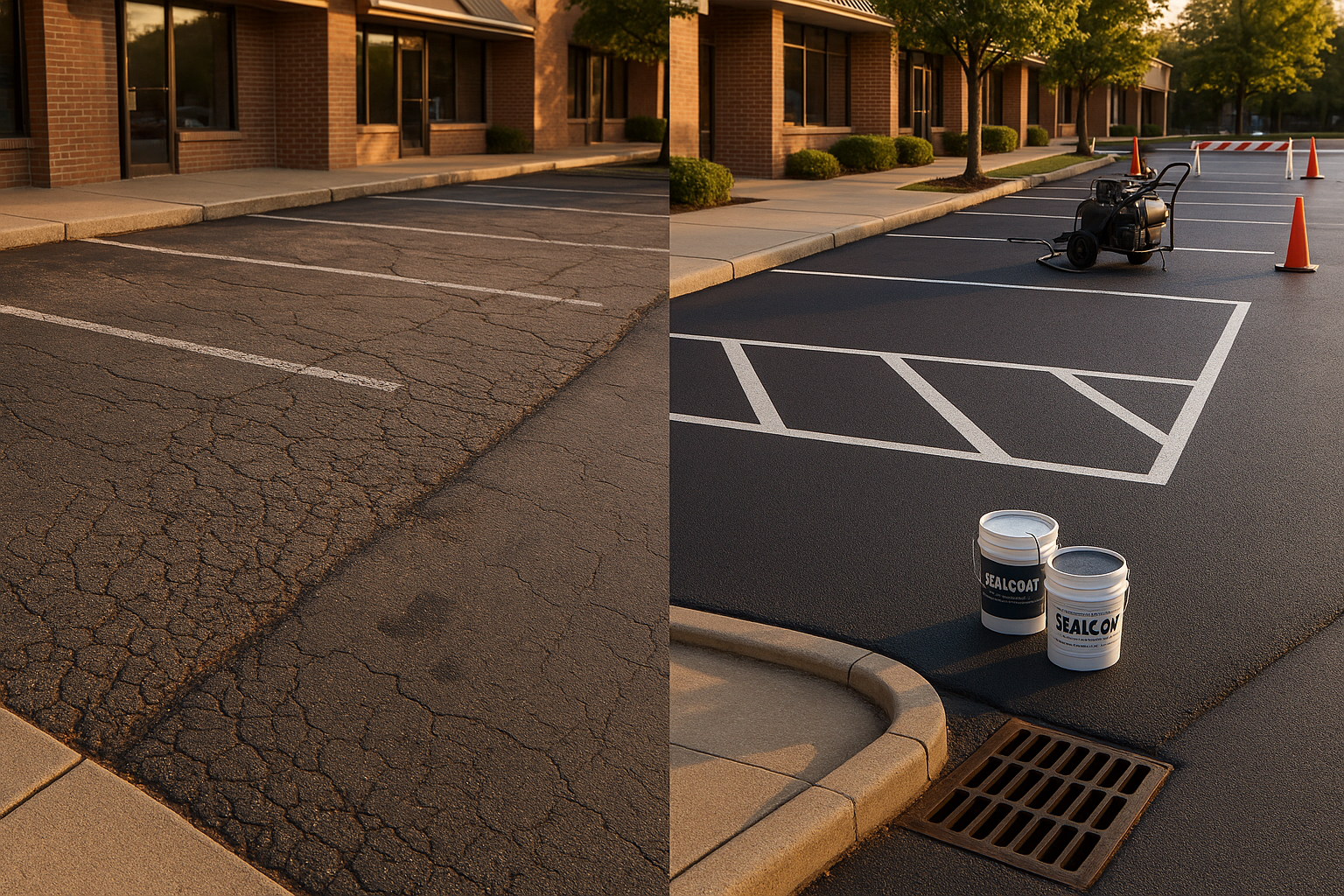
Asphalt needs a sealcoat every 2-3 years, crack fill as soon as you see one, and restriping every 18-24 months. Concrete’s big ticket is joint sealing—skip it, and water gets under slabs, leading to pumping and cracking. You’ll also need to patch broken panels eventually. For both, snowplow edges can chew up surfaces; specify rounded curb tops or guard edges. On a church property in Zionsville, we saw a concrete lot where they used rock salt for years—the top was crumbling. They’d have been fine with sand or a calcium-based deicer. Little choices make a huge difference.
Looks and Lighting: More Than Just Curb Appeal
Concrete stays light colored, which reflects more light—it can cut your nighttime lighting bill a bit. But fresh asphalt with bold white stripes looks crisp and professional. Asphalt can be overlaid later to look brand new again for a fraction of a full reconstruction. Concrete? It fades but doesn’t get that refresh without costly resurfacing. If your lot in Carmel sees a lot of public traffic and you want it to always look sharp, an asphalt overlay cycle might fit your maintenance budget better.
The Environmental Angle
Old asphalt gets ground up and recycled into new pavement—called RAP (recycled asphalt pavement). It’s standard practice around Indianapolis and keeps costs down. Concrete gets crushed and reused as base material. So either way, you’re not just dumping old material. If you’re into pervious pavement for stormwater, it’s an option, but it struggles with heavy traffic and freeze-thaw—so we usually steer it to overflow parking or light-use areas.
Make the Call That Fits Your Lot
There’s no one-size-fits-all. If your biggest worry is upfront cash and quick turnaround over in Brownsburg, asphalt likely wins. If you’re building a forever lot in Westfield with occasional heavy trucks and you hate regular maintenance, concrete might be your jam. Most Indy-area sites, though, end up with a strategic mix. The only way to know? Walk the site with someone who sees these conditions every day. We’ll check your subgrade, your drainage, your traffic patterns, and put together a phased plan with real numbers—asphalt, concrete, or a hybrid. No sales pit here.
If you’re staring at a tired parking lot and don’t want to make the wrong bet, let’s talk. We serve Indianapolis, Carmel, Fishers, Noblesville, Greenwood, and all the surrounding towns. We’ll give you a clear scope and a timeline that works for your business—not ours.
Ready for a free lot assessment?
We walk the lot, photograph the problems, and hand you a written plan — no pressure, no obligation.