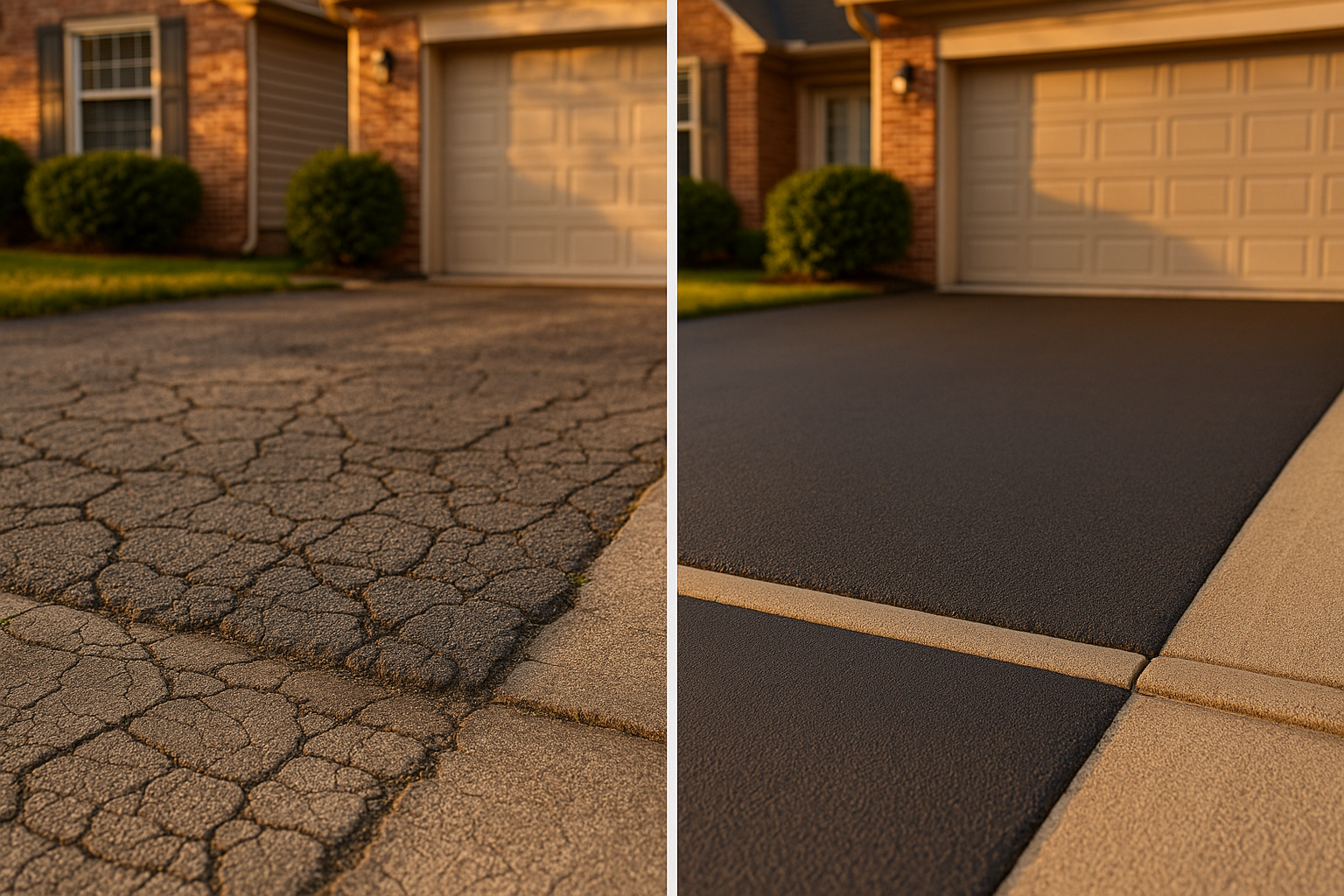
Last spring I ran into a guy in Broad Ripple who was just staring at his driveway, arms crossed, coffee cold. The thing looked like a dry riverbed—cracks everywhere, little chunks coming loose, moss starting in the corners. He’d already patched it twice, and the new cracks just laughed at him. That’s when a neighbor who manages a small office park in Fishers told him about geotextile fabric paving. He didn’t want to rip the whole driveway out—the base was still solid—so a fabric overlay sounded like a way to hit pause on the decay without breaking the bank. And honestly, around here, that’s a smart move.
What Is Geotextile Paving Fabric, Exactly?
Geotextile paving fabric is a nonwoven, polyester sheet that gets rolled out over your old asphalt, then saturated with hot liquid asphalt right before you place the new overlay on top. Think of it like a heavy-duty underlayment for your pavement. It’s not just a separator—it becomes a waterproofing membrane and a stress-relief layer all in one. Engineers call it a stress-absorbing membrane interlayer (SAMI), which is just a fancy way of saying it flexes enough to stop old cracks from telegraphing up through the new surface.
When Is Geotextile Fabric Paving the Right Fix?
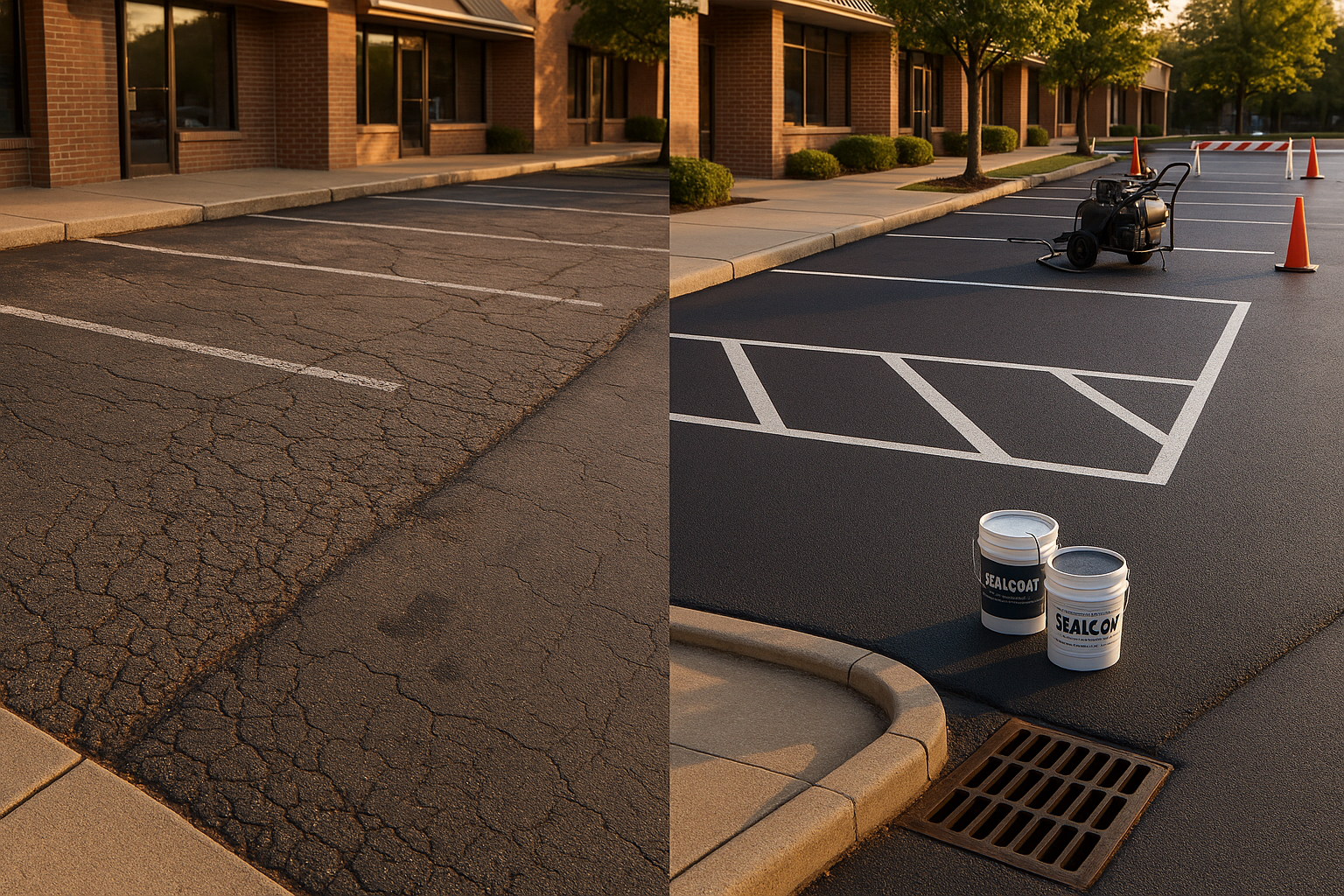
If your driveway or parking lot looks like a road map of distress but the base is still firm—no sinkholes, no alligator cracking that squishes under your boot—then a fabric overlay might be perfect. In Indianapolis and surrounding spots like Carmel, Greenwood, and Zionsville, we deal with crazy freeze-thaw cycles that chew up asphalt. Even sound bases can get wrecked by water seeping down into our sticky clay soils. That moisture freezes, expands, and pops the pavement from underneath. The fabric blocks that water, so the base stays drier and stronger.
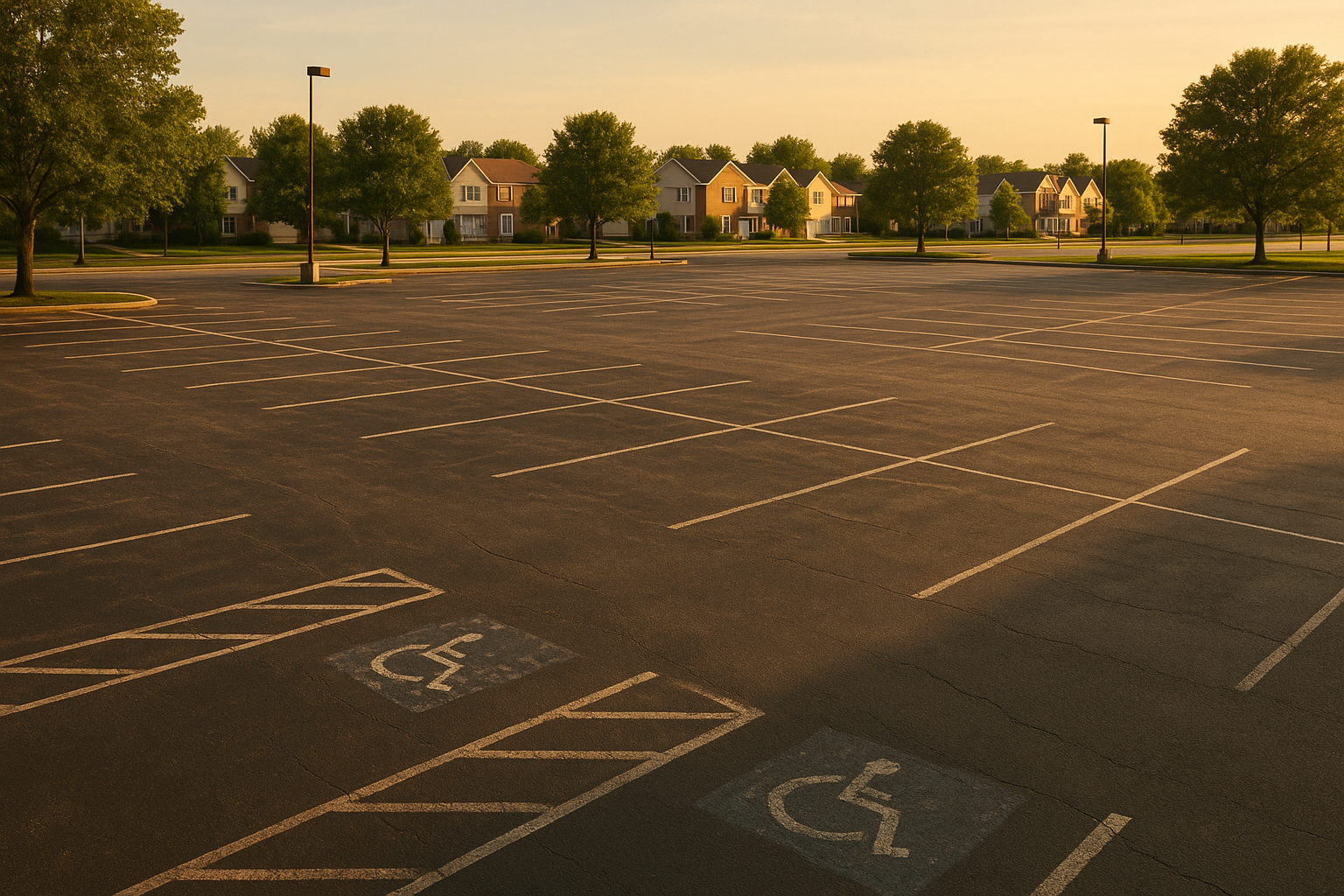
It’s ideal for residential driveways, HOA streets, church parking lots, and light commercial areas—places where you see widespread surface cracks but nothing catastrophic underneath. If you’ve got heavy trucks constantly rolling through, like a loading dock in Plainfield, you might need a thicker structural overlay or a full rebuild. But for the typical homeowner or small business, it’s a solid bet.
How It Actually Works
The magic is in the combination of the fabric and the tack coat. When you spray a hot asphalt binder and then embed the fabric, it forms a continuous, flexible waterproof layer. That layer keeps surface water from ever reaching the base. At the same time, because the saturated fabric is slightly elastic, it absorbs movement. When the old pavement underneath expands or contracts, the fabric stretches a little instead of letting that motion crack the new overlay. It’s not a miracle, but it slows down reflective cracking significantly—giving you years of extra life.
Planning: What We Check Before Rolling Out Fabric
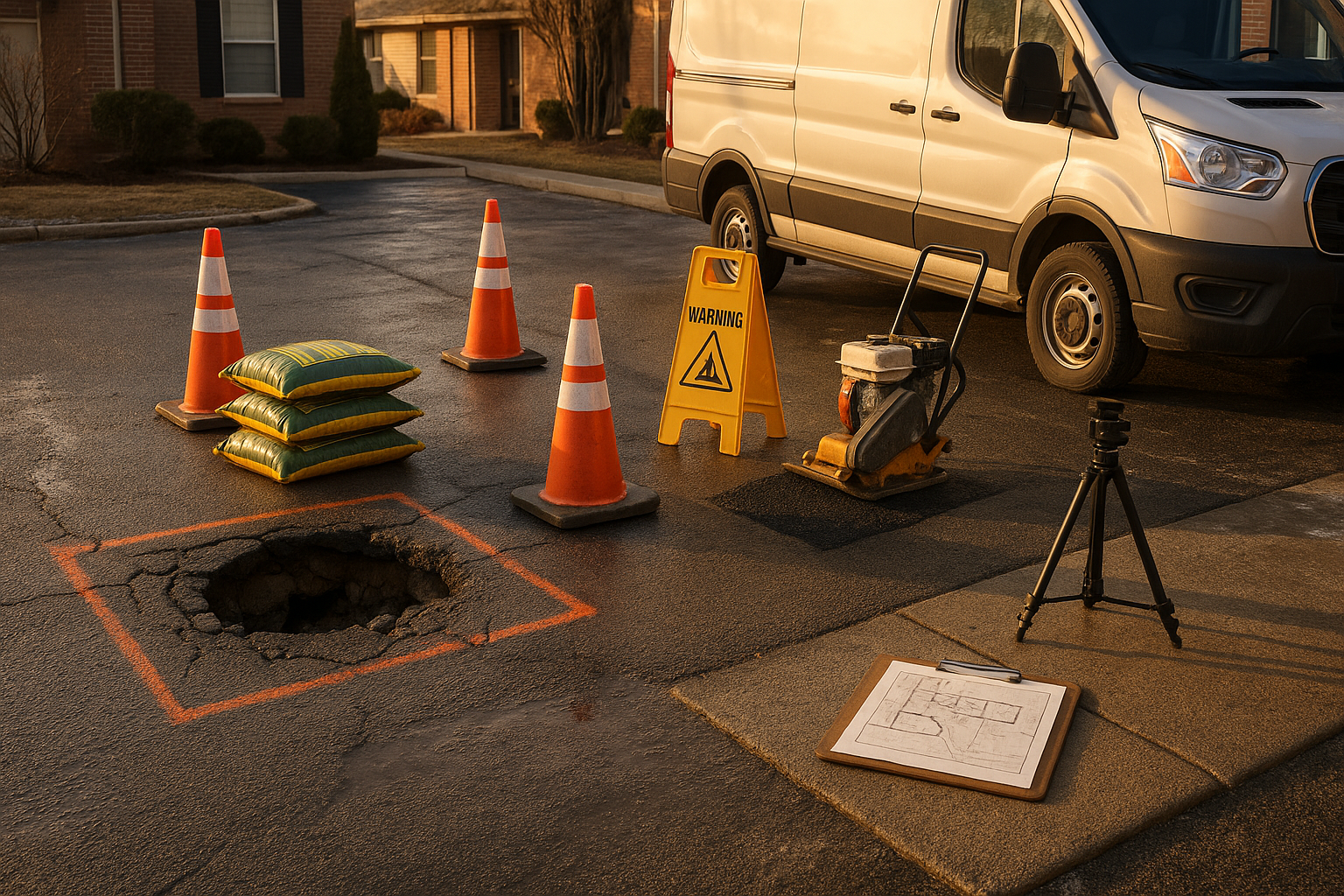
We don’t just guess. In a place like Noblesville where HOAs are picky about curb reveals, or in an older neighborhood like Irvington where garage aprons are tight, we check elevations first. We might core a few spots to see how thick the existing asphalt is. Then we proof-roll: a heavy truck slowly drives over the pavement while we watch for any pumping or deflection. That tells us if the base is bad in spots. We also look at drainage—standing water after a rain is a red flag. All this front-end work makes sure the fabric overlay doesn’t create new problems like tripping hazards at the curb or water running the wrong way.
Preparation and Installation: The Step-by-Step
Here’s the rhythm. First, we cut out and replace any failed areas—no fabric can fix a mushy base. Then we mill the edges (where the new overlay meets curbs, garages, or adjoining pavement) so the transition is flush. After that, the whole surface gets swept clean, blown off, and sometimes washed—every pebble and dust bit matters. Then comes the tack coat: a steamy, even spray of asphalt binder. Too little, and the fabric won’t bond. Too much, and you risk bleeding in the summer. The crew then rolls out the fabric smooth—no wrinkles, no folds—overlapping each row by 2 to 6 inches. The paver follows right behind, because you can’t let the fabric sit in the weather. Rain, dirt, even a leaf blower can foul it up. It’s a tight ballet, and when it’s done right, you’d never know there’s a hidden layer down there.
Overlay Thickness and Traffic
How thick do you go? For driveways and low-traffic courts, 1.5 inches of new asphalt is usually the minimum over the fabric. Heavier use—like a small office lot in Avon that gets delivery trucks—calls for 2 inches or more. The fabric itself doesn’t replace structural thickness; it just protects what you place. If you need a deeper dive on thickness, our post on asphalt paving thickness spells it out.
Local Matters: Clay, Freeze, Plows
Central Indiana’s clay soil holds water like a sponge, and when that water freezes, look out. That’s why waterproofing is everything. A fabric overlay keeps the base drier, so there’s less of that freeze-thaw heaving. Also, snowplows: In a winter-heavy suburb like Westfield, if the edges of your new overlay aren’t sealed and tapered just so, a blade can catch and peel back the mat. We always mill and seal the edges tight, and we steer folks toward gentle plowing practices. Check out our tips on preventing snow plow damage.
What This Costs and Why It Pays Off
Several things drive the price: overall size, how much milling you need, the type of fabric, binder rate, and how many patches we have to cut out. On the surface, a fabric overlay costs more than a plain overlay. But here’s the thing: a standard overlay on a cracked lot might start telegraphing cracks in 2 to 3 years, especially with Indy’s weather. With geotextile fabric paving, you can push that to 5 to 8 years—sometimes more. Over a decade, that’s real money saved. It’s like buying a better roof; the upfront hurts a bit, but you’re not fixin’ leaks every spring.
Keeping It Up After It’s Paved
Once the job’s done, treat it like any great asphalt surface. Seal any new cracks that pop up quickly, keep the edges tight, and don’t let water sit. When you plow, use rubber blades if you can, and go easy near utility lids and edges. Routine cleanings help too—oil and gas can soften the asphalt over time. We have a whole piece on preventive vs. reactive maintenance if you want to get into the weeds.
Quick Look at Common Worries
People ask us: “Isn’t this just a band-aid?” No—more like a sturdy raincoat. It won’t fix a destroyed base, but it’ll shield a decent one. “Will it bleed in summer?” Only if the crew goes overboard with binder. A pro uses just enough. “Do plows catch the fabric?” Not if edges are milled and sealed right. “Does it trap water under the asphalt?” Actually, it blocks water from getting through from above; proper drainage directs water away. “Is the extra cost worth it?” Over time, yep—fewer repairs, longer life, less headache.
When to Schedule and How to Keep Things Open
The sweet spot for installation is late spring through early fall. You need warm weather for the tack coat to bond right. That said, we can work a short winter window if the ground’s not frozen solid and the forecast holds. For busy places—like a small strip mall in Brownsburg or an HOA entrance in Fishers—we phase the work so you’re never fully shut down. We’ve done it enough that we can tiptoe through without tromping on your whole day.
Ready to See If It’s Right for Your Place?
Whether you’re in Indianapolis, Zionsville, or any spot in between, we’re happy to swing by. No high-pressure pitch—just a straight shot look at your pavement, a chat about what it needs, and a clear quote with options. You can even start with a quick estimate request right here on the site. We’d love to help you make that cracked driveway or tired lot look solid again.
Ready for a free lot assessment?
We walk the lot, photograph the problems, and hand you a written plan — no pressure, no obligation.