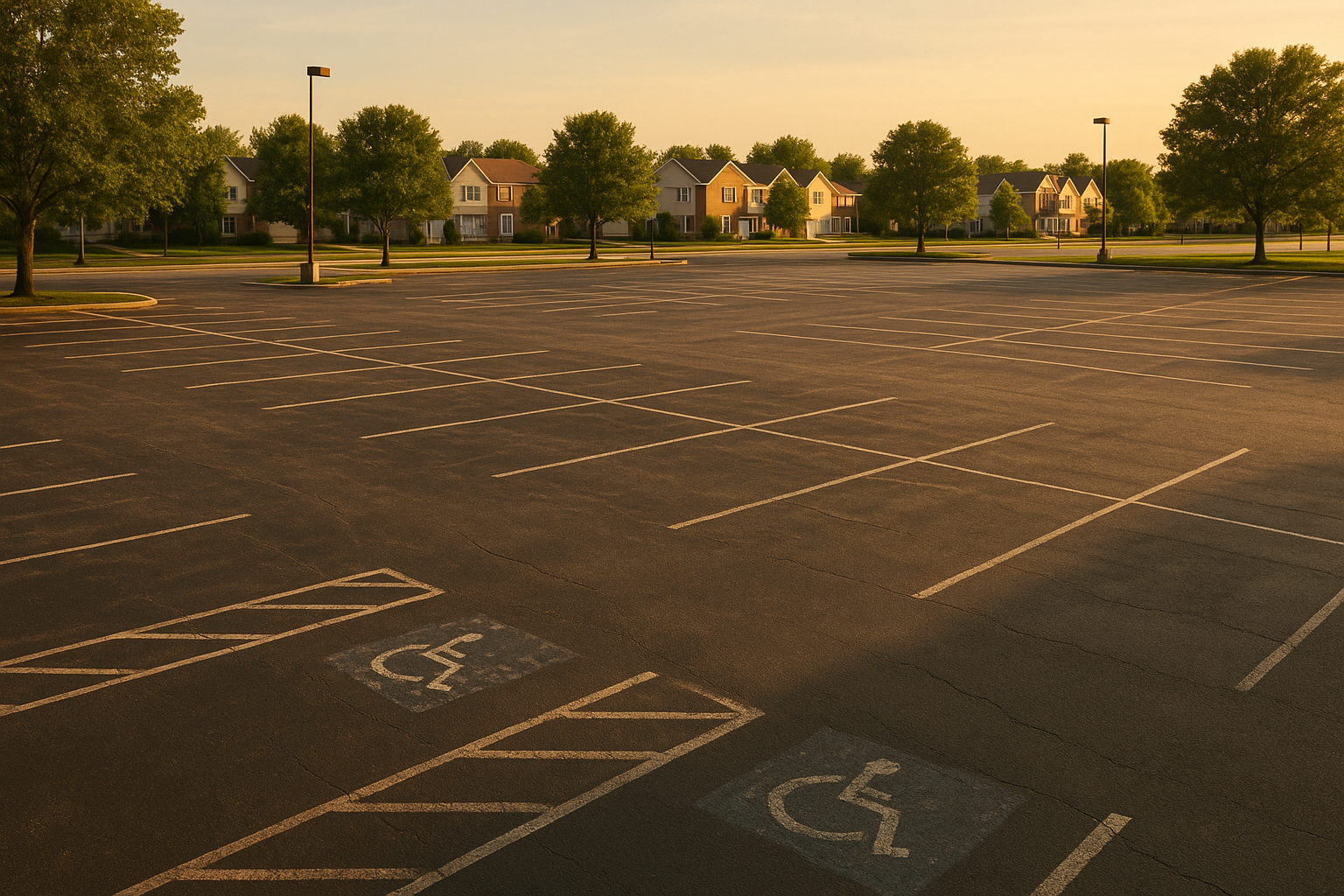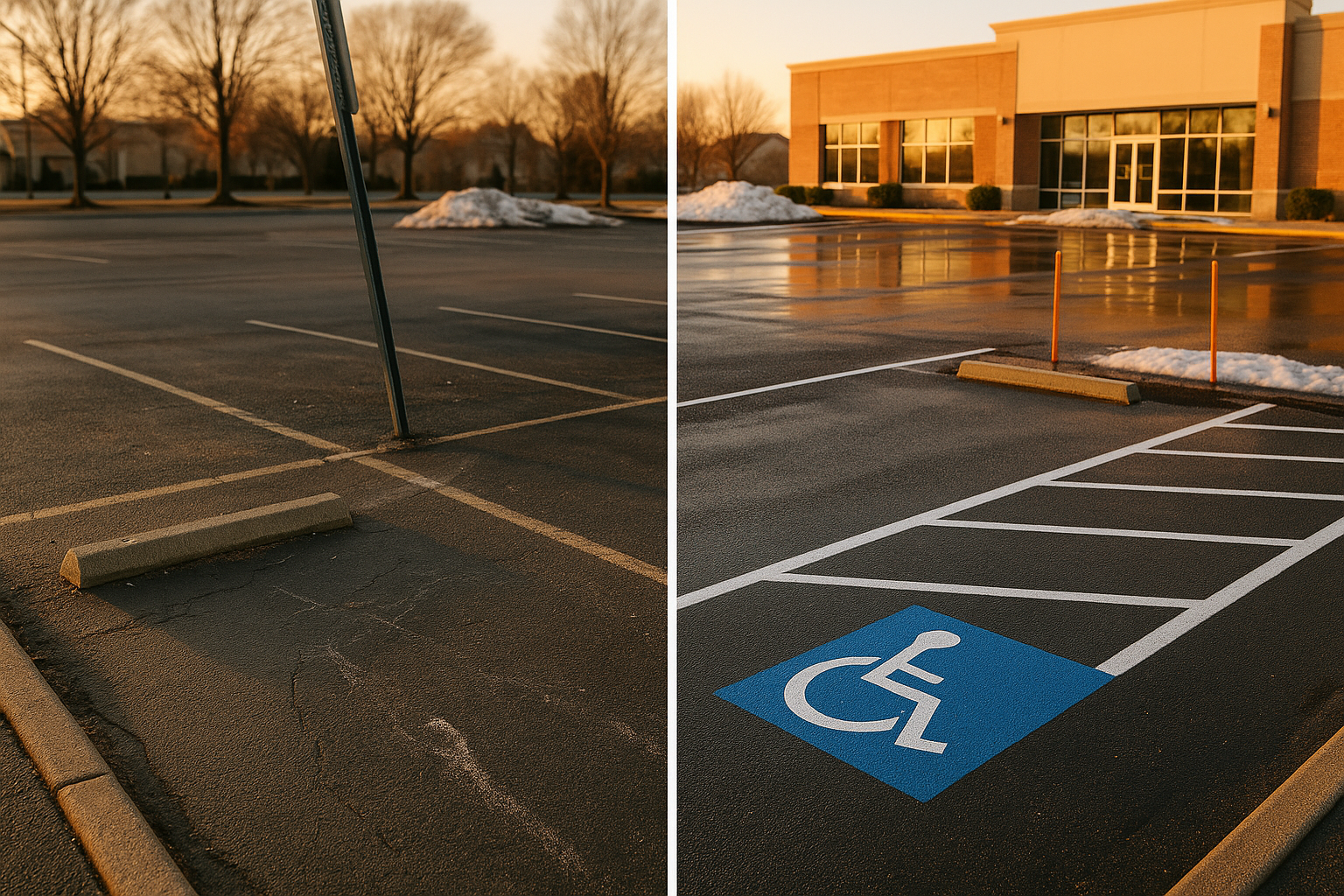
Last March, a manager at a retail center in Fishers walked her lot and thought, “Did a monster truck rally happen here?” Crosswalks looked shredded, the blue ADA stencils near the entrance were almost invisible, and a wheel stop was cockeyed next to a broken sign post. Winter had been brutal—freeze-thaw cycles, heavy plowing, salt piles everywhere. She wasn’t sure where to start, but she knew the lot sent a lousy message to customers. That’s snow plow damage, and it hits Indianapolis-area properties hard every year.
If you manage a lot in Indy, Carmel, Greenwood, or anywhere around here, you probably have similar stories. Snow plows keep us safe and moving, but they’re tough on pavement markings. The good news? You can spot the trouble early, minimize it before the next snow, and bring your lot back to life in spring without a huge headache.
What Snow Plow Damage Actually Looks Like
It’s not always big craters or massive gouges. Often, snow plow damage shows up as subtle—then suddenly obvious—fading. Steel plow edges scrape off the top layer of paint and the tiny glass beads that make lines reflective at night. You’ll see lane lines that look like they’ve been erased with sandpaper, crosswalks that are patchy, and ADA symbols that are barely legible. Around islands and curbs, the damage can get mechanical: a plow catches a curb, bangs a wheel stop loose, or bends a sign post. In high-traffic approaches—like the entry lanes of a grocery store in Westfield or a medical office in Noblesville—the repeated passes grind down paint fast.
I talked to a snow contractor once who admitted he keeps his blade about a quarter inch off the ground, but even then, uneven spots or sudden dips can cause scraping. And if the plow’s shoes or skids aren’t adjusted right? You get a direct steel-on-asphalt nightmare. That’s why you see those scuff marks around ADA spaces—plows tend to push snow right into those stenciled areas.
And don’t ignore the hard stuff: loose wheel stops and dented bollards are clear signs of plow impact. If a wheel stop isn’t anchored right, a plow can shove it into a stall line, tearing up the striping and creating a trip hazard. (Check out wheel stops vs. bumper blocks for some practical thoughts on that.)
Why Winter Chemistry Makes It Worse
After the snow melts, you’re left with more than just faded lines. Salt and liquid deicers leave a crusty residue on the pavement—especially along medians and curb lines, where plows pile up the slush. Drive through a lot in Brownsburg or Avon in March, and you’ll see white streaks all over the asphalt. That stuff is terrible for paint adhesion. If you try to re-stripe right over it, the fresh paint may peel in weeks. The fix? A thorough pressure washing before any paint goes down. We’ve seen too many properties skip this step and then wonder why their new lines looked ragged by June. (Here’s when and why to pressure wash your lot before striping.)
Freeze-thaw cycles are another villain. Around here, we get those days where it’s 25 at night and 45 by noon. Water seeps into tiny cracks, freezes and expands, then thaws and contracts. That repeatedly opens up the asphalt surface, making the paint film crack and flake off even faster under plow traffic. So by spring, you’ve got double trouble: chemical residue and mechanical wear.
Protecting Your Lot Before the Snow Flies
A little prep in October or November can save you a ton come April. First, get your snow contractor on the same page. Have them mark all islands, curbs, and raised features with flexible plow markers—those reflective wands that bend when hit. They’re cheap and they work. Also, check that wheel stops are anchored tight and sign posts aren’t wobbly. If you have bollards, make sure they’re visible. Share a lot map with the plow crew, highlighting where the ADA stencils and delicate striping are. Ask them to set shoes or skids at about half an inch off the surface and avoid scraping hard over those areas.
Some property managers in Indianapolis think this is overkill, but every spring I see the same story: a plow guy who won’t adjust his blade height because he’s in a hurry, and a lot that looks like a war zone. A little planning and communication with your snow guy can keep your parking lot striping intact. And if you’re in a busy retail area like Plainfield’s shopping centers, where there’s constant traffic, phasing the snow removal can also help avoid piling up heavy snow berms on fresh paint areas. (We talk more about minimizing business disruption during lot work.)
Spring Recovery: From Wrecked to Refreshed
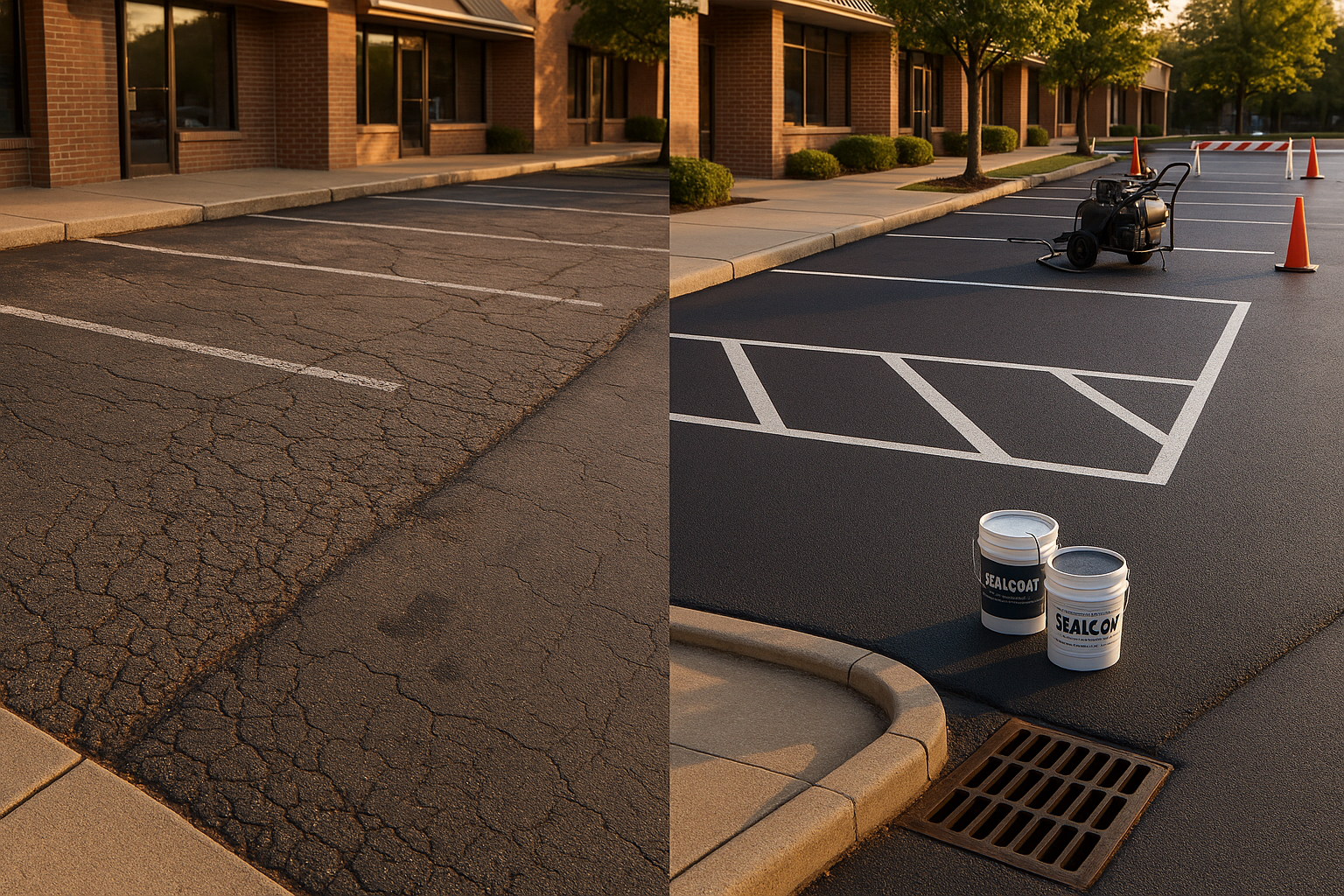
Once winter is truly done—usually by late March or April in central Indiana—you need a plan. Here’s the order: wash, repair, re-stripe. Don’t skip the wash, as we said. Then fix any cracks or potholes (crack sealing is a key step, because if water gets in and freezes next winter, you’re back to square one). Only after the surface is clean and sound should you lay down new paint. For most lots, high-solids traffic paint with good glass beads works fine. In high-wear zones—like the entrance lanes of a busy apartment complex in Greenwood—you might consider a more durable coating. But no paint is plow-proof; the goal is to survive one winter with good visibility.
ADA re-striping is non-negotiable. If your handicap symbols or access aisles are faded, you’re not just looking sloppy—you’re risking fines and lawsuits. Fresh, bright markings also improve safety at night, especially when the glass beads are new and reflective. (We cover what to expect during sealcoating and re-striping in another post if you’re tackling bigger repairs.)
Timing is tricky in Indy. You need pavement temps above 50°F and dry conditions for most standard paints. Fast-dry traffic paint can be a lifesaver for busy lots—it sets up in minutes, so you can close a lane for a couple of hours instead of a whole day. And you can phase the work: do half the lot one day, the other half the next, keeping access open for tenants and delivery trucks. Nobody in Fishers wants their strip mall closed all weekend.
Let’s Get Your Lot Ready for Spring
If you’re looking at your lot right now and seeing the aftermath of snow plow damage, don’t just hope it goes away. At PavementPros, we walk lots all over Indianapolis, Carmel, Zionsville, and the surrounding areas, and we see the same winter wear year after year. We’ll do a planning-first site walk with you, talk about what materials make sense for your traffic patterns, and give you a clear, itemized quote—no pressure. You can even bundle minor asphalt patching with your re-striping to save on mobilization costs. Ready to start? Request a quote here.
You’ve got a business to run; we’ll make sure your lot looks sharp without shutting you down.
Ready for a free lot assessment?
We walk the lot, photograph the problems, and hand you a written plan — no pressure, no obligation.