Last spring, a friend who manages a strip mall in Greenwood called me, frustrated. The winter salt had left white ghost stains everywhere, and a tenant's delivery truck had dripped oil across three stalls. Customers were complaining, and honestly, the place looked beat. He'd tried a hose and a stiff brush—didn't touch it. That's when he finally called us for actual parking lot pressure washing.
I know, “parking lot pressure washing” sounds like a glorified car wash for blacktop. But here in Indianapolis, it’s the difference between a lot that repels customers and one that quietly extends its own life. Let’s talk about when to pull the trigger, why it pays off, and what you should actually expect.
Why Pressure Washing Your Lot Isn’t Just About Looks
Sure, a squeaky-clean lot boosts curb appeal—and first impressions count big time. But the real payoff happens beneath the gunk. Every winter, freeze-thaw cycles push moisture into tiny cracks. Add road salt, and you’ve got a recipe for asphalt raveling. Pressure washing lifts off that corrosive salt residue before it eats your pavement. It also slashes slip hazards from algae or grease, which is a liability thing property managers lose sleep over. And if you’re planning sealcoating or line striping, a proper wash isn’t optional—it’s the only way to get that new coating to bond tight.
What’s Lurking on Your Asphalt (a Gross but Honest List)
We find stuff that’d make you squirm: quarter-inch thick oil patches behind restaurants, dried gum constellations near entry doors, tire marks from the Indy 500 traffic surge, and a film of pollen and cottonwood fluff that basically glues itself down every May. Up in Fishers and Westfield, construction dust from all the new builds coats everything. In warehouse districts like Plainfield, diesel drips and hydraulic fluid stains are the norm. All of it works deeper into the surface if you leave it, so regular cleaning is less about vanity and more about stopping slow-motion damage.
Hot Water or Cold Water? When Heat Actually Matters
If your lot just has general dust and some leaf tannins, cold water pressure washing gets the job done. But when you’re staring at set-in oil or grease—common behind restaurants or around dumpster corrals on concrete pads—you need hot water. Heat plus a biodegradable degreaser breaks down petroleum bonds that cold water can’t touch. I’ve watched crews fire up a hot-water unit on a chilly morning in Noblesville and pull up stains that looked permanent. That’s when “parking lot pressure washing” becomes less about washing and more about serious degreasing.
The Difference Between Power Washing and Pressure Washing
Quick side note: people toss around “power washing” and talk about heated water. Most pros in Indianapolis just say pressure washing but swap in hot water when the job calls for it. The real split is temperature. For asphalt, heated water is gentler on binders than blasting cold water at sky-high PSI, which can actually lift the top layer of aggregate. So for sensitive areas or older lots, hot water often wins.
Prepping for Sealcoating or Striping: Don’t Skip the Wash
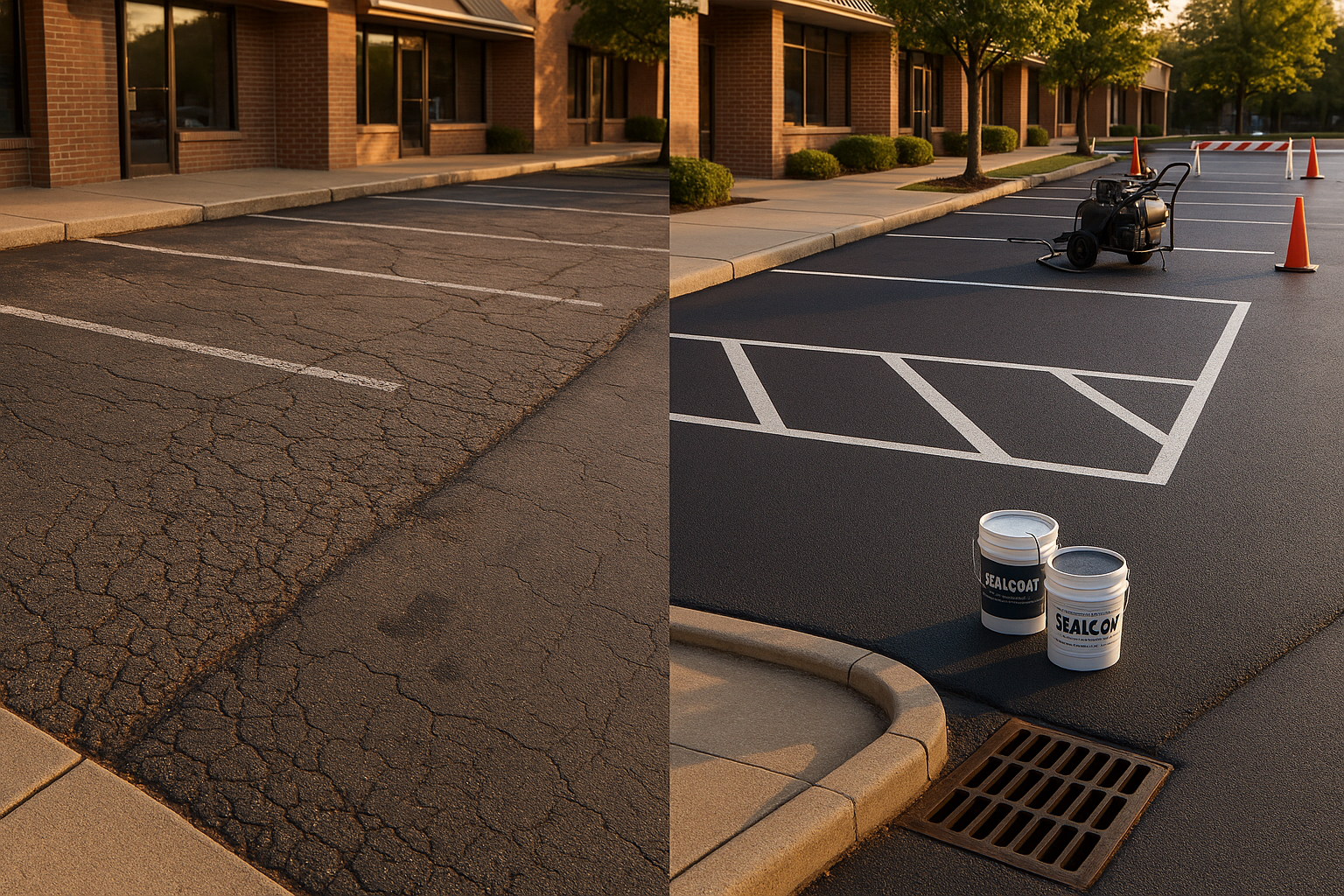
I can’t tell you how many times a building owner in Carmel has asked us to sealcoat right over a “pretty clean” lot. Bad idea. If you seal over dirt, oil, or salt, that coating peels within months. A thorough wash clears the pores of the asphalt so the sealer sinks in and grabs hold. Same goes for line striping—paint on a dusty surface flakes fast. We typically wash, let the lot dry 24–48 hours (depending on humidity), then stripe or seal. It’s worth the downtime. Actually, planning around sealcoating work is simpler when you know the timeline.
Indianapolis-Specific Headaches: Salt, Pollen, and 500-Mile Traffic
Our Midwest weather is special. The road salt used across Marion County leaves a film that attracts moisture all winter. Come March, you want that stuff off before it triggers more freeze-thaw cracking. Then late spring hits, and the cottonwood trees explode—stuff clogs drains and sticks to pavement like glue. If you manage a retail center in Castleton or near Broad Ripple, you know that pollen turns everything yellow-green. And don’t forget the weeks around the Indy 500: traffic spikes, tire rubber burns onto the asphalt, and out-of-towners leave a trail of oil drips in every parking spot. A seasonal cleaning cadence—spring scrub after salt season, maybe a mid-summer rinse—keeps things under control.
Keeping Wash Water Out of the Storm Drains (It’s Not Optional)
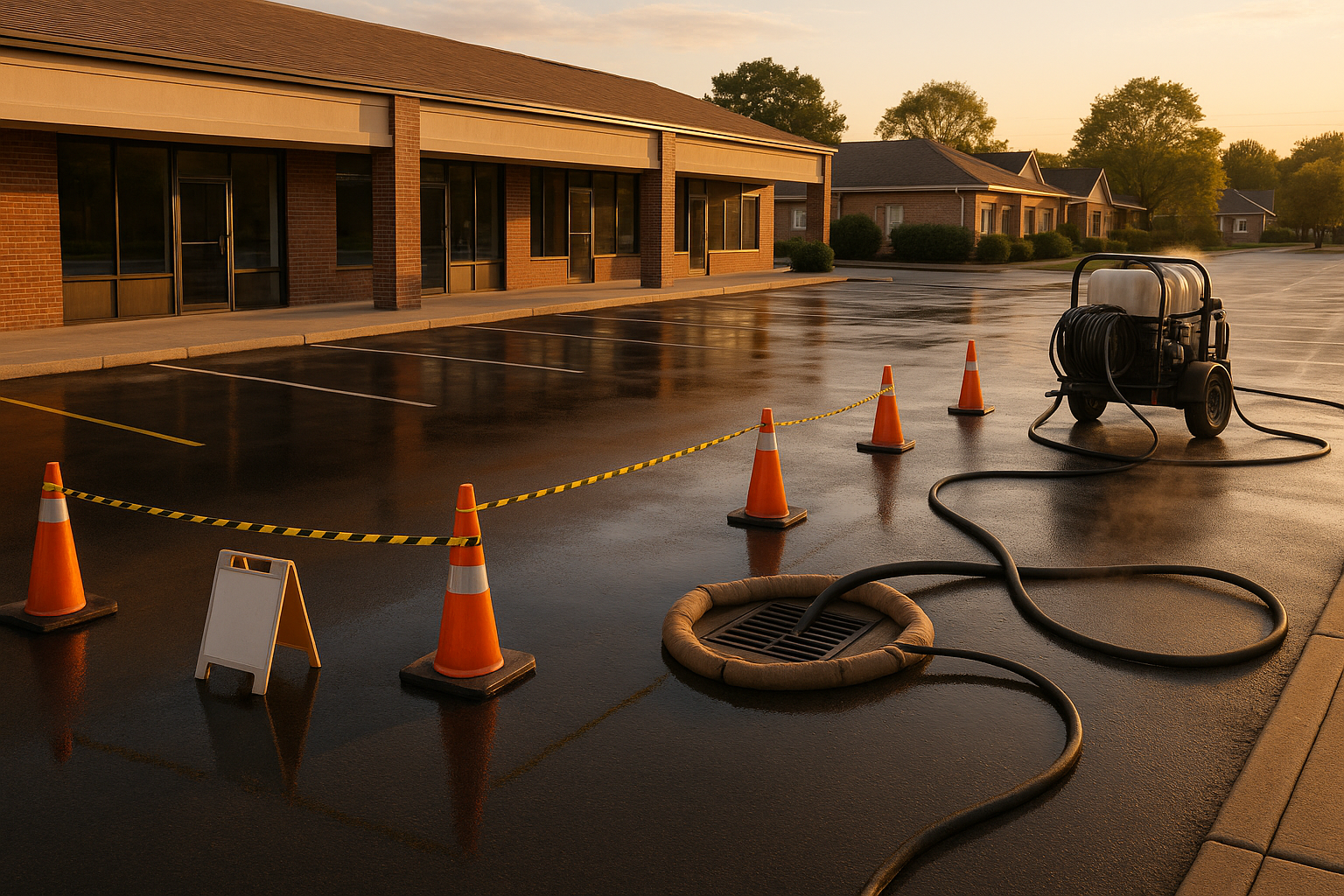
Here’s the part a lot of cheap operators skip: water reclamation. In Indianapolis, the Department of Public Works and MS4 rules require you to capture wash water so it doesn’t flow into storm drains. We use vacuum booms and filter socks to reclaim what we spray, separate out solids, and dispose of it properly through the sanitary system. This isn’t just regulatory box-ticking—it’s how we keep the White River clean and avoid fines for property owners. If a contractor shrugs about runoff, walk away.
Scheduling Around Your Tenants and Customers
Nobody wants a wet, roped-off lot at noon on a Saturday. That’s why we do most of our parking lot work off-hours or in phases. For a retail strip in Avon, we might wash the front section overnight, then the back loading area the next morning. Hotels near the airport often have us work midday when the lot is emptiest. We put up clear cones and signage—sometimes advance letters to tenants—so nobody’s surprised. And a professional crew can knock out a standard-sized commercial lot in a few hours, with dry times under an hour on a sunny day.
Asphalt vs. Concrete: Same Wash, Different Pressures
Asphalt is softer and more porous; you can’t lean on it with a zero-degree tip without scarring the surface. We use fan nozzles and lower pressure to avoid raveling. Concrete, like at a dumpster pad or a sidewalk in downtown Indianapolis, can handle higher pressure, but you still want to watch existing striping. Thermoplastic markings are tough, but old paint can fade if you’re not careful. We test a small spot first, always. And for industrial warehouse lots with heavy concrete areas, hot water degreasing around dock doors is pretty standard.
Real Talk About Stain Removal: What Comes Out, What Doesn’t
A lot of customers expect magic. Here’s the truth: fresh oil spots and surface grease lift beautifully. Ten-year-old oil that’s soaked deep into asphalt will lighten, but it might not vanish—think shadow, not stain. Rust from metal objects? It’ll fade but often leaves a ghost. Gum, beverage spills, and construction mud? Gone completely. If a stain has eaten so deep that the asphalt is soft, we’ll recommend patching instead. Setting realistic expectations saves everyone headaches.
What’s This Going to Cost?
Price depends on square footage, how caked the lot is, whether hot water and degreasers are needed, and how complex water reclamation is. A simple cold-water wash for a small retail lot in Brownsburg might run a few hundred bucks. A full hot-water degreasing and reclamation for a warehouse in Plainfield? More. Always get a walk-through and a written scope that spells out what’s included—don’t trust a price over the phone. We factor in access to your water spigot (or bring our own tank) and any traffic control. It’s not the cheapest line item, but skipping it leads to way costlier repairs later. Reactive maintenance gets expensive fast.
How Often Should You Wash Your Lot?
For most Indianapolis properties, twice a year is a sweet spot: a deep spring clean to strip salt and pollen, and a fall touch-up before leaves and winter grime build up. High-traffic retail centers—think Speedway gas stations or Westfield shopping plazas—might go quarterly. Quiet office parks could get by with one solid wash in late spring. The key is to pair it with sealcoating and striping cycles, so you’re not paying for separate mobilizations.
Ready to See Your Lot Actually Clean?
If your parking lot is looking tired and you’re tired of worrying about slip hazards or grumpy tenants, let’s figure out a plan. We’ll walk your property in Carmel or Fishers or wherever you’re at, hash out a scope that fits your budget and schedule, and give you a maintenance cadence that makes sense. No pressure, no fluff. Just a cleaner lot and fewer headaches. Request a quote here and we’ll set up a time to chat.
Ready for a free lot assessment?
We walk the lot, photograph the problems, and hand you a written plan — no pressure, no obligation.