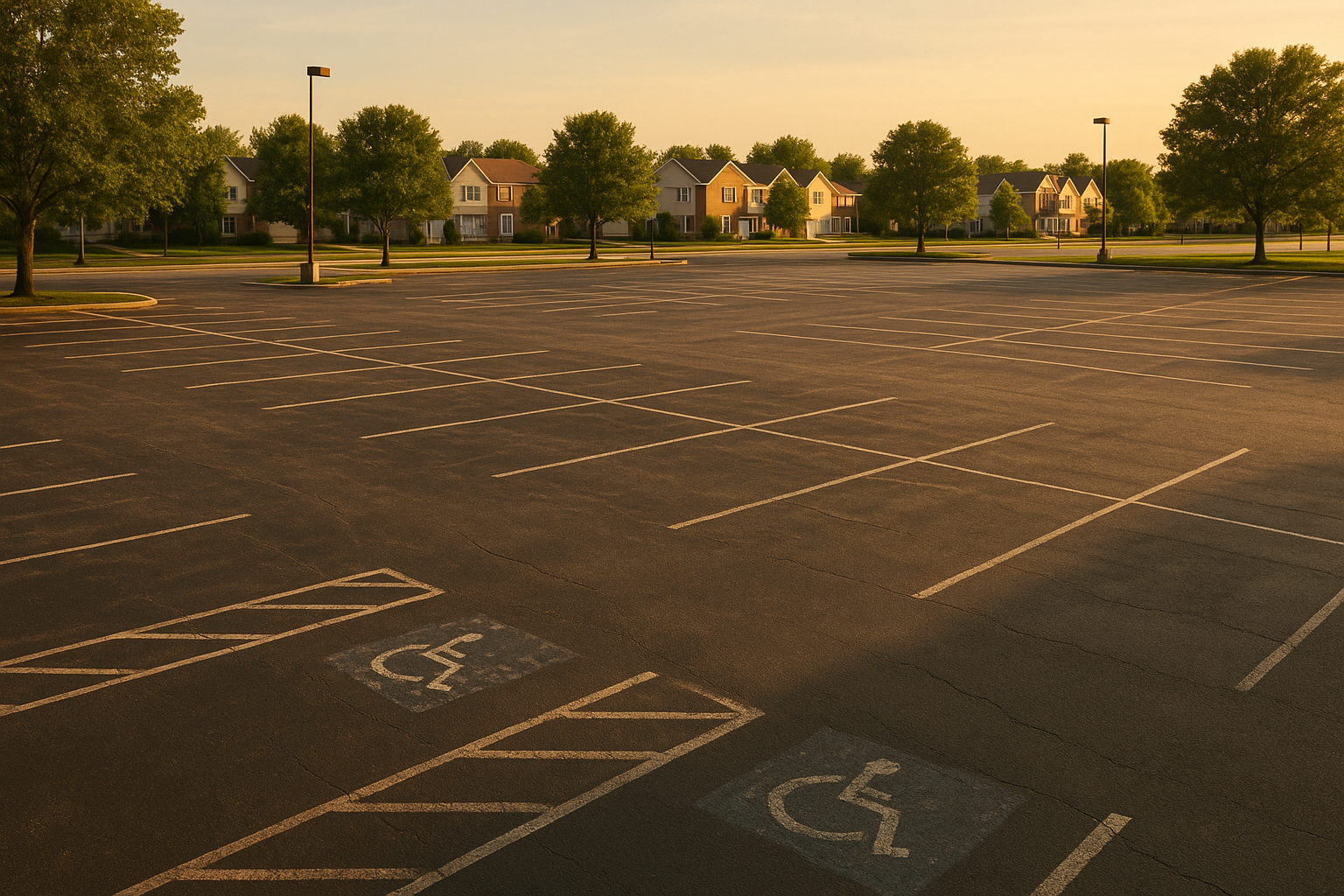
I was talking to a guy who runs a small strip mall over in Fishers. He was frustrated. “My lot looks lousy,” he said. “Faded lines, curbs that used to be red are now kind of pinkish-gray. Customers complain they can’t tell where to park, and I swear I saw someone almost back into a fire lane the other day.” He’d been putting off restriping because he thought it was no big deal. But then he got a couple of complaints about safety, and a tenant mentioned that the place felt run down. So he finally had the curbs repainted and lines redone. The difference? Night and day. Not only did the lot look sharp, but his tenants said customers started parking more orderly. It’s funny how something as simple as fresh paint can change how people feel about a business before they ever walk in the door.
That’s what we mean by parking lot curb appeal. It’s not just about looking pretty—though that helps—it’s about telling every driver and pedestrian, “Hey, we care about this place.”
Why Your Parking Lot's Looks Matter More Than You Think
A clean, well-marked lot is like a handshake. If the curbs are cracked and peeling, lines are almost gone, and you can’t tell where the handicap spots are, people assume the business itself is careless. In Indianapolis, where we get freeze-thaw cycles, salt, and snowplows scraping away at paint every winter, that wear shows up fast. A property manager in Noblesville told me she gets more positive reviews just from keeping the lot freshly striped. It’s one less thing for customers to worry about—they can park, walk safely, and not get annoyed before they even get inside.
Plus, safety. Clear curb colors and bright traffic markings reduce fender benders and pedestrian confusion. That matters a lot for retail centers, churches, schools, warehouse loading zones, anywhere there’s a mix of cars and people. We’ve seen lots where a faded crosswalk or missing stop bar gave drivers a false sense of what’s coming. And here’s the thing: parking lot curb appeal isn’t a one-and-done deal. It takes regular upkeep. If you’re noticing any of these signs, it might be time to take a closer look at what your lot needs.
The Real Stuff That Makes a Difference
Curb Colors and What They Mean
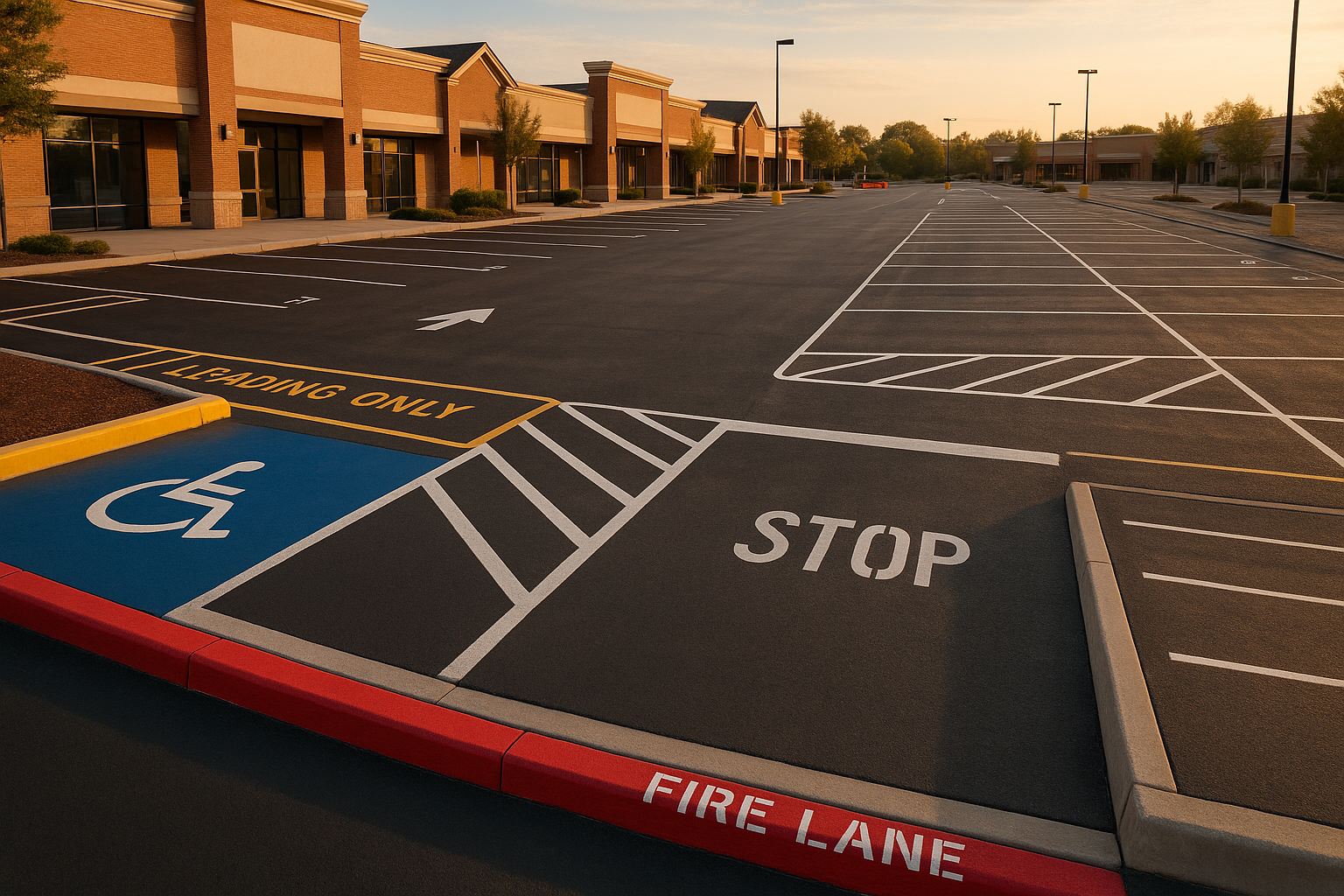
There’s a reason fire lanes are red, loading zones are yellow, and no-parking areas might be blue or white. In Marion County, the local authority has specific expectations for fire lane curb paint, and if yours are wrong, you could get cited. But beyond code, it’s about instant recognition. When a driver sees a drop-off zone in yellow, they know not to linger. When they see red, they keep it clear. We see a lot of lots around Greenwood and Avon where the curb paint is so faded, you can’t tell what’s what anymore. Fresh paint with crisp stencils (like “FIRE LANE” or “NO PARKING”) makes the rules obvious. And it looks professional.
Striping That Guides Without a Word
Wayfinding arrows, parking stall numbering, crosswalks, stop bars—these aren’t just suggestions; they keep traffic flowing. At a busy retail center in Carmel during holiday season, clear directional arrows can prevent half the backup. We’ve seen lots where people circle aimlessly because arrows contradict the flow. A good layout first, then precise parking lot striping, makes everything feel orderly. Even little things like speed hump markings or reflective glass beads on lines help at night or in rain, which we get plenty of. And for big properties, adding stall numbers or wheel stops versus bumper blocks can make a huge difference in how tidy the lot stays.
And don’t forget ADA. Accessible stalls with the right symbols, access aisles, and clear routes aren’t just a legal must—they show you care about all your customers. We see too many lots where the blue paint is so faded you can barely see the wheelchair icon, or the access aisle has become a makeshift parking spot because lines aren’t clear. ADA-compliant striping with reflective beads fixes that.
Materials That Survive Indiana Weather
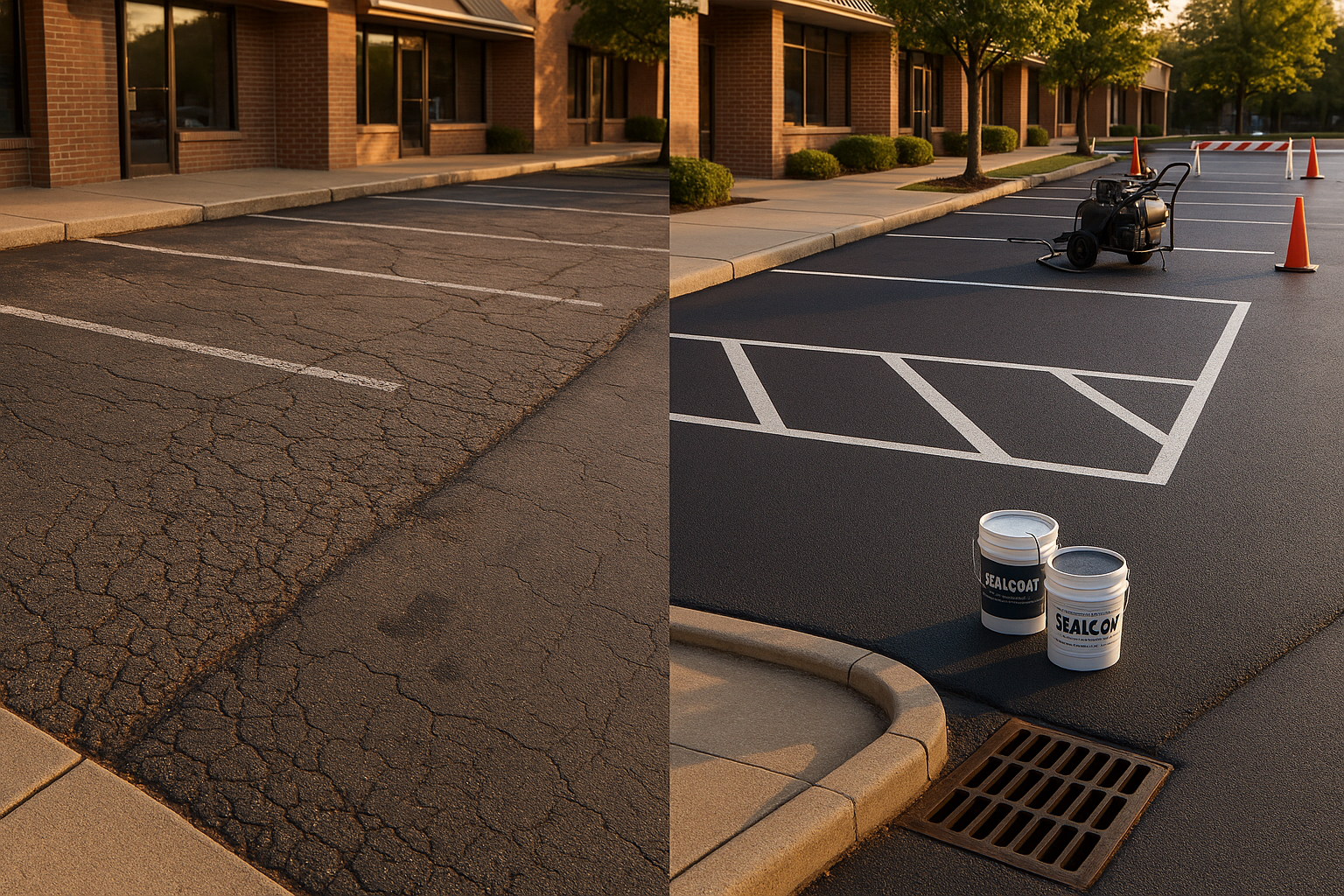
Let’s be real: hardware store paint won’t last one winter here. Between the salt, the freeze-thaw cycles that pop coatings off, and the snow plows that scrape curbs, you need traffic-grade paint or thermoplastic. Thermoplastic is more expensive but lasts longer—great for high-traffic areas like loading zone markings or crosswalks. For most curbs and stall lines, a good acrylic traffic paint with glass beads for reflectivity is the sweet spot. We also pay attention to surface prep: pressure washing, drying, priming if needed. If you don’t prep, that fresh paint will peel by spring. If you’re thinking about mixing sealcoating and restriping, the sequence matters—restripe after the sealcoat cures, not before, or the paint won’t bond right. We coordinate that routine so you don’t end up redoing work.
How We Handle the Tricky Parts
You might wonder: will the paint smell bother tenants? Modern traffic paints are low-VOC and dry fast, so by the time we’re done, it’s minimal. How about disruption? We phase work in sections, often at night or on weekends for busy places like medical offices or restaurants. We’ve done lots in Brownsburg and Plainfield where we half the lot at a time, so half is always open. We post signs and coordinate with property managers so nobody’s surprised. If you’re worried about business disruption during lot work, that’s our specialty.
And yes, we can handle custom stencils like unit numbers or branded wayfinding. We’ve added numbered stalls for apartment complexes and HOAs, which makes assigning spaces a breeze. Even small lots benefit—a church parking lot in Zionsville with clearly marked guest spots and accessible routes keeps things safe and welcoming. Snow plow damage to paint is another concern. Steel blades scrape curb faces way faster than rubber edges, so if your contractor uses steel, you’ll need a harder coating or more frequent touch-ups. We account for that.
Getting Started Without the Headache
The best first step? Walk the lot with someone who knows what to look for. We’ll come out, map your current layout, talk about what’s working and what’s not, check for ADA and Marion County fire lane standards, and give you a simple plan with a timeline and price. No pressure. We’ll even tell you if you can hold off a bit or if something needs attention now.
A lot of folks in Indy don’t realize that a fresh set of lines and crisp curbs can actually increase property value and tenant retention. It’s a small investment that pays back in safety and good impressions. If you’re tired of looking at faded paint or fielding complaints, let’s set up a walk-through. We’ve been doing this around Indianapolis long enough to know how to make your parking lot curb appeal shine—even through snow, salt, or blistering sun. Just reach out for a quote and we’ll get something on the books.
Ready for a free lot assessment?
We walk the lot, photograph the problems, and hand you a written plan — no pressure, no obligation.