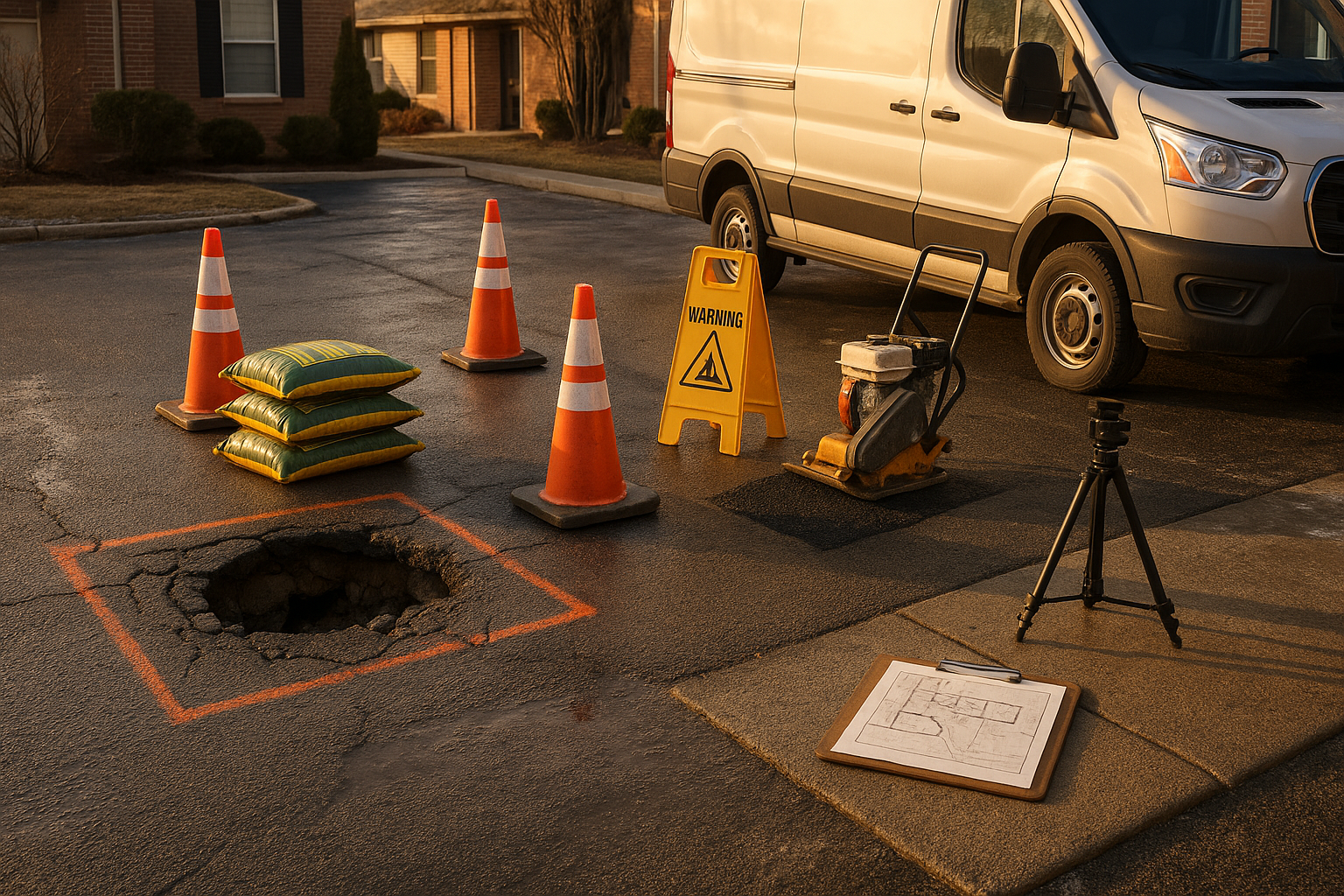
Last spring, I was pulling into a medical office lot over in Carmel—right off Meridian Street. My coffee nearly ended up in my lap because the pothole was deep enough to lose a small dog in. The property manager was outside, and she sighed. "Every year we patch that hole, and every year it comes back bigger." She didn’t need a patch. She needed real parking lot repair, something that went beyond filling the hole. If any of these seven signs sound familiar, your lot might be telling you it’s time to call in the pros.
Sign 1: Potholes That Keep Coming Back
You’ve patched the same pothole twice, and it’s back again. Sound familiar? Around Indianapolis, our freeze-thaw cycles are brutal. Water gets under the asphalt, freezes, expands, and pops the surface. A temporary cold patch might fill the hole for a few months, but come spring, it’s crater time again. Proper pothole repair means cutting out the bad asphalt, fixing the base, and compacting new hot mix. That’s the only way to stop the cycle. If your lot looks like a minefield, it’s time for more than a Band-Aid.
Sign 2: Cracks Running Everywhere
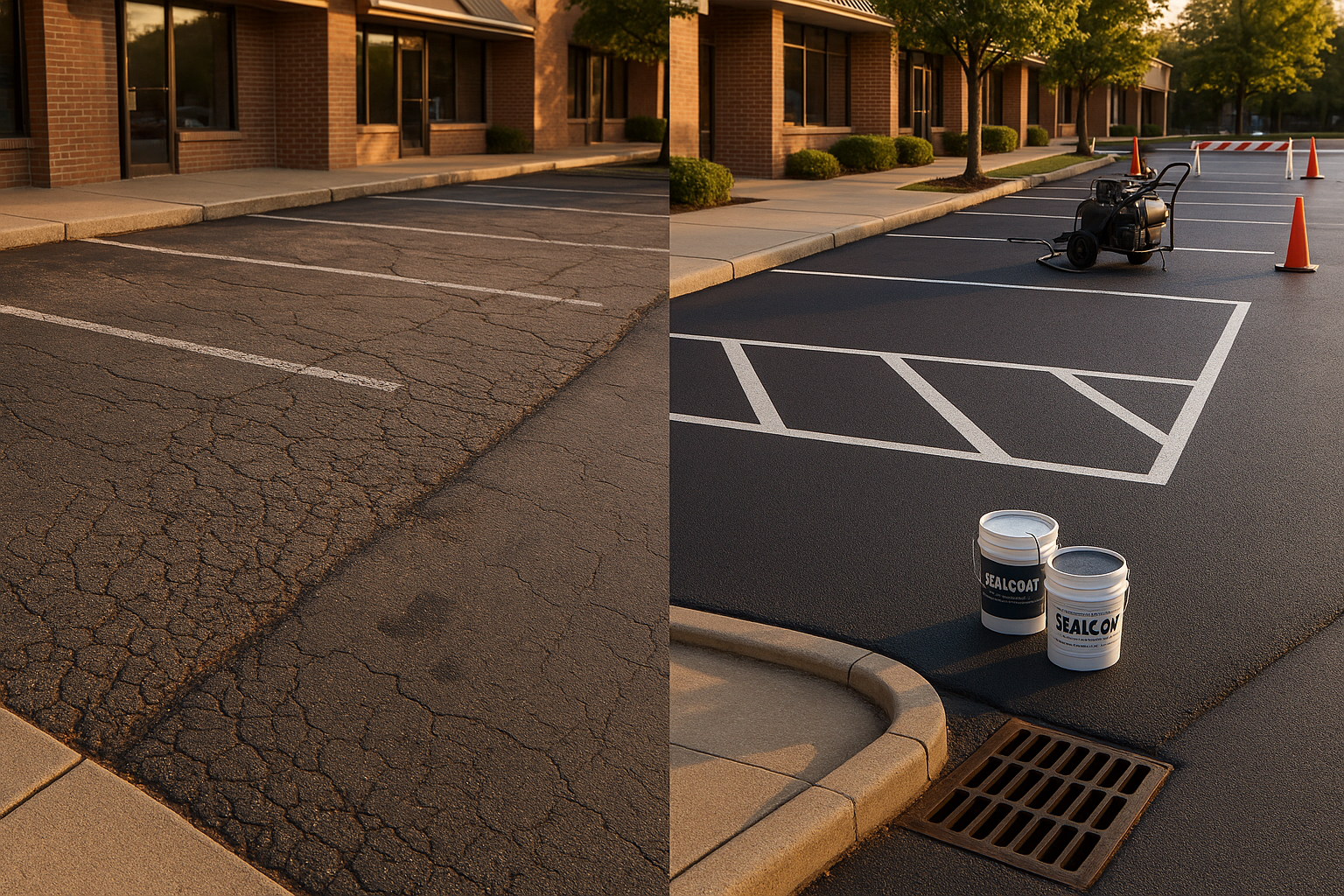
I’m not talking about hairline spiderwebs—those are normal. I mean cracks you can slide a credit card into. Once water gets in there, it’s game over for your pavement. Salts from de-icing make it worse, eating away at the asphalt. Crack sealing is cheap insurance: routing the crack and filling it with hot rubber stops moisture from reaching the base. If you see grass or weeds growing through, you’ve waited too long. Don’t just sealcoat over them—that won’t fix the underlying problem. (And yes, sealcoating is for surface protection, not for filling structural cracks.)
Sign 3: Water Hanging Out in the Wrong Places
After a good Indiana downpour, do you see ponds forming in your lot? Especially near catch basins or low spots. That standing water isn’t just annoying—it’s destroying your pavement. Over time, it seeps in and softens the gravel base, leading to alligator cracking and those potholes we already talked about. Often, the fix isn’t just repaving; you need to adjust the grade or repair the catch basin so water actually flows into it. I’ve seen lots where the drain is higher than the low spot—go figure. Check your drainage before you resurface, or you’ll be doing it again in two years. Learn more about fixing standing water here.
Sign 4: The Lines Have Left the Building
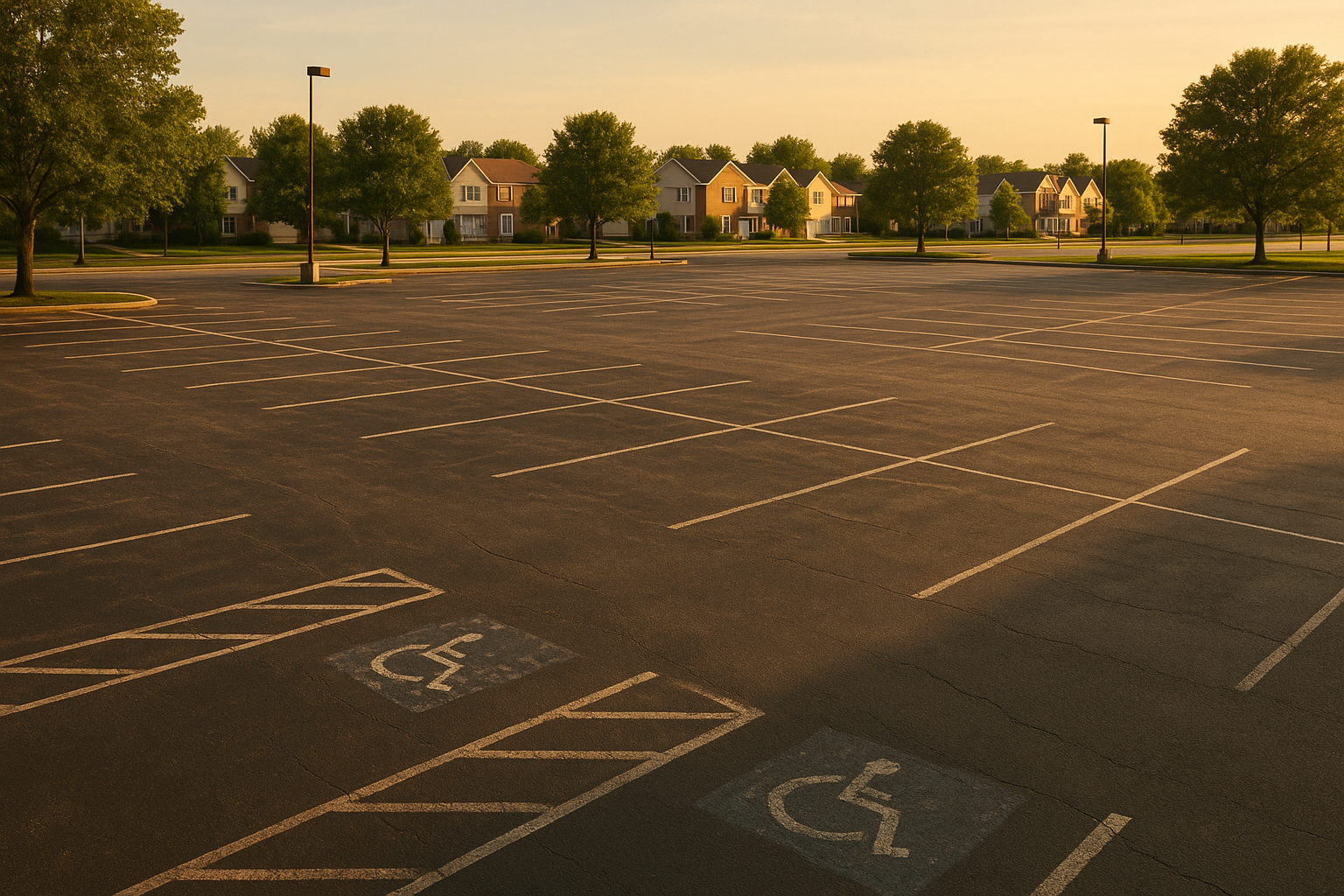
If your parking lot lines are more of a suggestion than a guide, it’s past time. I’m not just talking looks—faded striping and missing ADA markings can land you in hot water with compliance checks. Around Indy, cities like Carmel and Fishers take ADA seriously. And don’t forget, restriping isn’t just paint; the layout might need updating if regulations changed. Usually, a commercial lot needs restriping every couple of years, but heavy traffic and plow blades wear it down faster. Bright, straight lines make your lot look cared for, and they keep pedestrians safe.
Sign 5: Uneven Surfaces That Could Trip Someone
Watch people walking from their cars to your door. If they’re stumbling over lifted concrete or broken asphalt edges, that’s a lawsuit waiting to happen. I’ve seen curb joints that freeze and heave, creating a two-inch lip. That’s plenty to catch a heel. Trip hazard repair might mean grinding down high spots, patching, or replacing a section of curb. And when you’re fixing those edges, sometimes concrete makes more sense than asphalt—it handles the abuse better. But don’t let it slide; safety fixes should top your priority list.
Sign 6: Your Asphalt Is Gray and Rough
New asphalt is black. Old asphalt is gray and porous. That means the oils have oxidized out, and the surface is getting brittle. Small rocks start loosening up—we call that raveling. At this stage, a fresh sealcoat can extend the life of your lot if you catch it early. But if you’re seeing it crumble, you might need parking lot resurfacing: a mill-and-overlay where the top layer gets scraped off and replaced. I always tell folks, sealcoating is like sunscreen—apply it on schedule to avoid the burn. Once the damage is done, you need more than lotion.
Sign 7: You’re Hearing About It from Tenants or Customers
Maybe the owner of the dry cleaner in your strip center called because a delivery truck bottomed out. Or a church member mentioned the pothole after service. When people start telling you about your parking lot, it’s already a problem. But here’s the good news: this is the perfect nudge to make a real maintenance plan. Instead of chasing emergency parking lot repair every spring, you can budget for annual crack sealing and periodic overlays. A solid plan spreads the cost and keeps your lot from embarrassing you. I’ve worked with facility managers across Greenwood and Zionsville who swear by it—they sleep better knowing the next expense is planned.
What Happens Next?
If you nodded at more than a couple of these signs, don’t wait for the next big storm to make things worse. At PavementPros, we start with a simple site walk—no charge, no pressure. We’ll check your drainage, take photos, and give you a prioritized list: what needs fixing now for safety, what can wait a year, and what’s coming down the road. We know Indy’s clay soil and wild weather, and we’ve got the right repair methods for every lot—from infrared patching to full overlays. And yes, we can work around your business hours so you don’t lose a day’s operations.
Ready to get a real plan instead of patching the same hole again? Grab a no-obligation estimate and let’s figure out a parking lot repair schedule that fits your budget. No pressure, just a clear plan.
Ready for a free lot assessment?
We walk the lot, photograph the problems, and hand you a written plan — no pressure, no obligation.