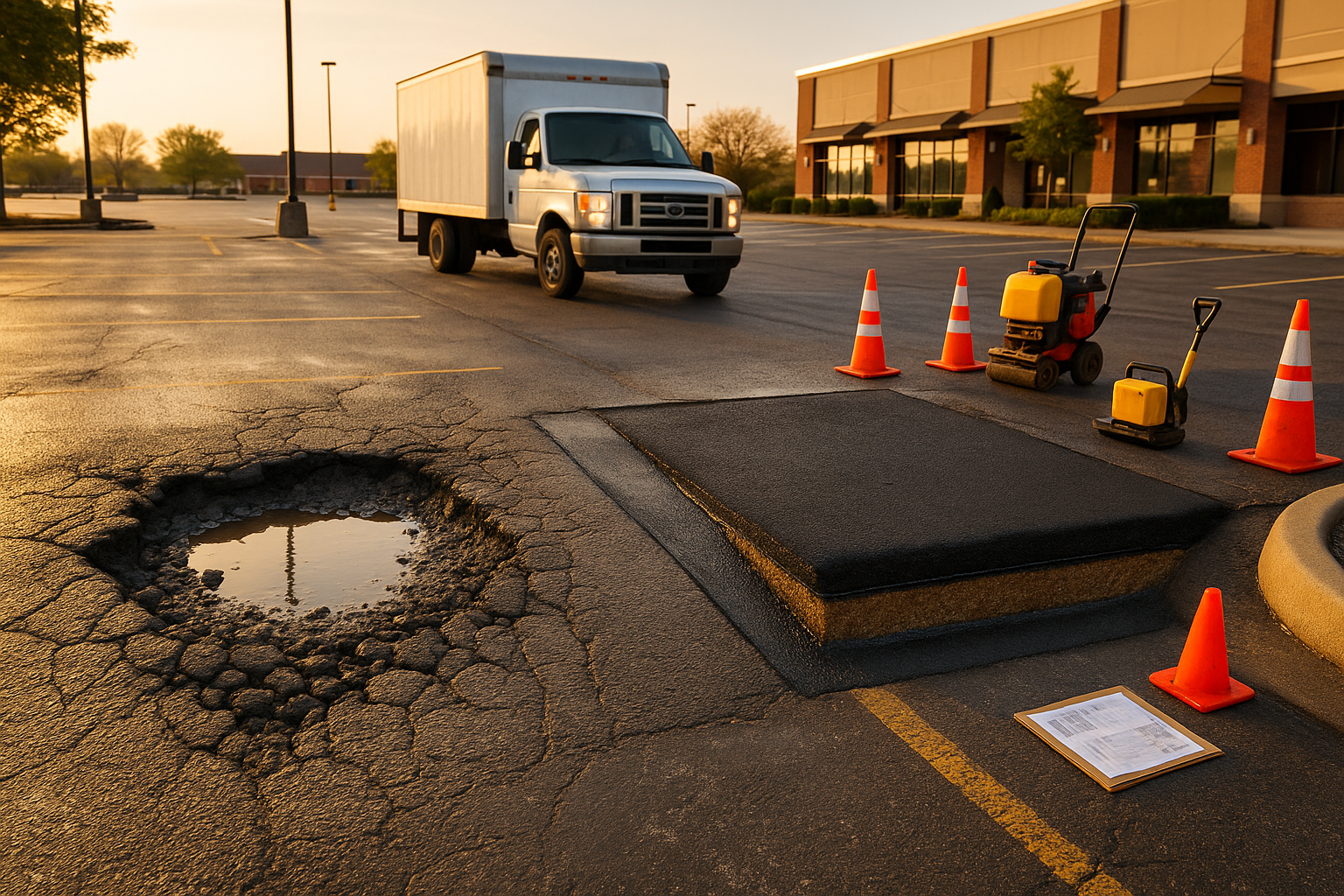
Last spring, a facility manager at a medical office in Carmel called us in a slight panic. Their lot had cracks running every which way, and a few potholes were starting to swallow car tires. They'd been putting off maintenance, thinking, "It's just cosmetic." But now they were worried about liability and whether they'd have to tear the whole thing out. Turns out, the lot was only 10 years old—but it looked 20. That's the thing about asphalt in Indiana: if you ignore it, it ages in dog years. But with a little regular care, you can squeeze 25 years or more out of a well-built parking lot.
So, how long does asphalt last around here? In Central Indiana, a properly constructed and maintained asphalt parking lot can easily last 18 to 25 years. We've seen some go even longer when owners stay on top of things. On the flip side, lots that get zero love—no crack sealing, no sealcoating—often start failing in 8 to 12 years. A lot of people ask us, "how long does asphalt last if we do nothing?" Honestly, in this climate, maybe 10 years if you're lucky. But with a little effort, you can double that.
Why Indianapolis Lots Age Faster Than You'd Think
Indianapolis weather doesn't do asphalt any favors. We get dozens of freeze-thaw cycles every winter, and when water seeps into tiny cracks and then freezes, it expands. Little cracks become big cracks. Then spring comes with heavy rains, and if water pools anywhere, it works its way down and weakens the base. Our clay-heavy soil doesn't drain well, so without proper grading, that moisture just sits there and causes trouble.
I've seen it in Fishers, where a church lot looked fine on top but had alligator cracking spreading from a low spot near the dumpster pad. Alligator cracking is a classic sign that the base is failing. Once you see that network of cracks, you're past the point of just sealing. That lot needed a full-depth patch, which could have been avoided if they'd fixed the drainage early.
Speaking of dumpster pads and delivery lanes—those areas take a pounding. If you run a retail center in Noblesville or an HOA in Westfield with a trash truck that comes through weekly, those sections need to be built thicker or reinforced. Standard light-duty asphalt might hold up for cars, but add a fully loaded truck turning, and you'll get rutting fast.
A Simple Maintenance Schedule That Works
I get it—maintenance sounds like one more thing on your to-do list. But honestly, a little timing goes a long way. Here's what we tell our clients in Greenwood and Brownsburg:
- Crack sealing every year. Ideally in the fall, before winter hits. Hot-pour sealant works way better than those jugs from the hardware store; it stays flexible and actually seals out water.
- Sealcoating every 3 to 4 years. This isn't just for looks. A good coal tar or asphalt emulsion sealer blocks UV rays and slows down oxidation, which makes the surface brittle. Some people think sealcoating is cosmetic—it's not. It's like sunscreen for your lot. We've seen lots that got regular sealcoating last a decade longer than ones that didn't.
- Fix potholes and patches immediately. That little chuckhole today is a tire-killer tomorrow, and liable to get you sued. Small repairs are cheap compared to a full-depth reconstruction.
- Address drainage the moment you notice ponding. Water should never stand on asphalt for more than an hour after rain. If it does, your life expectancy drops like a rock. Regrading or adding a catch basin might cost a few thousand bucks, but it's way less than rebuilding a soggy base.
One property manager in Avon budgeted for sealcoating every three years and crack sealing annually, and their 22-year-old lot still looks sharp. Meanwhile, the strip mall next door ignored theirs and had to do a full replacement at year 12. Which brings us to...
When to Overlay vs. Replace
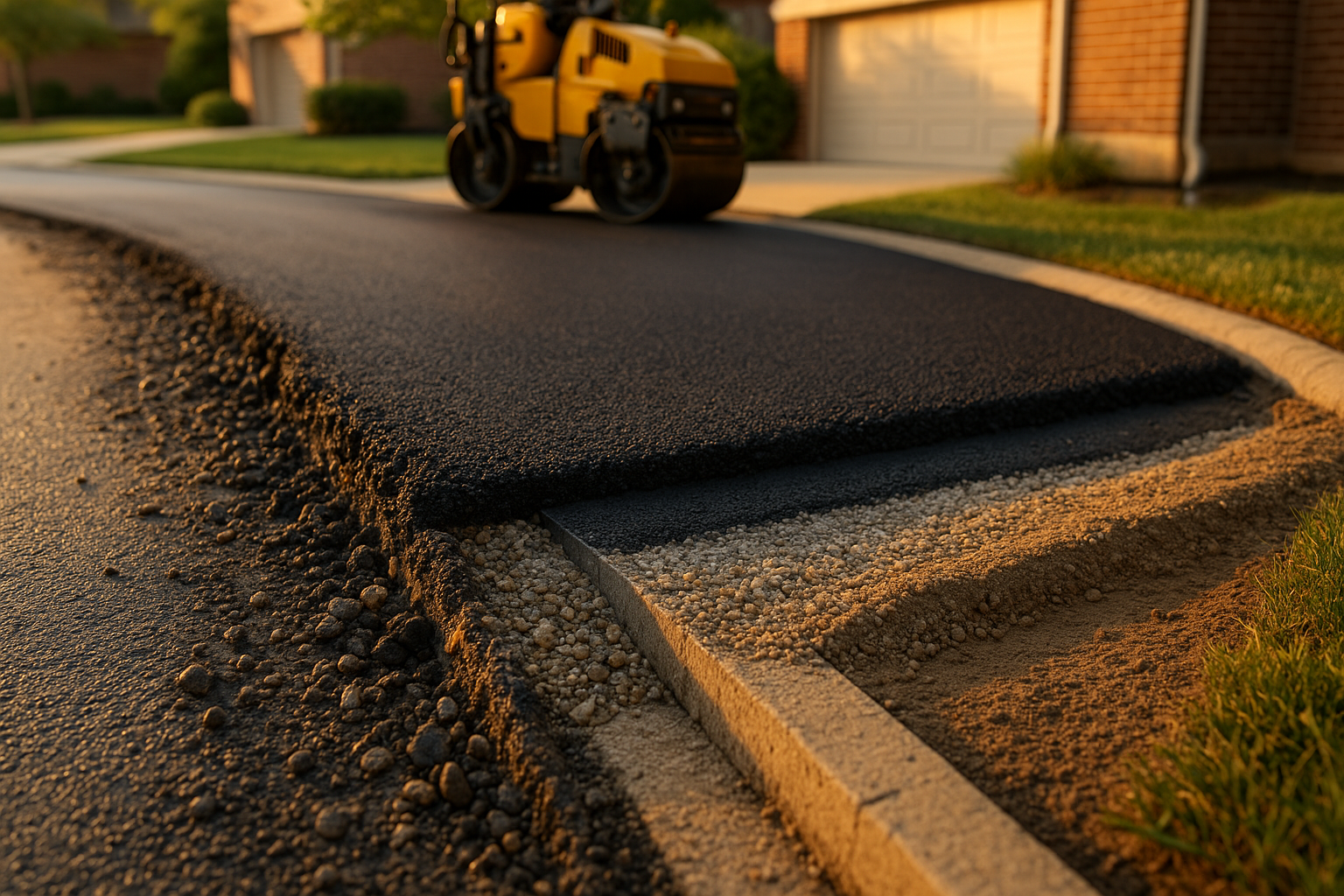
Around the 12- to 18-year mark, you might start seeing widespread surface oxidation, shallow cracking, and maybe some minor raveling—that's when the aggregate pops out. If the base is still solid, this is the sweet spot for a mill-and-overlay. That means we grind off the top couple inches and lay down a fresh surface course. A well-done overlay can buy you another 12–15 years. (Check out our post on mill-and-overlay vs. full-depth reclamation for the details.)
But here's where people get tripped up: an overlay won't fix drainage problems. If you've got standing water, alligator cracks, or deep ruts, slapping new asphalt on top is like putting a band-aid over an infection. The same cracks will reflect right through within a year or two. For those situations, you're looking at full-depth replacement or even full-depth reclamation, where we rebuild the base. It's a bigger job, but done right, you get another 25 years out of it.
We recently worked with a church in Zionsville that had alligator cracking throughout their lot. They hoped an overlay would do the trick, but after we did some test pits, it was clear the gravel base had turned to mush in spots. They bit the bullet and replaced it in phases over two summers so they could still hold services. It wasn't cheap, but now they've got a drainage system that works and a lot that'll outlast most of their neighbors'.
Common Myths (and What Actually Happens)
"We can wait another year—those cracks are only cosmetic." Nope. Cracks are never just cosmetic. Water gets in, freezes, and widens them. A $500 crack-sealing job can prevent a $50,000 replacement.
"Snow plows will destroy the surface anyway." Plows can cause damage if you're using bare steel blades or the shoes are set wrong. Use rubber-edged blades or polyurethane edges, and make sure your plow contractor knows what they're doing. Also, avoid rock salt and calcium chloride if you can; they corrode asphalt. There are safer deicers like magnesium chloride or CMA that are less aggressive.
"Winter paving is fine if the crew is good." No. In Indiana, you really want to schedule paving, sealcoating, and overlays from April through October. Cold weather keeps the asphalt from bonding properly, and you'll get early raveling. I don't care how skilled the crew is—physics wins.
"A cheaper thin overlay is the same as a mill-and-overlay." A thin overlay without milling might look good for a couple years, but it doesn't address surface irregularities and doesn't bond as well. Spend the extra money on milling; you'll get a longer life.
Plan for Your Lot's Future
The bottom line: how long does asphalt last? In Indianapolis, anywhere from 8 to 30+ years—and where you land on that spectrum depends almost entirely on how you treat it. Think of it like a car: you can skip oil changes and drive until the engine seizes, or you can spend a little on maintenance and drive it for 200,000 miles.
If you're managing a property in Carmel, Fishers, or anywhere around Marion County, start with a simple assessment. Look for cracks, puddles, and signs of crumbling. Then, put together a phased maintenance plan that fits your budget. Even if you can't do everything at once, sealing cracks now and planning for sealcoating next spring will slow down the aging process dramatically.
We know shutting down a lot is a pain, especially for medical offices or busy retail. That's why we work with you to phase the work—maybe do the north half one weekend, the south half the next. We'll give you a clear timeline so you can communicate with tenants or customers. (For more on budgeting, see our guide to planning annual parking lot maintenance.)
Ready to get a handle on how your lot's holding up? Let's take a walk around it together. Schedule your assessment → and we'll give you a straight answer—no scare tactics, just a practical plan and a clear quote that works with your schedule and budget.
Ready for a free lot assessment?
We walk the lot, photograph the problems, and hand you a written plan — no pressure, no obligation.