Last spring, a friend in Broad Ripple called me out to his driveway. He'd spent weekends patching potholes with bagged cold patch, but by March, the same craters were back, bigger and meaner. His whole drive looked like a jigsaw puzzle of cracks and sunken spots. He was fed up. "Can we just slap a new layer on top?" he asked. That's when I had to walk him through the difference between a quick asphalt overlay and a full-depth reclamation—because one hides problems, and the other fixes 'em for good.
That kind of confusion is normal. Asphalt repair lingo can sound like a foreign language. But if you manage a commercial lot in Fishers or a long driveway in Zionsville, understanding these options saves you money and headaches. Let's break down mill and overlay vs. full-depth reclamation, what each actually does, and which one makes sense for your pavement here in central Indiana.
What's an Asphalt Overlay, Exactly?
An asphalt overlay—sometimes called asphalt resurfacing—is exactly what it sounds like: you lay a fresh layer of hot-mix asphalt right over your existing pavement. But there's a catch. It only works if the base underneath is still solid. Think of it like putting a new carpet over a floor: if the subfloor is rotting, the carpet won't fix that.
So when does an overlay make sense? When you've got surface-level wear—small cracks, minor raveling, maybe some low spots—but no deep structural failure. We're talking about pavement where the big enemy is the Indiana freeze-thaw cycle. You know the drill: water seeps into tiny cracks, freezes, expands, and repeats until those cracks look like a road map of Marion County. If the base is stable and your drainage works, an overlay can add years of life for way less than tearing everything out.
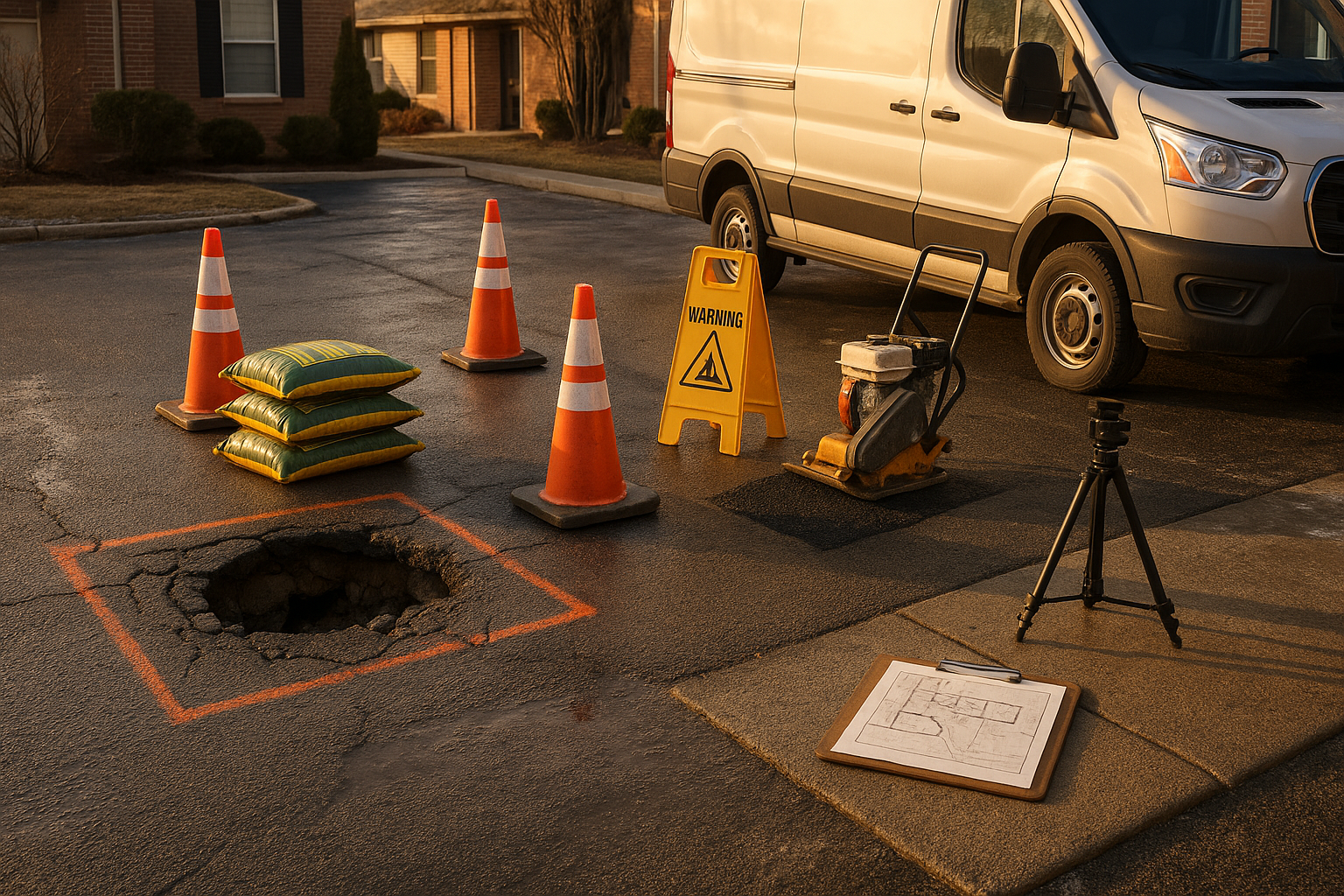
But prep is everything. You can't just pave over potholes. Before an asphalt overlay, those failed spots need digging out (that's a dig-out patch) or infrared asphalt repair to heat and rework the existing material. Cracks wider than a dime need routing and reliable crack sealing. I've seen crews skip this step, and within one winter, reflective cracking pushes right through the new surface. For a deeper dive, check our article on alligator cracking causes and repair.
Thickness matters too. For most residential driveways and light-traffic parking lots, we spec an asphalt overlay thickness of 1.5 to 2 inches. That's a proper hot-mix with a binder course and surface course, not just a thin smear. In heavy-use areas like a retail lot in Greenwood, we might go thicker or use a polymer-modified mix. And here's where milling comes in—mill and overlay is the standard when you need to keep curb reveal consistent or tie into existing grades. If your garage apron or a storm drain sits flush, milling off the top layer before paving means you won't build up height that messes with drainage or door clearance. (Nobody wants their car scraping every time they pull in.)
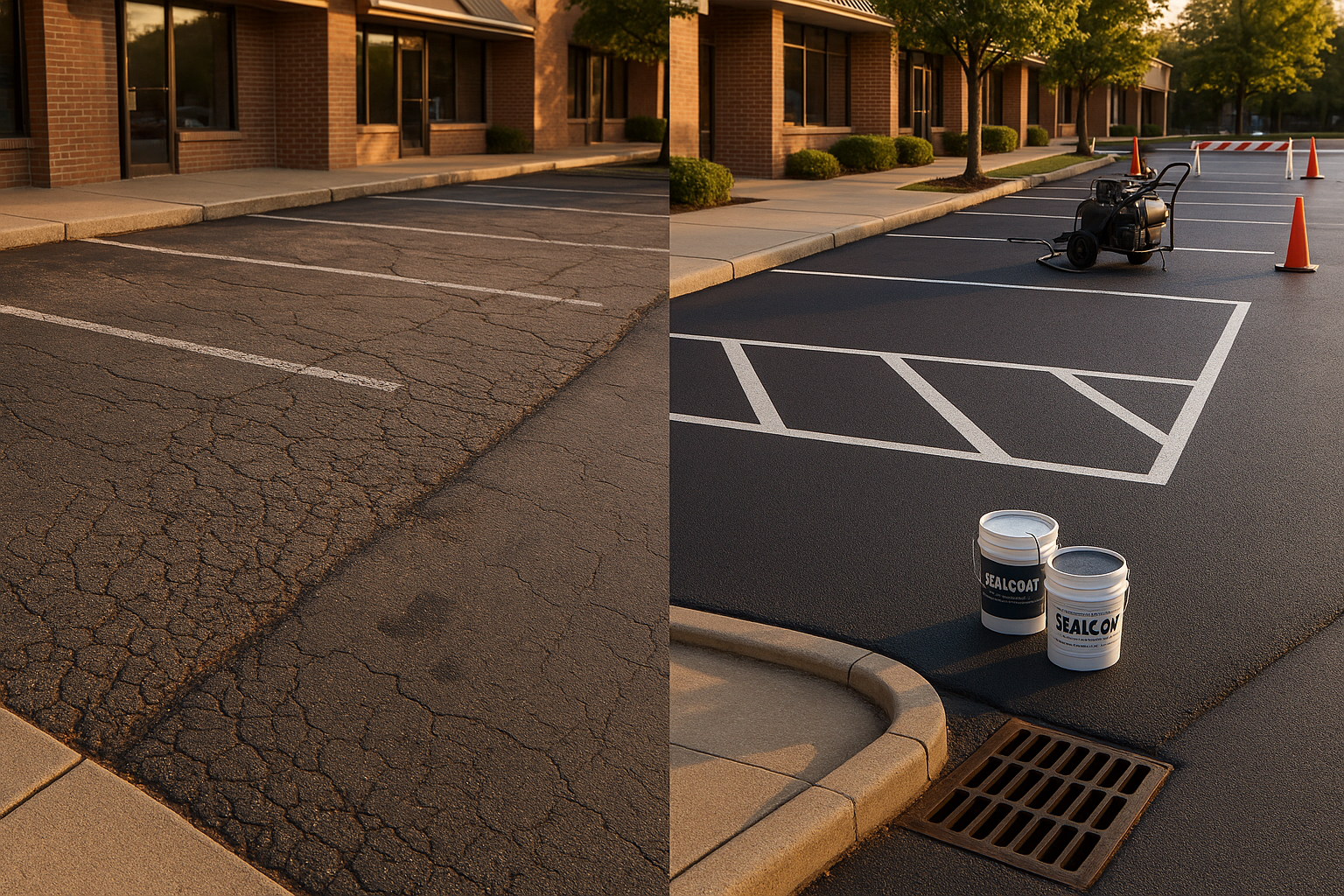
Edge transitions and drainage are big deals in neighborhoods like Meridian-Kessler or Irvington. Old lots often slope toward the street, and a poorly planned overlay can send water toward the foundation. We always check stormwater inlets and alley aprons, setting a leveling course where needed to correct low spots. For extra insurance against reflective cracking, some jobs get an asphalt fabric interlayer between the old surface and new overlay. After the overlay? Don't forget sealcoating after overlay—it helps slow oxidation and lock in that smooth finish, especially against Indiana's salt and plow blades.
Climate here makes timing tricky. The best season for an asphalt overlay in central Indiana is late spring through early fall, when asphalt plants are running hot and air temperatures stay above 50°F for compaction. Freeze-thaw asphalt damage is real, so if you're reading this in March and your lot looks like a war zone, call us now—we can do emergency patching and plan your overlay for May. (Read more about how Indiana winters punish asphalt.)
When Full-Depth Reclamation Is the Better Bet
Now, my friend's driveway in Broad Ripple? It was beyond an overlay. Underneath, the base had turned to mush—clay-heavy soil common around here had heaved and settled until the whole slab lost support. That's when full-depth reclamation (FDR) saves the day.
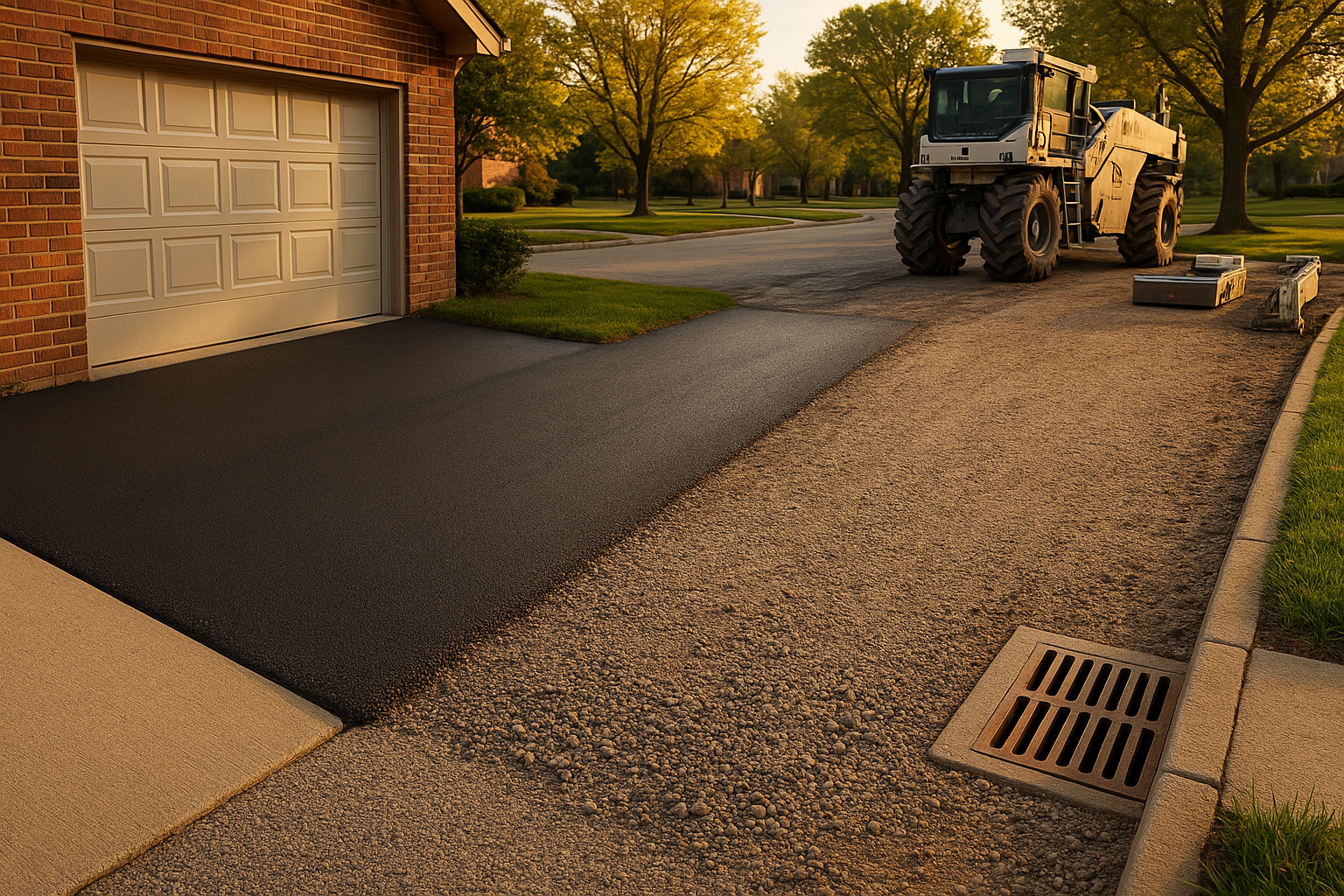
FDR isn't just a resurfacing; it's a total rebuild of the pavement structure. A big machine pulverizes the old asphalt and a portion of the base material, then mixes in additives like cement or lime to stabilize it. After compaction, you've got a brand-new, frost-resistant base, ready for a fresh asphalt surface. It costs more and takes longer, but it's the only fix for widespread alligator cracking, pumping, or chronic pothole repair Indianapolis drivers curse every spring.
Compare that to an overlay: overlay hides problems if the base is decent; FDR removes the problem entirely. For a commercial property manager in Noblesville with delivery trucks beating up the lot daily, sometimes FDR is the only way to stop the cycle of patching and praying. But for a homeowner with a decent driveway that's just showing its age, an asphalt overlay is often plenty.
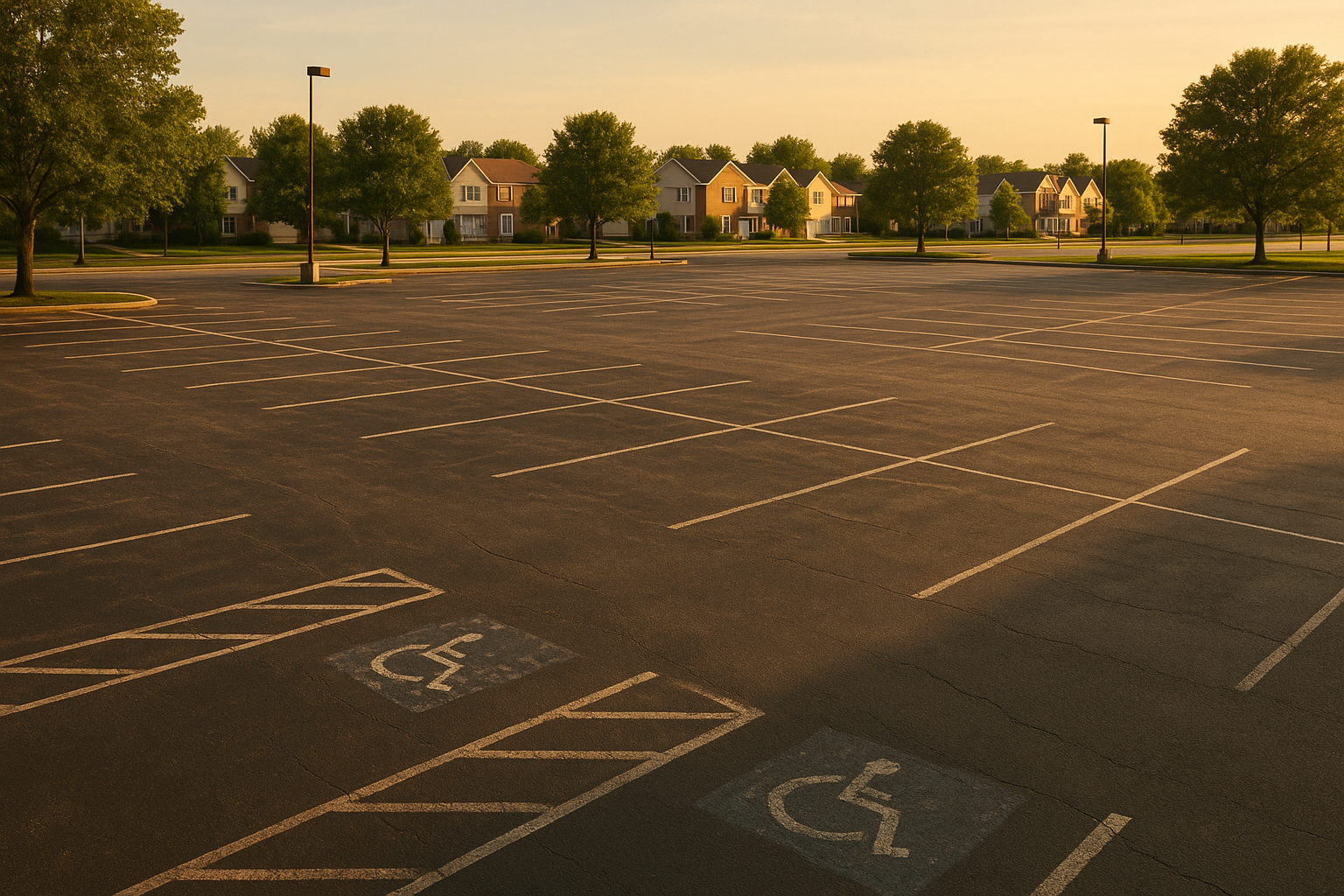
The downtime is different too. An overlay can often be done in a day, maybe two, and traffic can be back on it within 24-48 hours. Full-depth reclamation might close part of your lot for a week, though we phase work to keep access open. For HOAs planning annual parking lot maintenance, combining crack sealing before overlay with sealcoating stretches the budget.
How PavementPros Makes the Fix Fit Your Indy Property
We don't walk onto a site with a one-size-fits-all answer. When we show up to your place—whether it's a parking lot in downtown Indy or a long driveway in Avon—we look at what's really going on. We check drainage slope, base stability, curb reveal, and how the pavement ties into your garage or sidewalk. Then we lay out clear options: if your base is solid, a mill and overlay might be the ticket. If it's failing, we'll price full-depth reclamation and explain why it's worth the investment.
We also handle the stuff that keeps you up at night. Traffic control for paving? We plan it so your customers or residents aren't stuck. Edge transitions? We feather them smooth so plows don't catch. And we never cheap out on compaction—cold longitudinal joints are a recipe for early failure in this climate.
So if your pavement's looking rough and you're tired of temporary fixes, let's get you a real plan. Whether it's asphalt resurfacing or starting fresh with FDR, PavementPros offers a free on-site assessment. Just shoot us a quick note to schedule, and we'll walk through what your lot needs, no pressure, no jargon.
Ready for a free lot assessment?
We walk the lot, photograph the problems, and hand you a written plan — no pressure, no obligation.