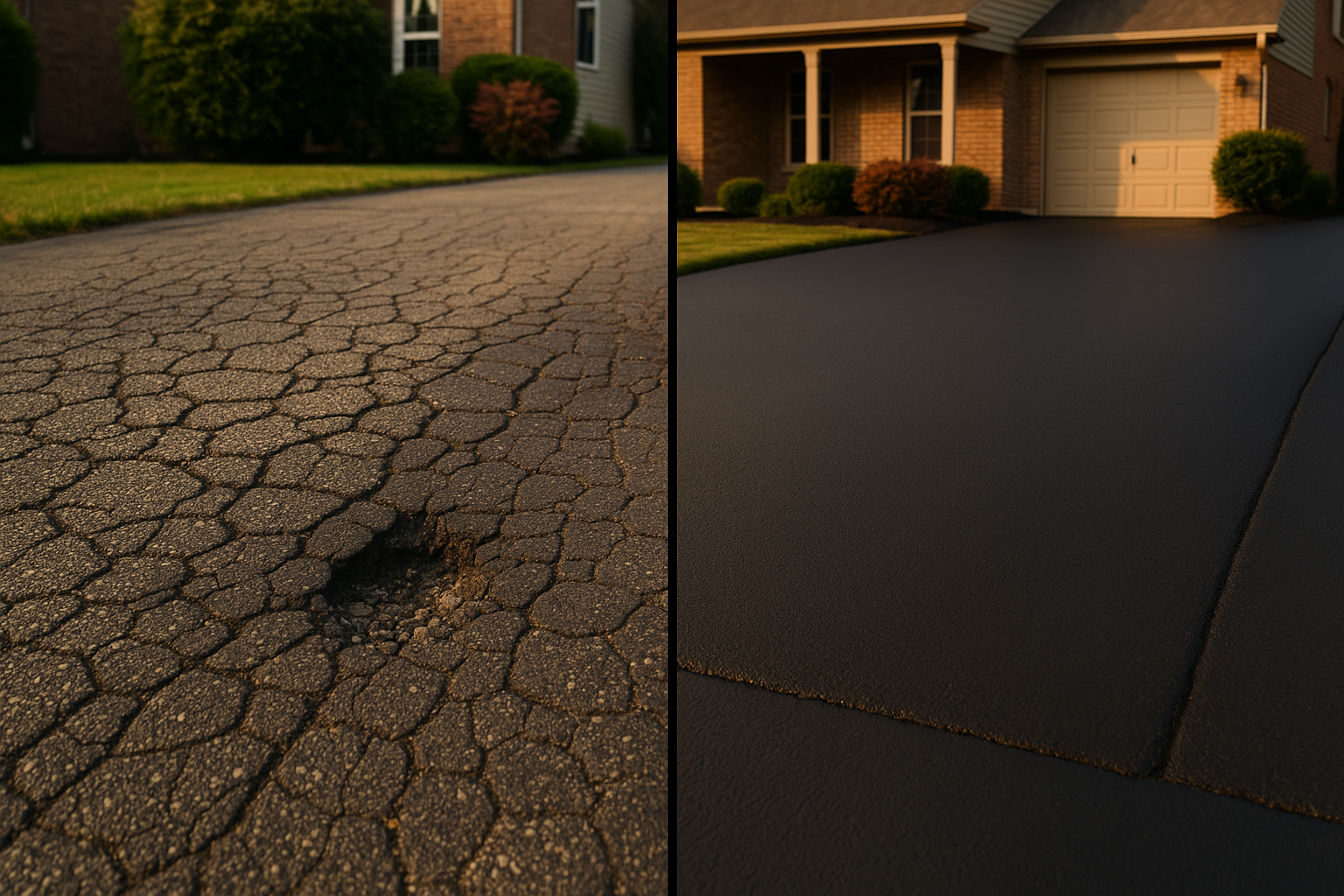
Last March, my neighbor Sarah stood in her driveway in Carmel, staring at a web of cracks that looked like dried mud on a riverbed. She’d just had the driveway sealcoated the year before, thinking that was enough. But now, after a brutal Indiana winter, those cracks had multiplied. She called me, worried: “Is this normal? Can I just paint over it?” I had to give her the bad news: that’s alligator cracking. And it’s not just a surface problem.
So, What Exactly is Alligator Cracking?
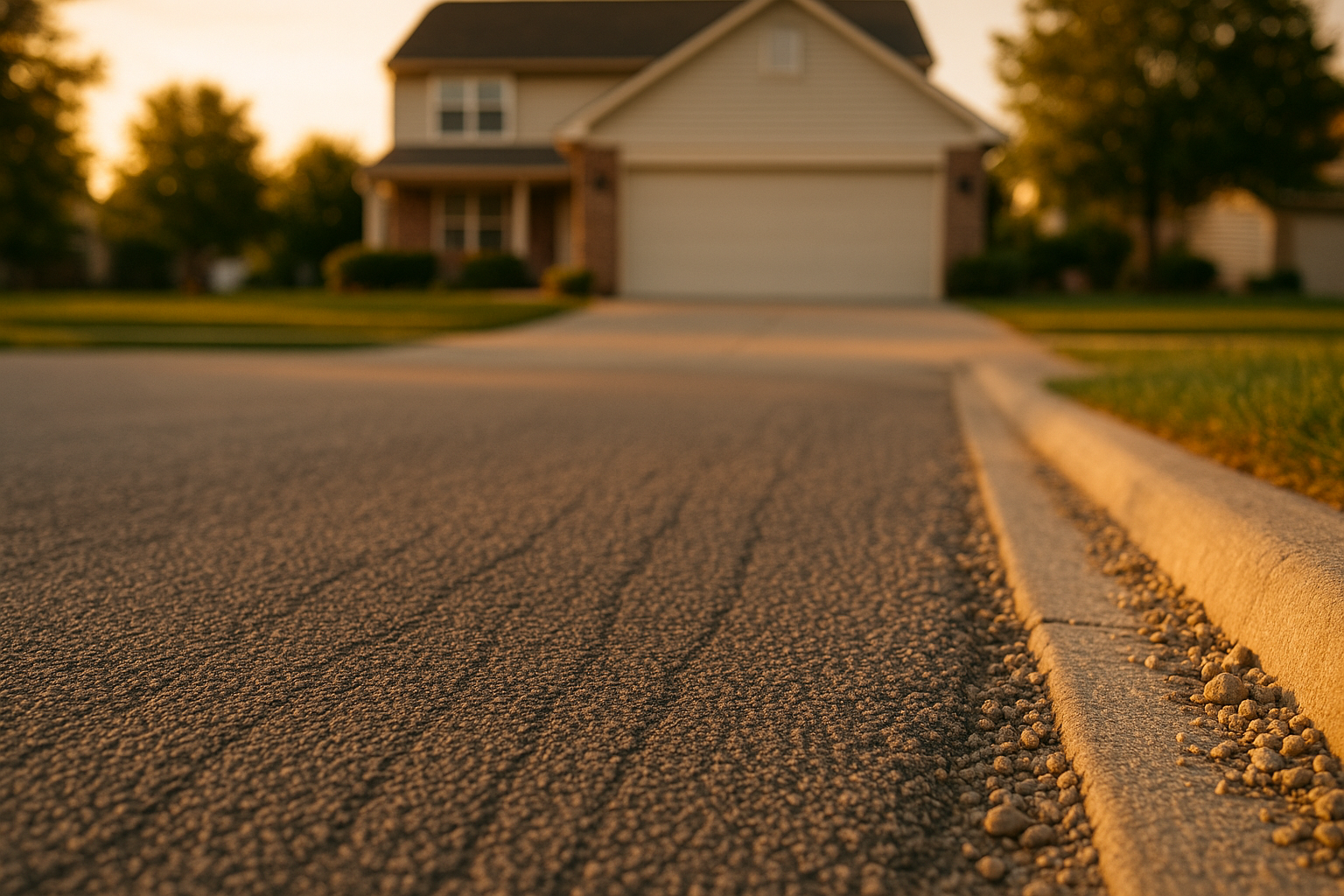
Alligator cracking—also called crocodile cracking or fatigue cracking—is that scaly, interconnected pattern you see on old asphalt. It’s like the skin of an alligator, hence the name. Unlike a single straight crack from a tree root or shrinkage, this pattern means the asphalt pavement is failing from the bottom up. The surface is literally fatiguing under repeated weight. In Indiana, it’s all too common. With our clay-heavy soil that holds water like a sponge, plus the constant freeze-thaw cycles we get from November through March, the ground shifts and softens under the asphalt. Then cars and trucks drive over it, and the pavement flexes. Over time, that flexing breaks the bond between the asphalt layers and the base underneath. Once you see those telltale scales, the structural support is already compromised.
Why a Simple Crack Seal Won’t Cut It
Here’s something a lot of folks get wrong: they think sealcoating or crack filling will fix alligator cracking. It won’t. Sealcoating is great for protecting good pavement from sun and water damage, but it’s not a structural repair. Crack filling is for isolated, non-working cracks—like those hairline ones you might see after a hot summer. But alligator cracking signals that the base has given out. If you just seal the top, the pavement keeps flexing underneath, and the cracks come right back. It’s like putting a band-aid on a broken bone. You need to dig down and fix the foundation. Learn more about the difference between crack sealing and crack filling.
Surface Craze vs. Structural Failure
Not every squiggly crack spells doom. There’s something called surface craze cracking—a fine, shallow pattern that’s confined to the very top layer. It happens when the asphalt binder gets old and brittle. That kind sometimes can be treated with a sealcoat or a thin overlay, but you need a pro to tell the difference. The way we check is simple: we bring a bucket of water, pour it over the cracks, and watch. If the water drains right through, it’s deeper than it looks. We might also do a core sample or just poke it with a screwdriver. If the base is soft or punky, you’ve got structural failure.
The Right Fix for Alligator Cracking
So what does a lasting repair look like? It depends on how bad the damage is and how sound the base is.
For small, isolated areas where the base is still solid, infrared asphalt repair can work wonders. It’s like re-melting the top inches of pavement, adding fresh mix, and blending it seamlessly. No saw cuts, no seams. But that’s only for minor fatigue where the base hasn’t turned to mush.
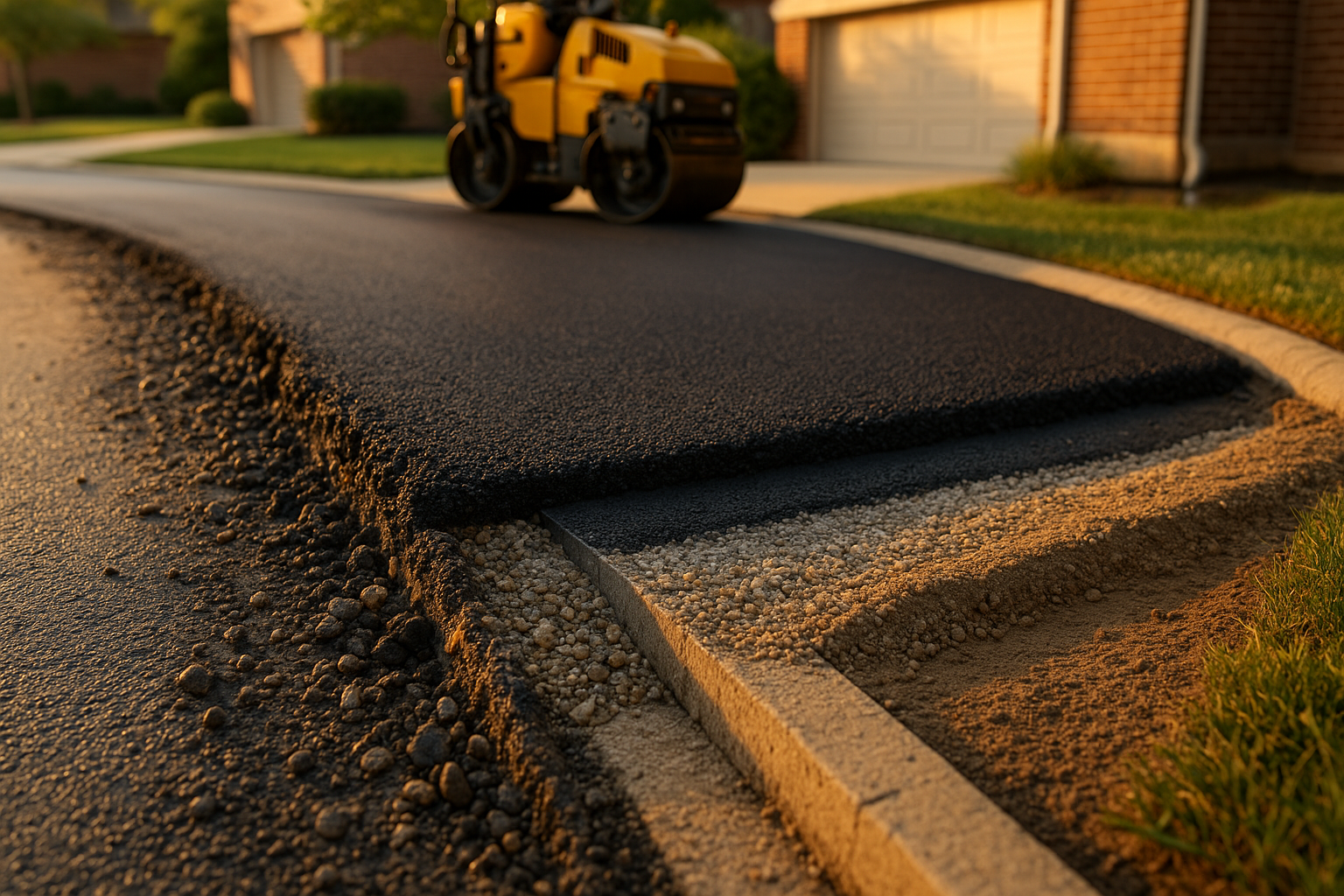
Most of the time, you’ll need a full-depth patch. That’s the gold standard. We saw-cut a clean rectangle around the bad area, dig out all the failed asphalt—usually 2 to 4 inches—and then inspect the subbase. Around here, we often find the stone base is saturated or contaminated with clay. We’ll dig that out too, add fresh aggregate, compact it in layers, and then place new hot-mix asphalt in lifts. The joints get sealed to keep water out. It’s a job, but it lasts.
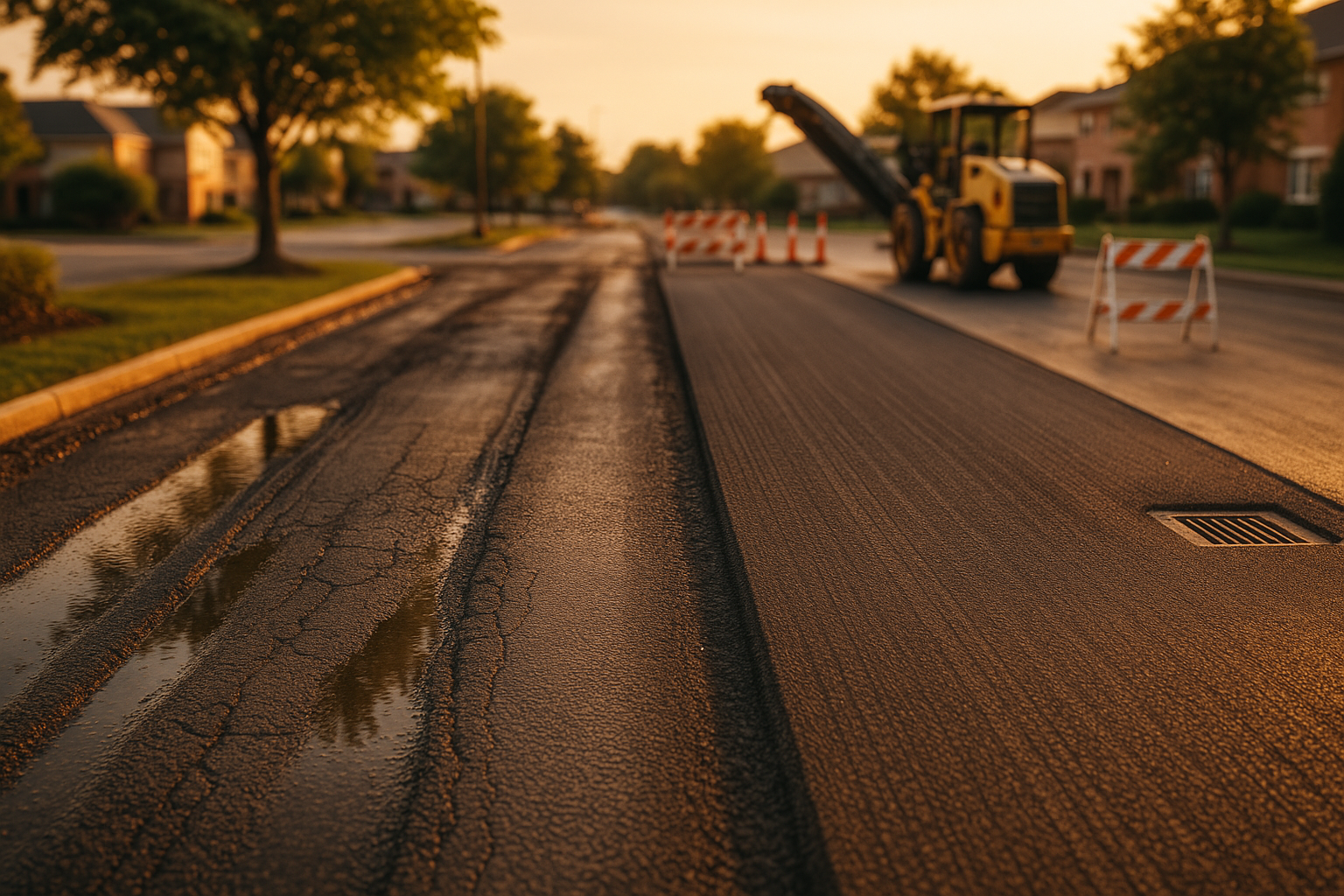
If more than 25–40% of your lot or driveway is alligator cracked, patching piecemeal can end up costing more than an overlay. But an overlay only works if the base can be salvaged. Sometimes we’ll do targeted full-depth patches in the worst spots, then cap the whole thing with a fresh layer of asphalt. That’s where deciding between patching and an overlay gets tricky—you really need someone who knows local conditions.
Drainage: The Silent Killer of Asphalt
I’ve lost count of how many driveways in Fishers and Zionsville I’ve seen with a perfectly good asphalt mat over a swampy base. The culprit? Downspouts dumping right onto the edge, or a yard that slopes the wrong way. Water is the enemy of asphalt. It washes out the fine particles in the base, leaving gaps that collapse under weight. Fixing the drainage is not optional—it’s part of the repair. We might regrade the lawn, extend downspouts, install a French drain, or build up the shoulder to keep water from pooling under the edges. Without that, even a $10,000 patch job will fail in a few years.
Don’t Forget About Seasons in Indy
In central Indiana, we’ve got a narrow window for permanent asphalt repairs. The best time is mid-spring through early fall when the ground is dry and temperatures are warm. That lets the hot mix bond properly. We can do emergency patches in winter—like stuffing a pothole with cold mix—but that’s a short-term fix to get you through the snow season. The real trouble is when those alligator cracks turn into potholes after a thaw and someone twists an ankle or dings a car. Then it’s a liability issue, not just an eyesore.
Budgeting and Planning Your Repairs
I always tell property managers in Greenwood and Avon: don’t just throw money at every crack. Prioritize. Start with the areas that see the most traffic—drive lanes, dumpster pads, delivery zones. And look for where water ponds after a rain. Bundle your repairs. If you’re already having a crew come out for patching, it’s smart to sealcoat the whole lot afterward and re-stripe the lines. It saves on mobilization costs and stretches your budget. At PavementPros, we lay out a clear written plan with marked limits, depths, mix specs, and drainage fixes. No surprises.
If you’re not sure where to start, just get a free on-site assessment. We’ll walk the pavement with you, poke around, and give you honest advice. No pushy sales—just a plan that fits your timeline and wallet.
A Quick Word on Aesthetics
Some folks worry that a patch will look like a cheap quilt. Here’s the real talk: infrared repairs blend so well you barely see them. Full-depth patches are more obvious at first because of the saw-cut edge, but once you sealcoat the whole surface, they fade into a uniform black. And honestly, a crisp, well-compacted patch looks a lot better than a web of cracks that’s only going to get worse.
Preventing Future Alligator Cracking
Once you’ve fixed the damage, you want to keep it from coming back. A good asphalt maintenance plan is your best defense. That means: - Sealcoating every 2-3 years to keep the surface flexible and waterproof. - Filling isolated cracks before they spiderweb. - Managing heavy loads—if you have dumpsters or delivery trucks, consider concrete pads in those spots. - Keeping edges supported with topsoil or gravel so they don’t crumble. - Watching your drainage like a hawk; clear gutters, extend downspouts, and fix low spots.
In our freeze-thaw climate, being proactive pays off. That scary alligator pattern doesn’t have to mean you’re headed for a full repave—if you catch it early and handle the base right.
Ready for a free lot assessment?
We walk the lot, photograph the problems, and hand you a written plan — no pressure, no obligation.