I remember a call from a board member out in Fishers—her parking lot looked like a topographical map after winter. Deep cracks, places where the asphalt was just crumbling. She was sure they needed a full repave. But once we walked it, it turned out most of the lot was still sound; the base was fine, the damage was surface-level. They ended up with a thorough patch and sealcoat, and it bought them three more years before even thinking about overhauling the whole thing. That’s the core of the sealcoating vs repaving question: are you protecting good pavement, or rebuilding failed pavement? It’s not always obvious, and around here, our brutal freeze-thaw cycles don’t make it any easier to judge.
Sealcoating Protects, Repaving Fixes
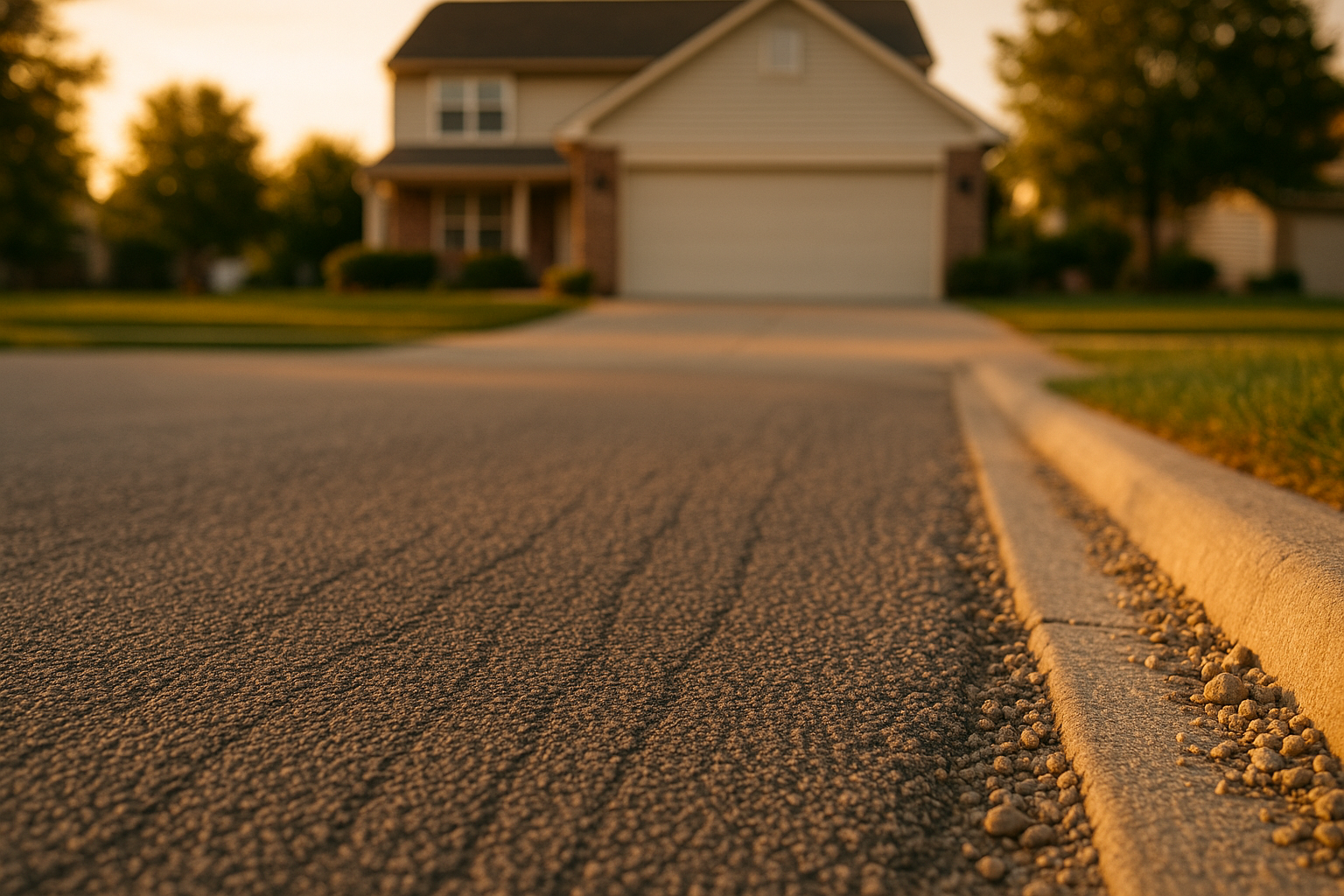
Think of sealcoating like sunscreen for your asphalt. It’s a liquid coating that seals the surface, blocking water, UV rays, and oil spots from eating away at the binder that holds the pavement together. It doesn’t add strength—it preserves what you already have. Repaving, on the other hand, is either an overlay (adding a new layer of asphalt on top) or a full removal and replacement when the base is shot. If your lot is generally in good shape but looks faded and has a few hairline cracks, sealcoating is likely your move. But if you’ve got alligator cracking—those interconnected cracks that look like the back of a lizard—or ruts deeper than your thumb, you’re looking at a repave. Simple rule: surface problems = sealcoat; structural problems = repave.
What Sealcoating Does Well
- Slows oxidation from sun and weather.
- Fills tiny surface voids, keeping water out.
- Gives a clean, dark finish—and yes, that matters for curb appeal and line visibility.
- Pairs perfectly with crack sealing to stop small cracks from becoming big ones.
And no, it’s not just cosmetic. A good sealcoat with sand admixture actually improves traction and resists wear from turning tires. I’ve watched lots that get sealcoated on schedule go 20 years with only minor patching. Ones that skip it? Sometimes need an overlay in half that time.
When to Stop Sealing and Start Repaving
So when do you cross that line? Here are the red flags I look for when I walk a lot:
- Alligator cracking across more than, say, 20–30% of the surface. A few patches here and there are fine—we can patch those and sealcoat over them. But widespread alligator cracking tells you the base is failing.
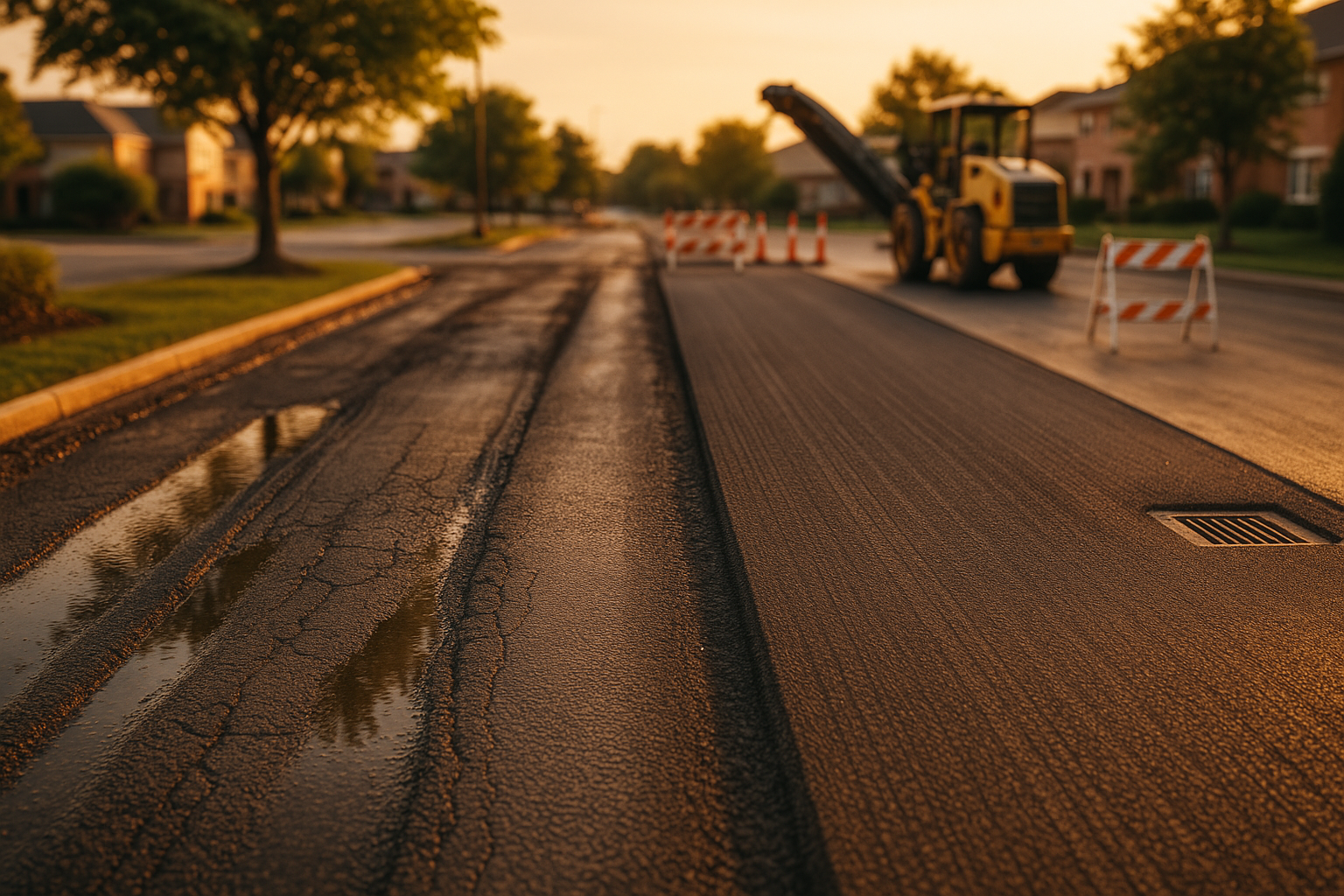
- Standing water or sunken areas that don’t drain. That’s usually a sign the sub-base has settled, and you need to mill and repave to fix the grade.
- Potholes that keep coming back. If you’ve filled the same hole twice in two years, the underlying material is mush. Patch it again and you’re just feeding a monster.
- Ruts where cars park or turn. If the asphalt has shifted, a thin coat of sealer won’t level that out.
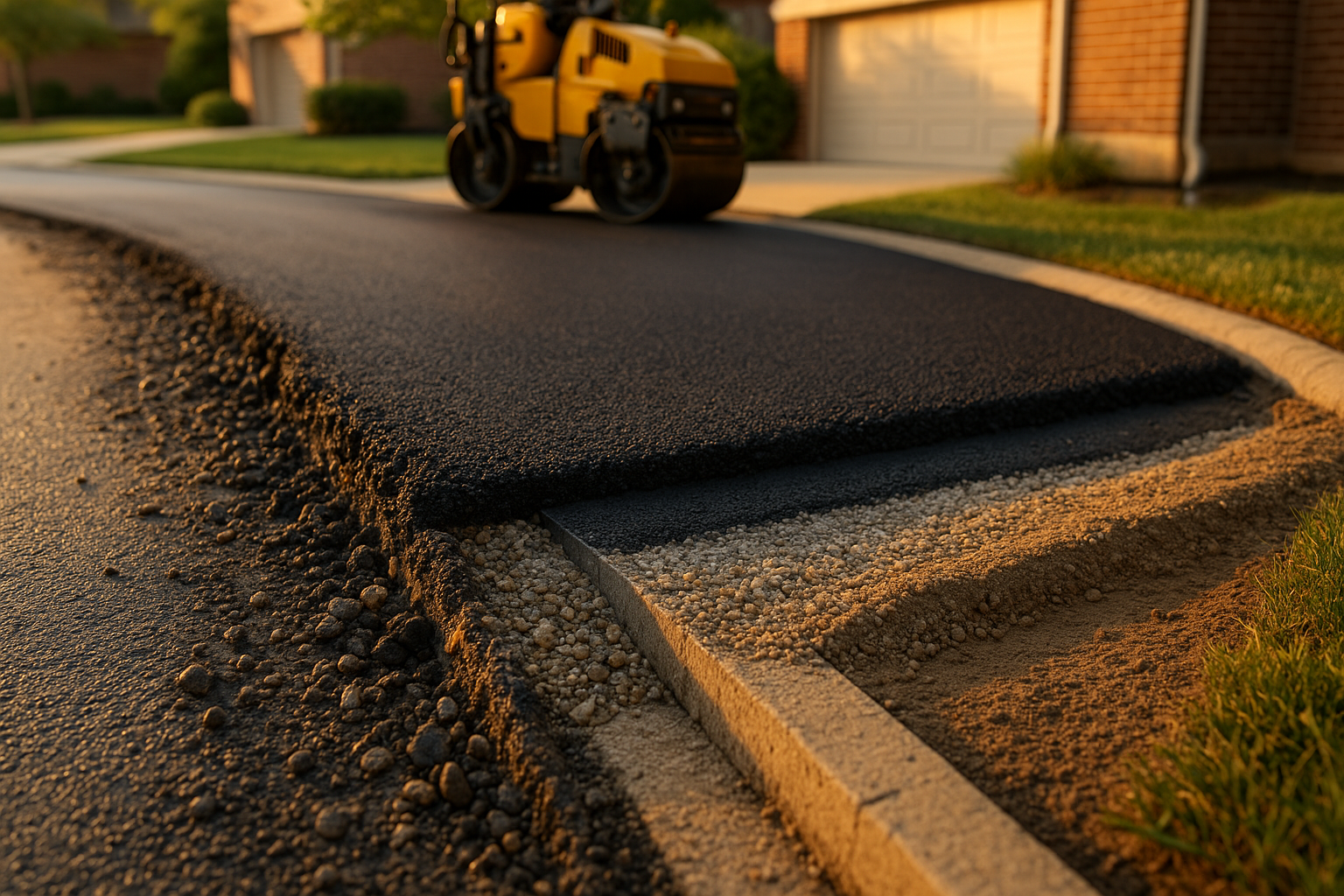
When you see those, it’s time to start planning for repaving. In Indianapolis, we often recommend an overlay if the base is intact—it’s less expensive and less disruptive than a full tear-out. But if the base is compromised, a mill-and-pave (removing the old asphalt down to the base and putting down a fresh mat) is the only way to get lasting results. If you’re patching potholes over and over, it’s probably a base issue—asphalt patching and pothole repair can only do so much when the ground under it is failing.
Why Our Indy Winters Make This Decision Tougher
Indianapolis winters are rough on pavement. Water seeps into tiny cracks, freezes, expands, and pops the asphalt apart. Then plows scrape it, salt attacks it, and by March your lot looks ten years older. I’ve seen parking lots in Fishers that were sealcoated in October still looking good, while the one next door that skipped it is covered in fresh cracking. Sealcoating basically waterproofs the surface so that freeze-thaw cycle can’t do its damage. But you have to time it right: we can only sealcoat when daytime temps are 50°F and rising, with a dry forecast—so late spring through early fall is our window. If you wait until October, you’re rolling the dice.
And then there’s the new pavement waiting game. Fresh asphalt needs to cure for 6–12 months before its first sealcoat, or the sealer won’t bond right and can actually trap oils that cause raveling. I’ve had homeowners call me to sealcoat a driveway they just had paved last month, and I have to tell them to wait. It’s a test of patience, but it matters.
What Actually Happens During Each Job
A proper sealcoating job isn’t just splashing on a coat of black goo. For us at PavementPros, it starts with cleaning—commercial pressure washing or sweeping every bit of dirt, oil, and leaf litter. (Fall acorns and mulch? Those will mess up adhesion faster than anything.) Then we crack seal every linear crack larger than a hairline, patch any bad spots, and only after that apply the sealer, usually with a sand mix for grip. We often do this in phases so businesses can stay open—shifting cars from one section to another over a weekend or a couple of nights. Cure time is usually 24–48 hours before light traffic, though striped lines need a bit longer to set. If you’re wondering about cure time specifics, we’ve got a write-up on sealcoat cure time that goes deeper.
Repaving is a bigger deal. For an overlay, we’ll clean, apply a tack coat, and then lay 1.5–2 inches of new asphalt. For a full-depth mill and pave, we grind out the old pavement, re-grade the base, and put down a fresh layer. Either way, you’re looking at longer closures—but we can still phase it. I recall a shopping center in Greenwood that stayed open while we did half their lot at a time, moving barrier cones every few days. It takes coordination, but it’s doable.
Cost and Lifecycle: Making the Money Call
Nobody wants to spend more than they have to. Sealcoating is a fraction of the cost of repaving—often pennies on the dollar. If your lot is structurally sound, a sealcoating cycle every 2–3 years (yes, that’s the Midwest rhythm) will extend its life dramatically and postpone that big capital expense. Combine that with annual crack sealing and touch-ups, and you’ve got a maintenance plan that keeps you out of trouble. I’ve crunched the numbers with property managers: consistent maintenance lowers total cost of ownership over a 15–20 year span, even though it means spending a little every couple years. Repaving only when things get desperate always costs more in the long run.
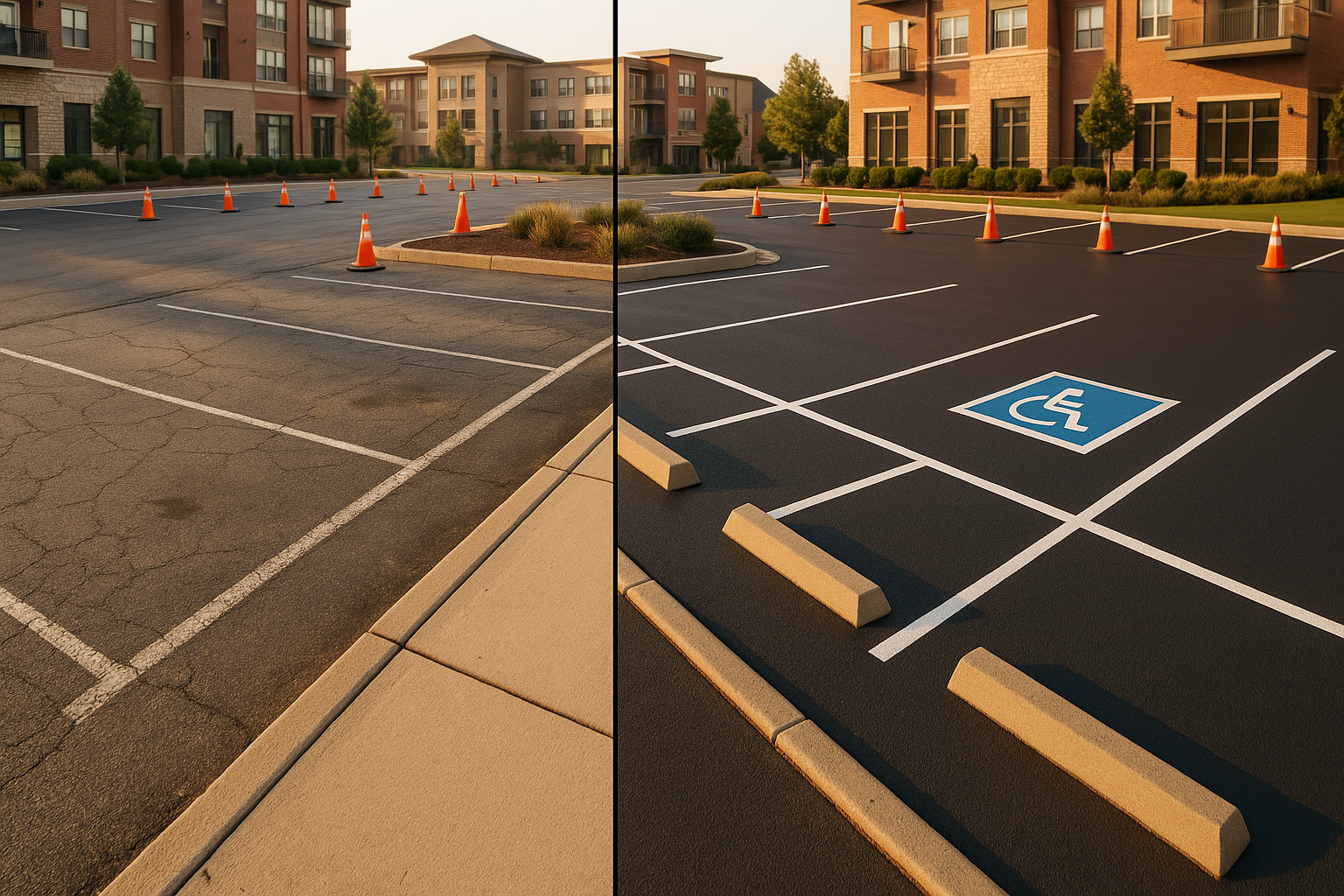
But let’s address the elephant in the room: downtime. I hear it all the time—“We can’t close the lot, we’ll lose business.” That’s why we phase work. We’ve done overnight sealcoating for office parks in Carmel, and weekend overlays for retail centers in Avon. It’s never a one-size-fits-all, but we figure out a schedule that keeps most doors open. And when we’re done, the lot is striped fresh, ADA spots are updated, and we often touch up wheel stops and curb painting to make the whole place look brand new. It’s a good time to check for ADA compliance too—those requirements change, and it’s easier to fix while you’re already mobilised.
So, What’s Your Lot Telling You?
Here’s my honest advice: if you can still see the stones in the asphalt and the cracks are mostly linear, sealcoat it. If you’ve got more than a few spiderweb patches or you’re bouncing over potholes that you feel in your teeth, call for a repave assessment. And don’t wait until you hate what you see—by then, the damage is further along. Catch it early. A simple walkthrough now can save you tens of thousands down the road.
If you’re in Indianapolis or anywhere around—Carmel, Fishers, Zionsville, Westfield, Noblesville, Greenwood, Brownsburg, Avon, Plainfield—and you’re not sure which side of the fence you’re on, let’s walk the lot together. I’ll tell you straight up whether sealcoating will buy you time or if it’s time to repave. No charge for looking, no pressure. Hit that button and schedule a site assessment and quote.
Ready for a free lot assessment?
We walk the lot, photograph the problems, and hand you a written plan — no pressure, no obligation.