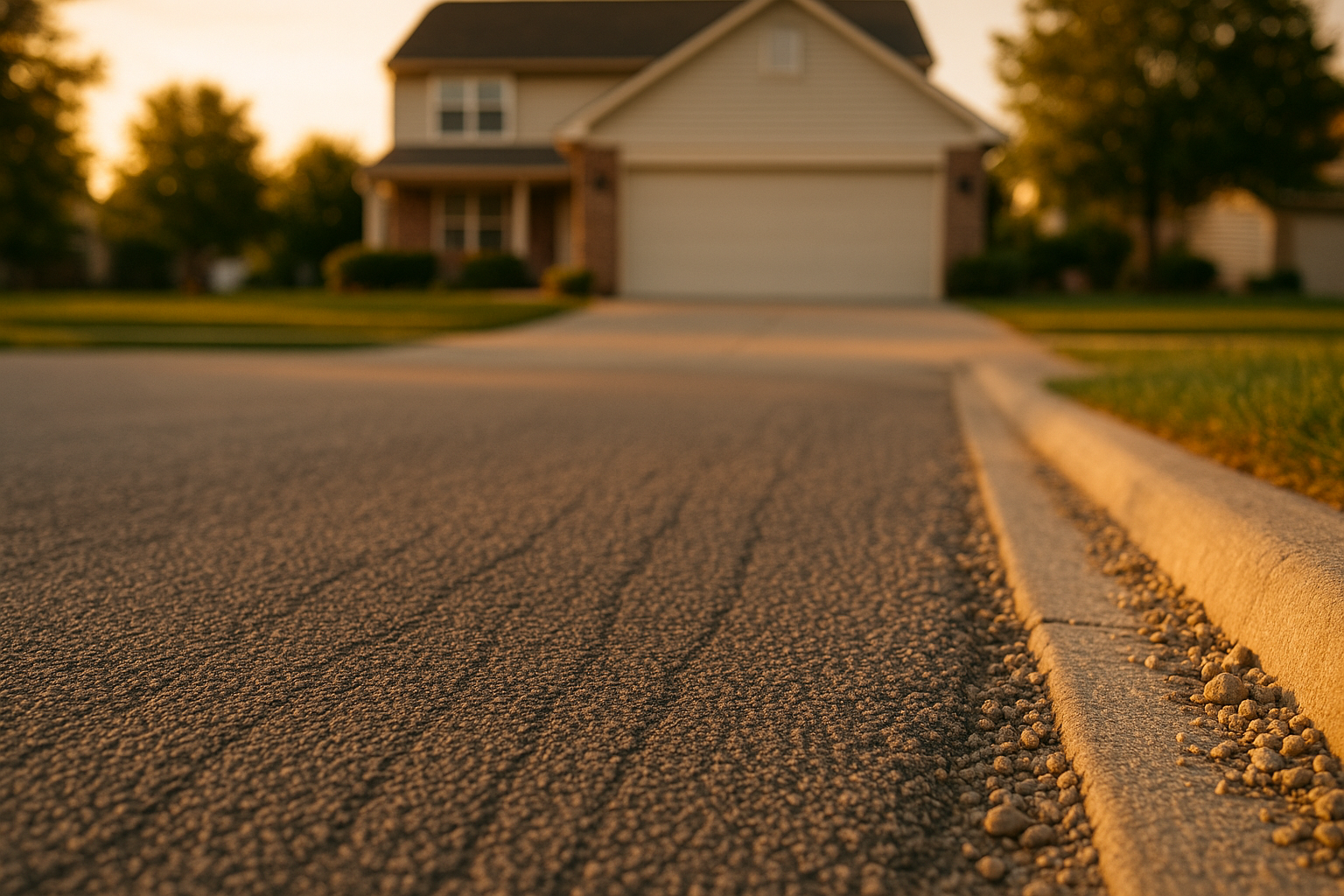
Last spring, my neighbor in Broad Ripple called me over, staring at his driveway like it had personally insulted him. Long, dark lines zigzagged from the garage to the street, and near the curb, a spiderweb of cracks spread out. “Is this thing gonna swallow my car?” he asked, only half joking. He’d bought some cold-pour goo from the hardware store the fall before, but after a few freeze-thaw cycles—classic Indiana—the filler had popped right out. Sound familiar?
That’s the thing about asphalt cracks around Indianapolis. They never just sit there. Every time it rains, every time it freezes and thaws, those cracks push water deeper into the base, slowly turning a $5 fix into a $5,000 problem. The good news? The right approach—and the right asphalt crack filler—can stop that slide.
Why Those Little Cracks Are a Big Deal
Think of asphalt like a sponge. It’s not solid; it breathes. When water gets into a crack and freezes, it expands. Then it thaws, and the water goes deeper. Over and over, that cycle pries open the crack wider and pushes the pavement up, then lets it sink. Before you know it, you’ve got potholes and a failing base. We see it all the time in neighborhoods from Zionsville to Greenwood. Once the base is shot, you’re not just filling cracks—you’re resurfacing, or worse. Early crack filling is the cheapest insurance you can buy for your lot. A few hundred dollars now beats thousands later. For more on how our winters tear up pavement, check out our deep dive on freeze-thaw damage in Indiana.
Crack Filling vs. Crack Sealing: Same Thing?
Nope, but we hear this mix-up a lot. Crack filling is usually for cracks that don’t move much—like small, tight lines that open less than a quarter inch with the seasons. It uses a less flexible material, often cold-pour stuff you buy at the store. Crack sealing, on the other hand, is what we do for cracks that move. We rout the crack to create a clean reservoir, then apply a hot rubberized filler that stretches and contracts with the pavement. In Central Indiana, with our freeze-thaw swings, most cracks need sealing, not just filling. If someone calls us for “asphalt crack filler Indianapolis,” we often tell them what they really need is hot rubberized crack sealing. It lasts way longer.
What Kind of Cracks Are We Talking About?
Not all cracks are created equal. Linear cracks—like the long seams that run down your driveway or parking lot joints—are prime candidates for sealing. Edge cracks near curbs happen when the pavement doesn’t get enough support. Block cracks look like giant puzzle pieces, usually from aged-out asphalt. Those respond well to filling and a fresh sealcoat. But alligator cracking? That’s a different beast. It looks like the skin of an alligator, a bunch of interconnected cracks. That tells us the base is failing, and no amount of crack filler will fix it. At that point, you need patching or resurfacing.
Hot Rubberized Filler vs. Cold Pour: What Works Here
I had a client in Fishers who tried the DIY cold pour route for his driveway. He did it on a warm October day, filled every crack he could find. Two winters later, half of it was peeling up and the cracks were back. Cold pour is okay for tiny, non-moving cracks, but for anything wider than a hairline, you want hot-pour rubberized filler. It’s heated on-site to bond with the asphalt, stays flexible down to crazy low temperatures, and doesn’t get brittle in the summer. In Indianapolis, where the pavement can swing from -10°F to 100°F in a year, that flexibility is everything. Plus, with hot rubberized crack filler, you get a neat, professional look that can be banded to blend in.
The Process: From Dirty Crack to Finished Repair
Here’s what actually happens when we come out to your property in Carmel or Avon. First, we clean the crack down to bare asphalt—no dirt, no weeds, no old sealant. We use compressed air and sometimes a wire brush. Then, if the crack is wide or moving, we rout it: cutting a clean channel that gives the filler a good grip and room to flex. Next, the hot rubberized filler is heated to 400°F and poured in. We often over-band it—spreading slightly wider than the crack to create a better seal. Finally, we blot with a light dusting of sand to cut down tracking. It’s quick, but every step matters. Plenty of driveways in Noblesville have deep shade from mature trees; those cracks take longer to dry and cure, so we plan accordingly.
Timing Is Everything in an Indianapolis Spring
Around here, you can’t just crack fill any old day. We need dry pavement and temps at least 50°F and rising. Spring and fall are the prime windows, but we dodge the pop-up storms that roll through. After application, you should keep cars off for at least an hour or two, sometimes longer if it’s cool or shaded. A homeowner in Westfield once asked, “How long do I have to wait?” and we had to tell him, “Until the filler is firm to the touch.” That’s the simplest rule. If you’re managing a commercial lot near I-465, we stage the work to keep traffic moving. Timing it right means the repair lasts for years.
When Filling Just Isn’t Enough
Sometimes we arrive and the cracks are too far gone. Alligator fatigue, base movement, or widespread raveling—that’s when you’re past the point of simple crack filling. You might need patching, milling, or even a full overlay. One look at an old lot in Brownsburg that had become more patch than pavement told the story. If your asphalt looks more like a road map than a smooth surface, it’s time to consider bigger options. We’ll always tell you straight up if filling is just a band-aid.
Sealcoating After Filling: The Finishing Touch
Once the cracks are sealed, we usually recommend sealcoating the whole surface. It locks in the repairs, resists UV damage, and gives a uniform look. A lot of HOAs around here love that clean, fresh appearance. When we work in neighborhoods like those in Plainfield, we coordinate crack filling and sealcoating so the entire project looks seamless. You can read about the difference between sealcoating and repaving here. Pairing them is the gold standard for longevity.
DIY or Call the Pros? One Neighbor’s Regret
I’ll never forget the guy in Greenwood who spent a whole weekend filling his driveway with a do-it-all product. By the next spring, cracks had reappeared and the filler had turned into a sticky mess. He ended up paying us to grind out his work and redo it properly. The truth is, pro-grade hot pour requires serious equipment and know-how. Temperature control, adhesion testing, routing—it’s not the same as squeezing a bottle. For long-term results in our chaotic Indiana climate, a professional job pays for itself.
Getting a Quote That Makes Sense
Here’s what most folks don’t know: not all quotes are equal. A fair quote should show the linear feet being treated, the material specs, and whether routing is included. Beware of flat fees—they can hide a lot. As a general contractor who focuses on asphalt, we don’t just squirt filler and call it a day. We look at drainage, soil conditions, and how snowplows and de-icers will interact with the repair. That local knowledge makes a real difference for properties in Hamilton, Marion, and Hendricks counties. If your parking lot or driveway is starting to look like my neighbor’s, don’t wait. Get a free, on-site crack assessment and a clear, line-item quote. Just hit the button below—we’ll measure it up, tell you exactly what you need, and nothing you don’t.
Get Your Free Crack Assessment
Ready for a free lot assessment?
We walk the lot, photograph the problems, and hand you a written plan — no pressure, no obligation.