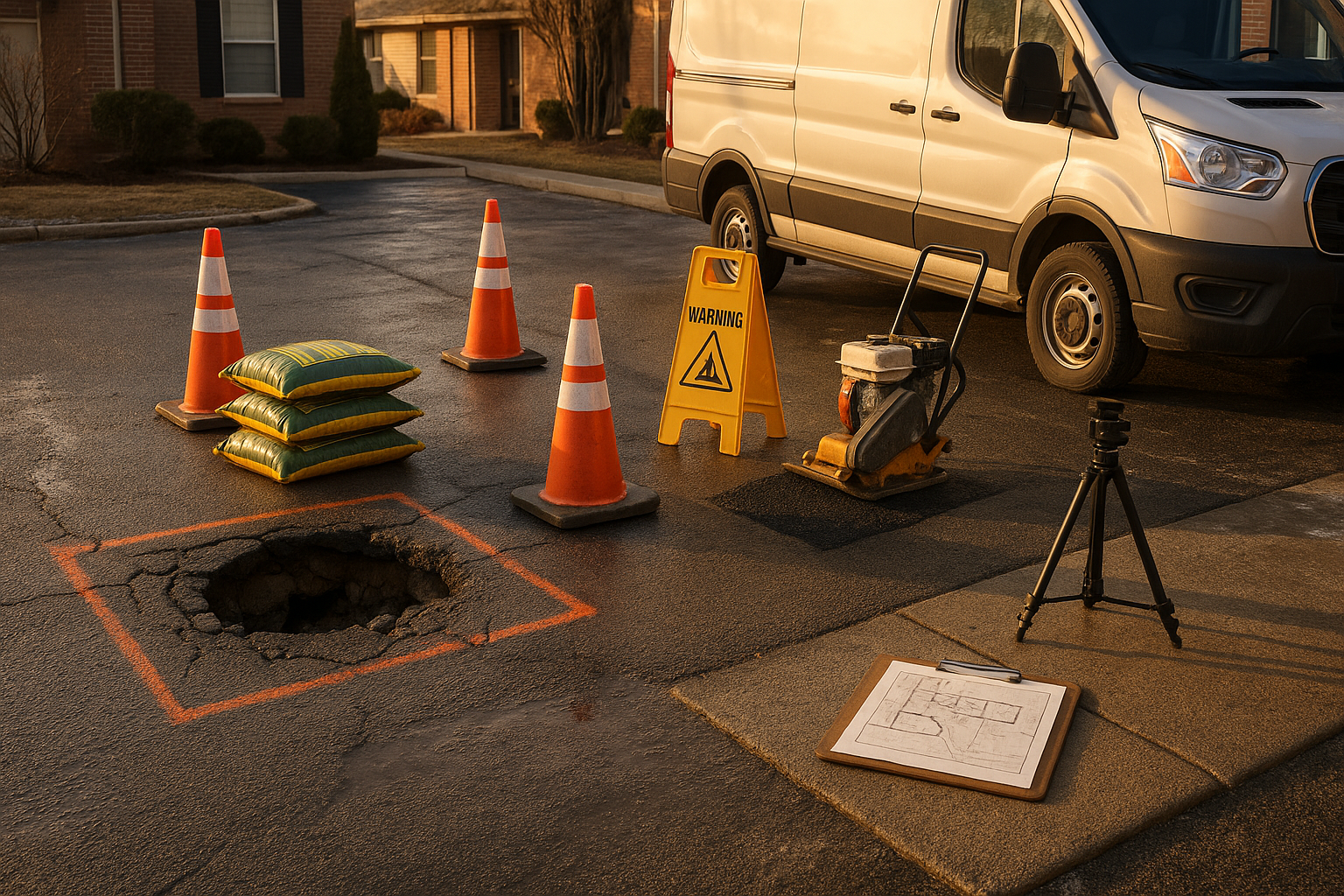
Last spring, a property manager in Fishers called me about a patch in his parking lot that had turned into a crater. The utility company had dug a trench for a gas line repair, threw in some cold patch, and called it done. For three weeks, it looked okay. Then the first hard freeze hit, water got under the edges, and the whole thing started to crumble. By May, delivery trucks were bottoming out in it. He was tired of patching the patch. That's the thing about a utility cut patch—if you don't do it right the first time, you'll be paying for it every season.
A utility cut patch is the repair you make after someone cuts into your asphalt to fix a pipe or cable. It could be a narrow trench across a driveway, a big square in a commercial lot, or a small keyhole in a cul-de-sac. The goal is to restore the pavement so it's as strong and smooth as the surrounding area. But a lot of folks think any black stuff in the hole is fine. It's not.
Temporary vs. Permanent: Don't Settle for a Band-Aid
Cold patch is the stuff you buy in a bag at the hardware store. It's fine for getting through a weekend, but it's not a permanent fix. Cold patch doesn't really bond to the old asphalt, and it doesn't compact well. When water gets in—and it will—the whole patch starts to crumble after a few freeze–thaw cycles. In Indianapolis, we get those cycles all winter long. One day it's 40 and rainy, next night it's 10. That's brutal on a temporary repair.
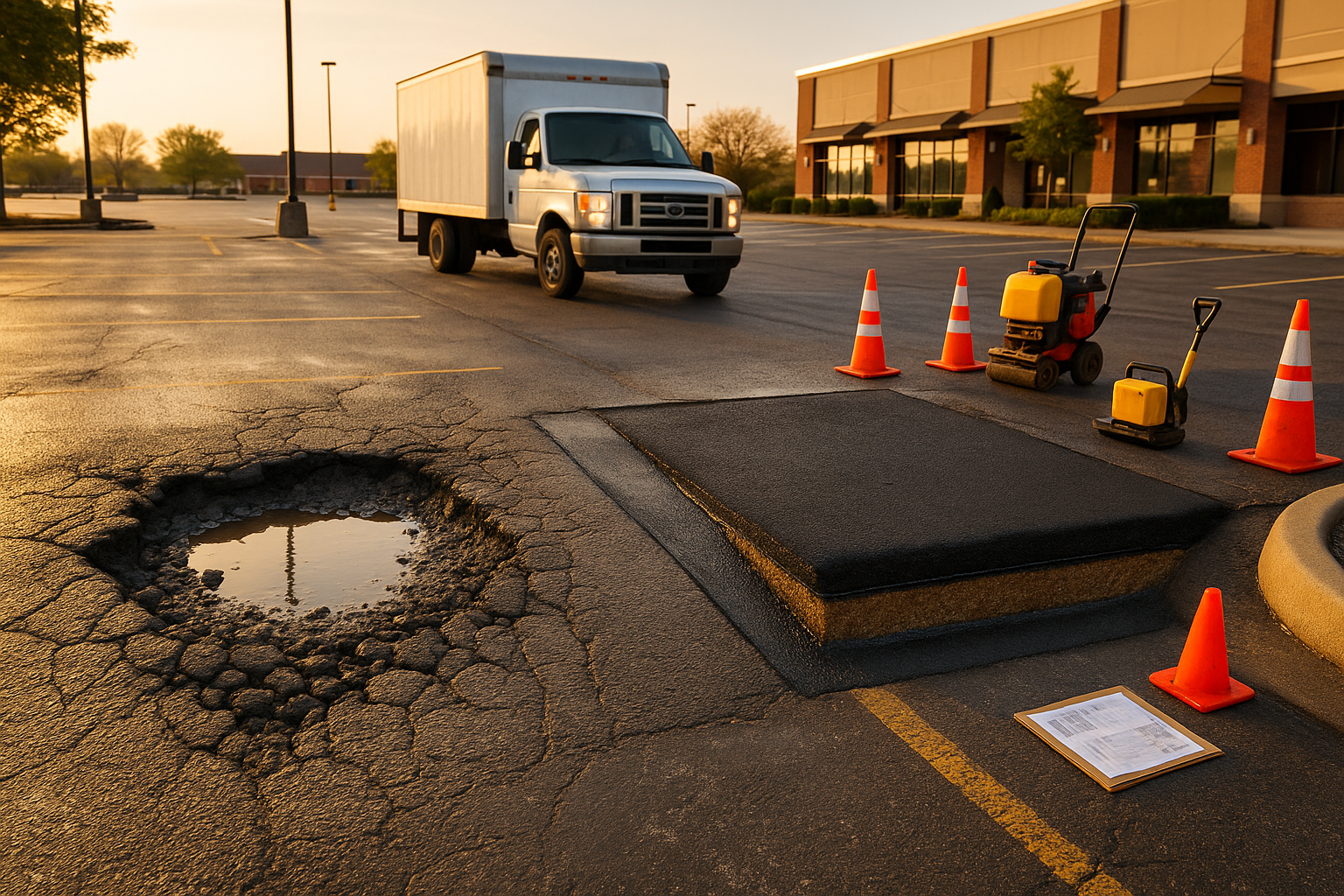
A permanent utility cut patch uses hot-mix asphalt, proper base, and sealed joints. It's a full-depth asphalt patch, meaning you take out the old material down to a solid subgrade, then build it back up in layers. Some folks ask, "Can't we just throw in some cold patch and be done?" Sure, if you want to redo it in six months. But if you want it to last, do it right the first time. If you want a warranty on the work, your contractor will only offer one on a permanent patch. Learn what a paving warranty should cover.
The Right Way to Restore a Utility Cut
A good utility cut patch starts before the saw even hits the pavement. You need to know what you're dealing with.
Cut It Clean and Square
The edges of the patch should be sawcut, not just broken up with a jackhammer. Sawcut and square-up means you cut a straight, clean line around the disturbed area, going a few inches into good pavement. That gives the new asphalt a solid wall to bond to. If you leave ragged edges, water gets in and the patch starts to ravel. We see this all the time on older lots in Greenwood and Avon.
Backfill and Compaction
Under the asphalt, the trench backfill has to be compacted right. If the utility company dug down four feet and just dumped the dirt back in, it will settle. That's what causes the sinkhole look. In Marion County, the clay and glacial till soil moves a lot with moisture. A good contractor will use granular backfill or flowable fill (also called CLSM) to fill the trench. Flowable fill is a liquid that sets up hard—it doesn't settle like dirt. Then you compact it in lifts. Compaction and density matter. If the base moves, the patch fails, no matter how thick the asphalt is.
Bonding and Sealing
Before you pour hot mix, you spray tack coat on all the vertical faces of the old asphalt and on the base. Tack coat is like glue. It helps the new asphalt stick to the old. Then, after the patch is compacted, you seal the joints with a hot rubber sealant or sand. That keeps water and deicing salts out. In Indianapolis winters, that's what kills patches—water gets in, freezes, expands, and pops the edges. Joint sealing is not optional if you want the patch to survive more than a year.
Getting the Details Right for Indianapolis Lots
Every lot is different. A patch in a residential driveway doesn't need the same depth as a patch in a delivery lane behind a strip mall in Carmel.
Thickness and Traffic Class
Asphalt patch thickness depends on what drives over it. A residential driveway in Westfield might only need 2 inches of surface mix over 4 inches of stone. But a commercial lot in Plainfield with semi-trucks turning around needs 3 inches of surface over a thicker base, maybe even a binder lift. If you guess wrong, the patch will rut or crack under heavy loads. Talk to your contractor about what's actually using the pavement. If you're not sure, go heavier. It's cheaper than tearing it out again.
Dealing with Utilities and ROW Permits
If the cut is in the street or the right-of-way (ROW), the city or township has rules. ROW restoration Indianapolis can be strict. They may require flowable fill, specific sawcut depths, and photos before you pave. If you don't follow the trench restoration standards, the inspector will fail you and you'll have to do it again. That's why it helps to hire a contractor who knows the local specs. We've done patches in downtown Indianapolis, Carmel, and Noblesville, and every municipality has its own quirks. A good contractor will handle the permits and coordinate with the utility company so you don't have to.
Seasonal Timing and Traffic Control
You can pave in winter in Indiana, but it's not ideal. Hot-mix plants close for a few months, so if you need a permanent patch in January, you might have to wait or use a temporary patch until spring. Cold-weather compaction is also harder. If you have a busy lot, traffic control matters. You need to keep one lane open, put up cones, maybe a flagger. Phasing the work so residents can still get in and out of their driveways is important. Nobody wants to be blocked in for an afternoon.
What to Ask Your Contractor
When you call for a quote, don't just ask for a price. Ask what's included. A good quote for a utility cut patch will list: sawcutting, removal, backfill, compaction, tack coat, hot-mix asphalt, joint sealing, and any traffic control or permit fees. If the contractor says "we'll just fill the hole," run. Milling the edges to tie in learn about asphalt milling, line re-striping, and cleanup all add cost. Here's how to evaluate a paving bid line by line.
A few months ago, we fixed a patch in a Zionsville HOA that had sunk two inches. The cause? The original contractor had used cold patch over uncompacted dirt. We cut it square, removed the bad material, put in compacted stone, and paved it with hot mix. Last week, the manager sent a photo—it looks like the rest of the driveway. That's the goal. A utility cut patch should blend in and hold up.
If you've got a trench in your lot that's starting to sag or crack, don't wait for it to become a liability. We'll come out, take a look, and give you a straight answer on what it needs. Book a free site review and get a clear, itemized quote.
Ready for a free lot assessment?
We walk the lot, photograph the problems, and hand you a written plan — no pressure, no obligation.