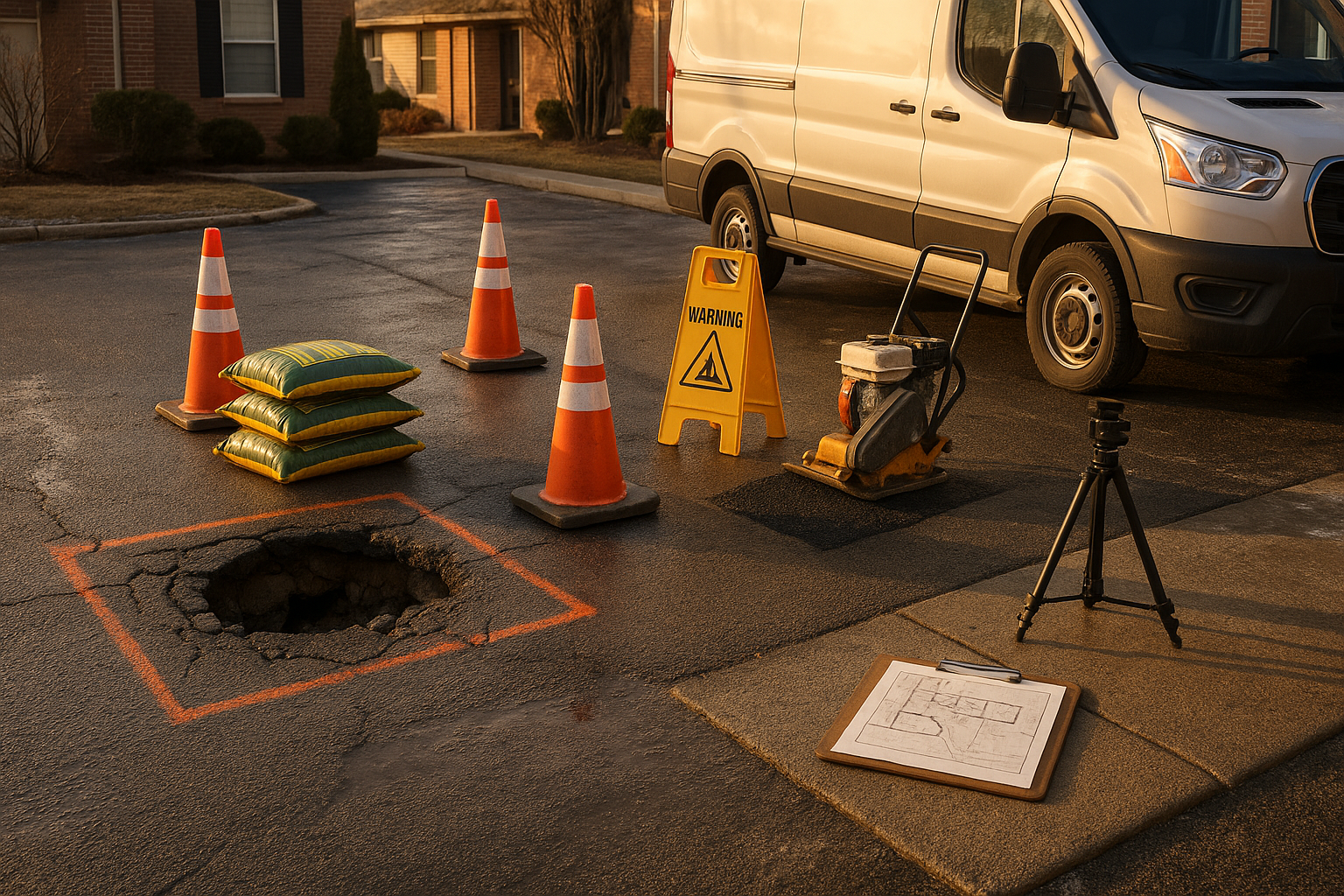
Mike runs a distribution center off I-70 on Indy’s west side. Last March, after a week of rain and a sudden freeze, his lot started breaking apart. A semi’s rear wheels sank into a pothole right at the dock approach, and it took two hours to get the truck out. He’d been patching the same spots for years, but this time it was different—the whole yard was coming undone. If you manage a warehouse parking lot, you’ve probably seen something like this. Heavy trucks, tight turns, and Indiana weather don’t play nice with ordinary pavement.
Most paving advice out there is written for shopping centers or apartment complexes. That doesn’t help when you’ve got 80,000-pound rigs making daily deliveries and forklifts darting around. The rules are different, and cutting corners on your warehouse parking lot maintenance just means bigger problems down the road.
Why Warehouse Parking Lots Need a Different Approach
A standard asphalt mix that holds up fine under sedans won’t last a year under semi-truck traffic. The stress from loaded trailers, constant turning, and even the weight of parked trailers can rut the surface, crack edges, and punch through weak spots. When we work on an industrial parking lot Indianapolis area, we always start with a thorough assessment—not just a walk-and-wave, but cores, subgrade checks, and a look at how water flows (or doesn’t).
You need thicker pavement sections, reinforced radii at turns, and a clear plan for which areas get the most abuse. A dock approach sees more punishment in a week than an employee parking zone sees in a decade. That’s why we design in zones—and pick materials accordingly.
The Right Materials for Heavier Loads
At the loading docks, we almost always recommend concrete aprons. They handle point loads from trailer landing gear, resist fuel spills and de-icing salts, and won’t rut under summer heat. We’ve covered the concrete-vs-asphalt debate in more detail here, but for truck courts and driving lanes, a heavy-duty asphalt mix—often with larger aggregate and a polymer-modified binder—gives you the durability you need without breaking the budget.
Out in the employee parking, standard commercial asphalt works fine. The trick is tying these zones together with proper transitions so you don’t get tripping hazards or water-trapping lips. Good truck court paving and solid loading dock concrete aprons are the backbone of a safe yard.
Maintenance That Actually Holds Up
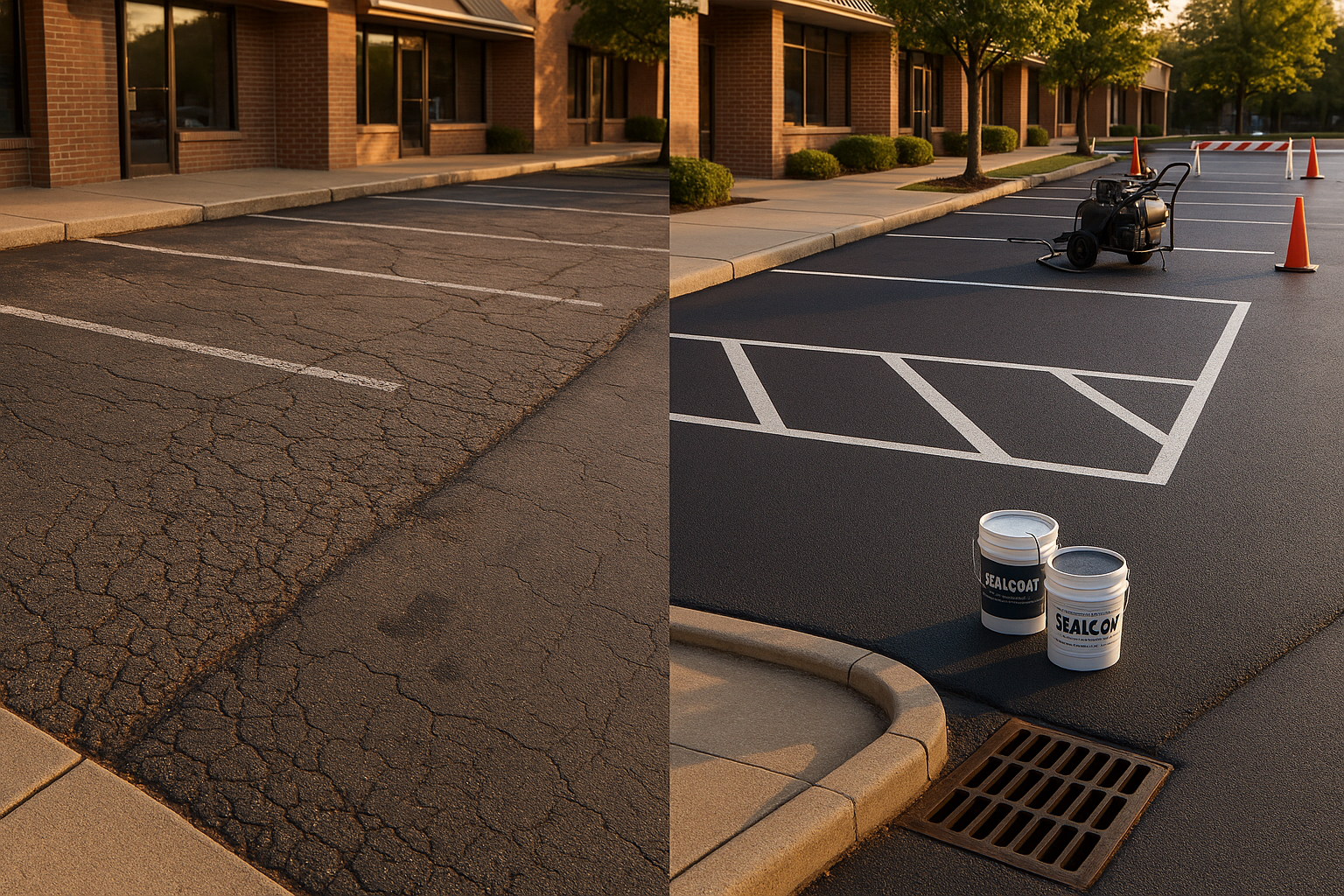
You can’t just set it and forget it. Heavy truck traffic means you need a scheduled maintenance cadence. Crack sealing every fall keeps moisture out of the base before freeze-thaw cycles do their damage. In lighter-traffic zones, sealcoating every 24–36 months helps prevent surface oxidation and minor aggregate loss. Where the asphalt’s already showing fatigue—alligator cracking or rutting—it’s time for a mill-and-overlay or full-depth patch.
A good crack sealing contractor can spot trouble early, and pothole repair warehouse calls should be handled quick to avoid costly downtime. For a deeper dive on stretching your lot’s lifespan, check out this guide.
Dealing with Water Before It Ruins Everything
If I had a nickel for every warehouse lot I’ve seen with a lake forming at the dock doors after a spring storm… well, I’d have a lot of nickels. Water is the number-one enemy of pavement, and in Indianapolis, we get plenty of it. Clogged catch basins, low spots that pond, and poorly graded approaches force water into cracks and erode the subgrade. Fixing drainage isn’t glamorous, but it’s the single best investment you can make. That might mean resetting basin rims, adding trench drains along dock faces, or regrading the whole truck court so water runs off fast. Get the water right, and you’ve already doubled your pavement’s life.
Keeping Operations Running During Work
I know what you’re thinking—“We can’t shut down the docks for a week.” You’re right, you can’t. That’s why we phase the work. We’ll tackle one dock area or half the truck court at a time, often during overnight hours or weekends when your shipping volume is lighter. A solid traffic control plan, coordinated with your ops team, keeps the forklifts moving and the semis turning. See how we minimize disruption during parking lot work here.
Safety and Signage That Work with Truck Traffic
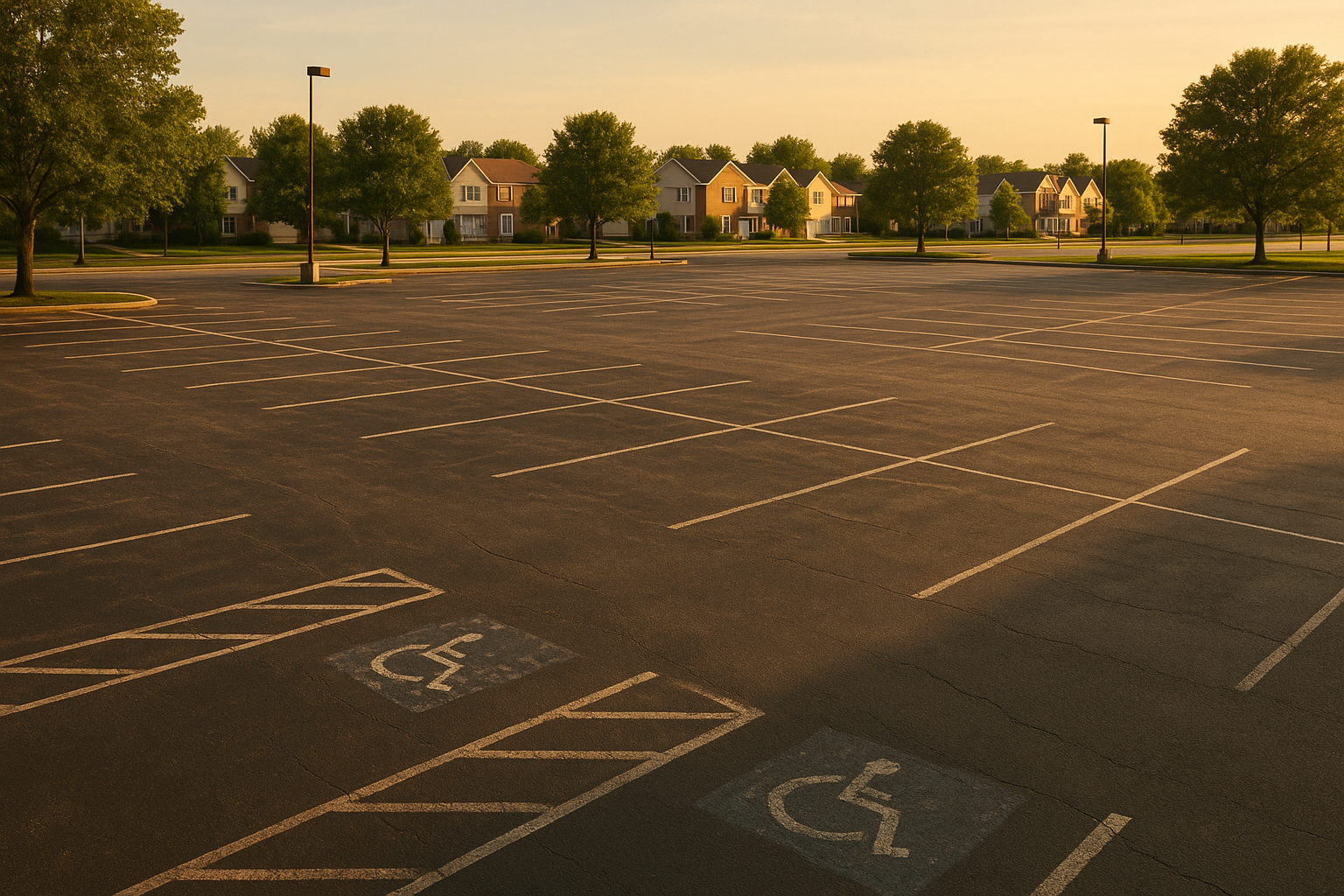
A warehouse lot isn’t just about pavement; it’s about people moving safely alongside heavy equipment. Clear line striping, high-visibility stop bars, wayfinding arrows, and numbered trailer stalls all cut confusion. ADA stalls near the office entrance need to be marked right and kept in good repair—those compliance issues bring fines. And don’t forget wheel stops, bollards, and speed humps placed where they actually matter. Not sure whether to use wheel stops or bumper blocks? We’ve got the answer.
Why Local Know-How Matters
Indianapolis weather doesn’t play around. Freeze-thaw cycles heave and crack pavement, spring downpours overwhelm drainage, and summer heat softens asphalt just enough for loaded trailers to leave ruts. The clayey soils common around Park 100 and other northwest-side industrial parks demand solid base prep. A Marion County paving contractor who knows the local permit rhythms, the preferred April-to-October paving season, and how to handle pop-up thunderstorms keeps your project on track. We’ve been working in this dirt long enough to know what works.
Let’s Build a Plan That Keeps Your Docks Moving
You need a lot that works as hard as you do. That starts with a plain-spoken assessment—no jargon, no scare tactics. We’ll walk your warehouse parking lot together, talk about what’s urgent, what can wait, and how to phase the work around your busiest times. Then you’ll get a line-item quote that covers scope, timeline, and warranties that actually mean something for truck-heavy use. Schedule your free on-site assessment today and let’s put together a plan that makes sense.
Ready for a free lot assessment?
We walk the lot, photograph the problems, and hand you a written plan — no pressure, no obligation.