A buddy of mine in Fishers learned the hard way about asphalt paving temperature. He got a quote in early March, and the rep told him to hold off until April. But my buddy was in a hurry—new house, cracked old driveway, guests coming. He found a guy who said 38°F was fine. The crew showed up, put down the mat, rolled it fast. By Thanksgiving, the edges were crumbling like a stale cookie. That’s the cost of ignoring the thermometer.
Why does temperature matter so much? Asphalt is a hot mix of aggregate and liquid binder. When it leaves the plant, it's around 275 to 325°F. That heat gives the asphalt its workability—the ability to be compacted into a dense, strong surface. As the mat cools, it stiffens. If you don't roll it before it gets too cold, you end up with air voids and weak spots. That's the whole game.
Why Temperature Makes or Breaks Asphalt
The compaction window is everything. Rollers should start as soon as the material hits the ground, and they keep working until the mat temp drops to about 175 to 185°F. After that, the mix is too stiff to densify properly. Thin layers—like most residential driveways in Carmel or Zionsville—lose heat fast. In cold air, that window might only be 10 to 15 minutes. On a thick commercial lot in Noblesville, you might get 30 minutes or more. That's why lift thickness matters: thicker lifts hold heat longer, giving the crew more time to lock in density.
The Numbers You Need to Watch
There are four temps that decide everything: ambient air, surface/base, mix delivery, and mat temperature during compaction. Most asphalt paving temperature problems in Indiana come from underestimating how fast a thin lift cools.
Ambient air temp: For driveway lifts under 1.5 inches, you want 50°F and rising. For thicker commercial lifts (1.5–3 inches), you can go down to 40–45°F, but the base must be dry and frost-free.
Surface/base temp: Often colder than air, especially with Central Indiana's clay-heavy soils. Clay holds moisture and cools bases for days after rain. If the ground is frozen or even frosty, don't pave—the bond will fail.
Mix delivery temp: Should be 275–325°F at the truck. If it's colder, the whole compaction window shrinks before the roller ever touches it.
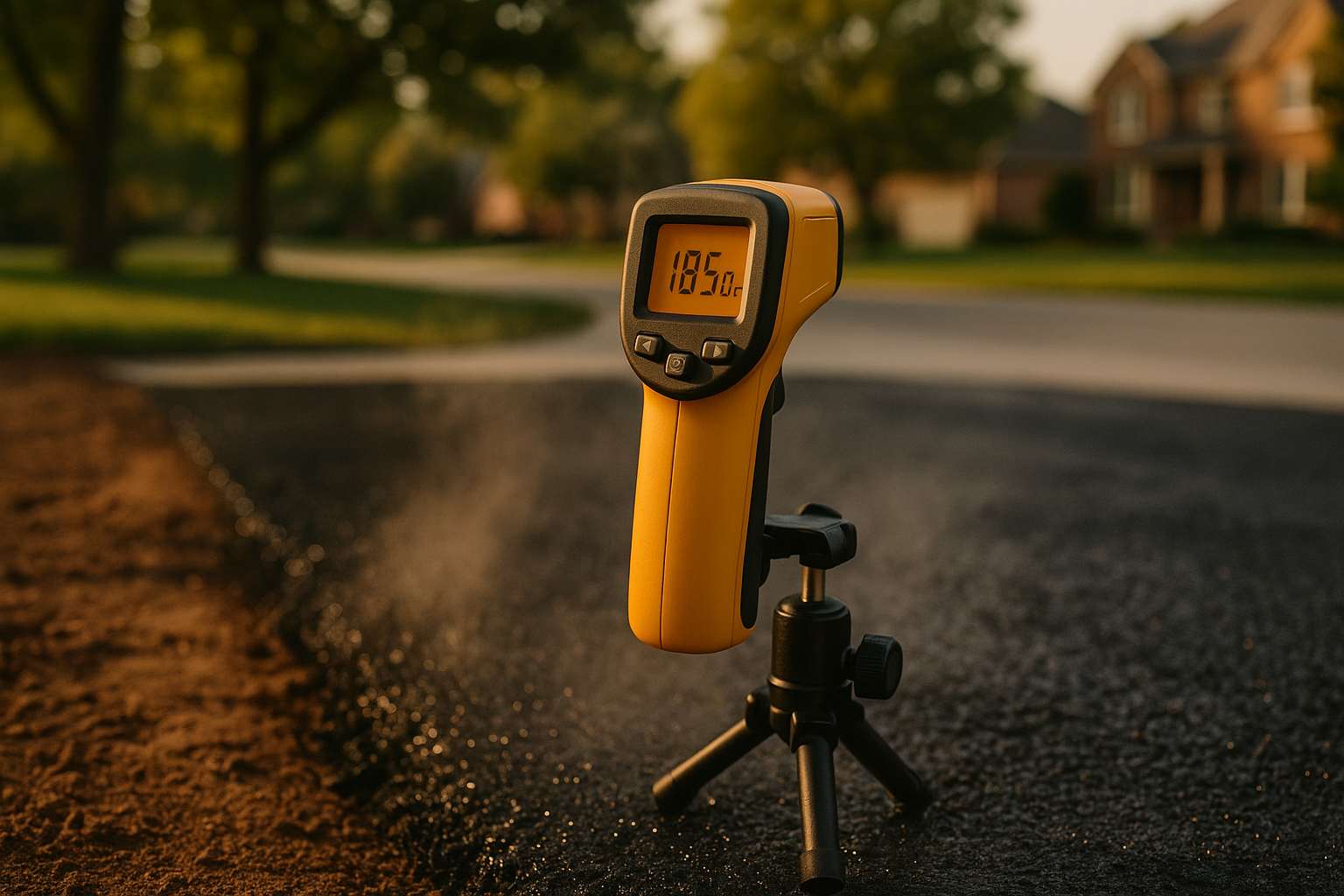
Mat temperature during compaction: Roll while the mat is still above 175–185°F. Use an infrared thermometer to check, because "looks hot enough" is how driveways die.
Too Cold? Too Hot? Both Can Ruin Your Paving
Cold weather is the obvious villain. Wind accelerates cooling—on open lots in Plainfield or Avon, a 10 mph breeze can cut your compaction time in half. Shaded drives under mature trees in Zionsville stay cooler and need later start times. Thin residential mats are especially sensitive; you can't just roll faster to compensate. The base might be colder than the air, and if there's morning frost, you're done before you start.
But extreme heat causes its own problems. In July, a fresh mat on a hot sunny day in Greenwood can stay tender for hours. That means scuffing, tracking, and tire marks at intersections. We shift to early-morning or evening paving in heat waves, and we stagger truck deliveries so the mix doesn't sit too long. Direct sun on fresh asphalt can make it too soft to compact without damaging the surface.
Wet Bases, Wind, and Indiana's Curveballs
Central Indiana clay holds water like a sponge. After a rain, the base can stay cool and damp for days, even if the air feels warm. That's why we check surface temps, not just air temp. Even a light drizzle can trap steam between lifts and weaken the bond. And our freeze–thaw cycles from late fall through early spring? They're brutal on thin lifts placed in marginal conditions. A driveway that gets compacted at 42°F in November might look fine through winter, but come March, it's cracked and raveling.
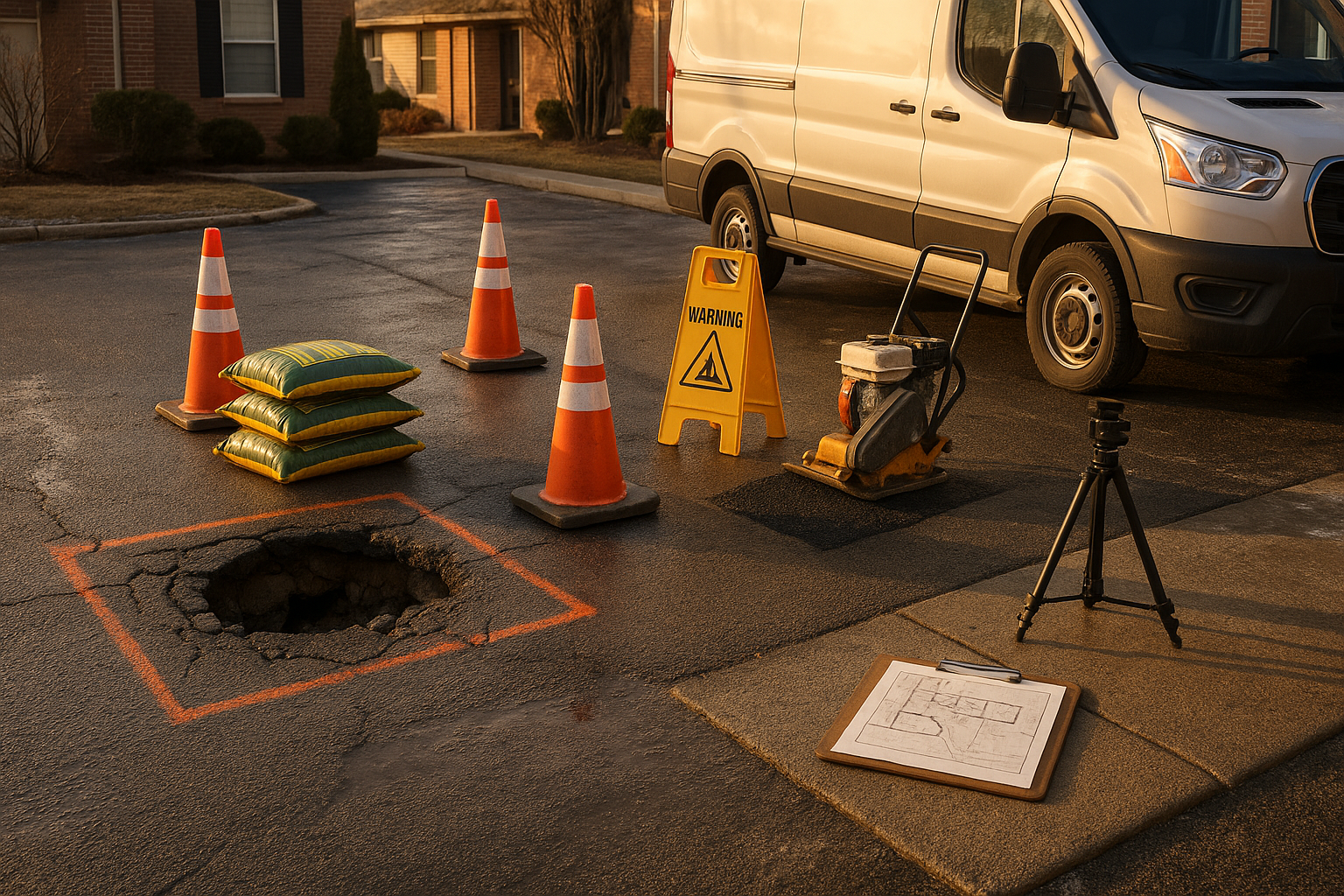
That's also why proper drainage matters. If your lot has standing water or a failing catch basin, the base never dries out enough to pave. We handle catch basin repair as part of the prep, because paving over a wet base is like building a house on mud.
Warm Mix Asphalt and Repair Workarounds
Warm mix asphalt (WMA) changes the asphalt paving temperature range because you can place it 30–70°F cooler than hot mix and still hit target density. That's huge for shoulder seasons—late October in Brownsburg, for example. It gives the crew more time to roll before the mat stiffens. And WMA is just as durable as hot mix; the binder chemistry is adjusted, not watered down.
For small patches and repairs in cooler months, infrared asphalt repair can work because it re-heats the existing asphalt instead of starting from a cold base. You're not fighting the thermometer the same way. Cold-mix patches are a temporary stopgap—fine for a pothole in January, but not a permanent fix.
Planning Your Paving Window in Indianapolis
On average, the best paving windows around here are mid-April to mid-October. Early morning in peak summer, midday in cooler shoulder months. Local asphalt plants often reduce hours or close in winter, so spring reopenings and fall demand can squeeze your schedule. Short hauls to nearby plants help keep mix at target temperature, and we time our truck arrivals, crew, and rolling patterns to lock in density.
We plan around the asphalt paving temperature for every single job. For a thin driveway in Fishers, we might wait for a 55°F afternoon in early April. For a thick commercial lot in Greenwood, we can start at 45°F if the base is dry. We'll walk your property, check base temps, and give you a construction sequence that actually fits the weather. If you want a site-specific plan—including recommended dates, mix type, and what to expect for your specific patch of Indiana soil—get a quote here.
Opening to Traffic
Once the mat cools sufficiently and achieves stability, you can let light traffic on it. Residential driveways usually need 24 to 48 hours before you park the minivan on them. Heavy trucks or dumpsters? Wait longer, especially in hot weather. A fresh commercial lot in Noblesville might need 72 hours before a fully loaded semi rolls across it. The goal is to avoid deforming the surface before it fully cures.
The Takeaway
Temperature isn't a suggestion—it's the physics that decides whether your asphalt lasts 10 years or 3. If you're tired of guessing, call us. We'll tell you honestly if you should wait a few weeks. That's cheaper than redoing the whole job next spring.
Ready for a free lot assessment?
We walk the lot, photograph the problems, and hand you a written plan — no pressure, no obligation.