I got a call from a guy in Fishers who manages a strip mall and a couple of medical offices. He was frustrated—not at me, at his parking lots. Every spring, the same story: potholes pop up like mushrooms, cracks turn into canyons, and his maintenance crew just patches the worst ones until next year. The repair bill never goes down, tenants complain about the ugly lot, and one time a customer tripped on a crack and threatened to sue. Sound familiar? If you're responsible for multiple properties around Indianapolis—Carmel, Greenwood, Avon, wherever—you've probably lived this. The problem isn't your crew or your contractor. It's that you're stuck in a reaction loop instead of doing real pavement asset management.
Pavement asset management isn't some corporate buzzword. It's a simple way to treat your parking lots like an asset, not an afterthought. You track their condition, plan fixes ahead of time, and spend money when it does the most good—not when you're forced to after a freeze-thaw cycle rips a new hole.
Stop Playing Whack-a-Mole
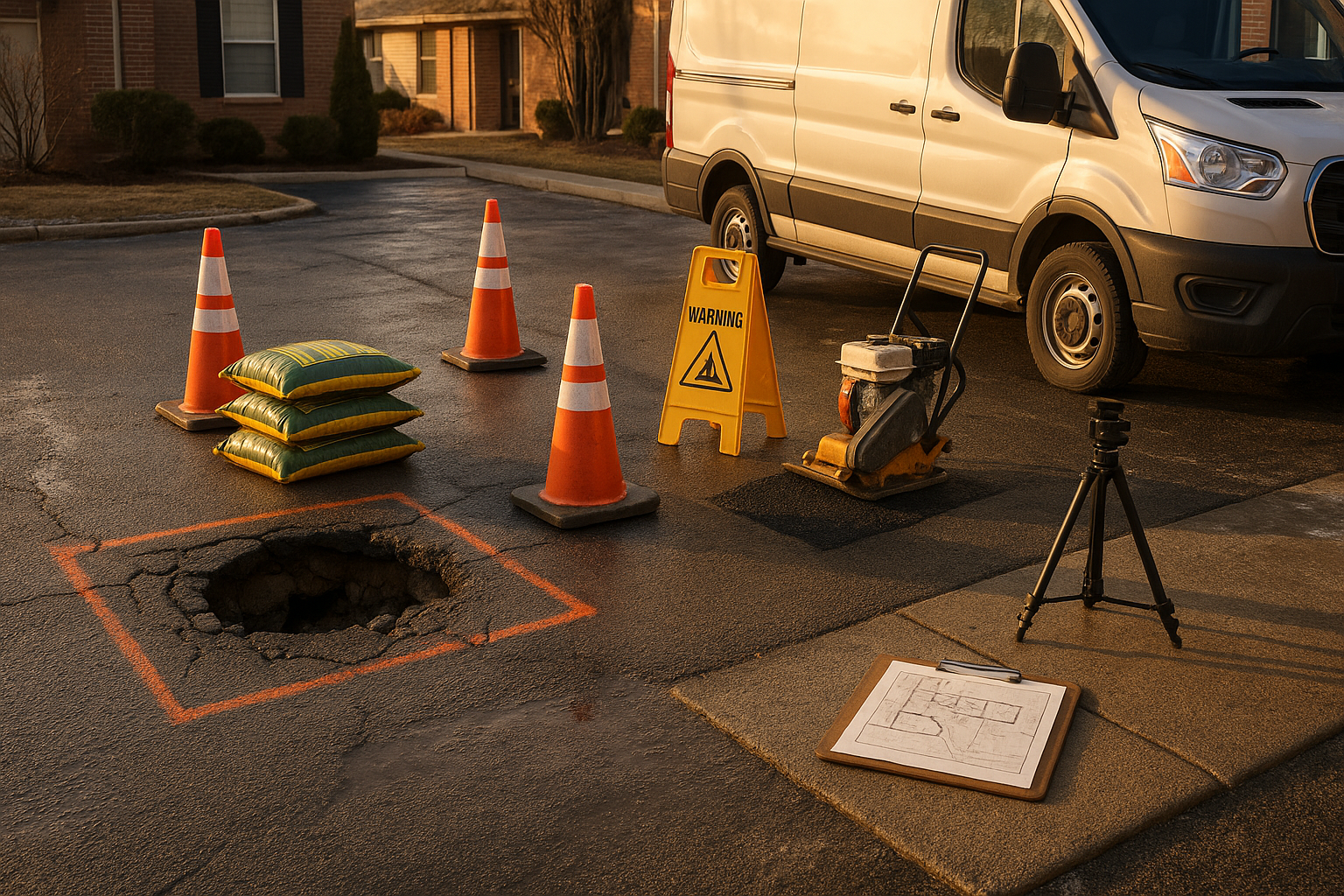
Indianapolis winters are brutal on asphalt. Water seeps into a tiny crack, freezes, expands, and cracks open wider. Then snowplows scrape the edges, deicing salt eats at the surface, and by March you've got a minefield. If all you do is patch potholes in April, you're just putting a band-aid on a broken leg. The base is failing, and next winter the same holes come back—bigger.
A better approach is to step back and look at all your sites at once. Instead of reacting to each emergency, you get a baseline, set priorities, and schedule work before things fall apart. That's the heart of pavement asset management.
Get a Baseline: Walk Your Lots and Score Them
You don't need an engineer to start. Grab a notebook or your phone and walk each lot. Rate every section on a simple scale called the Pavement Condition Index, or PCI. Think 0 to 100: 85+ is great, 70–85 has minor cracking, below 60 is getting rough, and below 40 means the base is failing. Take photos. You'll notice patterns: the drive lane near the dumpster always cracks first, the area where trucks turn is a mess, and the front entrance looks okay but has faded striping.
While you're walking, pay attention to drainage. Puddles that hang around after a rain mean water is sitting on the asphalt, softening it and getting into the base. A clogged catch basin full of fall leaves is a time bomb. If you ignore drainage, any new asphalt you put down will fail early. That's why we tell folks to fix the water problem before the pavement problem. (More on that in our post on catch basin repair and parking lot drainage.)
Match the Fix to the Condition
Once you have a PCI map, you can assign the right treatment to each zone. It's not one-size-fits-all.
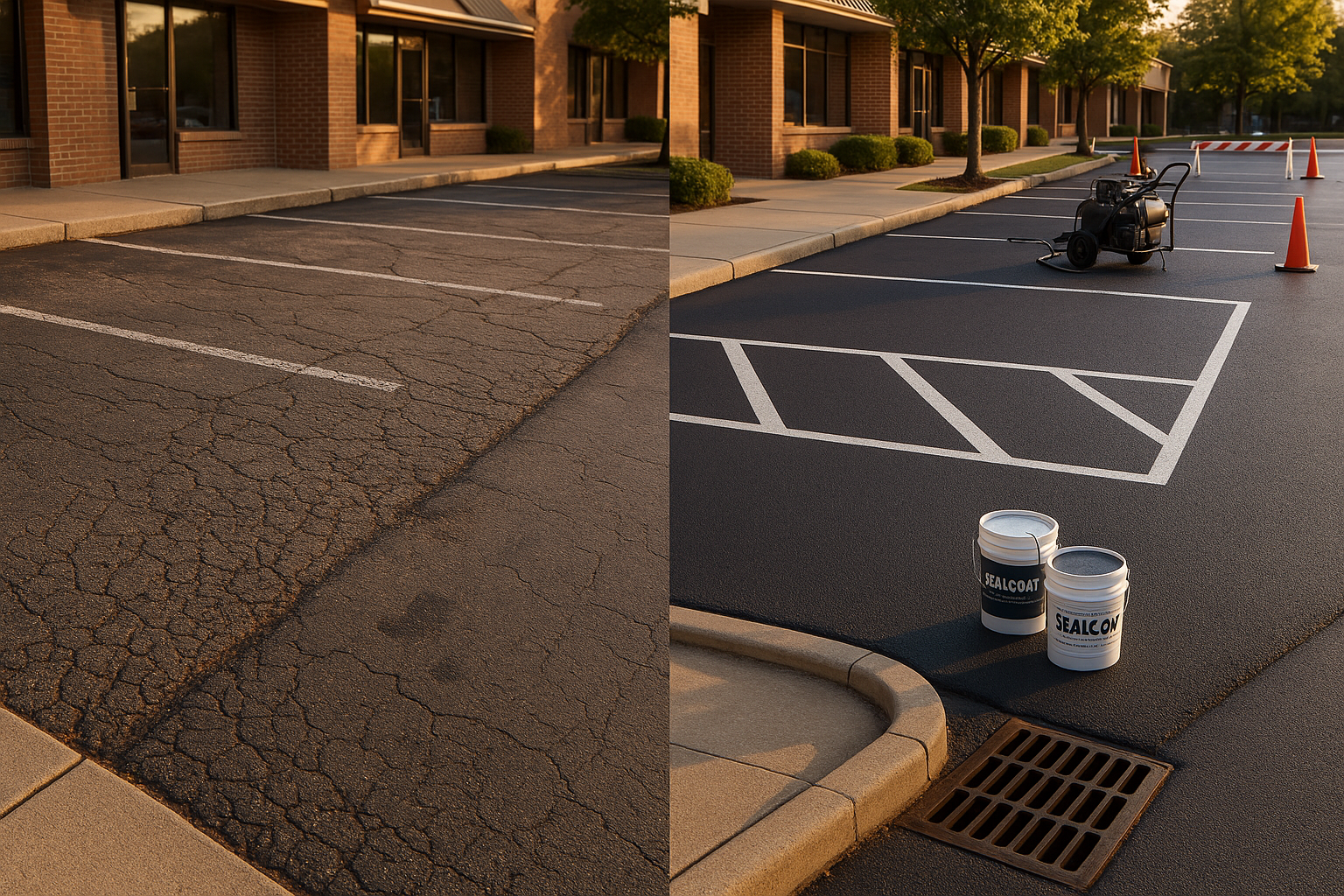
- Fair (70–85): Crack seal and sealcoat. This is the cheapest way to add years. Crack sealing keeps water out, and sealcoating protects the surface from UV and salt. Do this every 2–3 years on lots that still look decent.
- Localized failures (mostly 60–70 with a few bad spots): Patch the bad areas with a skin patch or infrared repair. Then sealcoat the whole thing to blend it.
- Widespread fatigue (lots of alligator cracking, rutting): A mill and overlay is your best bet. Grind off the top 2 inches and put down fresh asphalt. It's cheaper than full reconstruction and resets the clock for another decade.
- Base failure (deep potholes, sinking, standing water): Full-depth repair means digging out the bad base material and rebuilding. It's expensive, but patching won't work.
The key is timing. Deferring a $8,000 sealcoat on a lot that's at a 72 PCI might feel like saving money, but next year it drops to a 60, and the year after you're staring at a $40,000 overlay. That's the parking lot lifecycle cost in action. Spending a little now to preserve what you have is almost always cheaper than waiting.
Budget and Phase the Work
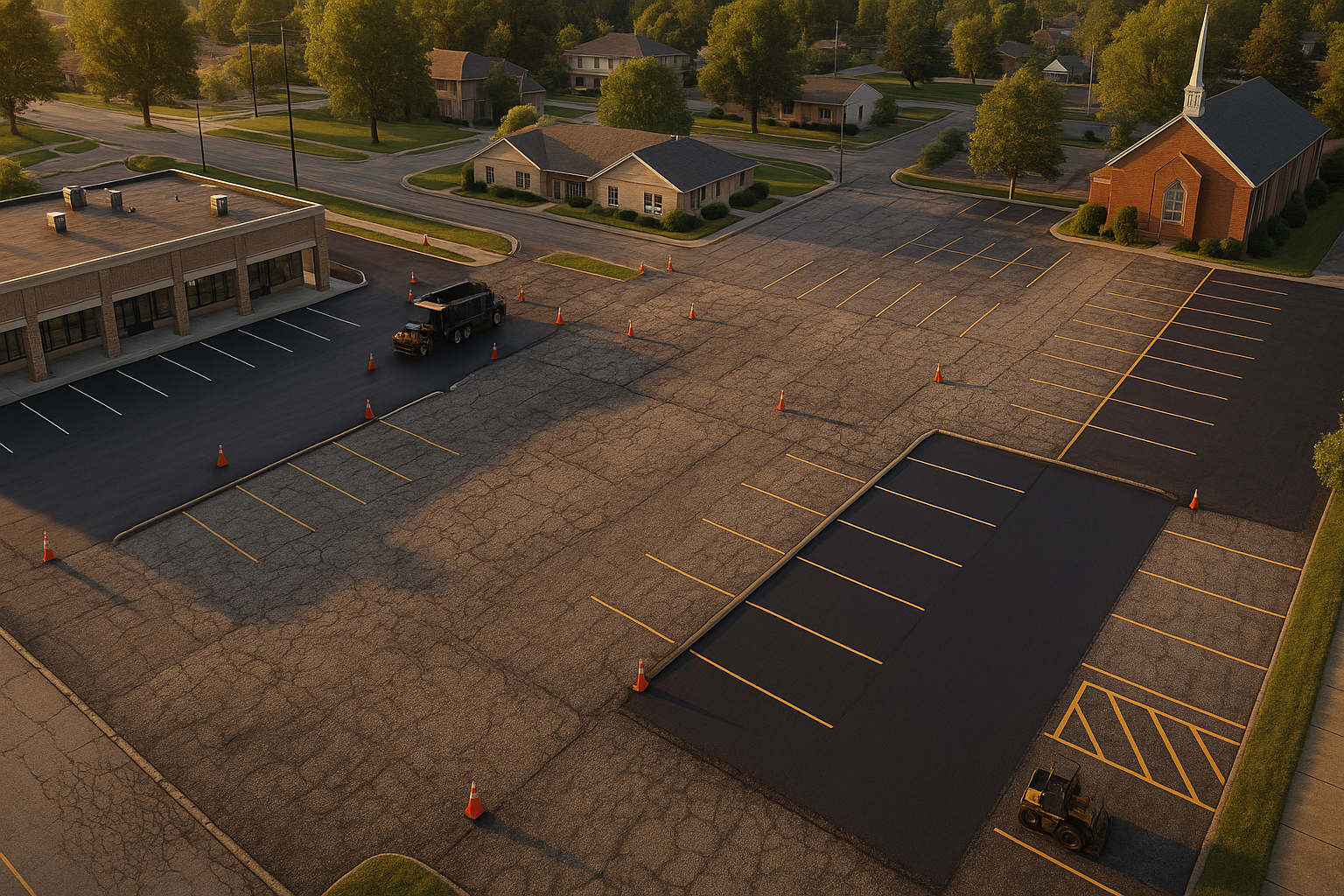
You don't have to fix everything at once. Break the work into zones. Maybe this summer you sealcoat the lot at the Carmel retail center, crack seal the church in Zionsville, and rebuild the catch basin at the clinic in Greenwood. Next year, rotate. Phasing like this spreads the budget across multiple fiscal years and keeps tenants happy because they get a heads-up about construction. Nobody likes surprise closures. (See our post on phased parking lot paving plans for more detail.)
Know Your Weather Windows
Central Indiana weather is unpredictable, but we do have patterns. Sealcoating needs air and surface temps above 50°F and no rain in the forecast for 24 hours. Asphalt paving needs it even warmer—usually 60°F and rising, with dry conditions. Striping paint cures best when it's not too humid. Crack sealing can be done in cooler spring or fall weather, but sealcoating and overlays are summer jobs. If you wait until November, you're stuck until May. That's why a multi-year maintenance plan includes a schedule that respects the asphalt weather temperature limits.
Don't Forget Striping and ADA
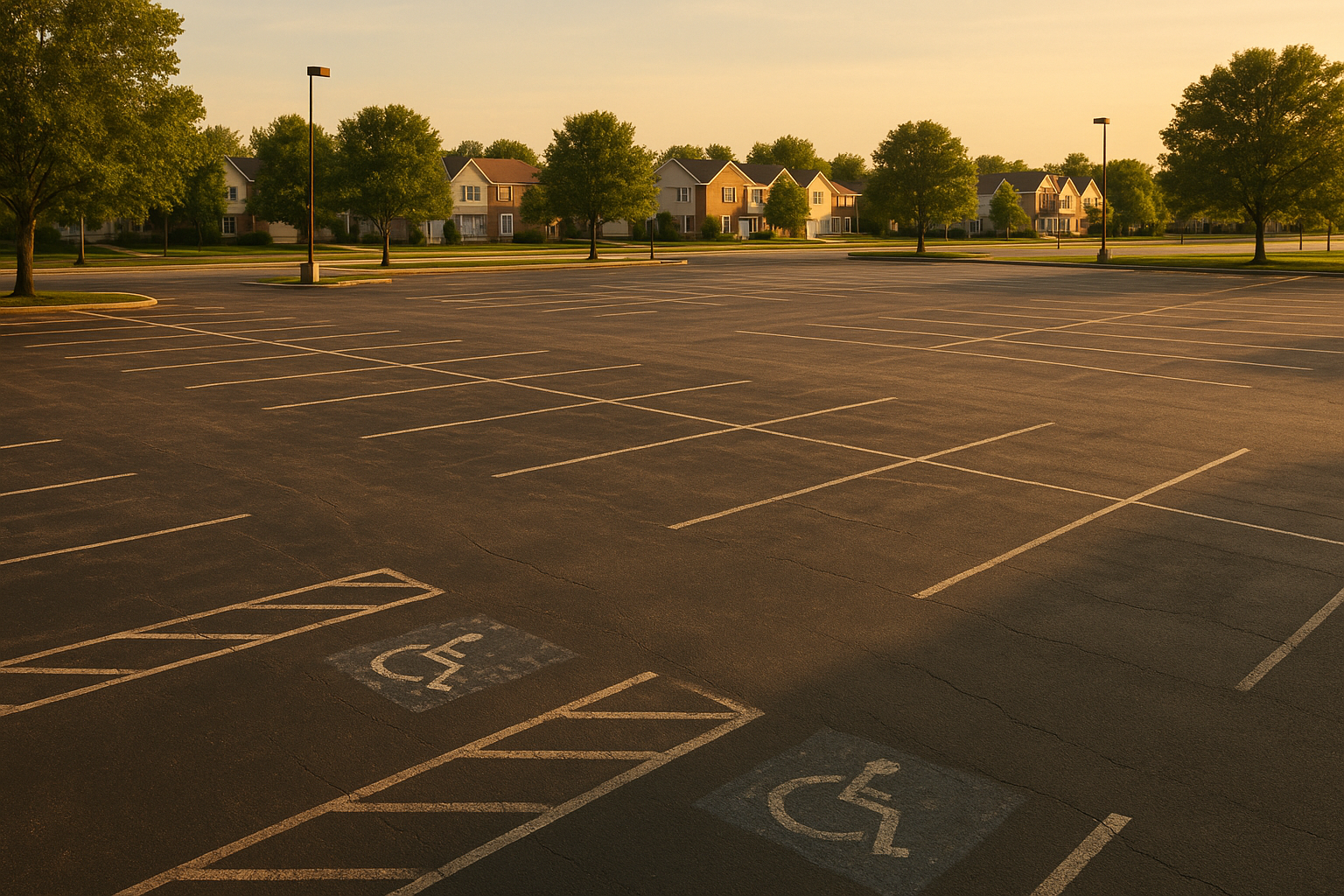
After the asphalt is fixed, the stripes are what people see every day. Fresh, bright lines make a lot look newer and safer. Plus, ADA compliance isn't optional—worn-out handicap symbols or missing van access aisles can get you into legal trouble. And if you're adding EV charging stations, those spaces need proper markings too. It's not just paint; it's part of the asset. Check out our post on EV charging station parking lot striping for ideas.
Pick a Contractor Who Thinks Like a Partner
When you ask for bids, make sure they're apples-to-apples. One contractor quotes $12,000 for sealcoat, another $20,000. What's included? Crack sealing first? Two coats? Traffic control? If it's not line-item, you're guessing. A good contractor will give you a detailed scope, local references, and a warranty that actually covers freeze-thaw cracking—not just some fine print that excludes everything. (Our guide on how to evaluate paving bid line items breaks this down.)
Take the First Step
Your parking lots are one of the first things a customer or tenant sees. They're also a liability if they're falling apart. Pavement asset management isn't about spending more—it's about spending smart. At PavementPros, we walk lots all over the metro—from Plainfield to Noblesville—and build simple, phased plans that fit your budget. Ready to get a handle on it? Get a free on-site assessment and a multi-year plan you can actually use. No pressure, just a clear road forward.
Ready for a free lot assessment?
We walk the lot, photograph the problems, and hand you a written plan — no pressure, no obligation.