I was on a site walk with a property manager in Carmel last spring. Her lot was a nightmare – alligator cracks, potholes deep enough to swallow a Civic, and drainage that turned half the parking into a wading pool every time it rained. She needed a full repave, but she ran a busy medical office. Close the lot? No way. That would mean lost appointments, angry patients, and staff parking on the street. That’s when we started talking about phased parking lot paving. It’s not some fancy trick. It’s just doing the work in planned sections so you never lose the whole lot at once.
Why Phasing Works So Well in Indianapolis
Phased parking lot paving means breaking the job into separate areas – maybe the front half this week, the back half next month. You keep one safe entrance open, you keep ADA stalls in play, and you don’t make your tenants park three blocks away. In places like Fishers or Greenwood, where every strip mall has three restaurants and a gym, shutting down for two weeks would kill business. Phasing lets you spread the pain so thin nobody really feels it.
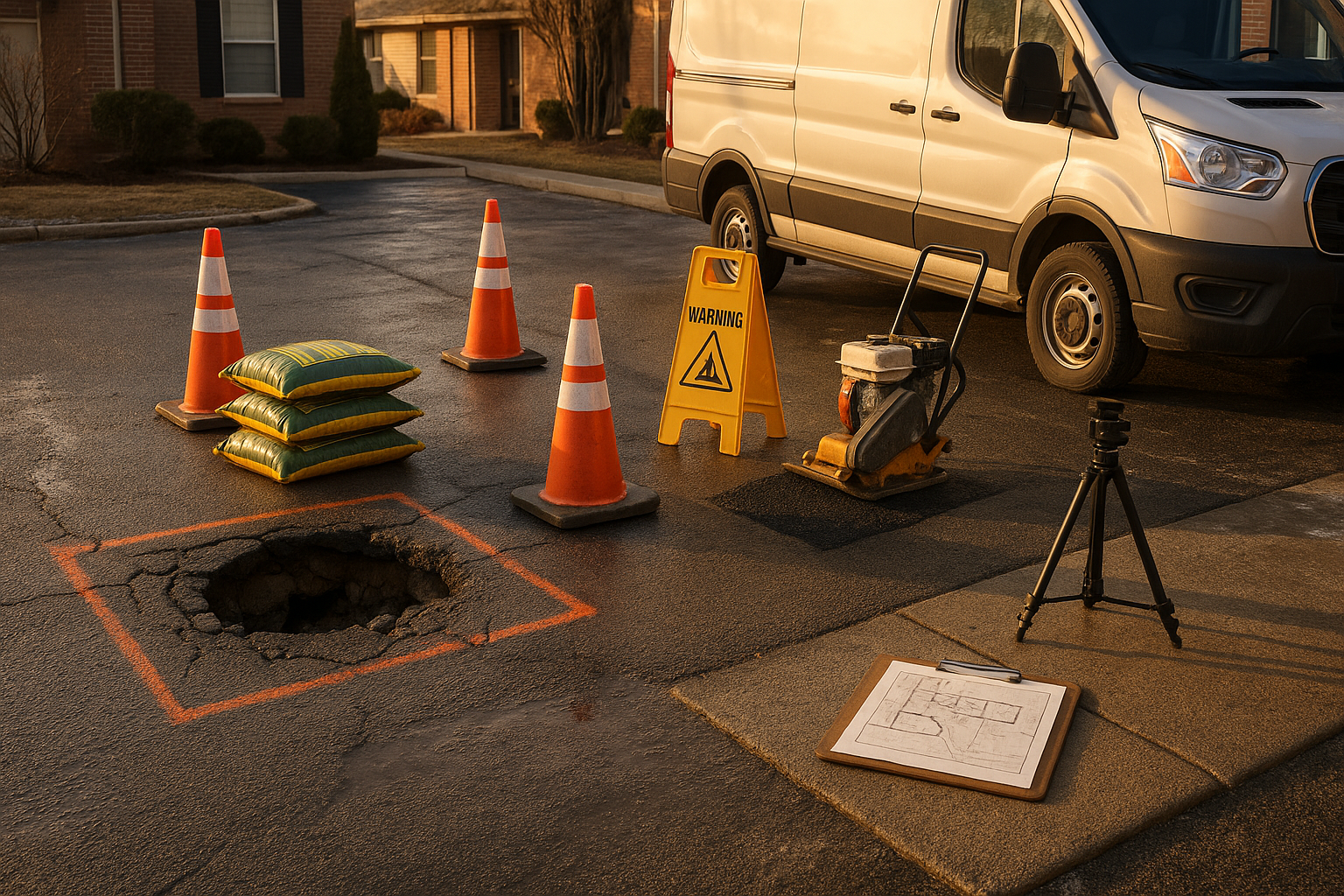
We’ve done this for HOAs in Zionsville, retail centers in Avon, and churches in Noblesville. The rule is simple: plan first, pave second. Before we ever fire up a milling machine, we walk the whole lot. We check the drainage – catch basins, low spots, base failures. Because if you pave over a drainage problem, you’ll be back in two years doing it again. And phasing actually helps here. We can fix the drainage in phase one, let it settle, then pave over it in phase two. It sounds slower, but it’s faster than redoing the whole thing later. We talk more about that in our piece on catch basin and drainage repair.
The Phase Map Is Your Friend (and Your Tenant’s Friend)
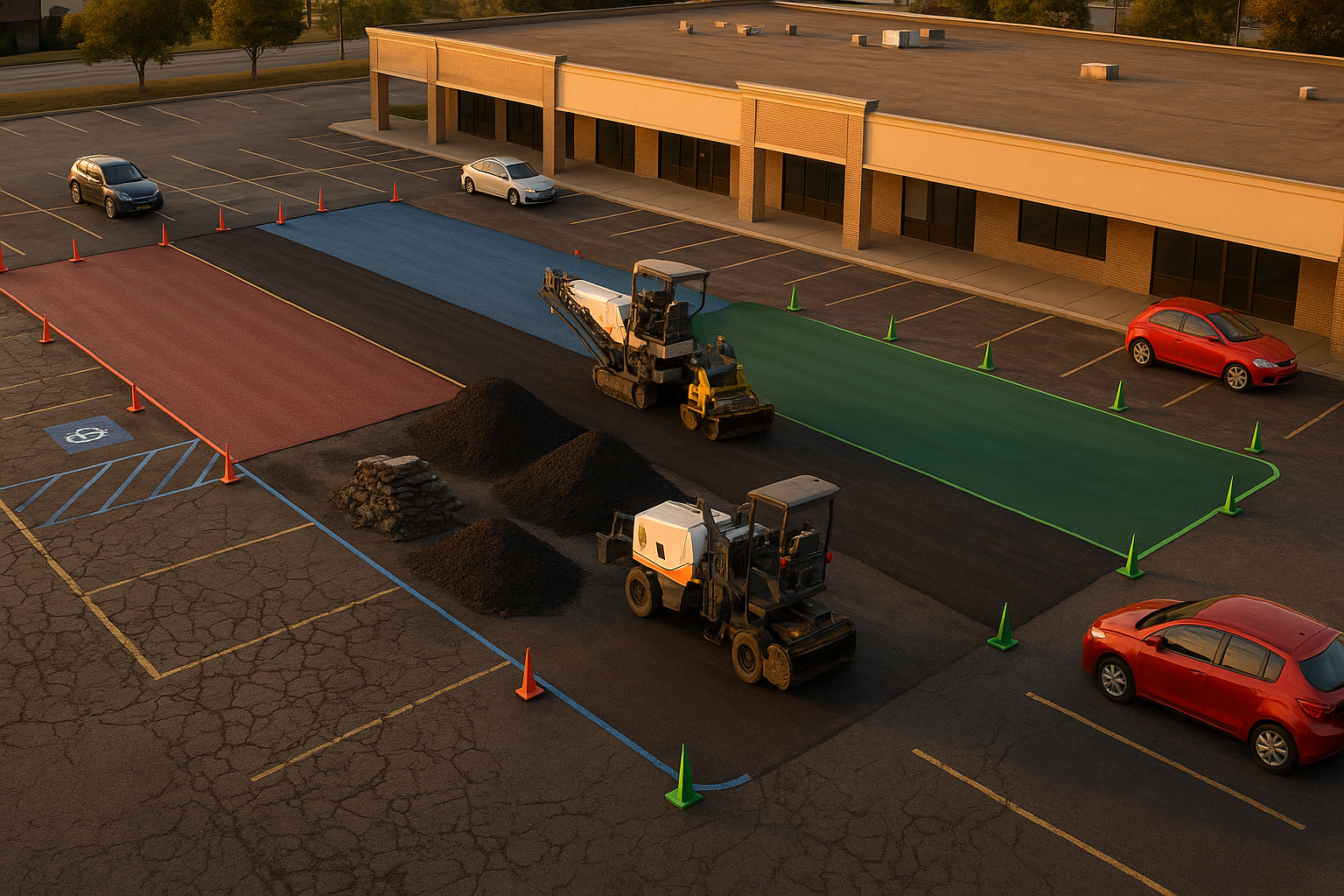
Before we start, we draw a color-coded map. Phase 1 in red, Phase 2 in blue, Phase 3 in green. Each phase has a start date, an end date, and a clear path for cars. We tape it to the front door of every business. We text it to the HOA board. We put it in the church bulletin. When people know what’s coming, they stop freaking out. A property manager in Plainfield told me her tenants actually thanked her for the map. They could plan deliveries and tell customers where to park.
Each phase usually takes a few days. We mill the old asphalt, fix any soft spots, and lay fresh mix. For seams between phases, we use infrared blending so you don’t get a cold joint that cracks in the first freeze. If you want to geek out on that, we wrote a whole thing about infrared asphalt repair. The point is, when phase one ends, it looks finished. No ragged edge, no tripping hazard. Then we move to phase two.
Keeping It Open While You Work
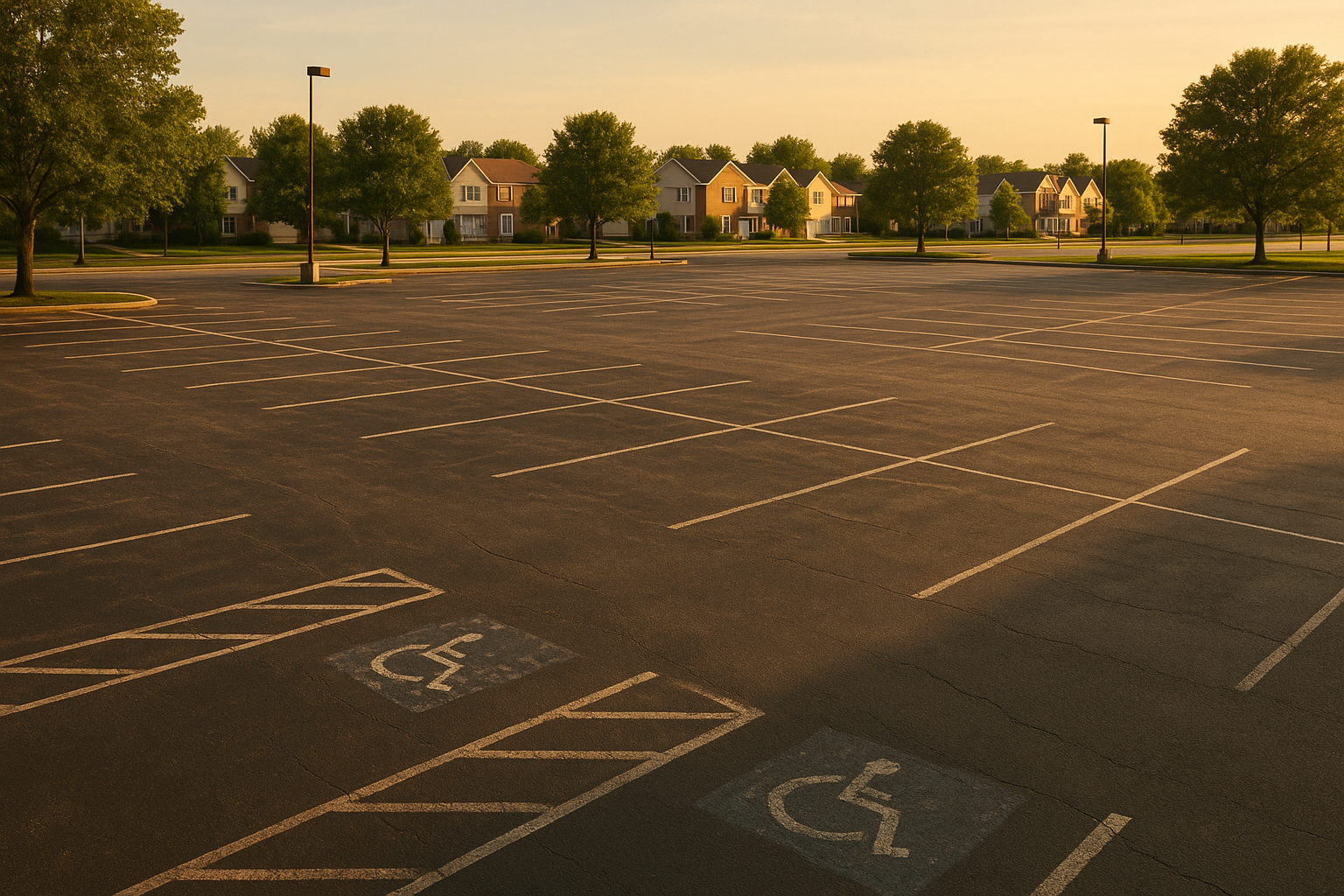
Safety is the part nobody sees but everybody feels. We set up cones, barricades, and signs that actually make sense. You’d be surprised how many contractors just throw a cone in the middle and call it a day. We maintain a clear ADA route through every phase. That’s not optional in Indiana. If you’ve got a medical office or a school, we keep those curb ramps and accessible stalls open even if we have to shift them temporarily.
And yes, we can work nights or weekends. We’ve done plenty of night and weekend paving for retail centers that do 70% of their business on Saturday. For a strip mall in Fishers, we started Friday at 6 p.m., paved through the night, and had the lot back open by 10 a.m. Saturday. The tenants never missed a customer. That’s what minimizing downtime looks like.
Weather, Budgets, and the Long Game
Indianapolis weather is not your friend. Freeze-thaw cycles, clay soil, and sudden summer thunderstorms. We plan phases around the forecast. If it’s a wet spring, we might push the first phase to late April. If July looks brutal, we do a night pour when the air temp is low enough for the mix to set right. You can read about asphalt temperature limits on our blog. The short version: we don’t pave when it’s below 40°F or when the ground is soaked. That means we build in weather buffers. A two-week phase might get a three-day cushion for rain. It’s not perfect, but it beats a failed mat.
And money. Phasing lets you split the cost across two fiscal years if needed. Maybe phase one is the critical repair – the potholes and drainage. Phase two is the overlay and fresh striping. You don’t have to find $80,000 in one budget cycle. We also recycle old asphalt using RAP. That saves money and cuts waste. More on that here. If you’re thinking about expanding the lot or adding EV chargers later, phasing makes that easier too. We can phase in the EV striping when the pavement is fresh.
What About Permits and Long-Term Maintenance?
Minor repaving doesn’t need a permit, but if you’re changing entrances, adding parking, or touching right-of-way, you’ll need to coordinate with the local municipality. We’ve handled projects in Marion, Hamilton, Hendricks, Johnson, Boone, and Hancock counties. The rules vary, but we know who to call. You can read more about permitting and expansion if that’s on your radar.
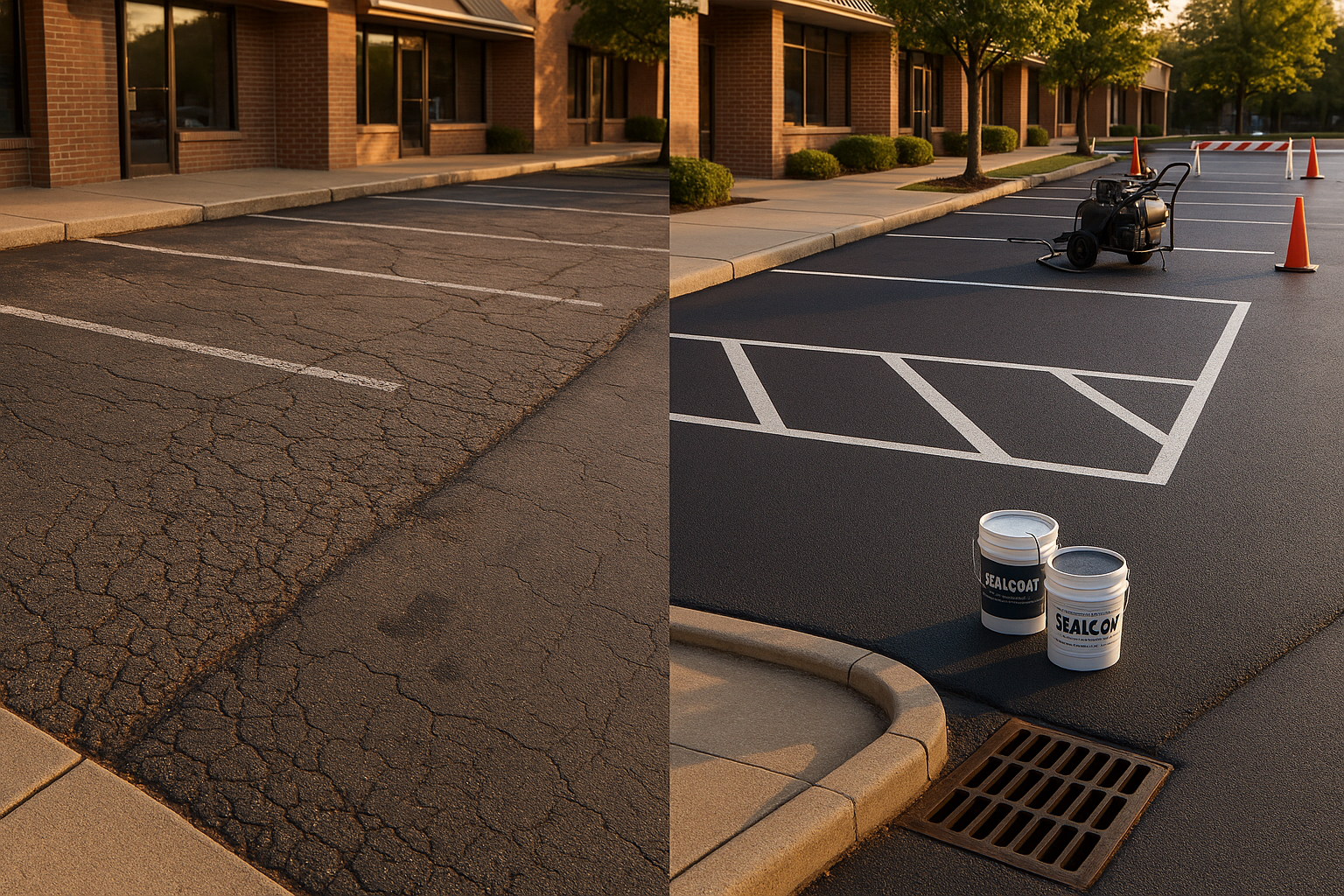
After the last phase is done, you get a maintenance plan. Crack seal in year two, sealcoat in year four. And we’ll tell you how to plow without tearing up the seams. Snowplows love to catch the edge of a fresh patch and rip it up. A little guidance goes a long way.
Ready to See a Phase Map for Your Lot?
If your parking lot looks like a topographical map of the moon, phased parking lot paving is probably the right call. It keeps your doors open, your tenants happy, and your budget intact. We’ll walk the site with you, mark the drainage issues, and draw a phase plan that makes sense for your traffic flow. No pressure, no sales pitch. Just a clear picture of what it takes to fix your lot without closing it.
Give us a shout through the quote form and we’ll come out for a site walk. We serve Indianapolis and all the surrounding suburbs – Carmel, Fishers, Zionsville, Westfield, Noblesville, Greenwood, Brownsburg, Avon, Plainfield. One visit, one plan, and a lot that actually works.
Ready for a free lot assessment?
We walk the lot, photograph the problems, and hand you a written plan — no pressure, no obligation.