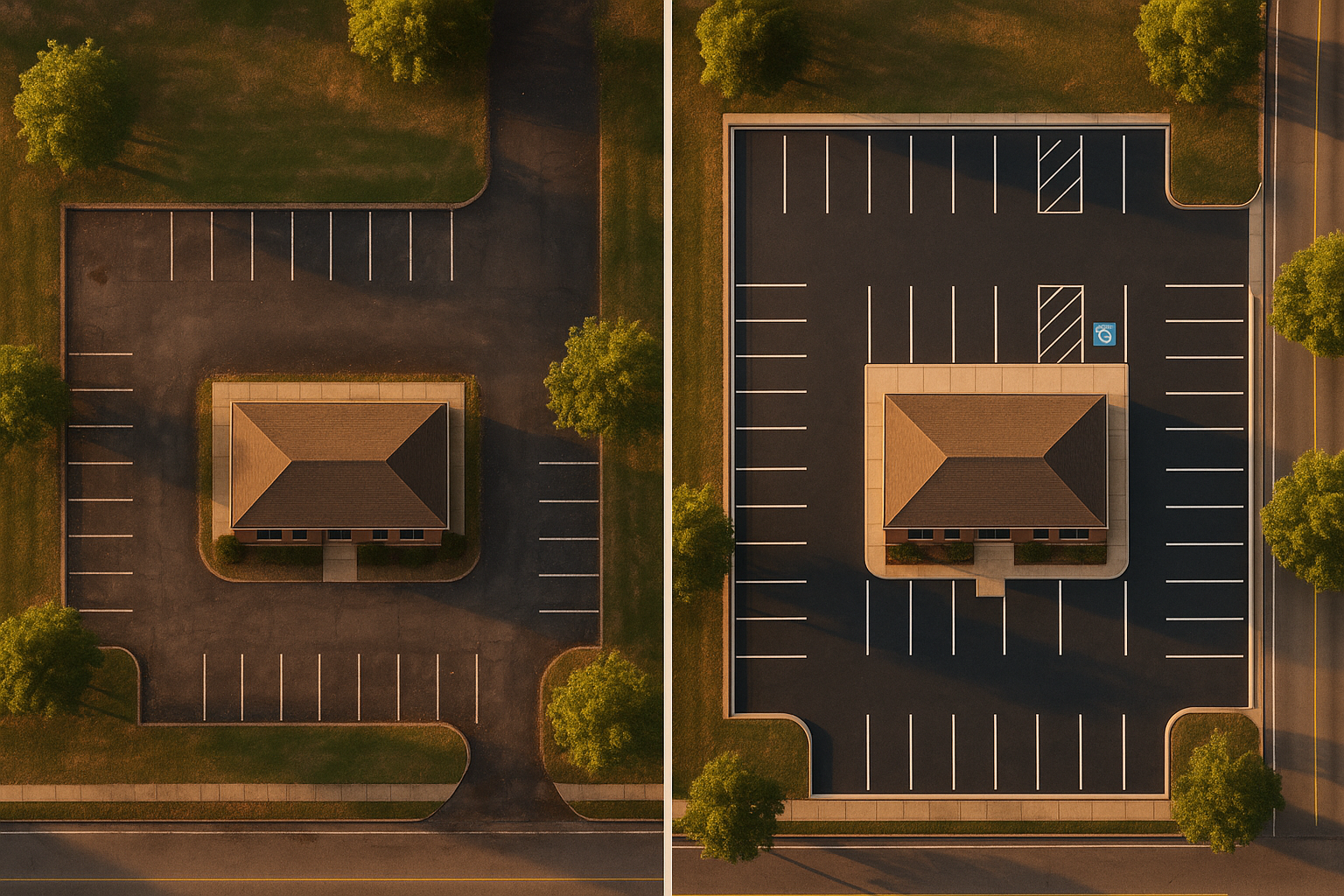
Last fall, I got a call from a property manager in Carmel. He was at his wits' end. His office building had 40 employees and only 22 parking spots. Every morning, people circled the lot like vultures. Tenants were mad. So he decided to expand the lot. But then he hit the wall: the city said he needed a parking lot expansion permit. He had no idea where to start.
Sound familiar? If you're thinking about expanding a parking lot around Indianapolis, Carmel, Fishers, Zionsville, Westfield, Noblesville, Greenwood, Brownsburg, Avon, or Plainfield, you'll likely need a permit. It's not a fun topic, but it doesn't have to be a nightmare either. We're PavementPros, and we've seen every version of this story. I'll walk you through what actually matters, based on years of seeing these projects from the pavement side.
When Do You Need a Parking Lot Expansion Permit?
In Marion County, the rule of thumb is: if you're adding impervious surface (that's hard surface like asphalt or concrete that water can't soak through), you probably need a permit. That's because more hard surface means more stormwater runoff. And the city takes that seriously — especially with our clay soils that don't drain well.
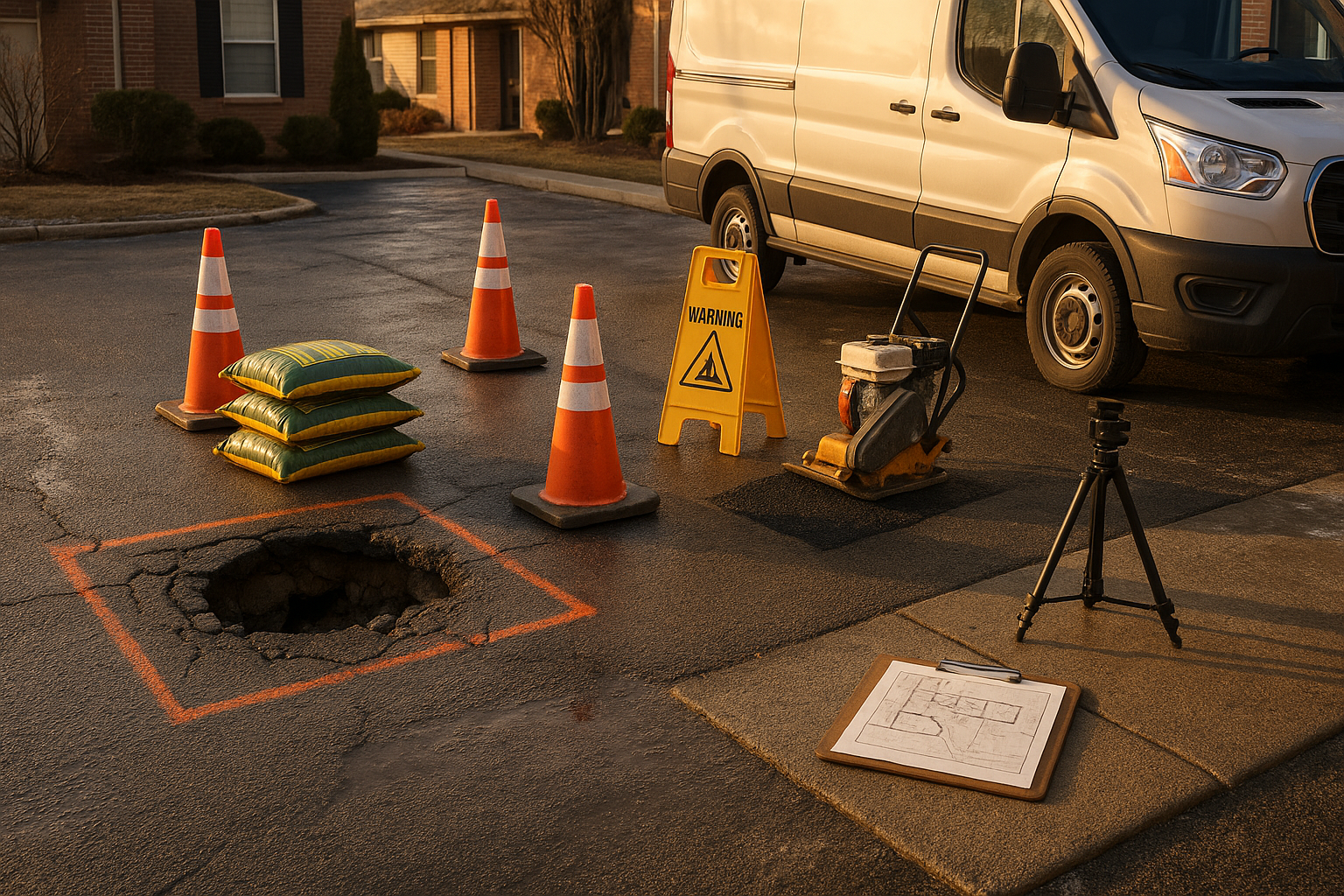
You also need a permit if you're making new curb cuts, changing how cars get in and out, or altering drainage. Even restriping to add spaces might trigger a review if it changes circulation. So don't just start ripping out grass. A property owner in Greenwood learned that the hard way. He widened his lot by a few feet, no permit. A neighbor complained about water pooling in their yard. Then the city got involved. Cost him double to fix it and pay fines.
The Plan Set: What You'll Need to Submit
When you apply for a parking lot expansion permit in Indianapolis, you'll need a set of drawings. Think of it as a recipe for the project. The main ingredients: a site plan that shows existing and proposed conditions, a grading and drainage plan, a stormwater management plan (if you're adding a certain amount of impervious area), pavement section details (how thick the asphalt and base are), striping and ADA layout, lighting plan (if you're changing lighting), and a construction staging plan.
Yes, it's a lot. But a good asphalt paving contractor in Indianapolis can help coordinate with a civil engineer to pull these together. The stormwater plan is often the biggest headache. In places like Avon or Plainfield, the flat land and tight soils mean water doesn't go anywhere. You might need a detention basin or underground storage. That's when you call someone who knows catch basins and drainage — it's not just about paving.
Who's Who at the City
The city of Indianapolis is not one big building where you get a stamp. It's more like a relay race. Business and Neighborhood Services (BNS) handles the building permit and plan review. Department of Public Works (DPW) looks at stormwater and anything touching the street or right-of-way, like a new curb cut. Zoning checks setbacks, lot coverage, landscaping, stuff like that. If your project disturbs a big area (usually an acre or more), you might also need an IDEM Construction Stormwater permit. And if you're messing with utilities, Citizens Energy Group could be involved. The online portal is Accela, but honestly, it can be confusing. That's why many business owners in Fishers or Noblesville end up calling a contractor who does this every day.
ADA: Expansion Triggers Upgrades
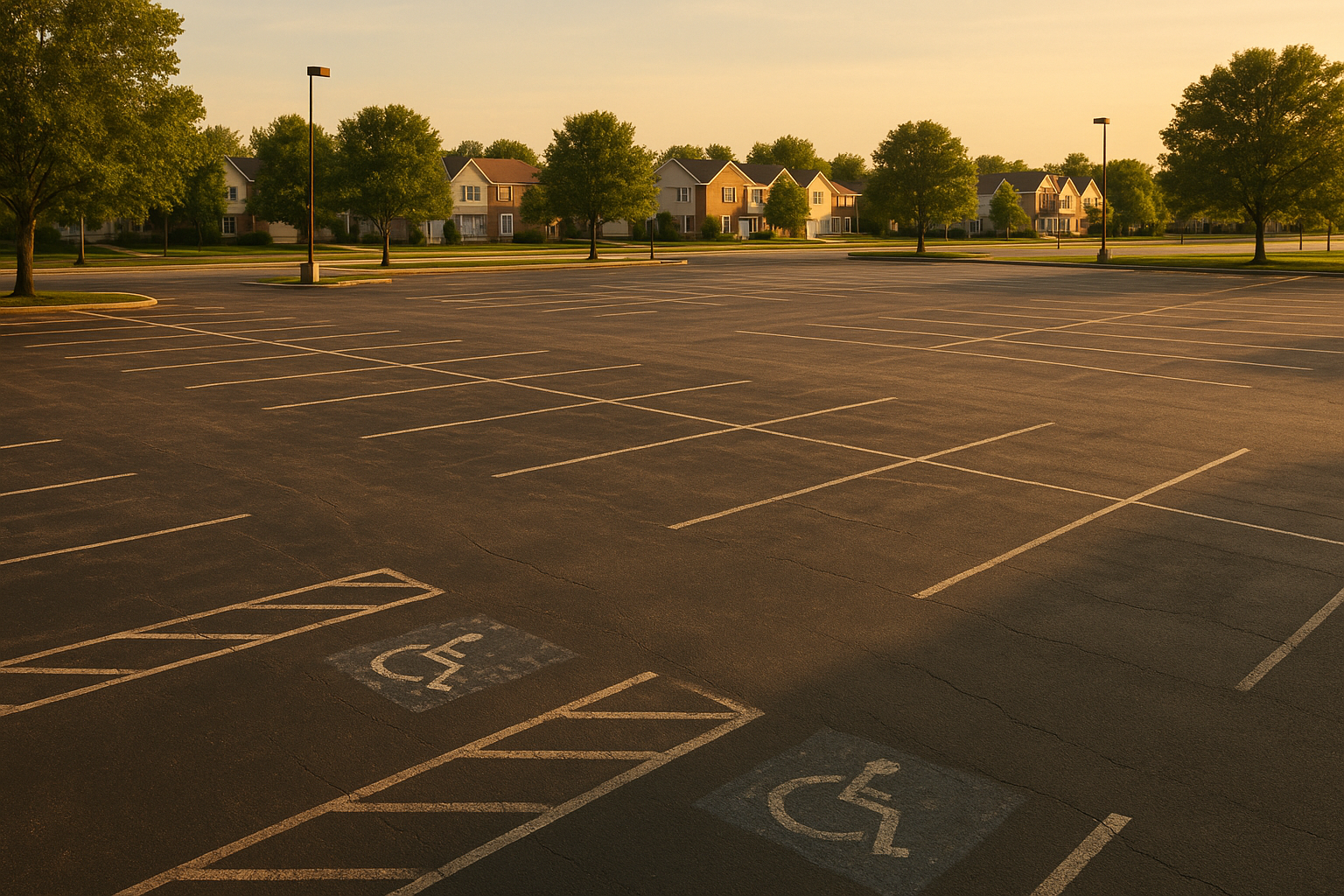
Here's a common surprise: when you expand a parking lot, the city will make you bring ADA features up to current standards. That means the right number of accessible stalls, proper van-accessible spots, access aisles, and a smooth route to the building entrance. Even if your lot was built in the 1980s, you can't just add onto the old design. You have to fix ramps, slopes, and signage.
I saw a project in Zionsville where the owner thought he could just paint a few blue stripes. But the inspector required a full accessible path with a new curb ramp. The good news? Getting ADA right upfront saves you from redoing work later. If you need help with ramps, we've got a whole article on sidewalk and ADA ramp repair.
Keeping Your Business Open During Construction
The biggest fear I hear from business owners is downtime. You can't close your restaurant or clinic for three weeks while they pour asphalt. The trick is phasing. A good contractor will stage the work so part of the lot stays open. Sometimes that means doing the back half first, then the front. Or scheduling paving and striping at night or on weekends.
In Indiana, our paving season is roughly April through October. You don't want to pour asphalt in January — it won't compact right. So plan accordingly. I remember a job at a medical office in Brownsburg. We milled and repaved the employee lot on a Thursday and Friday, restriped Saturday, and they were back to normal Monday. Phasing saved them thousands in lost revenue.
Before You Expand: Cheaper Alternatives Might Work
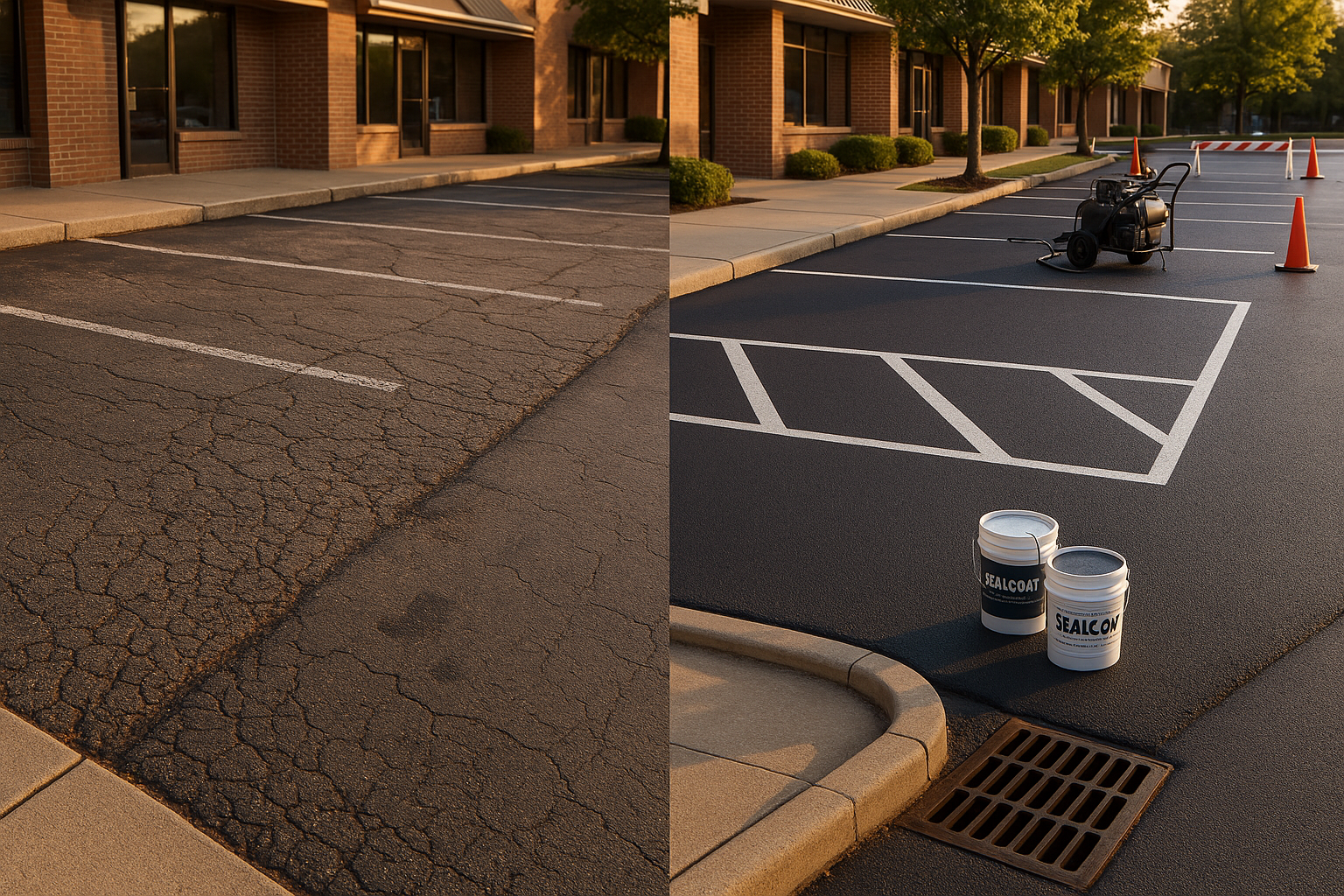
Expanding a parking lot is expensive. Between land, permits, stormwater, and paving, you could easily spend $50k or more. Before you go down that road, ask: do we actually need more spaces, or can we use what we have better? Sometimes re-striping can squeeze in a few more spots by making spaces narrower (within code) or reconfiguring aisles. Milling and overlay can refresh the surface without changing the footprint. And if you have a gravel area, converting it to asphalt might give you a clean, usable lot without expanding outward. We've helped clients turn gravel overflow lots into real parking. That often avoids the need for a full expansion. Check out our guide on gravel lot conversion.
The Permit Precheck: A Smarter First Step
So here's what we recommend. Before you spend money on engineering, get a permit precheck. That's where a contractor like PavementPros walks your site with you. We look at zoning, drainage, access, ADA, and the overall feasibility. We can tell you if expansion is even allowed, what triggers you'll hit, and a ballpark timeline. It's way cheaper than finding out later that you need a variance or a huge detention pond.
We work with civil engineers who know the Indianapolis permit process. We'll coordinate the paperwork and inspections so you don't have to chase the city. If you're thinking about expanding, call us for a site walk. We'll give you a straight answer on what it will take. No fluff.
Ready to see if your expansion can work? Book a free site walk and permit precheck with PavementPros. We'll help you understand the road ahead.
Timeline and Cost Reality Check
I won't sugarcoat it: a parking lot expansion permit in Marion County can take anywhere from 4 to 12 weeks, depending on complexity and resubmittals. Engineering fees vary, but plan for a few thousand dollars just for drawings. Permit fees are usually a few hundred, but stormwater and right-of-way fees add up. The actual paving is often the cheapest part. So if someone tells you they can start next week without a permit, run the other way. That's a recipe for stop-work orders.
Better to plan ahead, especially if you're targeting a spring construction start. In cities like Westfield or Carmel, the review might be a bit faster, but the same rules apply.
Straight Answers to Common Worries
Will permitting take forever? It can, but if your paperwork is complete and you have a contractor who knows the process, it's usually faster than you think. The delays often come from missing details, like a stormwater plan that doesn't show detention.
Engineering costs? Yes, you'll pay for drawings, but a good set prevents expensive changes later. Confused about which agency does what? That's why you hire a contractor who handles it. Drainage fears? We deal with clay soils every week; it's solvable. ADA upgrades? They're required, but they protect you from lawsuits and make your lot better for everyone. Phasing? A good contractor will keep you open. Denial? Very rare if you do due diligence upfront. Expansion vs optimization? We'll tell you honestly which is best for your budget and space.
Ready for a free lot assessment?
We walk the lot, photograph the problems, and hand you a written plan — no pressure, no obligation.