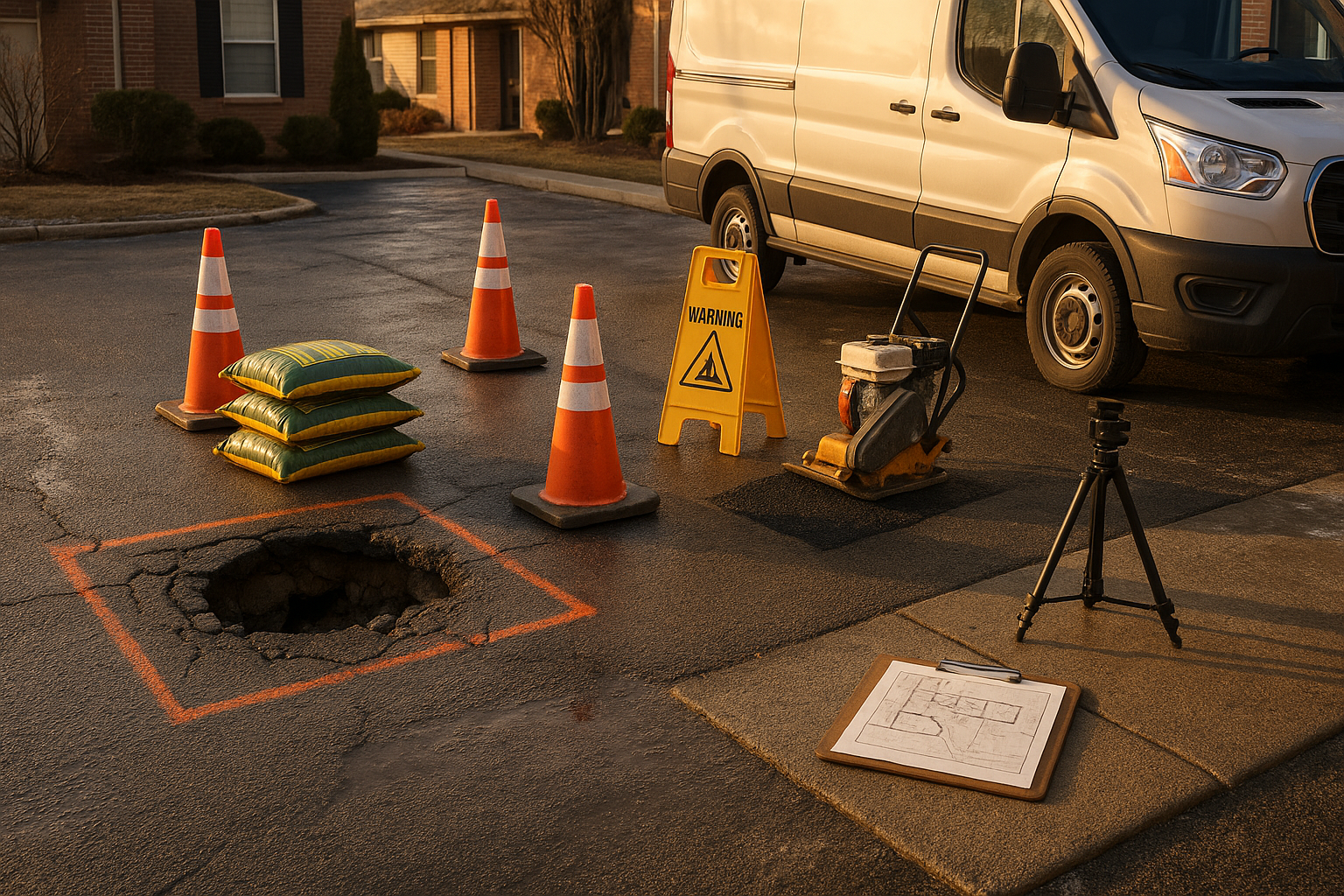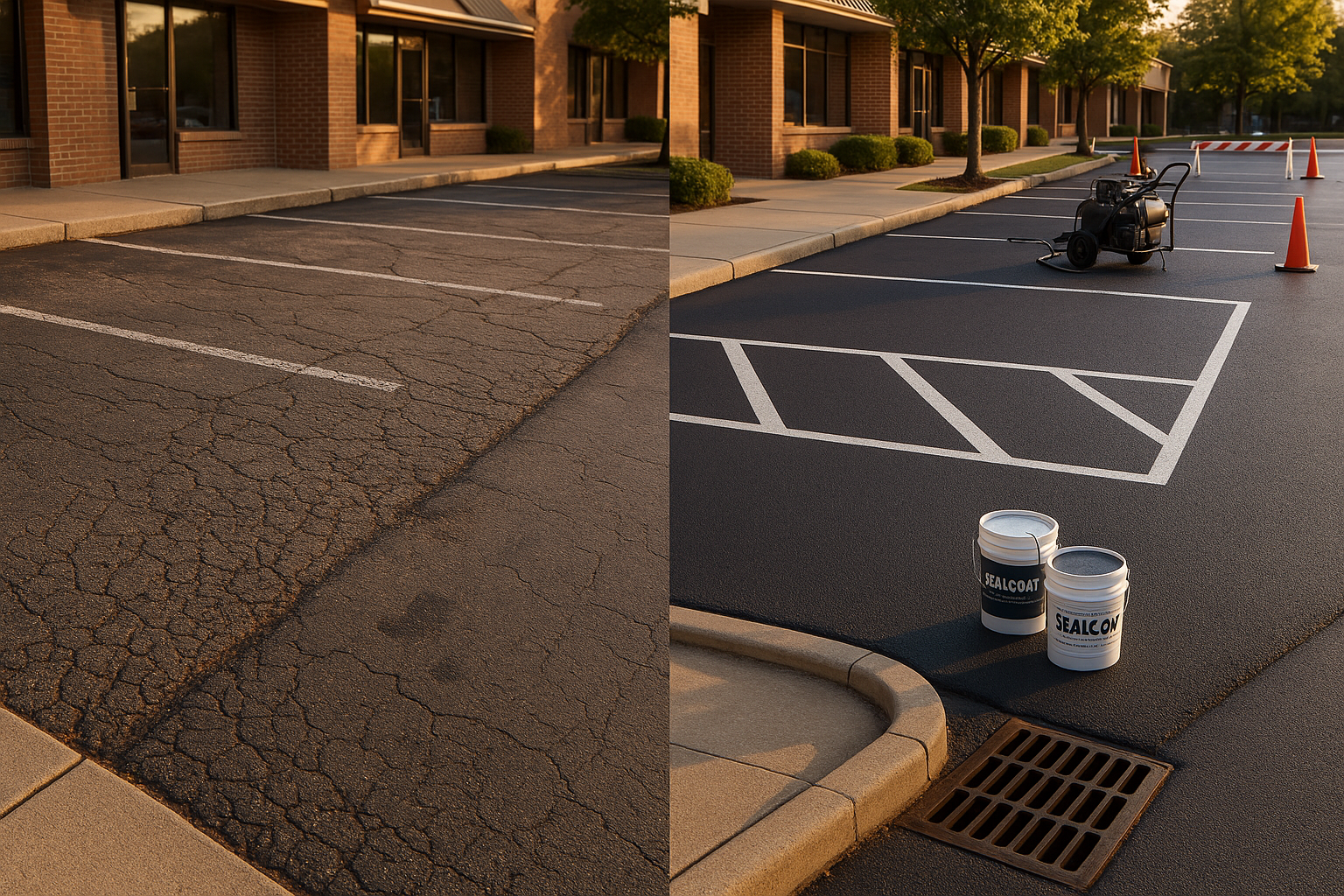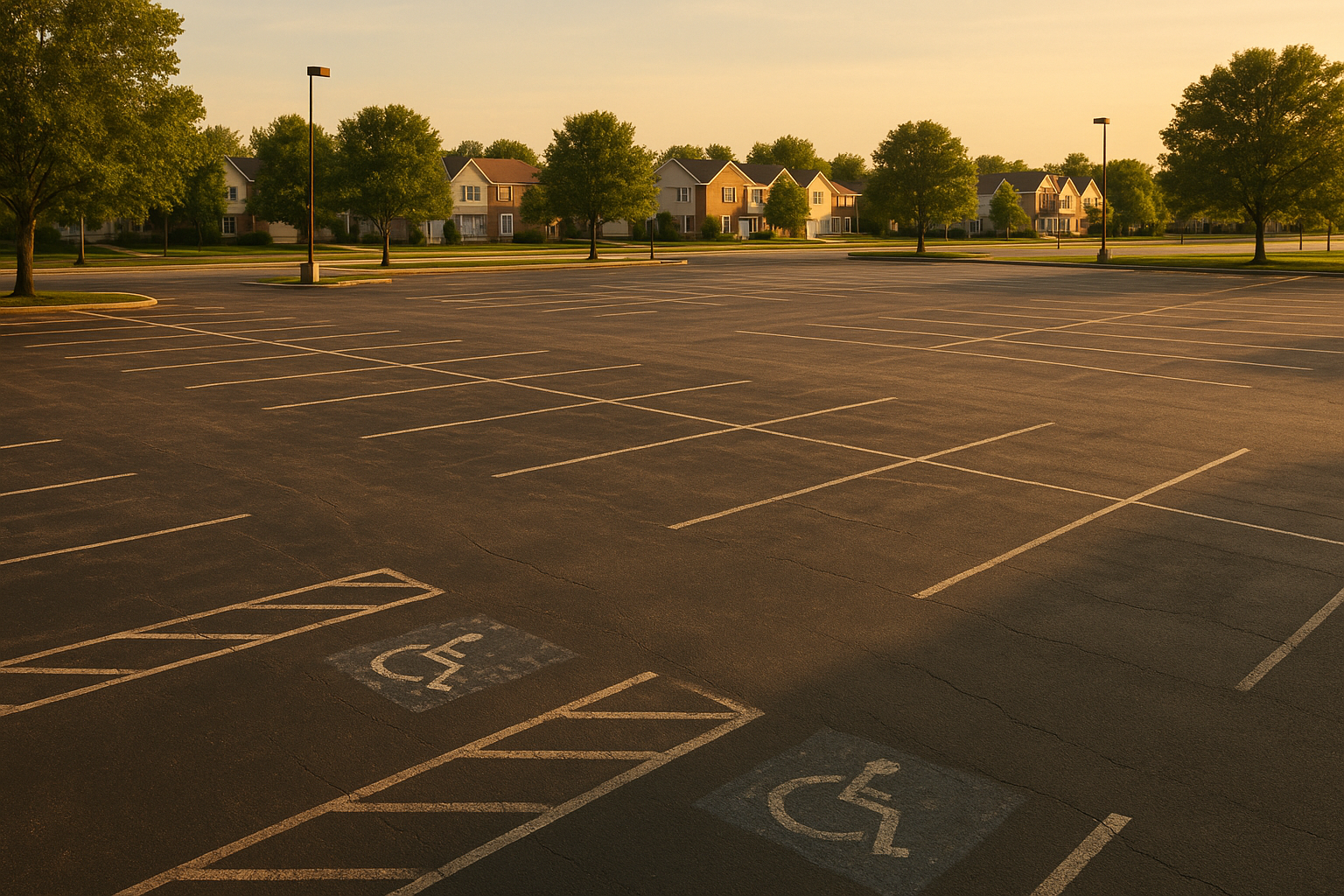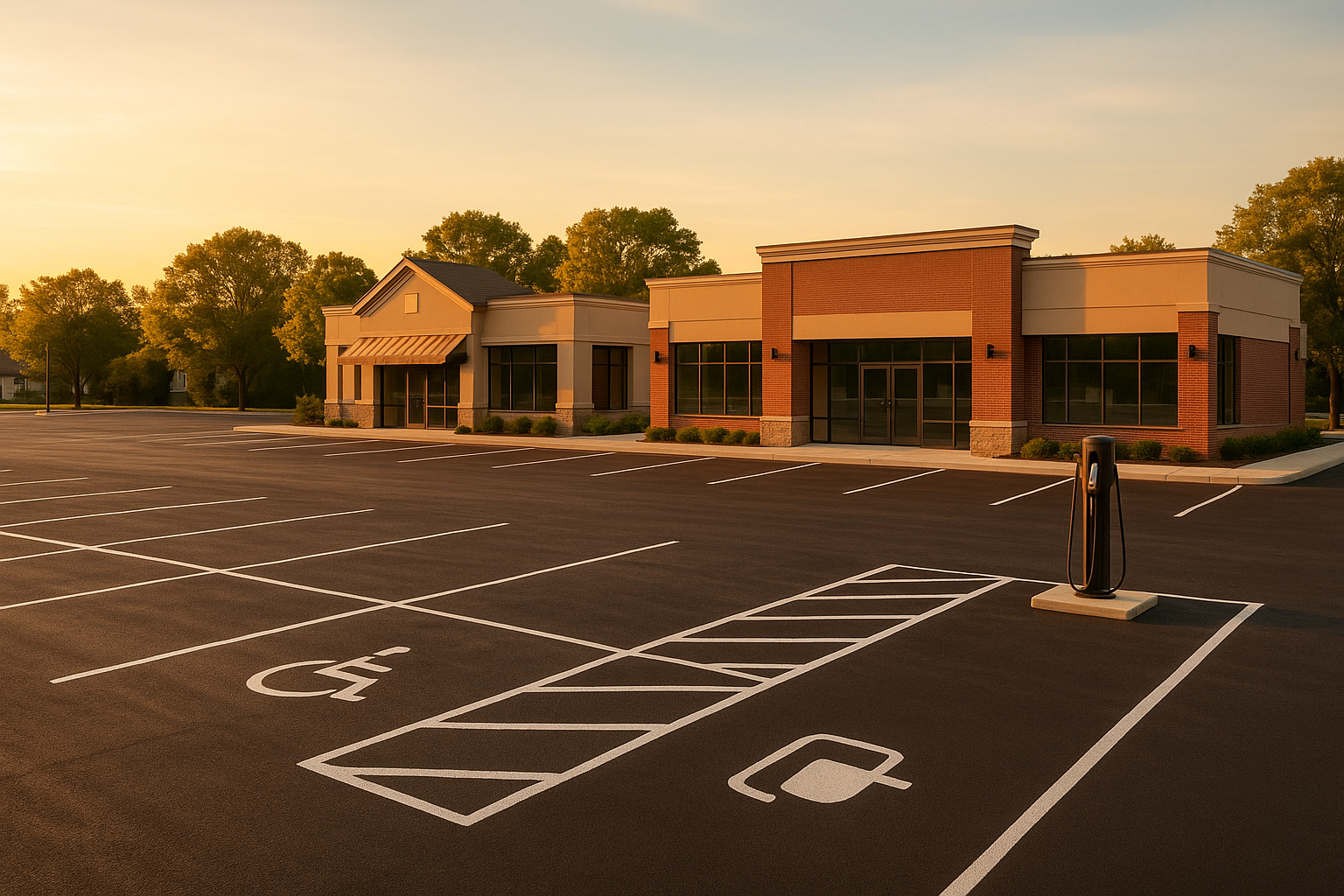
A few years back, a friend who runs a small strip mall in Carmel called me in a panic. The pavement out front had more cracks than a dry lake bed, and his insurance guy hinted he might be liable if someone tripped. But closing the lot for a daytime repave meant losing weekend foot traffic at his anchor café and the urgent care next door. He felt stuck.
Then we talked about night paving. He’d never considered it because, well, he didn’t know it was an option for a 40-stall lot. We ended up milling and repaving over three nights, phase by phase. He never lost a single business hour. His tenants barely noticed except for some fresh asphalt smell and new lines on Monday morning.
That’s the core appeal of night paving for commercial properties around Indianapolis, Fishers, Greenwood, Avon, and the whole metro: you pay a bit more for lighting and overtime, but you stay open while the work happens.
Why Night Paving Makes Sense for Indianapolis Businesses
Less Disruption, More Revenue
If you run a retail center, medical office, or church, your parking lot is your front door. Closing it during the day is like locking that door and hoping customers still climb through a window. Night paving keeps revenue flowing and tenants happy. You lose zero hours of customer access.
Plus, Indianapolis traffic around I-465, downtown, and busy corridors like Keystone or US 31 is rough enough during the day. Night work means trucks and equipment aren’t fighting commuters. Your lot is empty, so heavy machinery has room to move. No one is trying to park where the paver just laid hot mix.
Safer Work Zones When the Lot Is Empty
An empty lot also means a safer work zone. During the day, you’d need flaggers, cones, and a whole dance to keep pedestrians out of the way. At night, the only people out there are the crew. We can set up clearer barricades, use high-vis signage, and not worry about a distracted shopper walking into a fresh mat.
That safety benefit matters for liability. General contractors and property managers don’t want an accident on their insurance. Night work reduces that risk dramatically.
The Night Paving Process: Planning, Warm Mix, and Lighting
Planning the Phases and Tenant Notifications
Good night paving doesn’t start with a paver. It starts with a site walk and a phased plan. We map out which lanes close when, where tenants can still park, and how pedestrians will get to the door. Then we send tenant notifications a week ahead, then again the day before. A simple flyer or email works: “We’re paving Lot B tonight, please park in Lot A after 7pm.” That kind of clarity keeps everyone calm.
For HOAs in Zionsville or Westfield, we also coordinate with property managers on gate access and trash pickup. You don’t want a garbage truck trying to back over fresh asphalt at 6am.
Asphalt Temperature and Compaction at Night
Here’s the thing people worry about: does asphalt compact as well at night when it’s cooler? The short answer is yes, if you do it right. Nighttime air is cooler, so the mat cools faster, which shortens your compaction window. That’s why we use warm-mix asphalt for most night paving jobs. Warm mix stays workable at lower temperatures, giving our rollers more time to hit density before the mix stiffens.
We also add an extra roller on night jobs. More rolling capacity means we finish compaction before the mat drops below 185°F. And we coordinate truck timing tightly so the paver never waits for material. A paver sitting still is a cold joint waiting to happen. Check out our guide on asphalt temperature limits for more on why that matters.
Lighting and Safety Without Glare
Lighting is the big cost driver for night paving. You need to see, but you also don’t want to blind the neighbors. We use LED light towers with glare shields positioned to light the work area, not the apartment windows across the street. And we stage equipment away from residences where possible.
Indianapolis and most suburbs have noise ordinances that kick in around 10pm or 11pm, so we schedule the loudest work—milling, truck dumping—earlier in the night. The quieter stuff like rolling and hand work can go later. If you’re near homes, we can also use broadband backup alarms instead of the high-pitched beep-beep. It makes a difference. For more on keeping your lot safe and well-lit after hours, see our post on parking lot lighting and liability.
Striping, Compliance, and Morning-Readiness
You can’t reopen a lot without lines. That’s where overnight striping comes in. After the asphalt has cooled enough, usually around 2–3am, we lay down the paint or thermoplastic. Thermoplastic is better for high-traffic areas—it lasts longer and cures fast enough for morning traffic. We also re-mark ADA stalls, access aisles, fire lanes, and any EV charging spots per current code. If you’re adding EV spots, read about EV charging striping.
Sometimes we’ll mill a section and then find bad base or drainage issues. If it’s small, we can do infrared asphalt repair overnight instead of a full patch. That’s a quick fix that doesn’t shut down the whole lot. Learn more about infrared repair.
One thing that helps: we do an early morning walkthrough before the first tenant opens. We check density, smoothness, and that every line is where it should be. If there’s a puddle or a missed stripe, we fix it before 7am. That’s the service you pay for with night work—a lot that’s ready when your customers are.
Common Questions About Night Paving
Is night paving allowed in Indianapolis and the suburbs? Yes, but you need to follow local noise and light rules. Most municipalities allow construction from 7am to 10pm without a variance. After 10pm, you may need a special permit. We handle that for you.
How soon can we reopen after overnight paving? Typically, you can drive on the new asphalt within 24 hours, but we usually have the lot striped and ready by 6am. The key is letting the mat cool enough before striping. Warm mix helps.
Does night paving cost more? Yes, usually 10–20% more due to lighting, overtime, and plant coordination. But for many businesses, the cost of losing a day’s revenue is far higher. You’re paying to stay open.
What if it rains? We watch the forecast closely. If rain is likely after milling but before paving, we may reschedule. Milling in the rain is messy; paving on a wet base is a recipe for failure. We won’t do it.
Get a Night Paving Plan for Your Indianapolis Property
If your parking lot looks tired but you can’t close for three days, night paving might be your answer. At PavementPros, we’ve done night work for retail plazas, medical offices, churches, HOAs, and even a few industrial sites from Brownsburg to Plainfield. We’ll walk your lot, build a phased plan, and give you a clear timeline and quote. No pressure, just straight talk about what works and what it costs.
Ready to see if night paving fits your schedule? Request a no-obligation assessment here. We’ll come out, measure, and tell you honestly if night work is worth it for your specific lot.
Ready for a free lot assessment?
We walk the lot, photograph the problems, and hand you a written plan — no pressure, no obligation.