Last spring, I got a call from a property manager in Carmel whose parking lot lines looked ten years old after just one winter. Snowplows had scraped the cheap paint off like it was nothing. The faded stop bar in front of the dumpster area made every delivery driver guess. And the fire lane curb? It had gone from red to a sad pink. She was frustrated, because she'd just painted the lot the fall before, and now she had to pay again. That's when she asked me: "Is there something that actually lasts?" I told her about thermoplastic striping—and honestly, it changed how she budgets for pavement markings.
What is Thermoplastic Striping?
Thermoplastic striping is a thick, heat-applied marking system. We're talking 90 to 125 mils thick—compared to regular traffic paint that goes on maybe 5 to 10 mils. Think of it like the difference between a cheap sticker and a thick, melted-on rubber pad. It's either applied as a hot liquid that gets screeded onto the pavement, or as preformed thermoplastic shapes that you torch down. Either way, the material melts into the surface, creating a bond that's way tougher than paint just sitting on top.
The secret sauce is the reflective glass beads. We drop them on while the thermoplastic is still molten, so they embed halfway. That's what makes your crosswalks and stop bars glare back at your headlights at night. It's not just bright—it's retroreflective, meaning the light bounces right back at the driver. Paint with beads does the same, but the beads wear off fast. With thermoplastic, they're locked into a thicker layer, so they keep working for years.
Why Indianapolis Winters Eat Paint Alive
If you manage a lot in Fishers, Zionsville, or Greenwood, you know the drill. Freeze-thaw cycles cause the pavement to expand and contract. De-icing salts sit on the surface and chew through whatever's there. Snowplow blades scrape back and forth all season. Regular paint just doesn't stand a chance. It flakes, fades, and gets gouged out by March. Then you're repainting every spring—sometimes twice a year if you want to look decent.
Thermoplastic striping is snow plow resistant. Not plow-proof—nothing's plow-proof—but it's damned close. The thickness and the bond make it able to take the abuse. When a plow blade hits a paint stripe, it peels it off. When it hits thermoplastic, the blade usually skims over the top because the marking is raised just enough but still flexible. Sure, if the operator drops the blade too hard, they can chip an edge, but overall it holds up. Most of our clients in the Indy metro get five to eight years out of a good thermoplastic install. Some get longer on low-traffic areas like fire lanes or curb markings.
And don't forget the salt. Thermoplastic doesn't react to de-icing salts the way paint does. Salts can cause paint to soften and smear. Thermoplastic is inert—it just sits there. That's why you see it on INDOT roads and Indianapolis DPW projects more and more. They're tired of repainting too.
Curb Painting Done Right—Fire Lanes, No Parking, ADA
Curb painting is a whole other beast, but it's part of the same conversation. If you need a fire lane curb in Carmel or a no parking curb in Broad Ripple, you want it to stay red or yellow for more than a season. We use thermoplastic for curbs too, or a good quality paint if the budget is tight. But the key is sizing and placement per MUTCD and local fire code. For example, a fire lane curb needs to be red with white lettering that says "FIRE LANE NO PARKING" and it can't be faded or the fire marshal will holler. Same with ADA access aisles—blue with the wheelchair symbol, and the striping around the stall needs to be crisp and compliant.
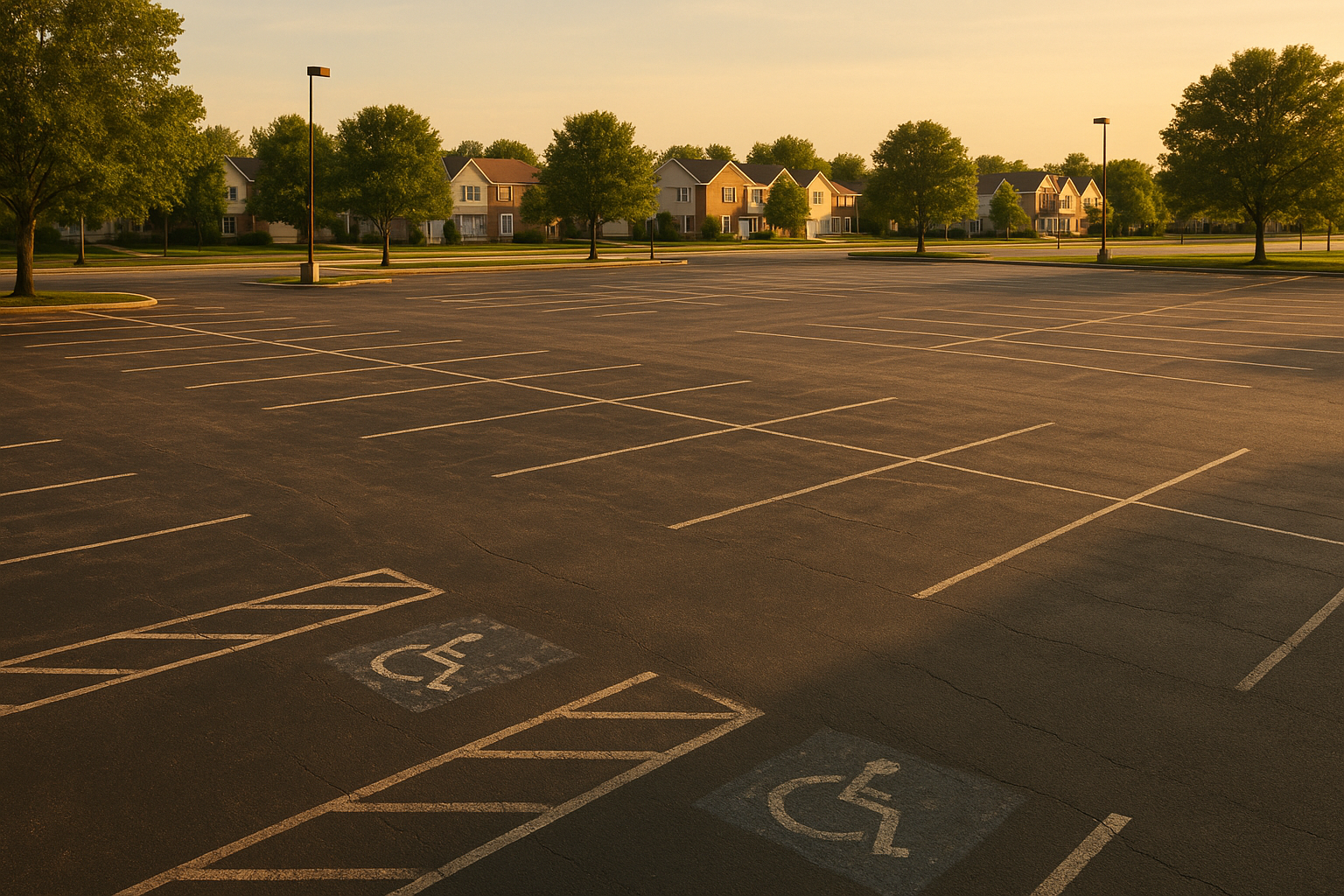
I've seen too many lots in Avon or Plainfield where the blue curb paint is so faded you can't tell it's an accessible spot anymore. That's a lawsuit waiting to happen. Thermoplastic curb markings hold their color way longer. We use preformed thermoplastic for symbols and letters because it's easier to get the right shape and spacing. And yes, we can match existing colors and ADA standards.
Surface Prep and Installation—Why It's Not a Weekend DIY
You can't just slap thermoplastic down on a dirty lot and expect it to stick. The pavement has to be clean and dry. We pressure wash, check for moisture, remove loose paint or old markings, and sometimes grind or shotblast if the surface is rough. On concrete, you need a primer. On fresh sealcoat, you might need to wait or use a special primer. That's where a lot of DIY jobs go wrong—they skip the prep and the marking peels off in a month.
We also do line removal and surface prep properly. If you have old paint that's chipping, we'll grind it off or use a removal machine. Then we layout the new striping plan, mark everything with chalk, and get your approval before we fire up the torch. The actual installation is fast. We heat the thermoplastic to around 400 degrees, screed it on, drop the beads immediately, and it's ready for traffic in minutes. That's a huge deal if you're managing a busy retail lot in Noblesville or a church parking lot in Westfield—you can't shut down for a day. With thermoplastic, you can often phase the work, keep half the lot open, and be done before lunch.
Where Thermoplastic Shines (and Where It Doesn't)
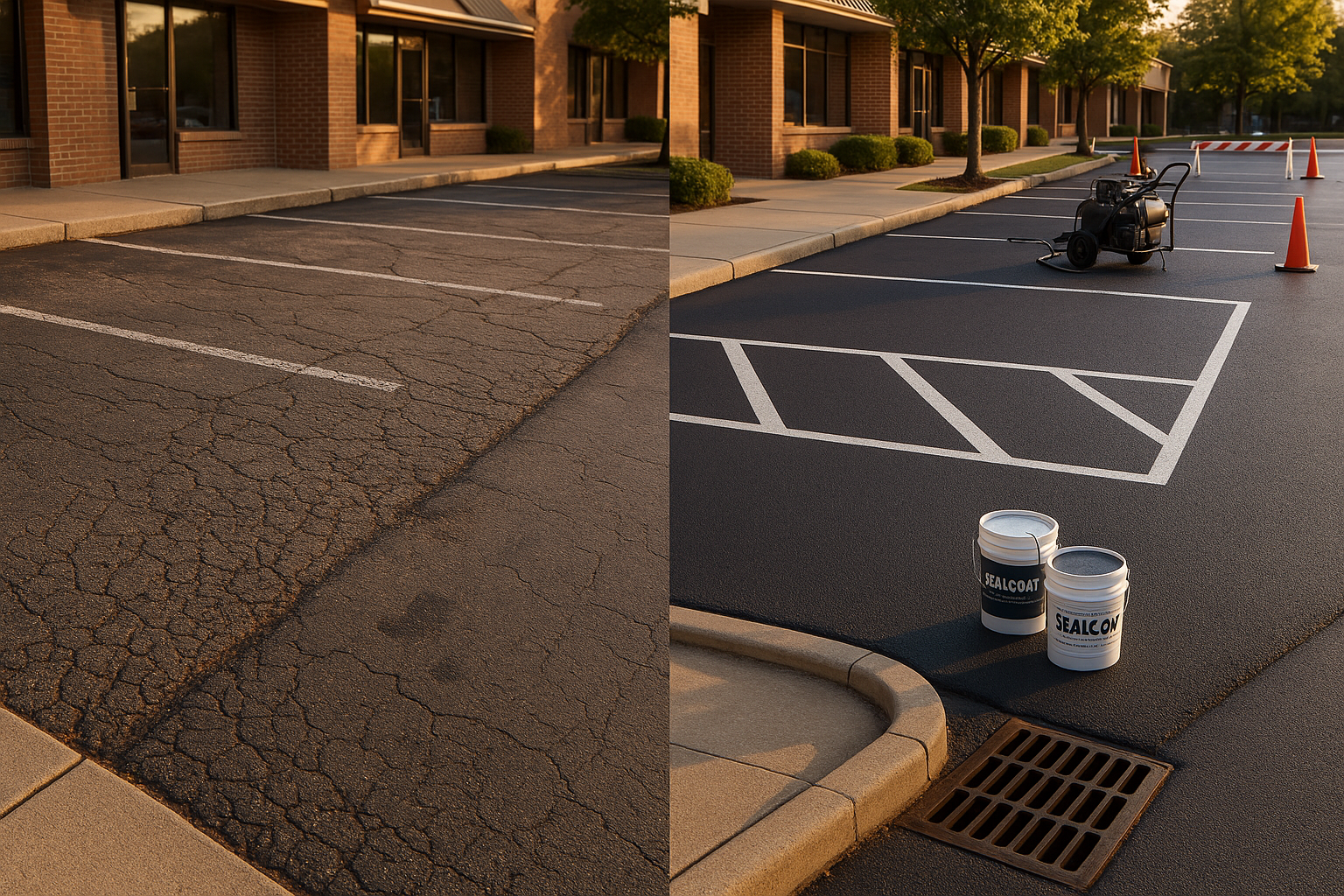
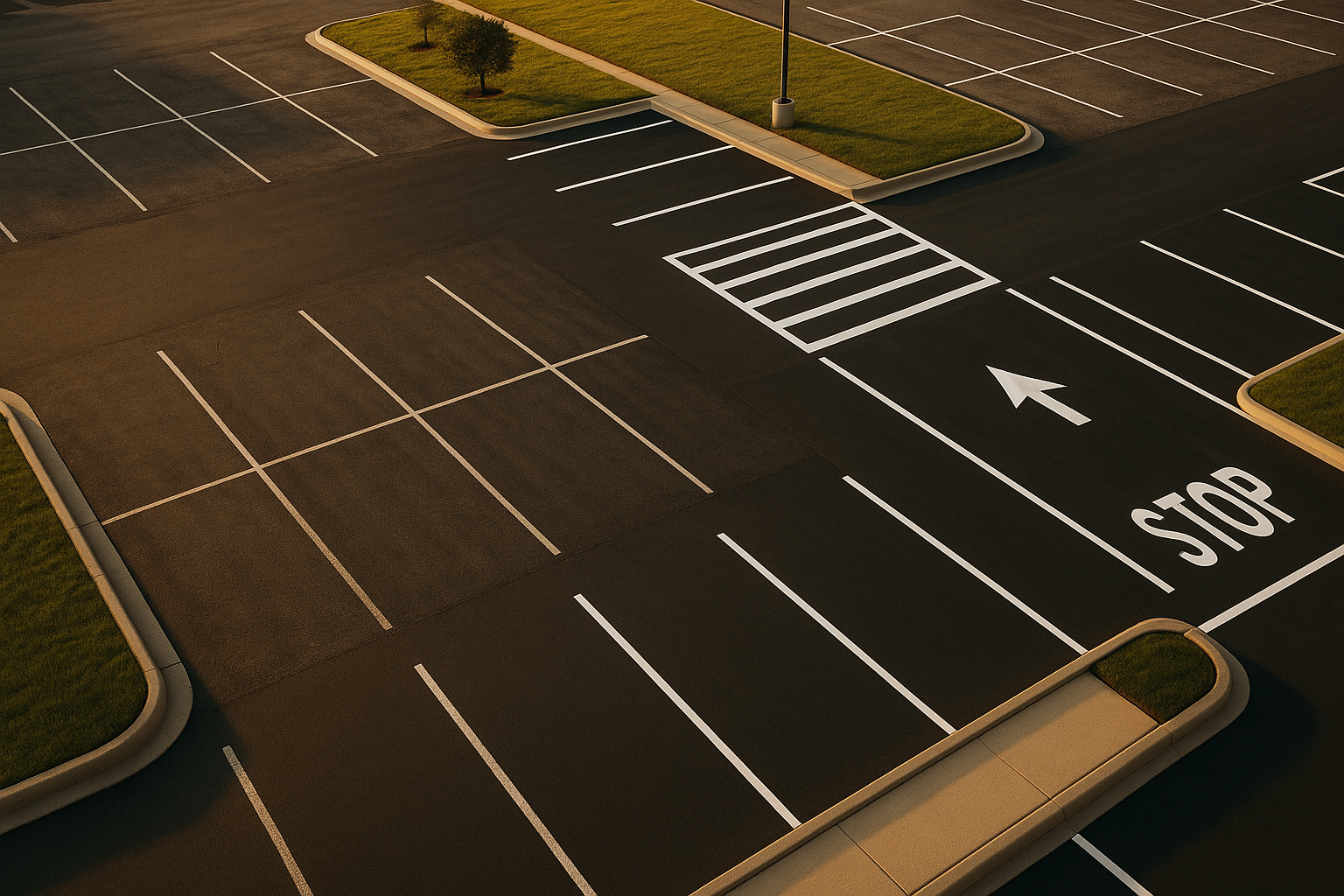
Thermoplastic is ideal for high-wear areas: crosswalks, stop bars, directional arrows, school zones, church drive lanes. It's also great for handicap spaces because it stays visible. But it's not a magic bullet. If your asphalt is failing—raveling, alligator cracking, potholes—thermoplastic won't fix that. It'll just highlight the cracks. You need to address pavement issues first. We always tell clients: if your lot needs sealcoating or repairs, do that first, then stripe. Same with concrete that's spalling or has a sealer that's peeling. Thermoplastic won't bond to a dusty or crumbling surface.
And on a freshly sealcoated lot, you have to wait for the sealer to cure—usually 30 to 60 days—before applying thermoplastic, or use a special primer. That's why we always do a site assessment first. We'll give you a clear scope and timeline, and we'll be honest about whether your lot is ready. If you're not sure what condition your pavement is in, check out this piece on what a pavement core sample tells you.
Lifecycle Cost of Striping: Paint vs Thermoplastic
Yeah, thermoplastic costs more upfront. Maybe 2 to 3 times the cost of paint for the same markings. But let's do the math. If you paint your lot twice a year for $1,500 each time, that's $3,000 a year. Over five years, that's $15,000. A good thermoplastic job might cost $4,000 once and last five years. That's a no-brainer. And that's not counting the downtime and hassle of scheduling paint crews all the time.
Also consider the liability angle. Faded lines and missing ADA markings can get you fined or sued. Thermoplastic's longer life means you're compliant for longer. That's why so many HOAs in Zionsville and property managers in Greenwood are switching. They'd rather spend once and not think about it for a while.
Maintenance Tips to Get the Most Out of Your Markings
Once your thermoplastic is down, it's not zero-maintenance, but it's close. We recommend a quick inspection every spring and fall. Check for any chipped edges from plows or heavy trucks. If you have a snow removal contractor, tell them to use plow shoes (rubber or polyurethane) and set the blade just off the surface. That'll protect the edges. Keep the lot clean—dirt and sand can grind into the surface and dull the beads over time. A good power sweeping in the spring helps.
If you do see damage, it's usually easy to patch. We can cut out the damaged section and torch in a new piece of preformed thermoplastic. That's way cheaper than repainting the whole lot.
Need a Real Quote? Let's Walk Your Lot.
If you're tired of repainting every spring and want markings that survive an Indy winter, let's talk. At PavementPros, we do thermoplastic striping and curb painting for residential and commercial properties all over the Indianapolis metro—Carmel, Fishers, Zionsville, Westfield, Noblesville, Greenwood, Brownsburg, Avon, Plainfield, you name it. We'll come out, look at your lot, check the pavement condition, and give you a clear, line-item scope with a timeline. No pressure, no fluff. You can also read more about parking lot signage and post repair if that's on your radar. But if you're ready to get real numbers, hit us up on the quote page and we'll get back to you fast.
Ready for a free lot assessment?
We walk the lot, photograph the problems, and hand you a written plan — no pressure, no obligation.