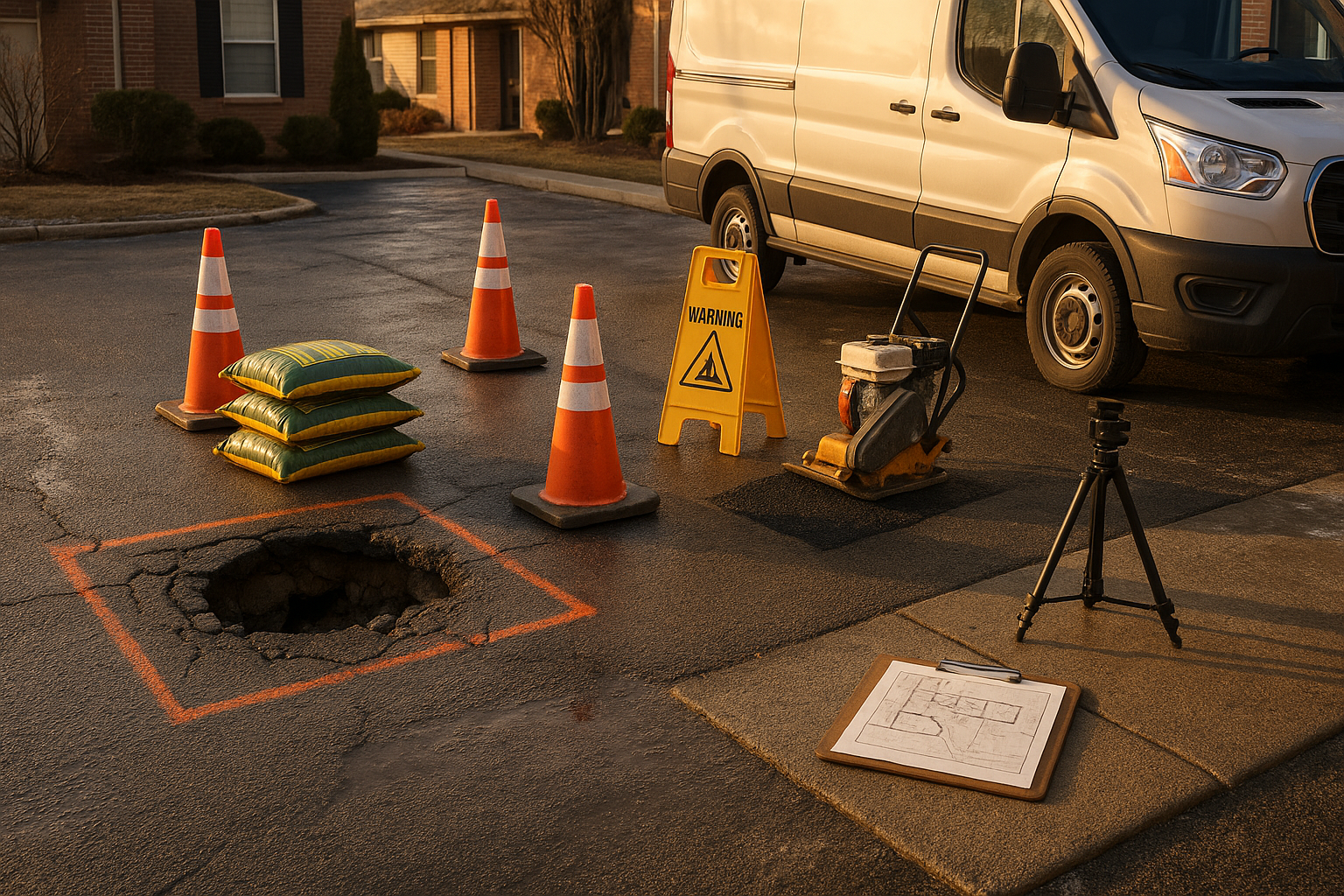
Last February, a manager at a small office park in Carmel came out after a rough snow weekend to find one of his accessible parking signs lying flat in the slush, the post snapped clean at the base. A plow driver had clipped it, and now the space was unmarked. He called a few contractors, but nobody wanted to come out for just one sign. That's the kind of job we actually like. Parking lot sign repair isn't glamorous, but it's the difference between a compliant, safe lot and a place that looks abandoned.
Signs do a lot of quiet work. They tell people where to park, where not to park, and where the fire lane starts. When they're missing or unreadable, enforcement gets shaky, and that's when you get tow-away disputes or worse, a fire truck blocked. For businesses, faded or bent signs also send a message: this property doesn't care. That first impression matters when customers pull in.
Why Parking Lot Sign Repair Matters in Indianapolis
You can't ignore signs around here. Indiana winters chew up posts and hardware. Freeze-thaw cycles heave footings, road salt eats away at metal, and snow plows turn into sign-seeking missiles. A lot that looked great in October can be a mess by March. And if you're a property manager or HOA board, you're the one who gets the complaint email when someone gets a ticket for parking in a spot that wasn't marked as reserved.
But it's not just about aesthetics. ADA compliance is law. The city of Indianapolis and surrounding communities like Fishers, Greenwood, and Avon expect lots to be properly signed. If a person with a disability can't find an accessible space, or the van-accessible designation is missing, you're opening yourself up to a lawsuit. Even if nobody sues, it's just wrong. We've talked to property owners who thought they were fine until a surprise inspection or a tenant request made them look closer. The fix is usually cheaper than they feared.
Common Sign Problems We See
Here are the usual suspects we run into across Central Indiana:
- Plow damage: Bent posts, snapped bases, signs turned sideways. Plows don't care about your sign's feelings.
- Faded faces: Engineer-grade reflective sheeting that's gone dull after five or six years. At night, those signs might as well be blank.
- Spinning or loose signs: Hardware came loose; the sign spins in the wind or hangs at a weird angle.
- Wrong height: Too low, too high, or mounted on a wall where it should be on a post. ADA has specific mounting heights.
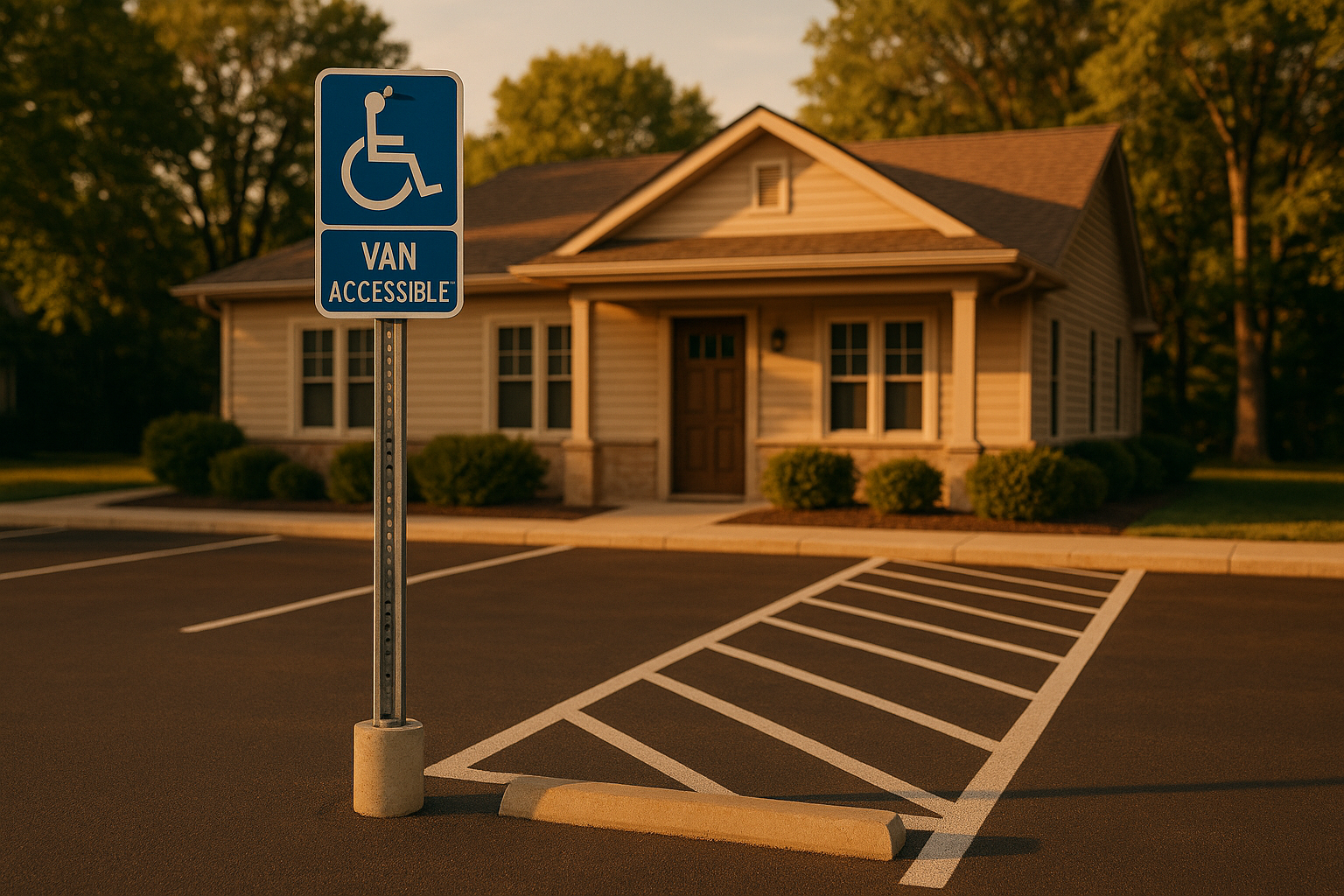
- Missing van-accessible plaques: Most lots have accessible spaces, but half of them forget the additional "Van Accessible" sign below the main ISA symbol. That's a violation.
- Fire lane or tow-away signs that are gone: These are high-liability spots. If someone parks in a fire lane and you can't prove it was marked, you're stuck.
We also see signs that are just old and beat up. They might have been fine for years, but the world moves on. If your sign doesn't meet current MUTCD guidelines for size or legend, it's time for a parking lot sign replacement.
ADA Sign Rules You Can't Ignore
ADA rules are confusing, but the basics are simple. Each accessible space needs the blue-and-white ISA symbol on a sign mounted at least 60 inches from the ground to the bottom of the sign, measured at the head of the space. If a space is van-accessible (the wider ones with an access aisle), you need an extra "Van Accessible" plaque below the main sign. That plaque tells drivers with lifts they have room to deploy. We see a lot of lots where the signs are too low because someone installed them on a short post or bolted them to a fence. That's a quick fix, but it's an ADA violation if left.
And don't think old signs are grandfathered in. There's no grandfathering for ADA sign requirements. If you're repaving or restriping, you need to bring the signs up to code. Even if you're not doing other work, a complaint or an inspection can force the issue. That's why a quick ADA signage audit is a smart move.
Materials That Survive Indiana Winters
For this climate, we recommend galvanized steel posts, either U-channel or square perforated tubing. They handle road salt better than painted steel. If you're in a spot that gets hit by plows, we can set the post on a breakaway base so it snaps at the ground instead of bending the post or cracking the footing. That way, replacing the base is cheaper than digging out a bent post.
We use high-intensity reflective sheeting, often Type XI, because it bounces back headlights better at night. Cheap engineer-grade signs fade in a few years, but prismatic sheeting lasts a decade or more. Reflective aluminum signs with stainless hardware hold up to de-icer chemicals far better than the big-box store stuff.
Footings matter too. We set posts below frost depth—around 30 to 36 inches in Central Indiana—so heaving doesn't push them out of plumb. Proper compaction and a little concrete around the base keeps the post straight for years. And if we can place the post behind a wheel stop or curb, we will, because that extra few inches of protection from a plow blade is worth it.
Repair or Replace? How We Decide
Sometimes a sign just needs new reflective faces and hardware. If the post is still straight and the footing is solid, that's a quick fix. But if a plow wrapped the post around the bumper, or the concrete footer is cracked, or the sign is at the wrong height, trying to patch it is a waste. We'll tell you straight: a full replacement with a properly set post will outlast a bent post that just gets hammered straight again.
And then there's the question of matching. A lot of property managers worry they'll end up with a mismatched sign. We can match your existing design, arrows, and messaging. If you have a specific sign layout from a previous contractor, we'll copy it. That keeps the lot looking consistent.
Signs and Striping Go Together
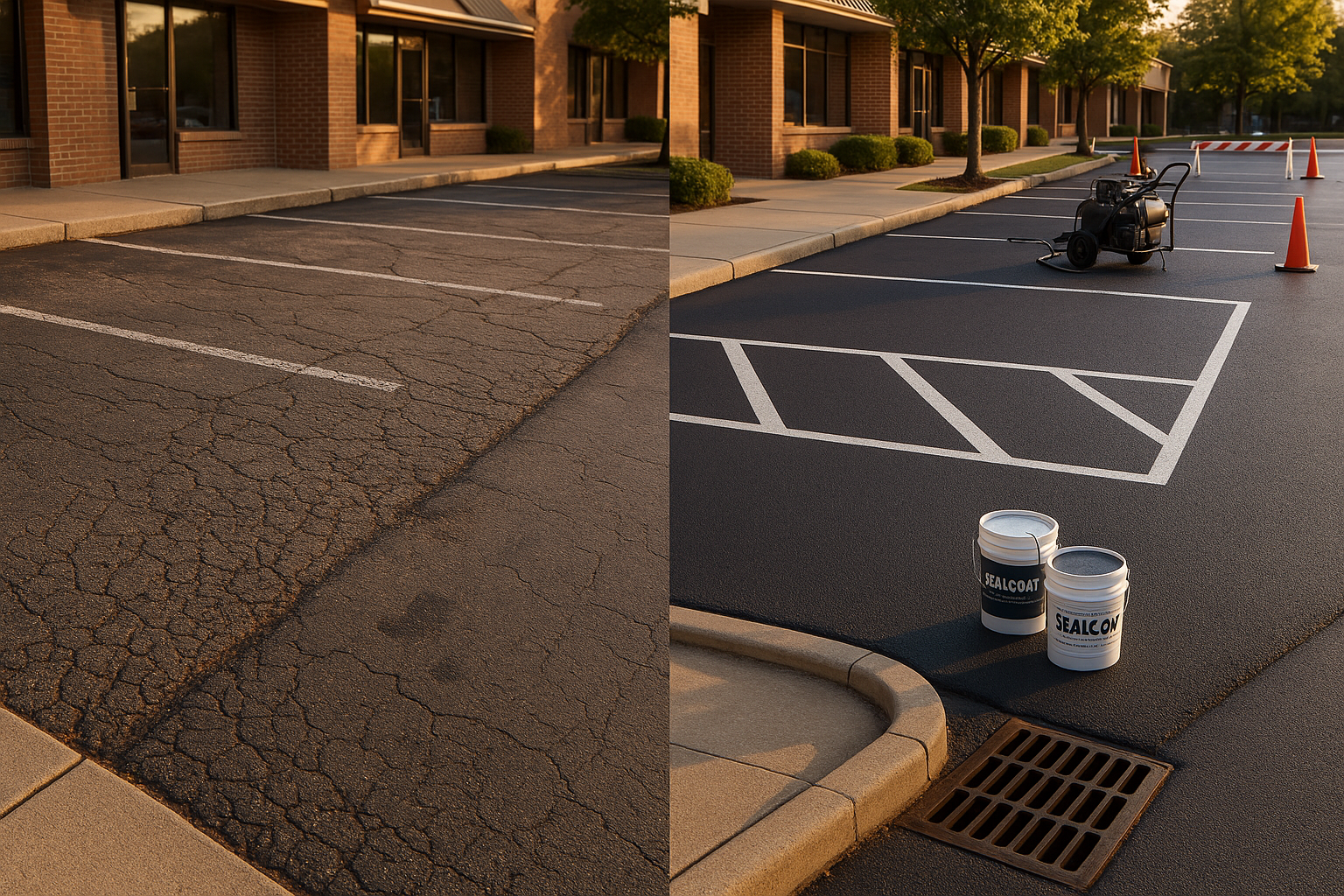
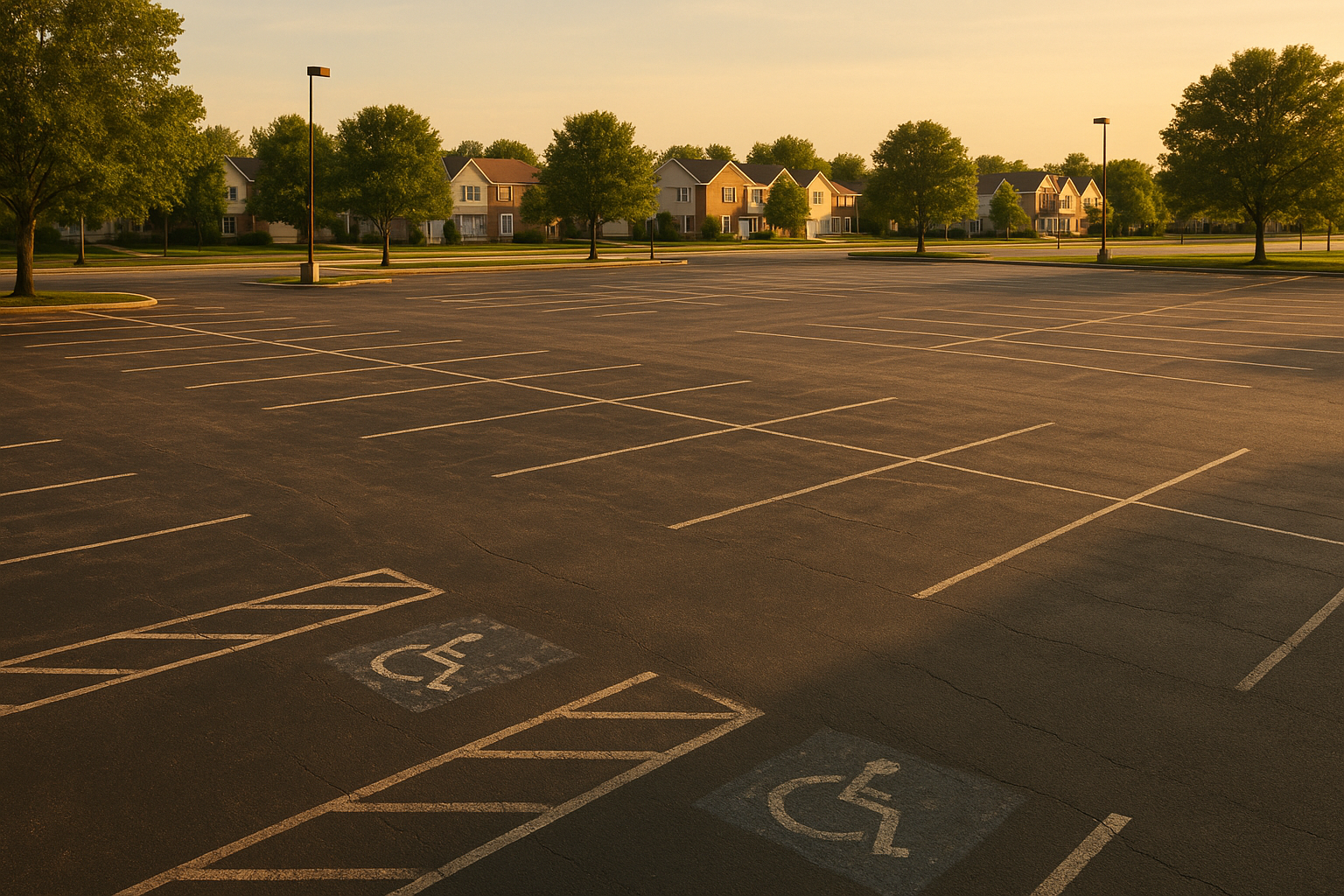
Signs and striping should be planned together. The sign for an accessible space needs to line up with the stall and the access aisle hash marks. If we restripe, we check that the signs are still in the right spot. We can do both in one trip, which means less downtime for your lot. Our striping layout for curbside pickup article explains how we think about stall layouts and traffic flow. When we handle signage and striping as one package, you don't end up with a freshly painted lot and old, crooked signs.
Our Simple Process for Getting It Fixed
Here's how we work: you call or click here to schedule an audit. We walk your lot, note every missing, damaged, or non-compliant sign, and map it. Then we give you a clear scope and price. No hidden fees, no upsells. If you need us to handle permits for right-of-way signs, we'll check local rules. Most private lot repairs don't need city permits, but we verify. We'll schedule the work, usually with some traffic control so your tenants and customers aren't blocked. After we're done, we take photos and walk through a punch list with you. You get a documented record for your files.
And for the folks who worry a small job won't get attention: we show up for one sign or fifty. We're a local team, and we know that the little jobs often turn into bigger relationships. If you're in Indianapolis, Carmel, Fishers, Zionsville, Westfield, Noblesville, Greenwood, Brownsburg, Avon, or Plainfield, we're close by.
Quick Answers to Common Questions
What is the required mounting height for accessible parking signs in Indiana?
The bottom of the sign should be at least 60 inches above the ground, measured at the head of the parking space. This allows visibility over parked cars.
Do I need a city permit to repair or replace signs in a private parking lot?
Usually not for private property. If the sign is in a public right-of-way or attached to a city pole, you might. We check the local rules for you.
Can you match my existing sign design, arrows, and messaging?
Yes. We can replicate most standard sign layouts and can work with your property's brand colors if needed.
How fast can you replace a knocked-down or missing sign?
For a standard ADA or fire lane sign, we can usually get it done within a week of the audit. If it's urgent, we can sometimes do same-week service.
What reflective grade should parking signs use for night visibility?
We recommend high-intensity or Type XI prismatic sheeting. Engineer-grade fades too fast in Indiana weather.
Don't Wait for the Next Plow
If your parking lot signs are looking rough, don't wait for another winter to make it worse. Pre-winter and early spring audits catch problems before they become liabilities. PavementPros handles parking lot sign repair, replacement, and installation across the Indianapolis metro. Give us a call or schedule a free on-site audit and quote today. We'll make your lot easier to navigate and a lot less likely to get you sued.
Ready for a free lot assessment?
We walk the lot, photograph the problems, and hand you a written plan — no pressure, no obligation.