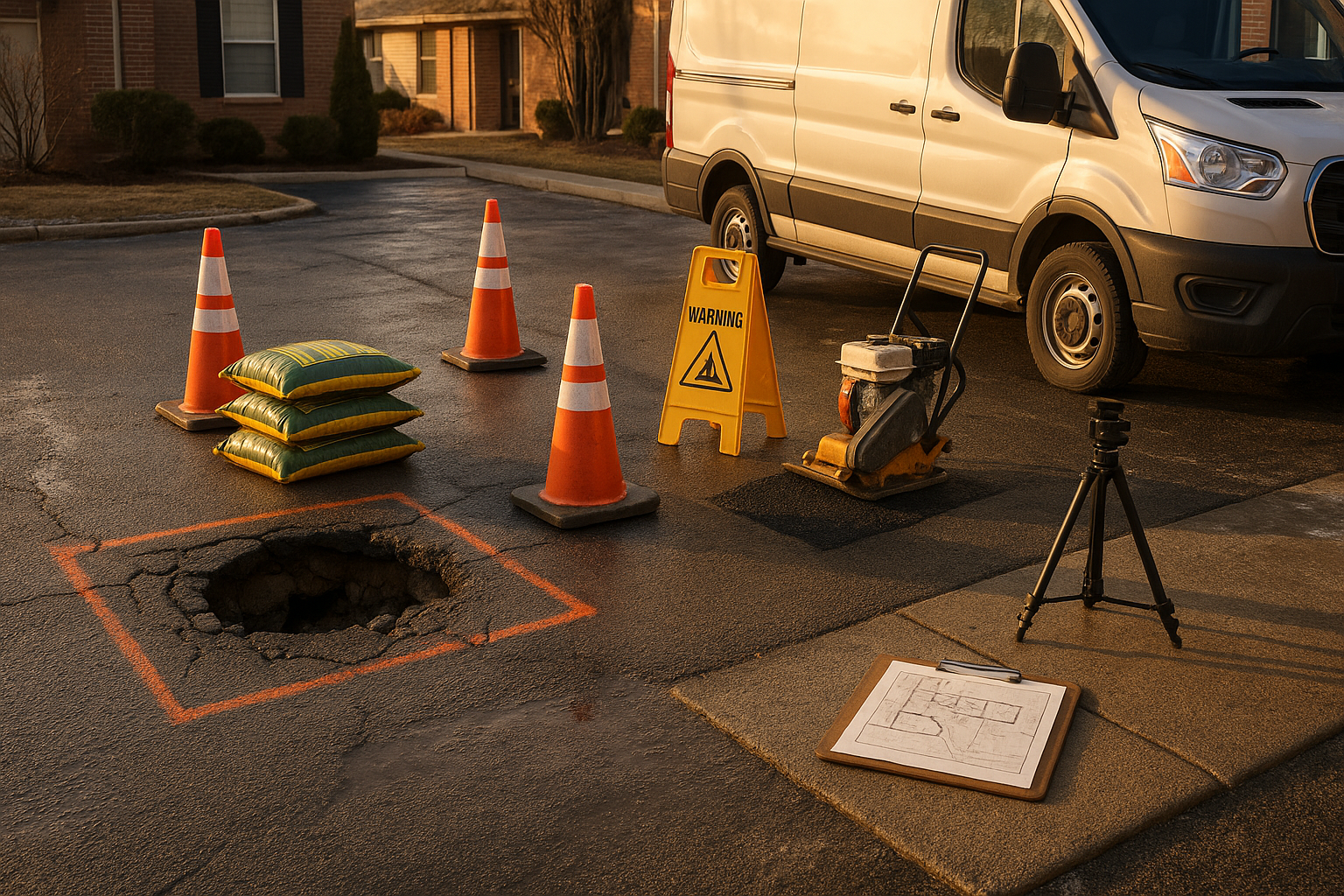
Last holiday season, a friend who runs a small market in Broad Ripple called me nearly in tears. Curbside pickup had taken off, but his lot was a mess. Cars double-parked, drivers honking, customers wandering around looking for their assigned spot, staff carrying bags between moving cars. A couple of near misses almost turned into fender-benders. He had put out some cones and a hand-painted sign that said "Pickup Here." It wasn't working. I told him what I've told a dozen other Indianapolis businesses: you need real curbside pickup striping, not a jury-rigged setup. That conversation led to a full redesign and repaint that changed his pickup operations overnight.
At PavementPros, we've seen this over and over. Retailers, grocery stores, even school pickup lines—when you have people waiting in cars for orders, you need a system. The pavement markings are the system. They tell drivers where to go, where to stop, and how to get out. Without them, it's a free-for-all.
Why Cones and Duct Tape Don't Cut It
Let's be honest. Cones are temporary. They blow over, get moved, disappear under snow. A handwritten sign fades and falls off. And none of it helps with traffic flow. You need painted lines, numbered stalls, arrows, and real signage. That's what curbside pickup striping gives you. It's not just paint on asphalt; it's a wayfinding system.
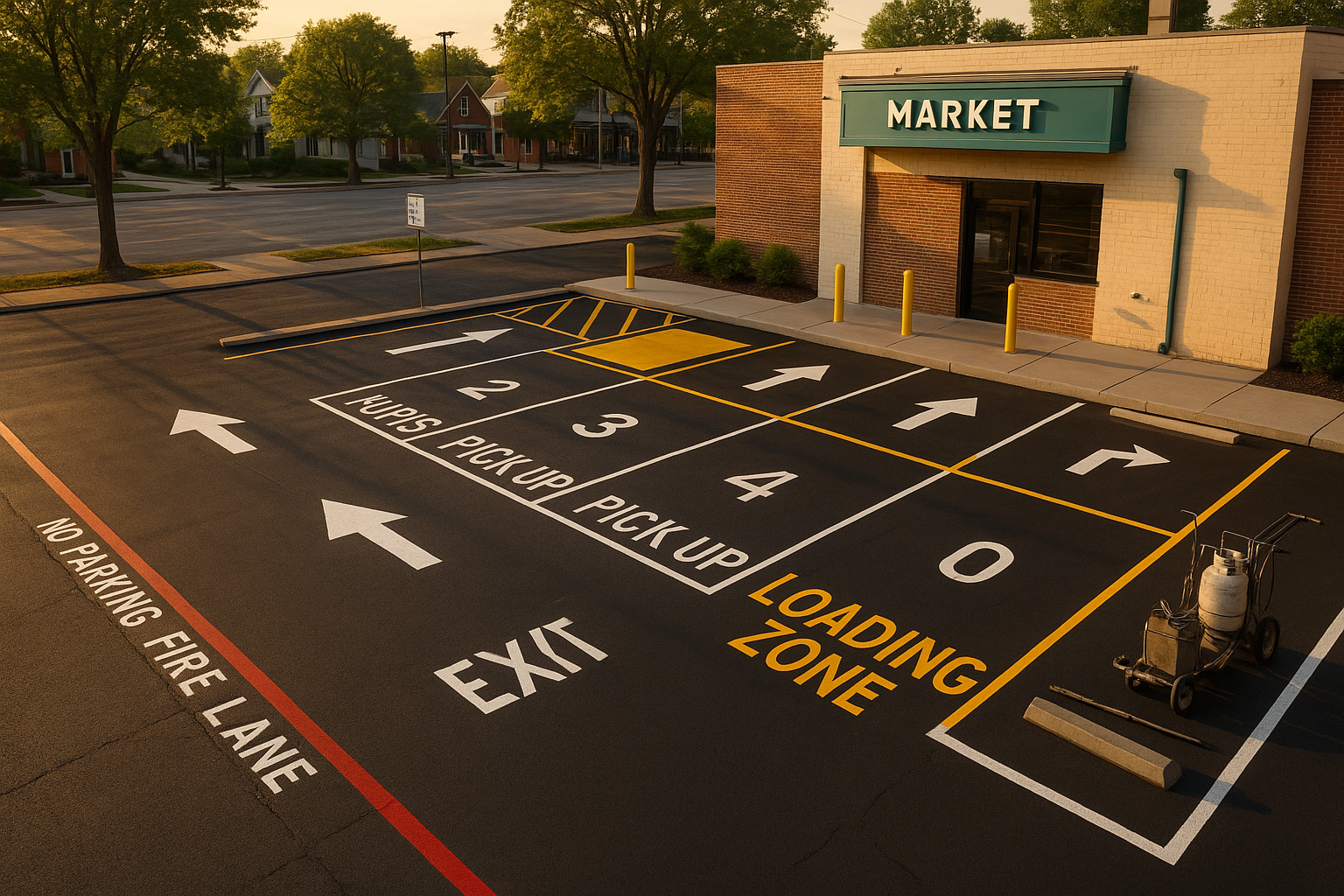
I remember a store manager in Carmel who tried to manage pickup with just a few orange cones. Every day at 5 p.m., the lot turned into a chaotic loop. Cars entering and exiting from the wrong sides. Delivery drivers parking in pickup spots because there were no clear markings. He finally called us after a customer backed into a cart corral. We restriped the lot with dedicated, numbered BOPIS parking stalls (that's "buy online, pick up in store"), one-way arrows, and a clearly marked pickup lane. The difference? Handoff times dropped from five minutes to under two. And no more near-misses.
Planning Your Pickup Zone Layout
Before we pick up a paint gun, we do a walk-through. We look at where the store entrance is, where the traffic enters and exits, and where the peak bottlenecks happen. How many pickup stalls do you actually need? A small boutique might get by with three. A busy grocery store on 82nd Street in Castleton may need ten or more. We count cars during peak times, not just guess.
The layout matters a lot. You want one-way circulation if possible, so cars don't cross each other. Approach angles should make it easy to pull in forward, not back up into traffic. Numbered pickup stalls are key—your staff can see the number on the app and walk straight to that spot. We usually use high-contrast white or yellow paint, and stencil the numbers big enough to read from a car window. For places with multiple lanes, we add wayfinding arrows to guide drivers from the entrance to the pickup zone and back out.
We also think about conflict points. Pickup zones should be separate from regular parking, fire lanes, and loading docks. The last thing you want is a delivery truck blocking your pickup lane at noon. That's why we often mark a separate loading zone and keep it visually distinct from the curbside pickup area.
Materials That Survive Indiana Weather
Central Indiana weather is tough on pavement markings. Freeze-thaw cycles, snowplows scraping, salt and deicer, and heavy UV. You can't just use cheap hardware store paint and expect it to last. We use premium waterborne traffic paint for most projects—it's fast-drying and holds up well. For high-traffic areas, we recommend thermoplastic striping Indianapolis. Thermoplastic is applied hot and bonds to the asphalt. It lasts two to three times longer, and it handles plows better. We add reflective glass beads to the paint while it's wet. That gives you night visibility. When headlights hit those beads, the lines glow, even in rain.
Winter striping Indiana gets complicated. Most paints need warm temperatures to cure properly. We can do cold-weather applications with special formulations, but there are strict go/no-go thresholds for temperature and moisture. If it's below 40°F or the pavement is damp, we usually tell clients to wait. Spring through fall is the sweet spot. But don't worry—we work with you to schedule around your busy times. Off-hours striping is common: we'll come in at 5 a.m. or after closing to minimize disruption. We've done plenty of lots on weekends in Fishers and Zionsville.
One thing we've learned: snowplow damage is real. That's why we coordinate with your snow removal contractor. We avoid putting wheel stops in pickup lanes because plows catch on them. If you need bollards or wheel stops for safety, we place them where plows won't hit. Speaking of snow, you might want to check out our article on salt and deicer damage to pavement to understand what those chemicals do to your asphalt.
Keeping It Legal: ADA, Fire Lanes, and Safety
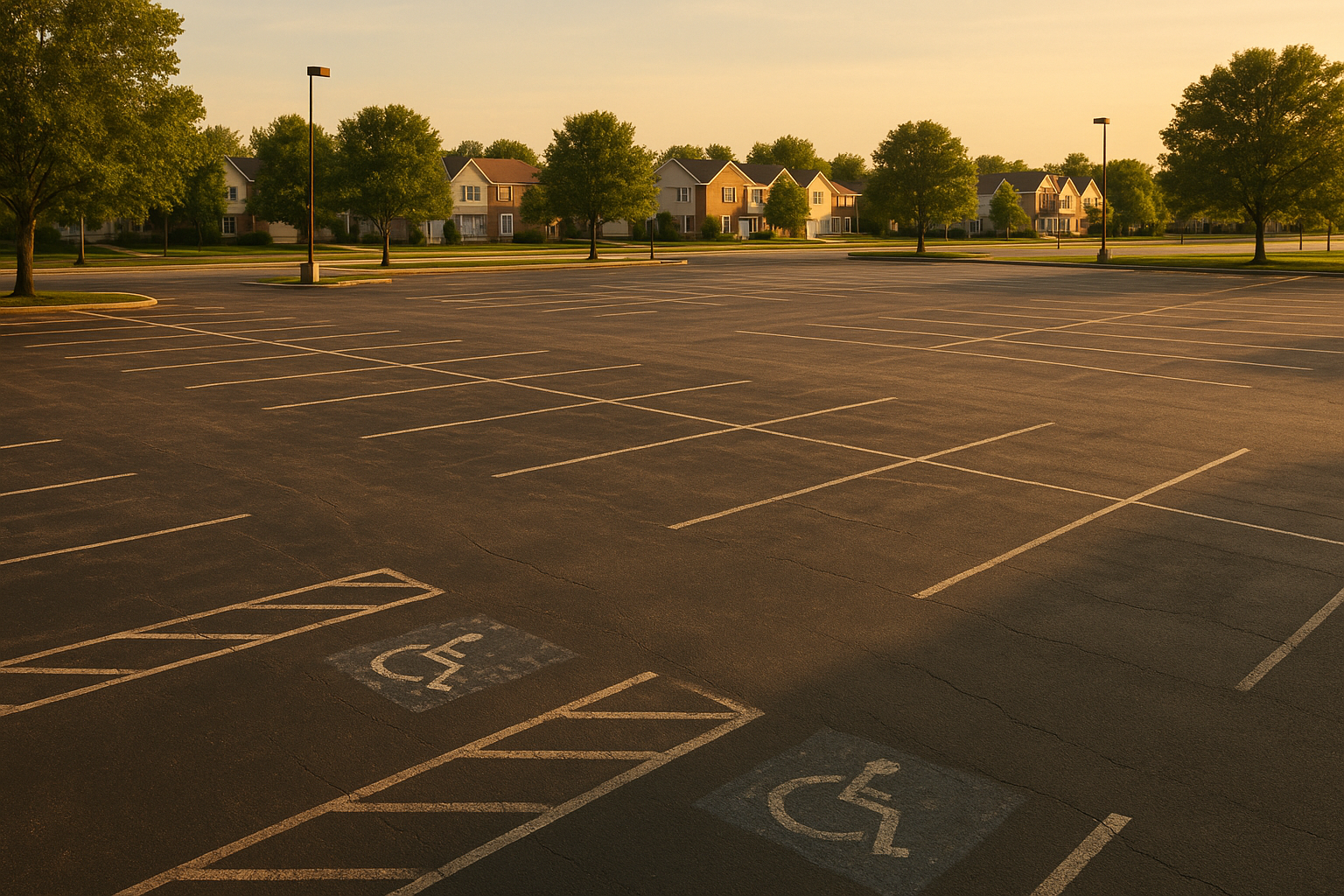
You can't just paint wherever you want. You have to follow ADA rules and fire codes. Accessible parking spaces and routes must stay clear. We measure the width of access aisles and make sure the slope is right. If your pickup zone is near an accessible route, we'll stripe cross-hatching to keep cars from blocking it. Fire lanes and curbs need their own markings. In Indianapolis, fire lane requirements vary by jurisdiction, so we coordinate with your local fire marshal. Typically, fire lanes get red curbs or red stripes with "No Parking Fire Lane" stencils. We've done projects in Greenwood and Avon where the fire chief came out to inspect after we finished. It's better to get it right the first time.
Parking lot signage Indianapolis also matters. You need signs that say "Curbside Pickup" or "Pickup Parking Only" with the right size and reflectivity. We can install sign posts, often with weighted bases so they don't need concrete if you're renting. We also do MUTCD style pavement markings, which means the arrows, legends, and colors follow national standards. That keeps things consistent and legal.
A common question: what's the difference between a loading zone and curbside pickup? Loading zones are for trucks unloading goods, usually with a time limit and often near a back door. Curbside pickup is for customers in cars waiting for an employee to bring out their order. You don't want those mixed. We've seen lots where delivery trucks parked in pickup stalls, blocking customers. Clear markings solve that.
Maintenance: Don't Let Your Striping Fade Away
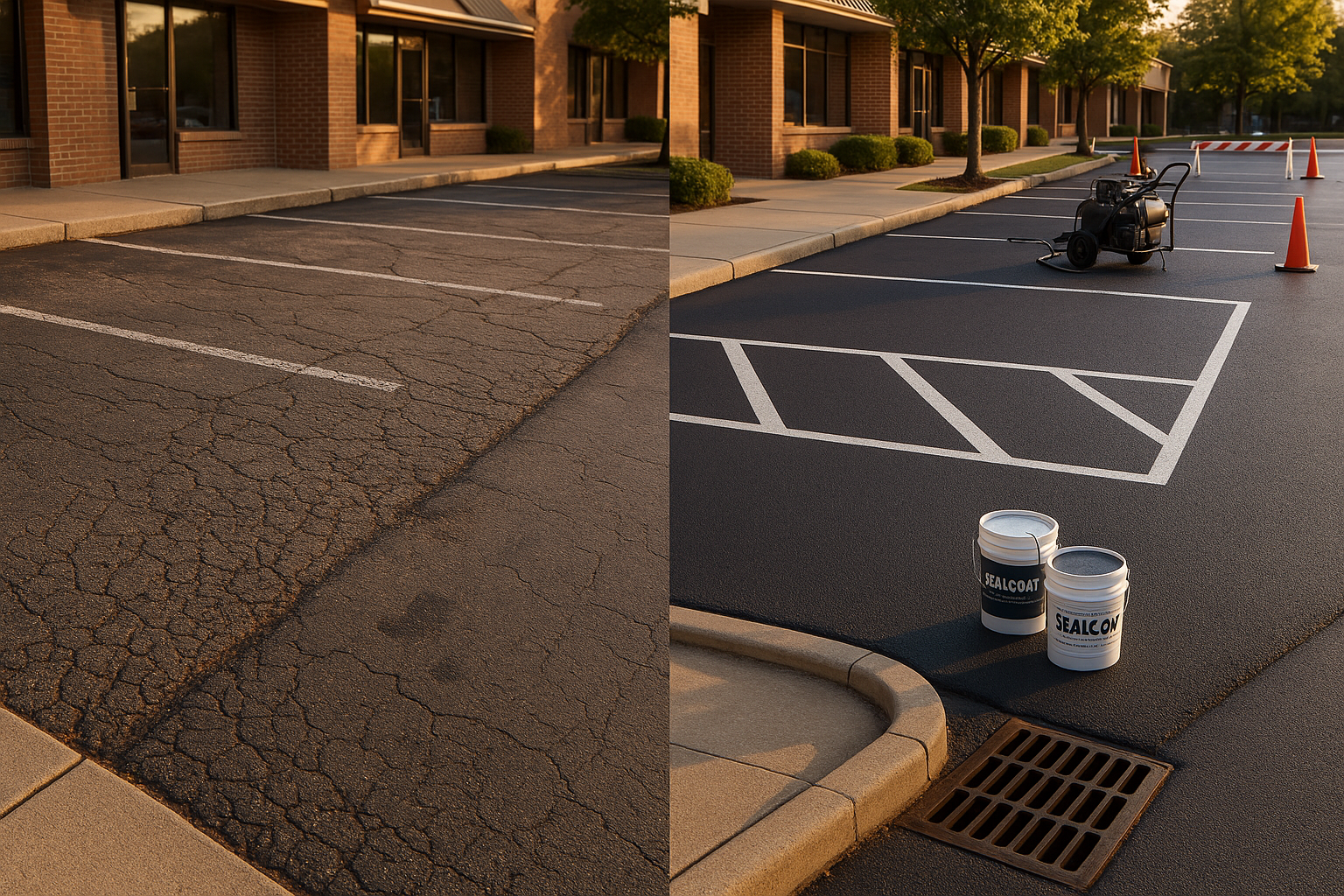
Pavement markings are not permanent. In Central Indiana, we typically recommend repainting every 12 to 24 months, depending on traffic and snowplow wear. After winter, we inspect for faded lines, cracked paint, and shifted signs. The freeze-thaw cycle can cause paint to peel, especially if the asphalt has cracks. That's why we also recommend sealing cracks before striping. If you're planning for fall, check out our fall parking lot checklist for tips on getting your lot ready for winter. And if you have cracks, our article on cold weather crack sealing explains the best time to fix them.
A good striping maintenance schedule saves money in the long run. It's cheaper to repaint before the old lines are completely gone. And it keeps your lot looking professional. Customers notice when markings are faded. It makes the store look run-down. Fresh paint says you care.
Get a Free On-Site Layout Review
If your lot is in Indianapolis, Carmel, Fishers, Zionsville, Westfield, Noblesville, Greenwood, Brownsburg, Avon, or Plainfield, give us a call. We'll come out, do a site walk, measure, and talk about your pickup volume and traffic flow. We'll draw up a plan and give you a clear, itemized quote. No surprises. We'll spell out the line counts, stencil list, colors, materials, phasing, and traffic control. If you need off-hours striping, we can do that. We've worked on lots near Keystone at the Crossing, US-31, and SR-135 in Greenwood.
The best time to plan is now, especially before the holiday rush or Indy 500 week. Book early so we can get you on the schedule. Have a site plan or even a few photos from your phone? Upload them when you request a quote. Our form is at the link, and you can pick times that work for you. We'll confirm and come out.
Don't let your curbside pickup turn into a daily headache. A few well-placed lines and numbers can make all the difference. Let's get your lot ready for the next wave of orders.
Ready for a free lot assessment?
We walk the lot, photograph the problems, and hand you a written plan — no pressure, no obligation.