Last October, a guy in Fishers called me after three other paving companies told him his driveway sealcoating job was a no-go. "But it was 68 degrees yesterday!" he said. He wasn't wrong. The problem was the overnight low. It dipped to 38, and the driveway never got above 45 the morning he wanted it done. We didn't turn him away—we just told him the truth: if the next three days held above 50 overnight, we could squeeze it in. It didn't, so we scheduled him for the first warm stretch in spring. That's how the end of paving season really works.
The Calendar Doesn't Decide—Conditions Do
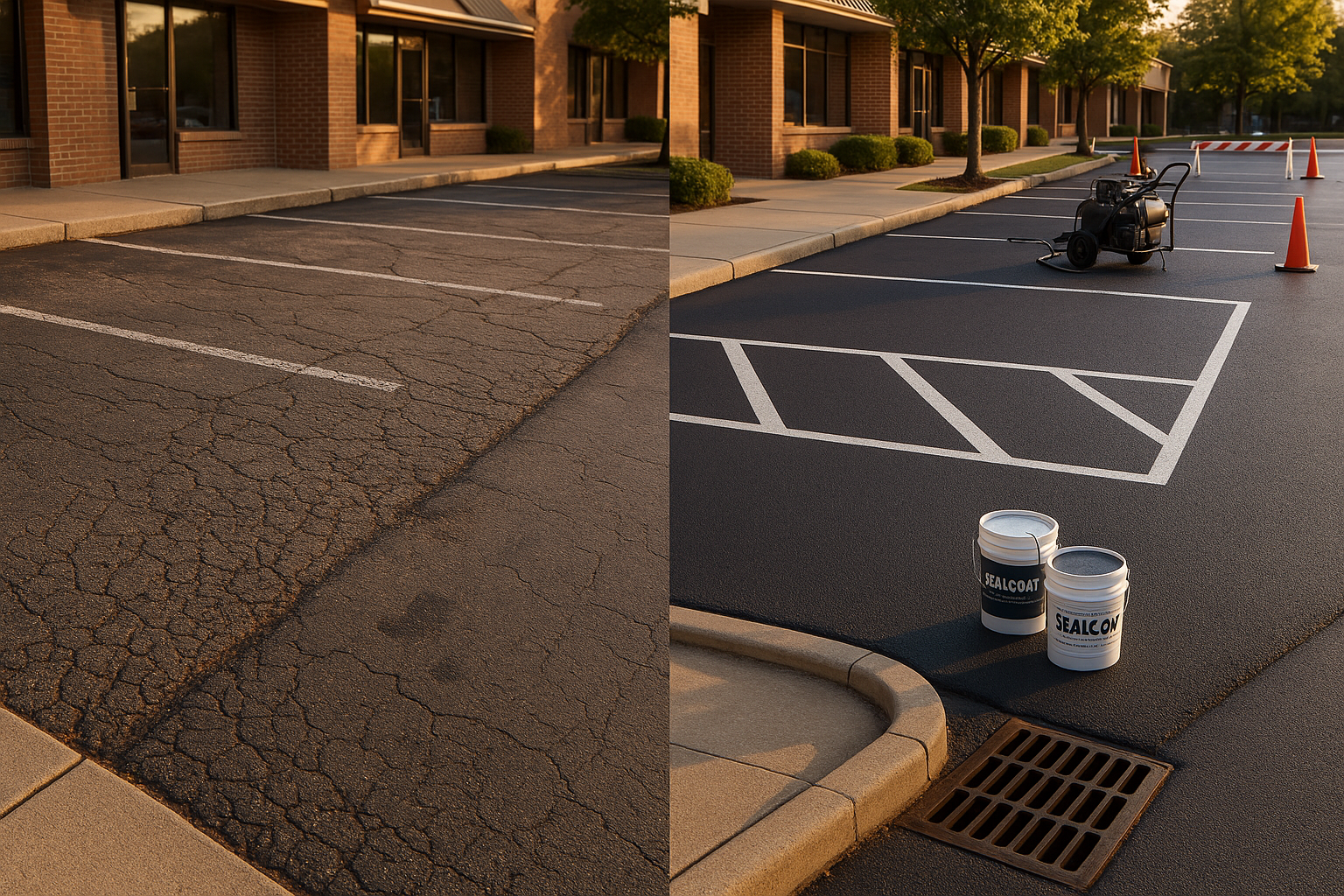
A lot of folks ask, "When does paving season end in Indiana?" They want a date. But we've never seen a calendar that knows what an Indianapolis driveway feels like at 7 a.m. in late October. We watch pavement surface temperature, overnight lows, humidity, and dew point more than the month on the wall. Sealcoating needs sustained warmth. The sealer has to cure, and if it gets too cold or too damp, it won't bond right. That's what causes streaking or a sticky mess that looks bad and lasts half as long.
For most of our work in Indianapolis, Carmel, Fishers, Zionsville, Westfield, Noblesville, Greenwood, Brownsburg, Avon, and Plainfield, we look for daytime highs between 55 and 90°F. The pavement surface itself needs to stay above 50°F during application and for at least 24 hours after. Overnight lows really matter—we want them above about 40 to 45°F for a couple nights in a row. If the asphalt can't hold that heat, the sealer won't cure.
What Our Crews Watch For This Time of Year
Shorter days and heavy morning dew are the big enemies of late-season sealcoating. In Central Indiana, especially under mature oaks and maples, a driveway might not hit 50°F until noon and then cools off fast after sunset. Some neighborhoods—like north-facing slopes in Carmel or tree-lined streets in Meridian-Kessler—stay cooler than open lots in Greenwood or Avon. We check the multi-day forecast, not just the application day. If the dew point is within a few degrees of the surface temp, we skip it. Too much moisture in the air slows the cure and can ruin the film.
Leaf fall adds another layer. We spend extra time blowing and sweeping before we even think about spraying. A single leaf stuck in fresh sealer leaves a bare spot that water can get into. Then a freeze-thaw cycle pops it loose and you're left with a pothole by February. That's why we plan leaf cleanup into every fall job.
So Should You Sealcoat Now or Wait?
This is the question we hear most during the end of paving season. Honestly, it depends on your property and the forecast. A south-facing driveway with no shade might be fine next week. A shaded lot behind a commercial building in Brownsburg might already be too cold for a full sealcoat. We don't gamble with your money or our reputation. If the weather window looks tight, we'll tell you straight up: hold off, but let's do crack sealing and patching now, then sealcoat in spring.
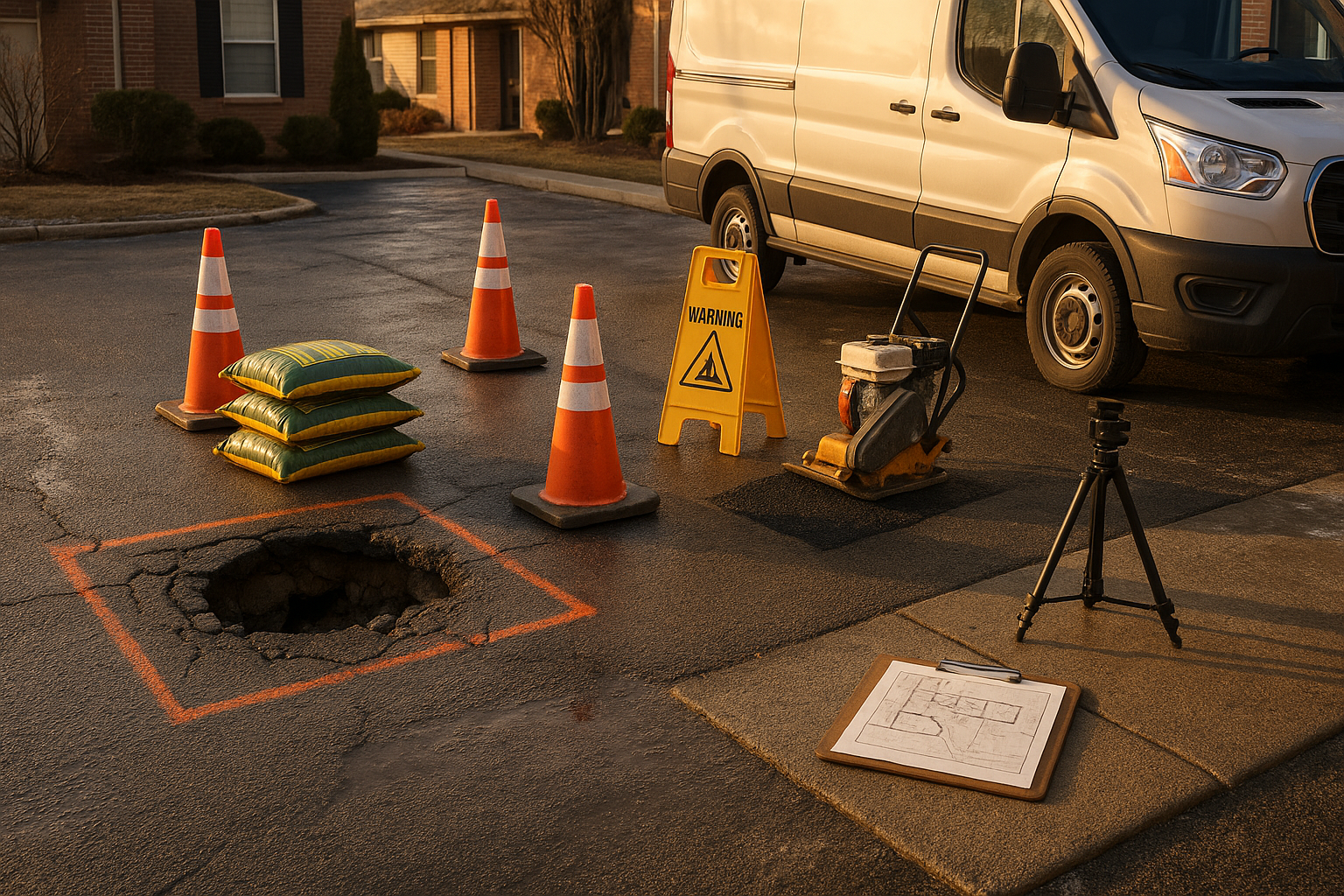
Crack sealing before winter is one of the smartest moves you can make. It stops water from getting into the base, which is what causes most freeze-thaw damage in Marion County. We can still do crack filling and pothole repairs when it's too cold for sealcoating. The materials we use for crack sealing cure fine in cooler temps. So even if the sealcoating ship has sailed, you can still protect your pavement from a rough winter.
What We Can Still Do When It's Too Cold for Sealcoating
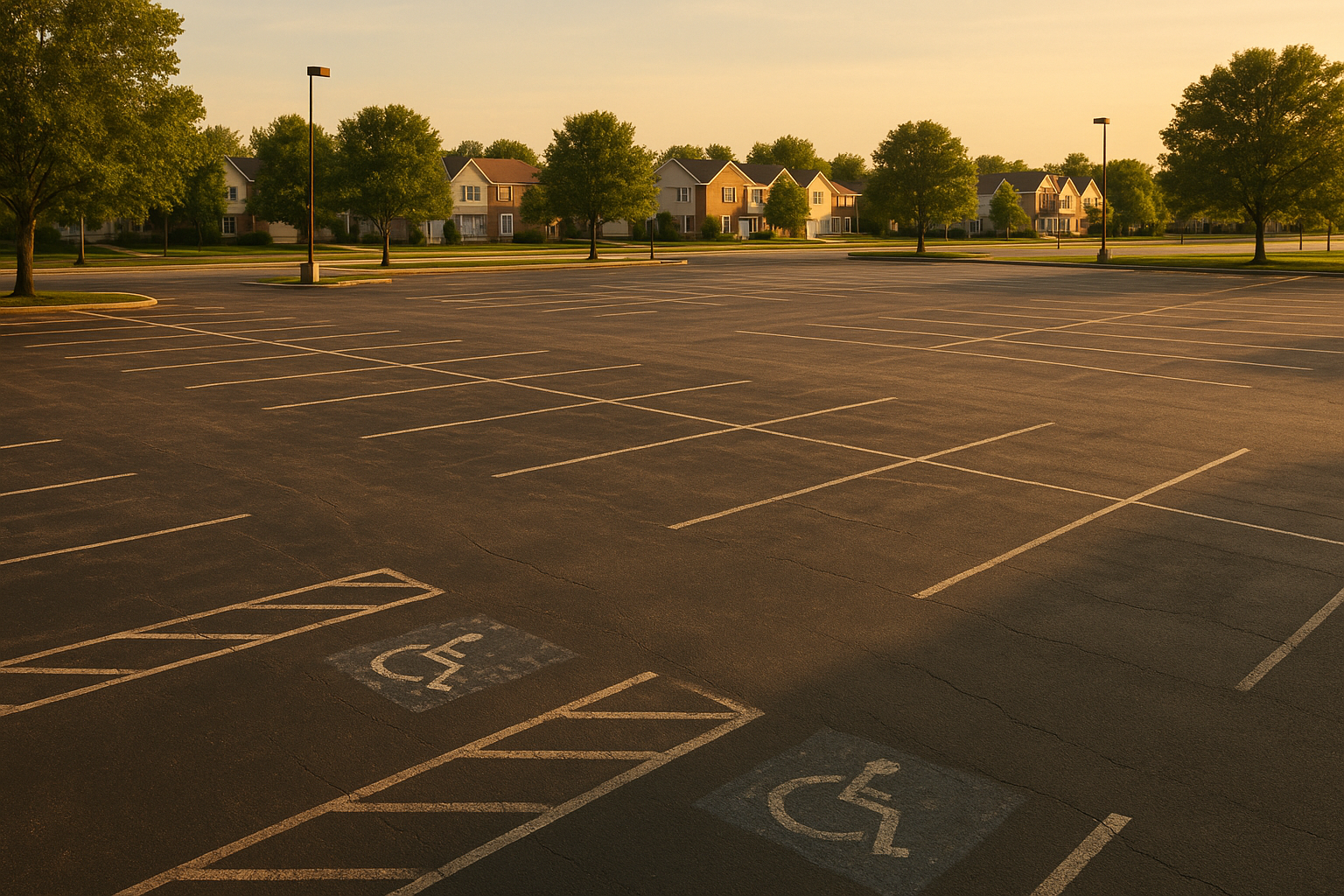
If overnight lows dip into the 30s and stay there, we shift to repairs. Crack sealing, patching, and sometimes line striping (if the paint can cure) are still on the table. For commercial lots, we can phase the work to keep access open during shorter daylight hours. A restaurant or retail lot in Fishers doesn't want to close down for a whole day, so we'll do a section at a time. That's part of the parking lot maintenance fall routine for businesses.
Asphalt cure time fall is slower, so if you need a patch or a small overlay, we account for that. We won't rush it. Pushing a job through cold weather to get it off the books almost always leads to callbacks and ugly results.
Prepping for Spring: Lock In Your Slot
Here's the thing: spring schedules fill fast. Right now, we're booking assessments for both the last warm weeks of fall and the first good weather in March and April. If you wait until April to call, you might be looking at a June sealcoat. That's not a problem if you don't mind the wait, but if you want to beat the rush, get on our calendar now. We'll do a site walk, give you a written scope, and hold your price until spring.
For commercial lot sealcoating timing, early spring can be tricky because of rain and lingering cold. We usually don't start until mid-to-late April, depending on how winter goes. Residential driveway sealcoating timing is more flexible, but the same rules apply. If your driveway is in decent shape but needs a fresh coat, spring is the most predictable time.
A Note on Materials and Process
We use premium asphalt emulsion sealer, often polymer-modified, which holds up better in Indiana's freeze-thaw cycles. The polymer adds flexibility so the sealer can expand and contract without cracking. In late-season conditions, we might adjust the mix or apply it a little thinner so it cures faster. But we never cut corners on prep. Crack filling, oil spot priming, and clean edges are non-negotiable. That's what separates a job that looks good at first from one that still looks good in five years.
Why Local Experience Matters
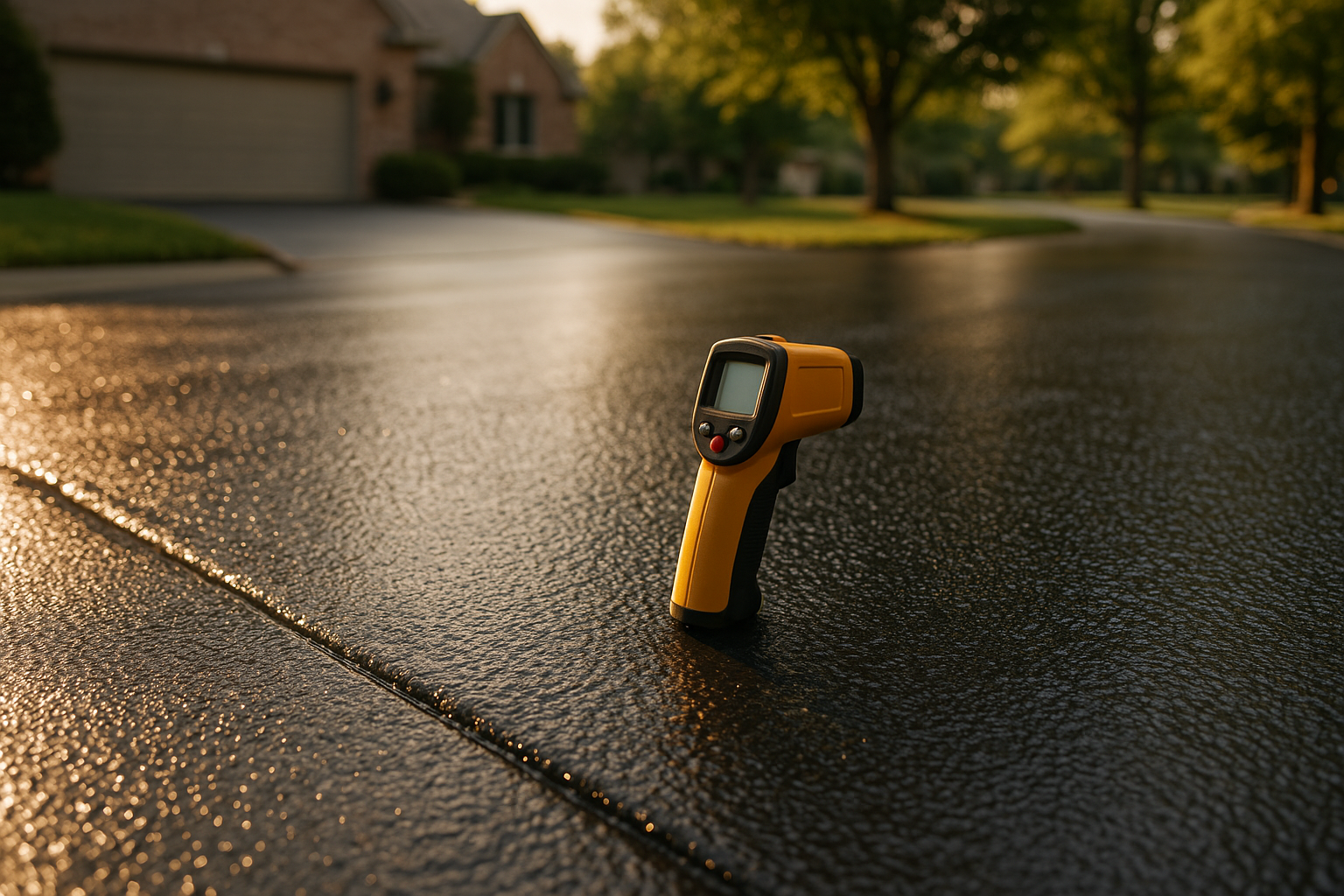
We've been working in Central Indiana long enough to know that a forecast can say one thing and a shaded driveway in Zionsville can feel completely different. We carry infrared thermometers and check surface temps every hour before we start. If a customer in Westfield calls on Monday and says, "Can you sealcoat my driveway Thursday?" the first thing we do is look at the overnight lows, not the afternoon high. That's how you avoid a streaky mess.
Get an Honest Assessment
If you're on the fence about whether to sealcoat now or wait, the best move is to get someone who actually looks at the weather and your property. Not a guy who just wants a check. We'll come out, check the surface temp, look at the shade, and tell you straight: do it this week, or let's set you up for spring. It's free, it's quick, and nobody's going to pressure you. Just request a quote here or give us a call. Let's figure out the right window before winter shows up.
Ready for a free lot assessment?
We walk the lot, photograph the problems, and hand you a written plan — no pressure, no obligation.