A buddy of mine manages a small retail plaza over in Castleton. Last spring he got a nastygram from the fire marshal—three citations, plus a towed car fiasco, all because his fire lane paint had faded to a ghost of its former self. He thought he was saving a few bucks by skipping restriping. Turned into a whole lot of headache. And honestly, I hear this story way too often.
Fire lanes aren’t just red curbs with white letters. They’re a promise that if something bad happens, a 40-ton ladder truck can get where it needs to go. Here in central Indiana, our freeze-thaw cycles, snowplows, and salt eat lane markings faster than you’d think. But getting it right isn’t rocket science—it’s just knowing a few rules and having a solid plan.
What Counts as a Fire Lane Anyway?
A fire lane is any driving path or pull-up area that the fire department says must be kept clear so they can fight a fire. Could be the main drive aisle through a strip mall, the loop in front of a medical office, or the access road behind a big-box store. If a fire engine can’t get through because somebody parked there, that’s a problem. And if the paint is worn off so nobody knows it’s a fire lane, that’s still your problem as the property owner.
The Indianapolis Fire Department enforces this stuff pretty actively—especially in high-traffic spots like Keystone, downtown, or around the hospitals. They look for clear markings, proper signs, and open space around hydrants and FDC connections. Mess it up and you’re not just risking a fine. You’re risking lives.
Indiana’s Rules: IFC 503 and Local Twists
The starting point is the International Fire Code, Section 503—that’s the big book on fire apparatus access roads. Indianapolis and most surrounding towns have adopted it with their own local amendments. So while the core rules are the same, the specifics can shift from city to city. For example, Carmel might want a slightly different stencil wording than Greenwood. That’s why you always want to double-check with the local AHJ—the “authority having jurisdiction,” which around here is usually the township fire marshal or the Indy Fire Prevention Bureau.
Here’s the gist of what most Indiana fire lanes require:
Curb Paint and Stencils
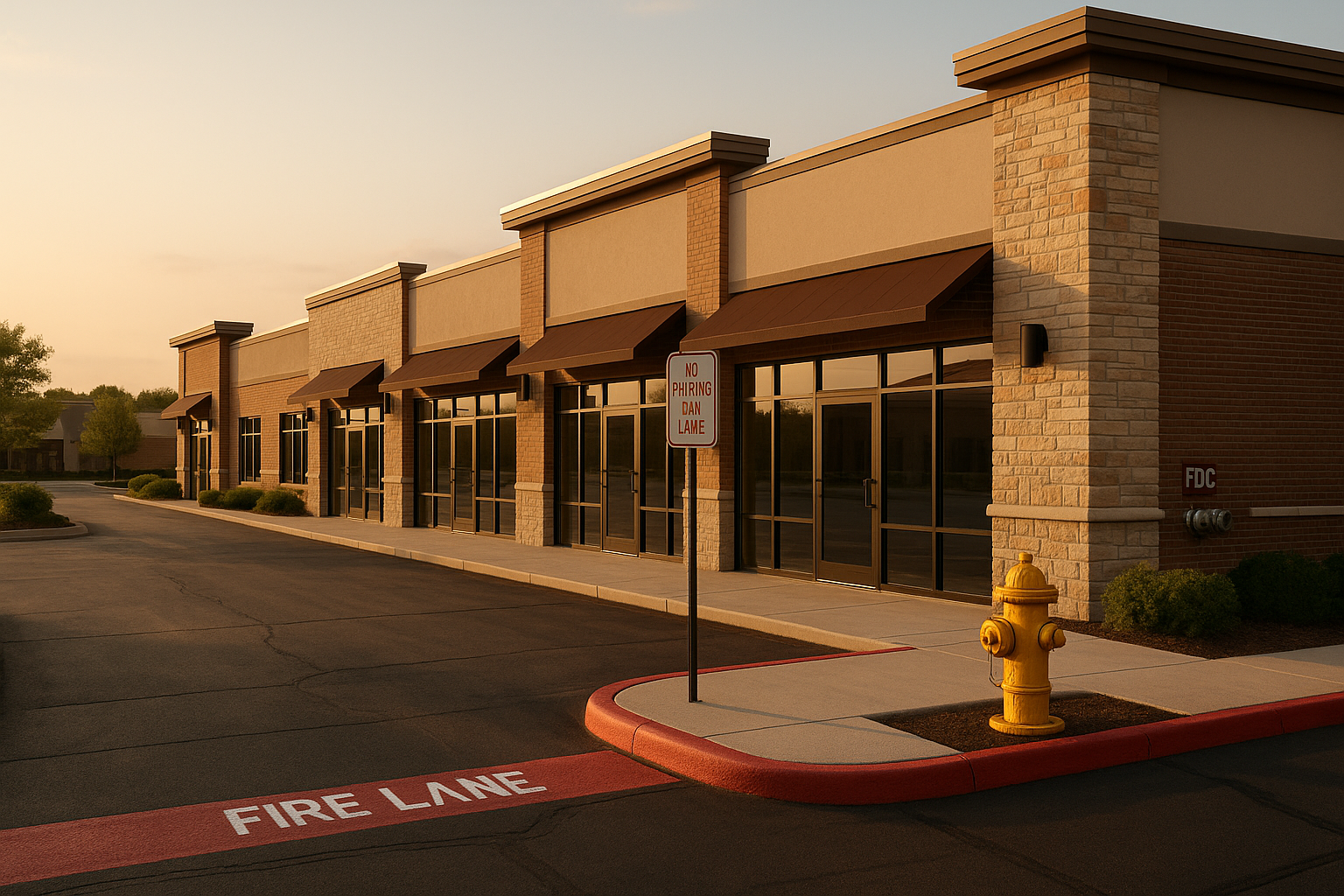
Usually, you’ll see red curbs with white letters that say “FIRE LANE” or “NO PARKING FIRE LANE.” Some towns prefer the letters painted right on the asphalt instead of the curb. The color has to be consistent and high-contrast. Indy generally likes red curbs, but we’ve seen yellow in some older parts of Noblesville. When in doubt, ask the marshal.
Signs: More Than Just a Suggestion
You can’t just paint the curb and call it good. Most codes require signs every so many feet—often 100 feet apart, or at each end of the lane and at turns. They need to say “NO PARKING FIRE LANE” with reflective lettering so drivers can see them at night. Height matters too; too low and a snowbank hides it, too high and it’s out of the normal line of sight.
Getting the Measurements Right
The fire department isn’t driving a Prius. A ladder truck needs at least 20 feet of clear width, sometimes more if it’s a dead-end access road. There’s also a minimum vertical clearance (usually 13 feet 6 inches), a turning radius around 25–30 feet outside, and you can’t have anything parked within 15 feet of a fire hydrant or FDC. Even temporary storage or landscaping can get you in trouble.
Where Do You Put the Fire Lane?
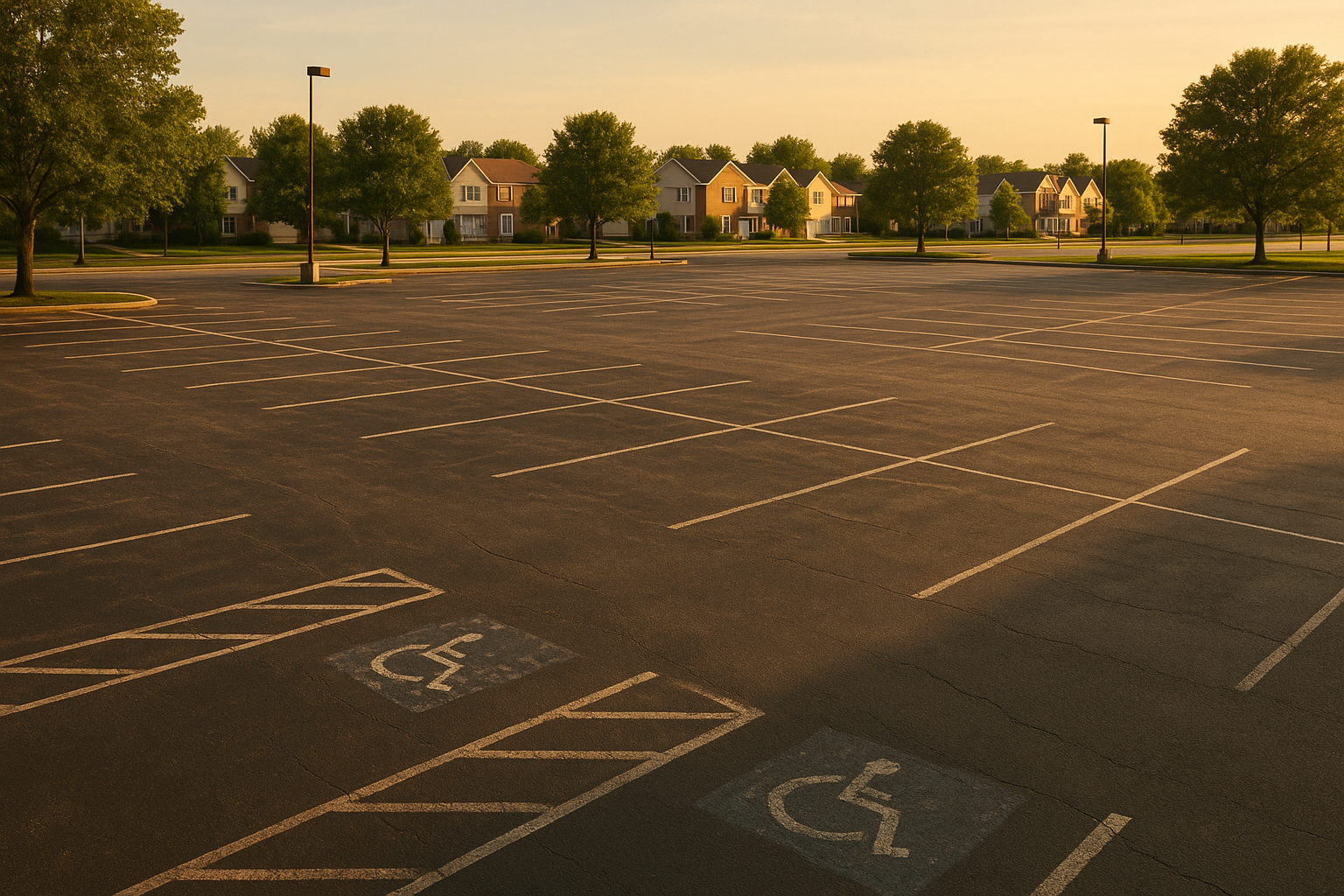
Layout matters a ton. You’re mapping the path a fire engine would take from the street entrance to all sides of each building. That path has to be clear, but it also can’t block ADA parking and ramps. We often see lots where the fire lane cuts right through accessible stalls because nobody thought it through the first time. Then you’ve got a conflict with ADA requirements—and that’s a whole other mess. (We’ve got a guide on ADA parking in Indiana if you need a refresher.)
Picking the Right Paint for Indiana Weather
Our winters chew up cheap paint. Snowplows scrape the surface, salt sits and corrodes, and freeze-thaw cycles pop the paint right off if the prep wasn’t done right. So material choice is huge.
For most fire lanes, we use premium traffic-grade paint with glass beads for reflectivity. The beads make the stripes glow under headlights at night, which is a key safety feature. In really high-wear spots—like the entry to a busy retail lot—thermoplastic might be worth the extra upfront cost. It bonds into the asphalt and holds up longer against plows and salt. But it’s not a magic fix; if the asphalt is crumbling, nothing will stick.
Prepping and Timing the Job
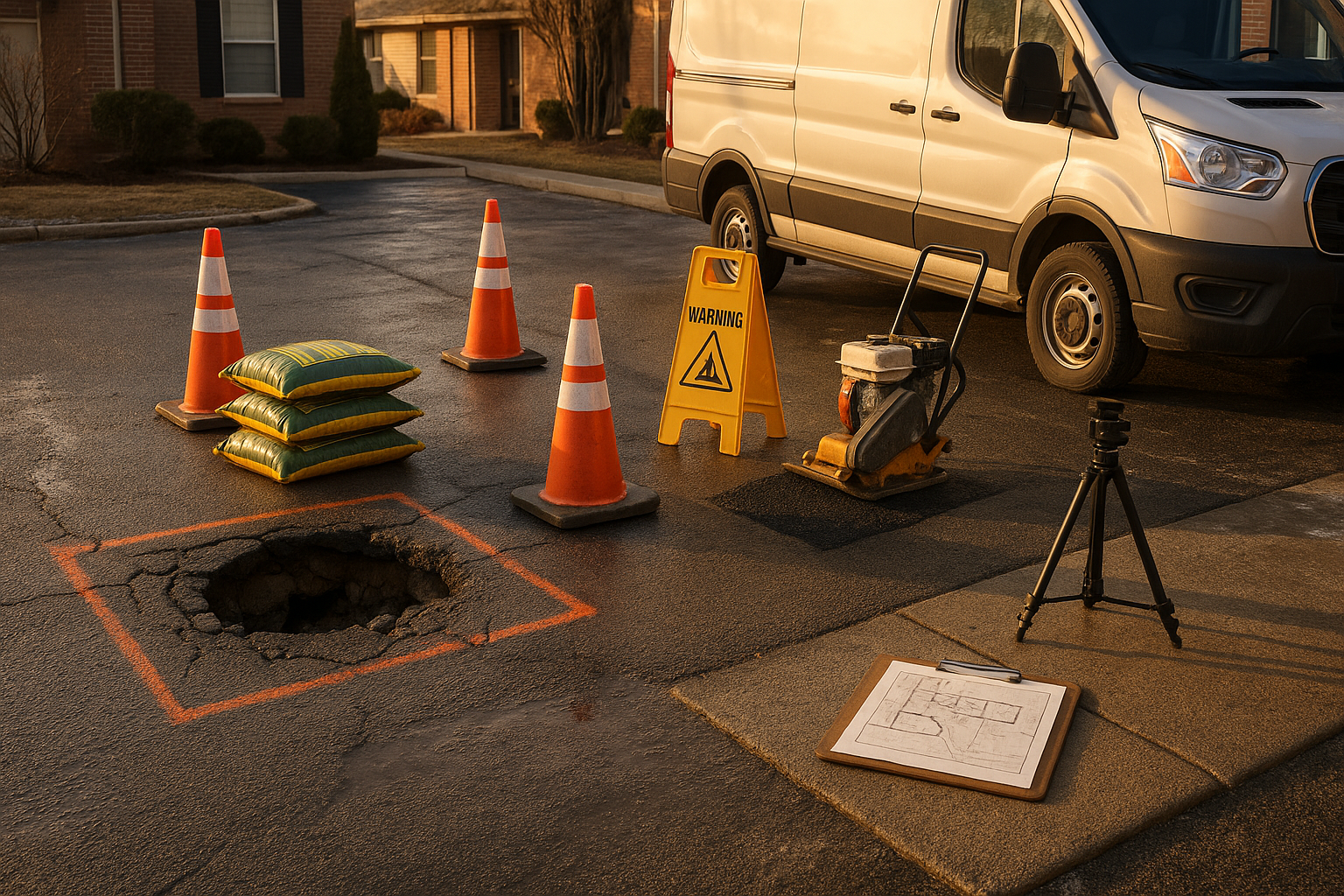
Old, oxidized asphalt or a peeling coat of sealant won’t hold fresh paint. We always clean, degrease, and do any crack filling or patching first. Oils spots from leaky cars are paint-killers. And moisture is the enemy: you need the pavement dry and above about 50°F for the coating to cure right. In central Indiana, that means spring and fall have short windows between rain and dew. Summer is easier, but you might have to work overnight to keep the lot open during business hours—which we do all the time in places like Fishers and Avon.
How Often Should You Repaint?
Plan on inspecting after each winter. Most fire lanes need a fresh coat every 1–3 years, depending on traffic, plow frequency, and sun exposure. If the red has faded to pink and the letters are illegible, it’s time. Keeping a log or photo record helps the fire marshal see you’re on top of it.
Do You Need a Permit?
Sometimes. In Indianapolis, simple restriping of an existing layout usually doesn’t require a permit, but if you’re changing the fire lane route or adding new signage, the fire marshal may want a plan review. It’s always smart to shoot them an email with a sketch ahead of time. That way there are no surprises.
Mistakes We See All the Time
Even well-meaning folks slip up. Here are the big ones:
- Wording that doesn’t match what the local fire code says. “NO PARKING” when they want “NO PARKING FIRE LANE.”
- Signs spaced too far apart, so drivers claim they didn’t see one.
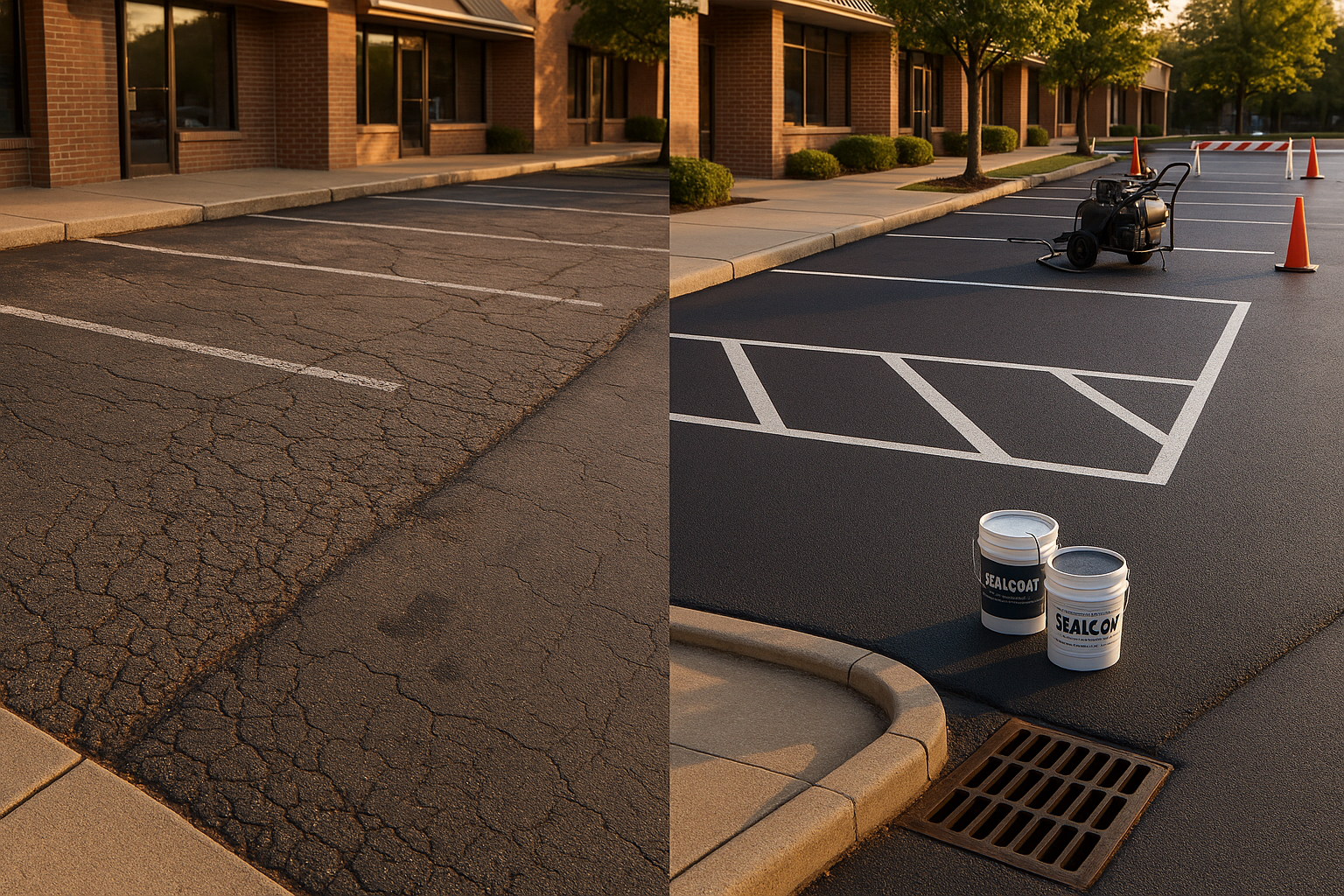
- Painting over cracked or peeling sealcoat—the new paint flakes off by October.
- Blocking the clear space around hydrants or the FDC with striping that directs parking too close.
- Forgetting that speed bumps or bollards in the fire lane can stop a truck cold—those usually aren’t allowed unless specifically designed for emergency access.
How We Tackle Fire Lane Striping
At PavementPros, we start with a site walk. We look at your current markings, measure clearances, snap photos of hydrants and FDCs, and check in with the local fire marshal if the layout is unclear. Then we draw up a scaled plan, spec the right materials for your traffic load and exposure, and schedule the work in phases so you don’t have to shut down.
We handle all the prep: crack sealing, patching, cleaning, and even a fresh sealcoat first if needed. (Check out our parking lot maintenance schedule to see how these jobs fit together.) The painting itself is fast and clean, and we add glass beads at the end for that reflectivity. Then we do a punch list with you and leave you an as-built drawing and material data sheets—handy if the fire marshal ever asks.
If you’re not 100% sure your fire lanes are up to code, let’s talk. We’ll come out and give you a no-pressure compliance check and a clear striping plan. No jargon, no pressure—just a practical way to keep your property safe and ticket-free. Get a free quote and site walk here—we’ll work around your schedule, even if that means at night.
Ready for a free lot assessment?
We walk the lot, photograph the problems, and hand you a written plan — no pressure, no obligation.