Last spring, my neighbor who manages a small retail strip in Greenwood called me, panicked. A customer had tripped over a loose chunk of asphalt in a faded crosswalk, and her insurance adjuster asked for maintenance records. She didn’t have any. No schedule, no log, just a lot of ad-hoc crack filling whenever she remembered. That sinking feeling is avoidable. A simple parking lot maintenance schedule can save you from headaches, liability, and big surprise bills. Here’s what every Indianapolis-area property manager needs to know about keeping their lot safe, compliant, and looking sharp year-round.
Why a Schedule Actually Saves You Money
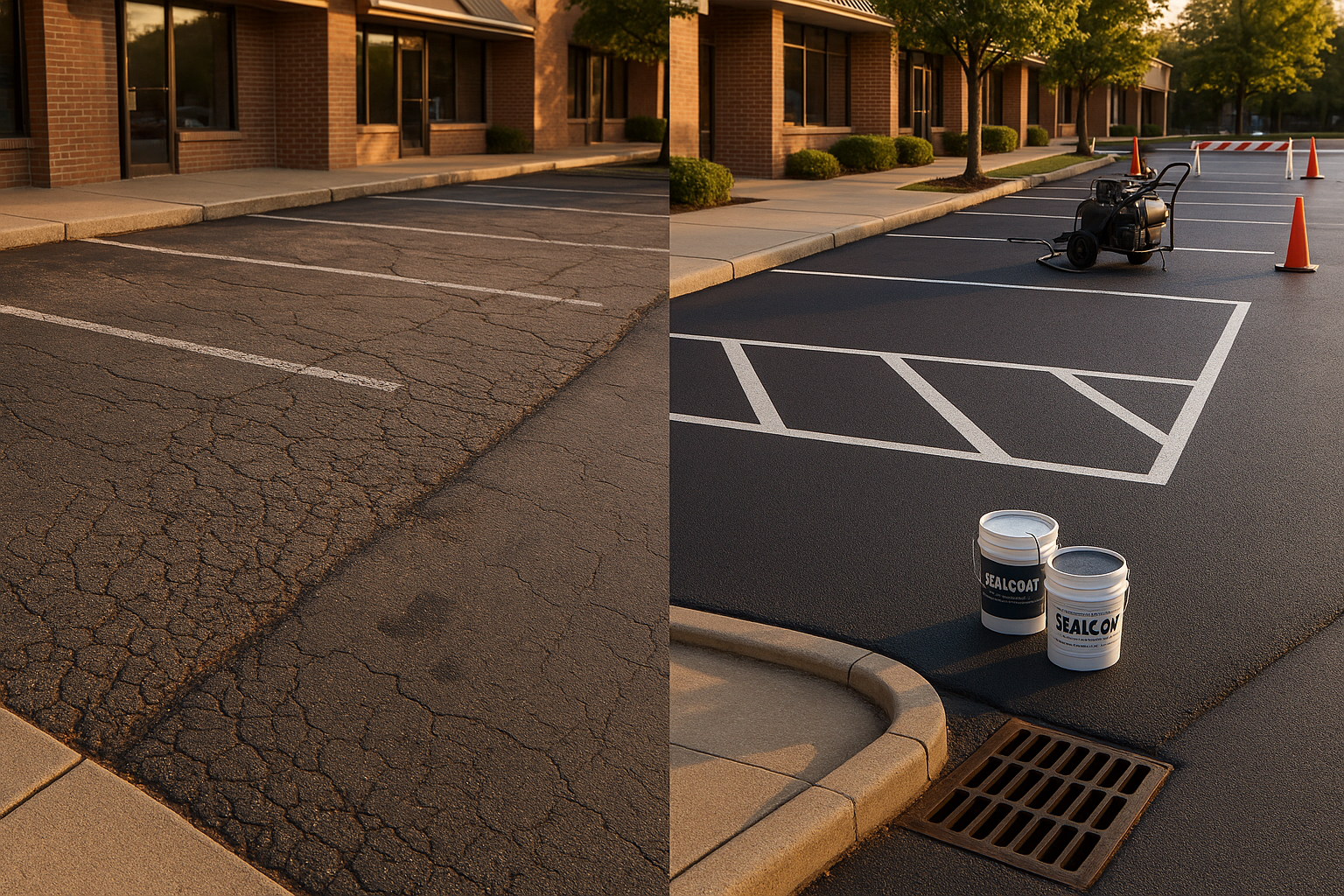
Most folks treat asphalt like it’ll last forever, then panic when a pothole eats someone’s tire. The truth? Reactive repairs cost way more than a steady plan. A sealcoat cycle every three years, for example, blocks water from chewing up the base. Skip it, and you’re looking at full-depth patching down the road. I once talked to a church administrator in Carmel who put off sealcoating for seven years. Their lot ended up needing a $22,000 rebuild—about five times what a regular sealcoat cycle would have run. A parking lot maintenance schedule isn’t just a chore list; it’s a budget safety net.
It also keeps your place looking like a business someone actually cares about. Faded lines and cracked asphalt send a message: “we’re not paying attention.” Curb appeal matters for tenants, customers, and property values.
What Should Be on Your Maintenance Checklist?
Every lot is different, but a solid asphalt maintenance plan covers these basics:
- Sweeping and surface prep: Regular cleaning stops debris from grinding into the asphalt and hides puddles that signal drainage trouble. Before any repair or painting, a good sweep (and blow-off) is non-negotiable.
- Crack sealing: Fill small cracks before they become big ones. Think of it like fixing a windshield chip—ignore it, and one freeze-thaw cycle spreads the damage.
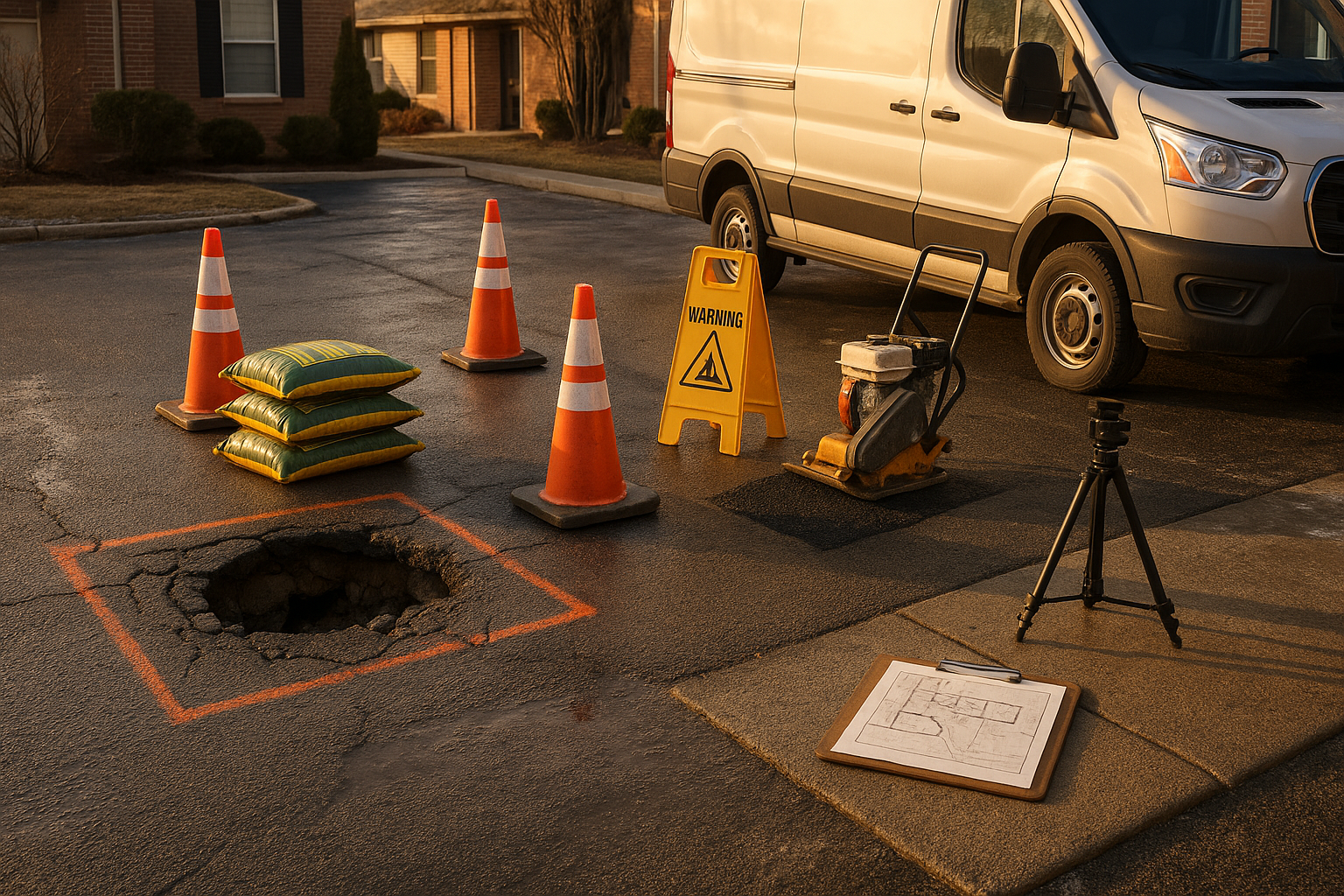
- Pothole and patch repair: Spring is prime time for patching after winter wreaks havoc.
- Sealcoating: Every 2-4 years, depending on traffic and weather. In Indiana, we lean toward the shorter end because of our winters.
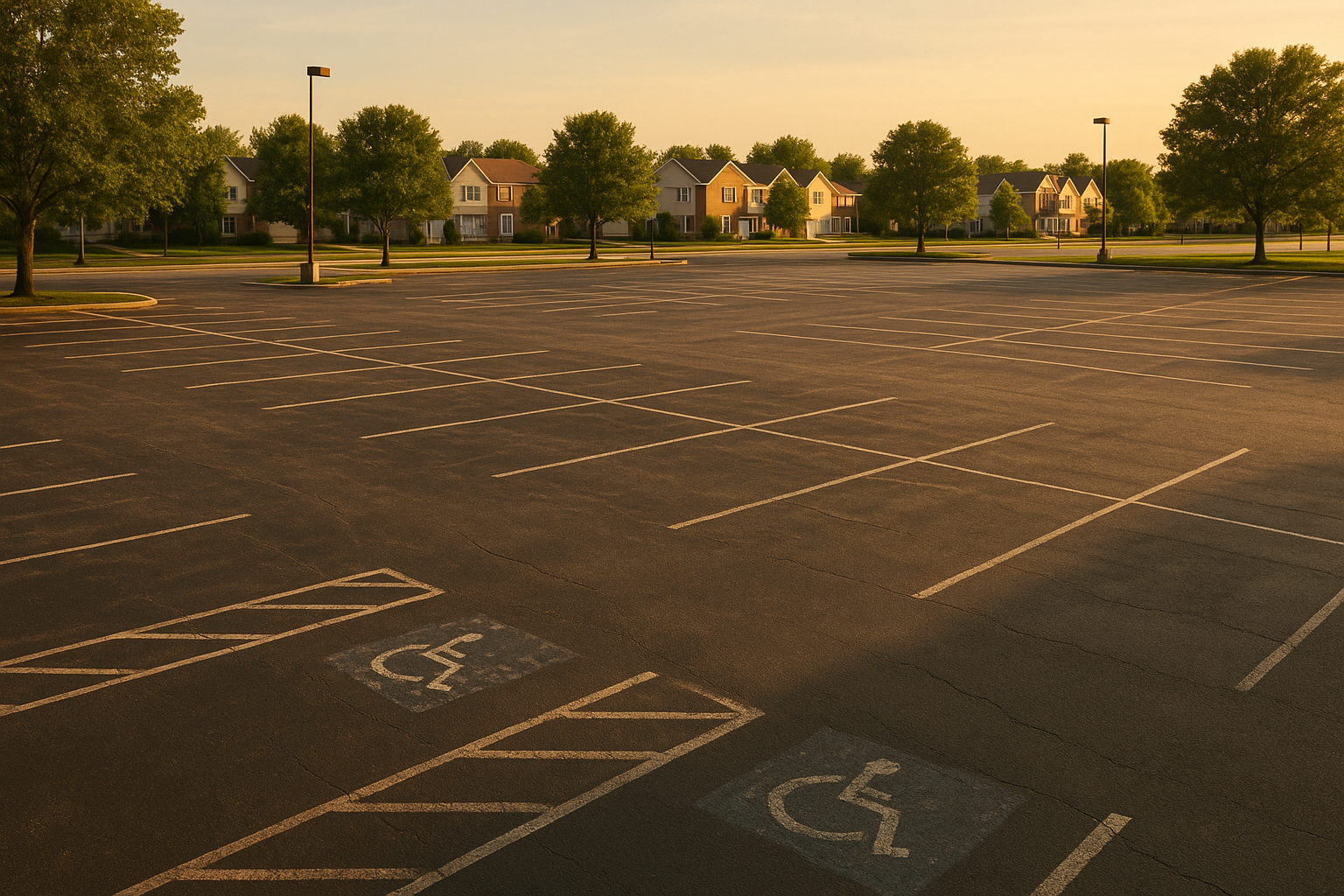
- Restriping and layout: Fresh stripes make the whole lot readable. This is where parking lot restriping frequency gets overlooked—most waterborne paint needs a refresh every 12-24 months, sooner if snow plows are aggressive.
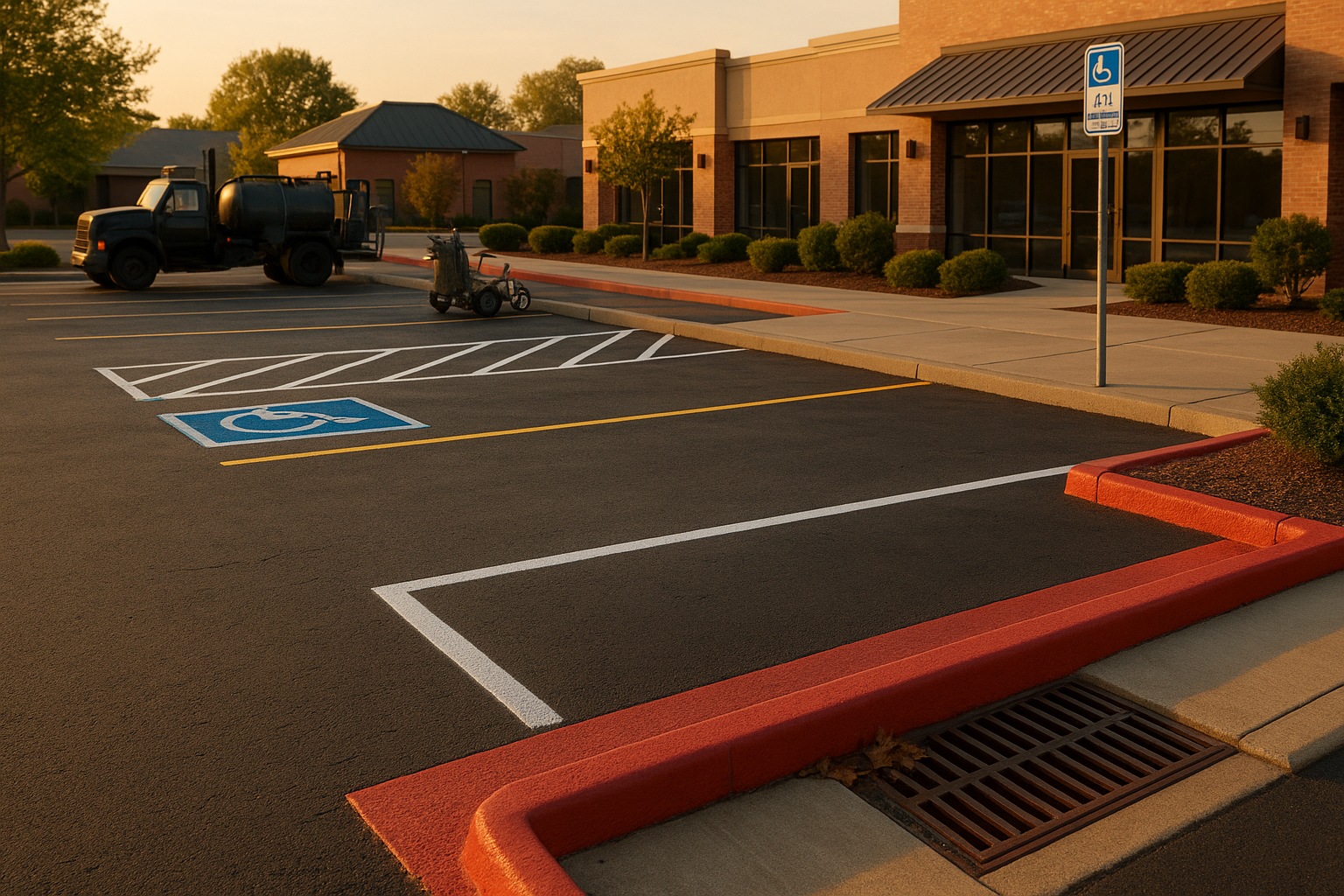
- Signage, wheel stops, and curb paint: Those faded “Reserved” signs and chipped curbs are a liability and an eyesore.
- Drainage checks: Standing water is asphalt’s #1 enemy. Clean out basin grates and make sure water runs off the edges, not puddles in the middle.
Indianapolis Weather: The Silent Stripe Killer
Indiana’s climate plays on hard mode for asphalt. Freeze-thaw cycles, road salt, and snow plow blades all gang up on your lot. Water sneaks into tiny cracks, freezes, expands—repeat a dozen times a winter—and voila, pothole city. That’s why timing your sealcoat right matters so much: you want that sealcoat down before the worst of winter hits, but after the spring rain has dried out.
Snow plow damage to striping is real, too. A steel blade can scrape off cheap paint in one storm. We always ask plow drivers to use rubber edges or plow shoes, and to mark islands with tall poles so they don’t clip curbs. But even then, expect some wear. That’s why we recommend retroreflective glass beads in the paint—they add visibility and a bit of durability. For high-traffic spots like drive-thrus or stop bars, consider upgrading to thermoplastic or MMA markings. They hold up longer under salt and scrapes.
A Seasonal Schedule That Works for Indy Lots
Here’s a rough cadence that matches central Indiana’s quirks:
- Spring (March–April): Walk the whole lot. Note every crack, pothole, and faded area. Patch potholes and fill cracks early, before the April rains saturate the base. Sweep thoroughly.
- Late spring to early summer (May–June): This is the sweet spot for sealcoating and restriping. Temperatures are warm but not scorching, humidity is usually manageable, and the pavement is dry. Do them together: sealcoat first, then paint fresh stripes. Most fast-dry waterborne acrylic can reopen to traffic the same day.
- Summer (July–August): If you need layout upgrades—like adding new stalls or reworking drive lanes—now’s the time. You’ve got long days and predictable weather windows. Phased striping lets you block off sections while others stay open, so businesses don’t shut down.
- Fall (September–October): Touch up any cracks that appeared over summer. A light crack-seal and inspection before winter is cheap insurance. Make sure drains are clear of leaves.
- Winter (November–February): Coordinate with your snow removal crew. Remind them about plow shoes and delicate areas. After storms, check for new damage. Avoid heavy de-icing chemicals near fresh sealcoat or paint.
Striping and Sealcoating: Better Together
I see too many lots where they sealcoated last year and now the lines are half-gone because they didn’t restripe. Sealcoating covers up old markings, so if you don’t redo them, your parking lot looks like a blank slate. Always plan to restripe right after sealcoating—the paint adheres better, and the lot looks brand new. As a rule, parking lot restriping frequency for waterborne acrylic in Indianapolis is about 18 months, but if you sealcoat every three years, you’ll naturally restripe then anyway. High-wear areas near entrances may need a mid-cycle refresh.
Don’t Forget ADA and Fire Lane Compliance
This part makes some managers nervous, but it’s not that complicated. The ADA requires a certain number of accessible spaces, including van-accessible stalls with access aisles, based on your total parking count. The signs and symbols have to be visible and in the right spots. Fire lanes need clear, bright red curbs and lettering. During a layout check, we verify stall counts, measure spaces, and make sure nothing has drifted. If you’re unsure, a quick review can save a fine or a lawsuit. (We’ve helped several schools and medical offices in Fishers and Zionsville get compliant without ripping everything out.) For the full rundown, check our ADA parking guide for Indiana.
Budgeting and Planning Ahead
Surprise capital expenses are the worst. Map out a 3-year parking lot maintenance schedule with predictable line items:
- Year 1: Spring crack sealing and spot repairs; sealcoat and restripe entire lot.
- Year 2: Inspection, minor crack fill, restripe worn areas if needed.
- Year 3: Same as Year 1 (if sealcoat interval is 3 years).
This spreads costs evenly and avoids the “we have to do everything right now” panic. For a rough idea of line-item costs, see our striping cost breakdown. Having a plan also makes it easier to get owner approval—you’re showing you’re proactive, not reactive.
Getting Started Without the Hassle
I hear the same worries over and over: “We can’t shut down during business hours,” “Indiana weather will delay everything,” “Snow plows will just scrape the paint off anyway.” All valid, but fixable. Phase the work. Use fast-dry materials. Communicate with plow crews. We’ve handled lots in Broad Ripple and downtown Indy where the only window was 2:00–5:00 a.m.—it’s doable.
If you’re ready to get a real plan for your lot, we do quick on-site assessments. We’ll walk your property, document what’s needed, and layout a maintenance schedule that fits your budget, your tenants, and Indiana’s seasonal curveballs. No pushy sales, just straight talk. Grab a time for a free walk-through here.
Ready for a free lot assessment?
We walk the lot, photograph the problems, and hand you a written plan — no pressure, no obligation.