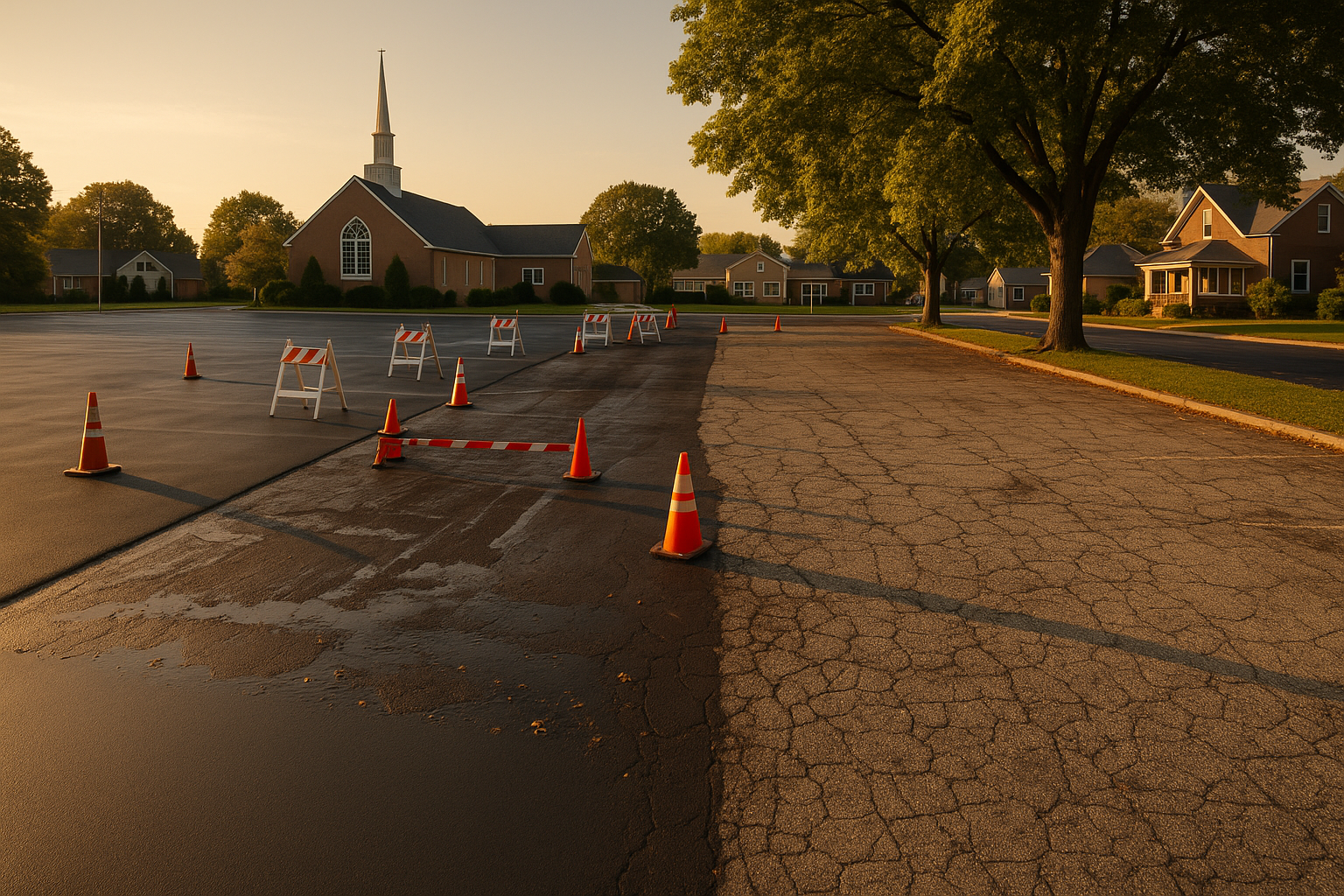
Last fall, a church over in Broad Ripple called us in a panic. They had a big community picnic coming up, and their parking lot was looking rough — faded, cracked, patches everywhere. They'd scheduled sealcoating with another company for late October, right after the leaves dropped. Sounded fine on paper. Then the Ohio Valley weather did its thing: a cold front swept in, nighttime temps dipped into the 40s, and a surprise drizzle hung around for two days. The sealer never cured. It tracked onto the sanctuary carpet, gummed up tires, and the lot looked patchy and uneven. The picnic happened, sure, but instead of a fresh black matte surface, they had a blotchy mess and a lot of frustrated volunteers scrubbing floors.
The problem? Timing. Right here in Central Indiana, when you sealcoat matters just as much as how you do it. Get the season wrong, and you might be watching money wash away. Get it right, and you buy years of life for your asphalt. So let's talk about when to sealcoat a parking lot — not just a calendar answer, but how to pick the right window for your property, whether you're managing a busy retail strip in Fishers, a school lot in Noblesville, or a church over in Zionsville.
Why Sealcoating Needs the Right Weather (Especially in Indianapolis)
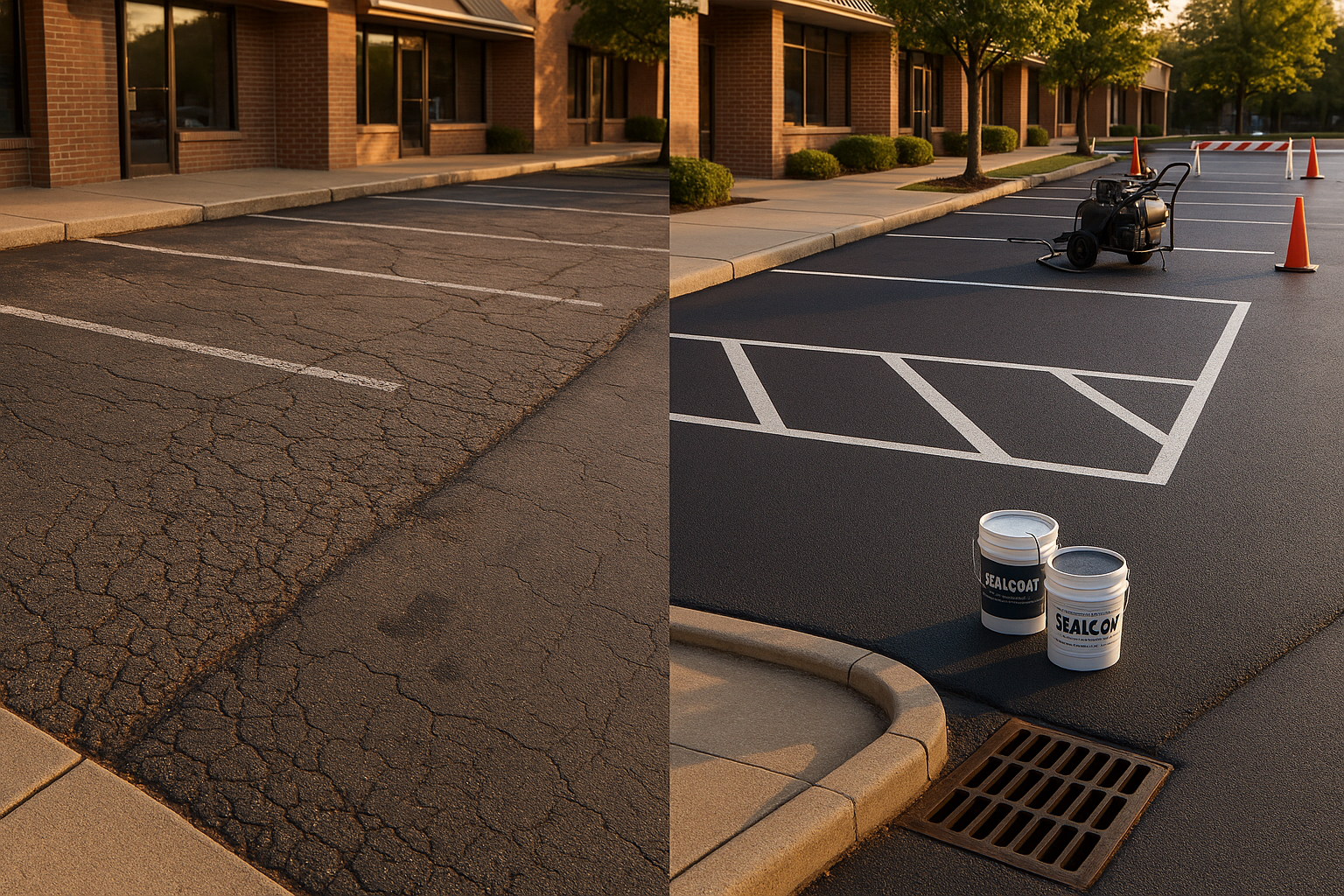
Sealcoating is basically sunscreen for your asphalt. It blocks UV rays that oxidize the binder, keeps water from sneaking into cracks, and fends off the oil drips and de-icing salts that chew up surfaces. But it's not a pour-and-go deal. The sealer needs warm, dry conditions to bond and cure. That's why the prime window around here runs from about May through September. Daytime highs should be between 60° and 90°F, and overnight temps shouldn't dip below 50°F. Humidity matters too — if the air is thick (hello, Indiana August mornings), the water in the sealer can't evaporate fast enough, and you end up with a sticky mess that takes forever to dry.
The old-timers say Central Indiana gets two seasons: winter and construction. And there's truth to that. Our freeze-thaw cycles are brutal. All winter, water seeps into tiny cracks, freezes and expands, then thaws and leaves bigger gaps. Come spring, those cracks are roadmaps for potholes. (We've got a whole post on why potholes form in Indiana if you want the gritty details.) So sealcoating isn't just about looks — it's about timing the protection before the damage sets in. That's why many property managers in Carmel and Westfield ask us when to sealcoat a parking lot — they want that shield up before the snowplows start scraping.
But What If You Missed the Summer Window?
You might be reading this in August and thinking, "Uh-oh, am I too late?" Not necessarily, but you're pushing it. September can still work, especially if we're having a warm, dry fall. The key is to watch the 10-day forecast like a hawk. One of our guys in Greenwood told me about a shopping center he worked on last September — they squeaked it in during a warm spell, but the north-facing side of the lot (shaded by a big stand of maples) stayed tacky an extra day. So he held off restriping that section until it was bone-dry. That's the kind of detail that matters.
Once October hits, it's a gamble. Nighttime temps can plummet, and those pop-up rain showers become more frequent. Even if the sealer looks dry on top, the underneath might still be curing. If a heavy rain hits within 24 hours, you can get washouts or thin spots. And then there's leaf debris. Nothing ruins a smooth sealcoat like wet, colorful leaves plastered onto fresh sealer. So if you're asking, "Can I sealcoat in fall?" — the honest answer: maybe, but don't bet your budget on it.
How Often Should You Really Sealcoat?
So you know the season, but how often do you actually need to pull the trigger? For a typical commercial parking lot in Indianapolis, the sweet spot is every 2 to 3 years. But that varies. A high-traffic retail lot — like the strip malls along 86th Street or around Castleton — might need it every 2 years because of constant turning vehicles and heavier loads. A church or office lot with mostly Sunday or weekday traffic can often stretch to 3 years. Even then, keep an eye on the surface. When you start seeing the grayish hue of oxidized asphalt, or when water soaks in instead of beading up, it's telling you the sealcoat has worn away. That's another way to know when to sealcoat a parking lot — your lot will literally tell you. (We dug deeper into sealcoat frequency for commercial lots in another post, if you want the nerdy breakdown.)
And here's a question we get from newer property managers: "We just paved the lot last year — can we sealcoat now?" Don't rush it. New asphalt needs time to cure, usually 6 to 12 months. The oils in the fresh mix have to off-gas first. If you seal too soon, you trap those oils, and the surface can get soft or peel. A good test: sprinkle water on it. If the water beads up and takes a while to darken the pavement, it's still oily. When it soaks in quickly, you're good to go.
Planning Your Sealcoat Project Without Shutting Down
The biggest objection we hear? "We can't close the whole lot!" And you don't have to. Phased sealcoating is the norm for us. We'll split your lot into A and B sections — sometimes C if it's big — so tenants, customers, or parishioners always have a place to park. Nights and weekends work great for businesses and schools. We've done Friday-night-to-Sunday-afternoon jobs for churches all over Indianapolis, and the lot is ready for Sunday services. For a 24-hour gym or grocery store? We might start at 9 p.m. and wrap by morning, then cone off the sealed section until it's cured.
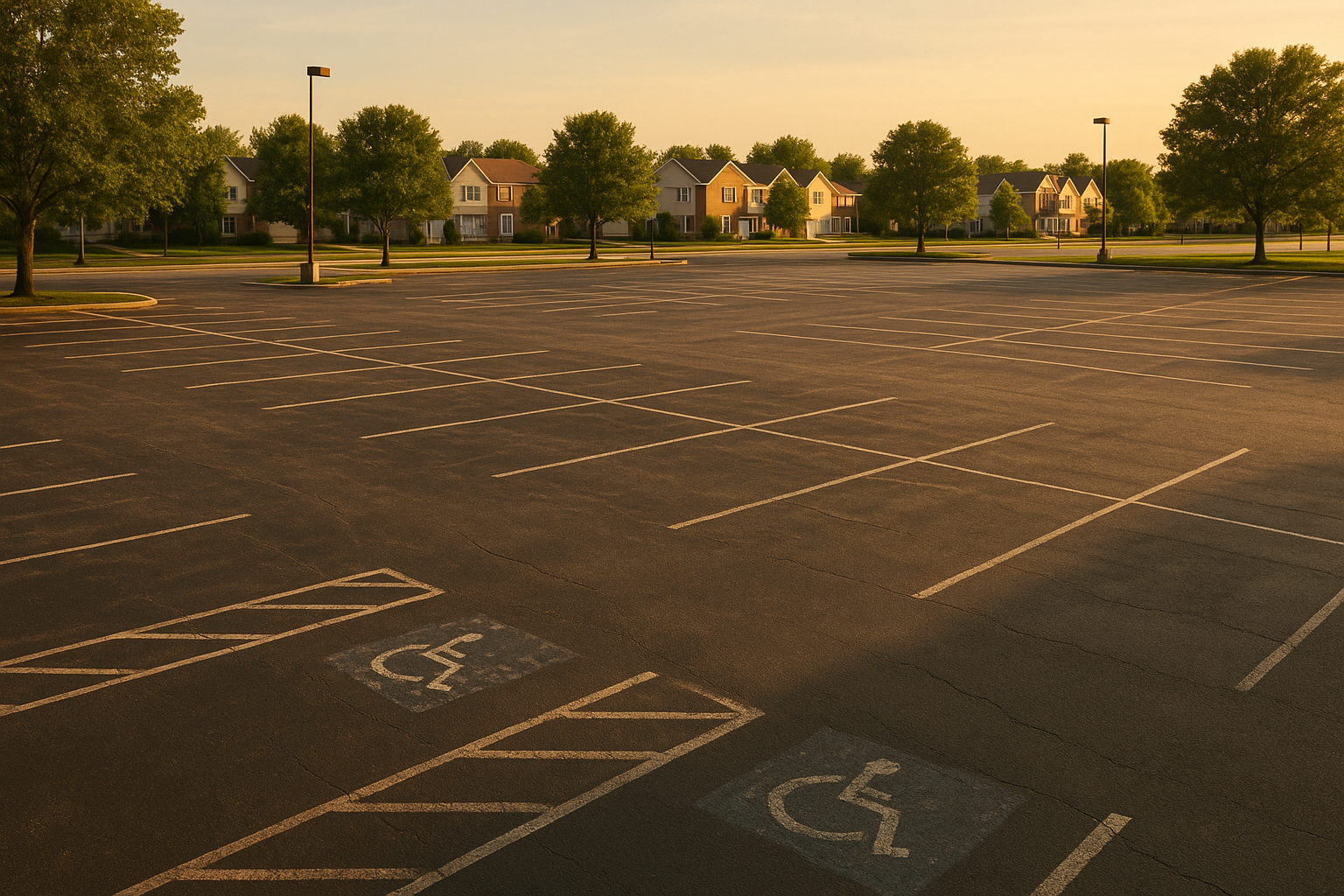
Cure time matters for striping, too. You can't paint fresh lines on a tacky surface. After the last coat of sealer, you typically need 24 hours before light foot traffic and car traffic, and 36 to 72 hours before heavy trucks or dumpsters. We usually wait until the sealer is fully cured — no dark transfer on a shoe or tire — before we lay down new lines. That's when we refresh ADA stalls, fire lanes, and directional arrows. Actually, combining sealcoating and restriping is a smart move because you're already disrupting the lot; might as well make everything crisp and compliant in one go. (Check out our parking lot striping cost breakdown if you're curious about what that part runs.)
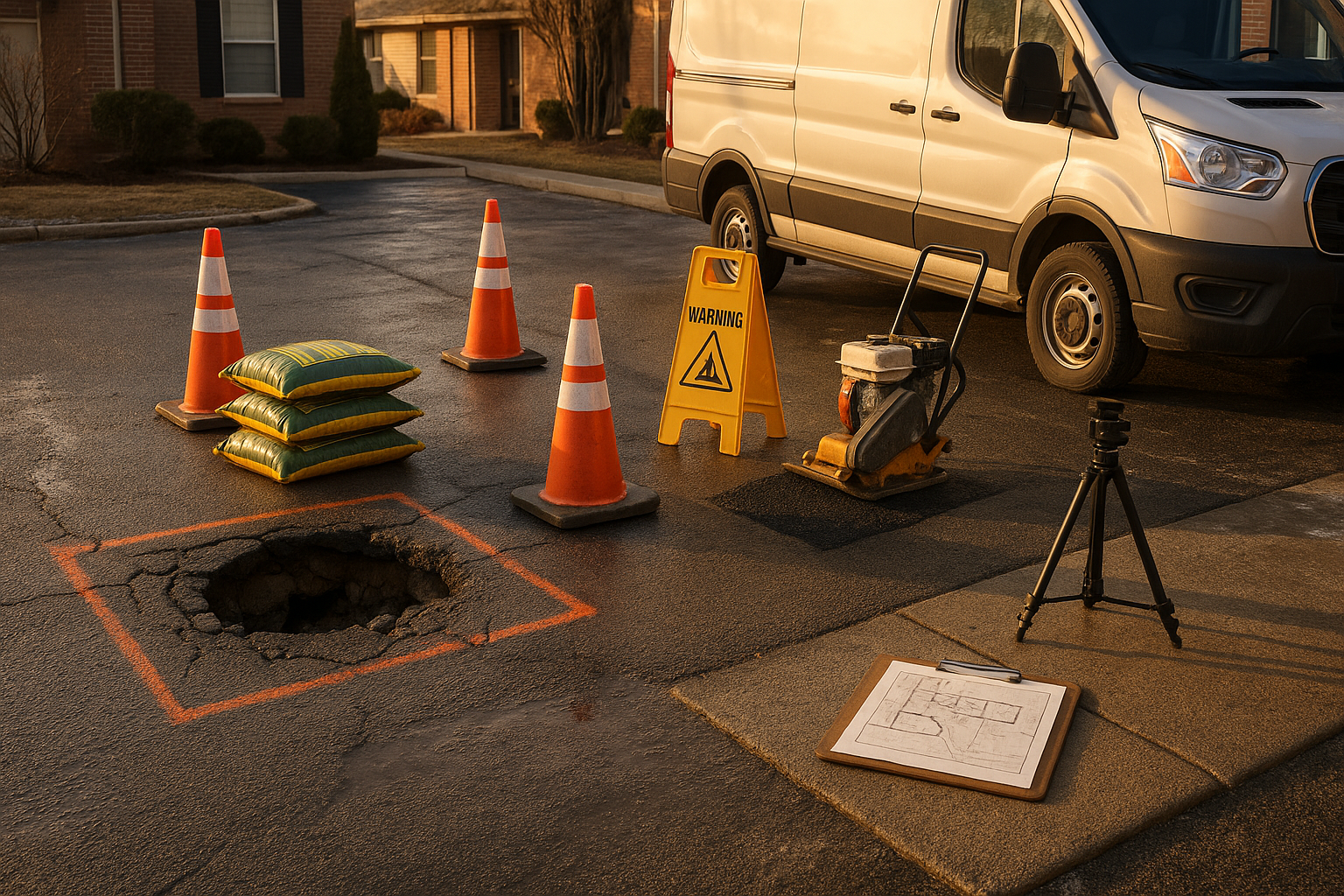
But before any sealer goes down, there's prep. Crack filling, oil-spot priming, and patching need to happen first. You can't sealcoat over a crack and expect it to disappear. It'll just flex and crack the sealer. We've learned that the hard way on older lots in Avon and Brownsburg, where decades of neglect left spiderweb cracks. So we always fill cracks and let that cure before we seal. It's like putting a bandage over a clean wound — works a lot better.
What Goes Into the Job and What It Costs
You might wonder about the sealer itself. We use a high-quality refined tar-based sealer for commercial lots because it stands up to fuel spills and de-icing chemicals better than the asphalt-based stuff. But there's a trick: the mix design. Too thick, and it can peel or track. Too thin, and it won't last. Our crews calibrate the mix on-site based on the lot conditions and weather.
As for cost, it's not a one-size-fits-all number. A small church lot might run a couple thousand, while a big retail complex with phasing can be more. The key is to budget on a cycle. If you set aside funds every 2-3 years, you avoid the sticker shock of emergency paving. And when you combine it with crack filling and a fresh restripe, you're actually lowering your long-term ownership cost. Think of it this way: a can of sealcoat and a bag of crack filler cost a lot less than a full-depth asphalt patch. (We compared crack filling vs. patching vs. repaving if you want the full picture.)
The Local Edge: Why an Indy-Based Crew Makes a Difference
We live here. We know that north-facing lots shaded by old oaks in Meridian-Kessler take longer to cure. We know that the retail corridor around Greenwood Park Mall sees heavy traffic and might need a 2-year sealcoat schedule. We've dealt with the sudden storms that barrel through the Ohio Valley and learned to build in weather-flex days. When you work with a local outfit, you're not getting a cookie-cutter schedule — you're getting a plan that accounts for the quirks of your specific property.
If you're ready to figure out when to sealcoat your parking lot — and how to do it without making your tenants or customers crazy — reach out to us at PavementPros. We'll do a site walk, map out a phased plan that fits your calendar, and give you a clear scope of work with no surprises. You can grab a quote and get the ball rolling on our site. Let's make your lot ready for whatever Indiana weather throws at it next.
Ready for a free lot assessment?
We walk the lot, photograph the problems, and hand you a written plan — no pressure, no obligation.