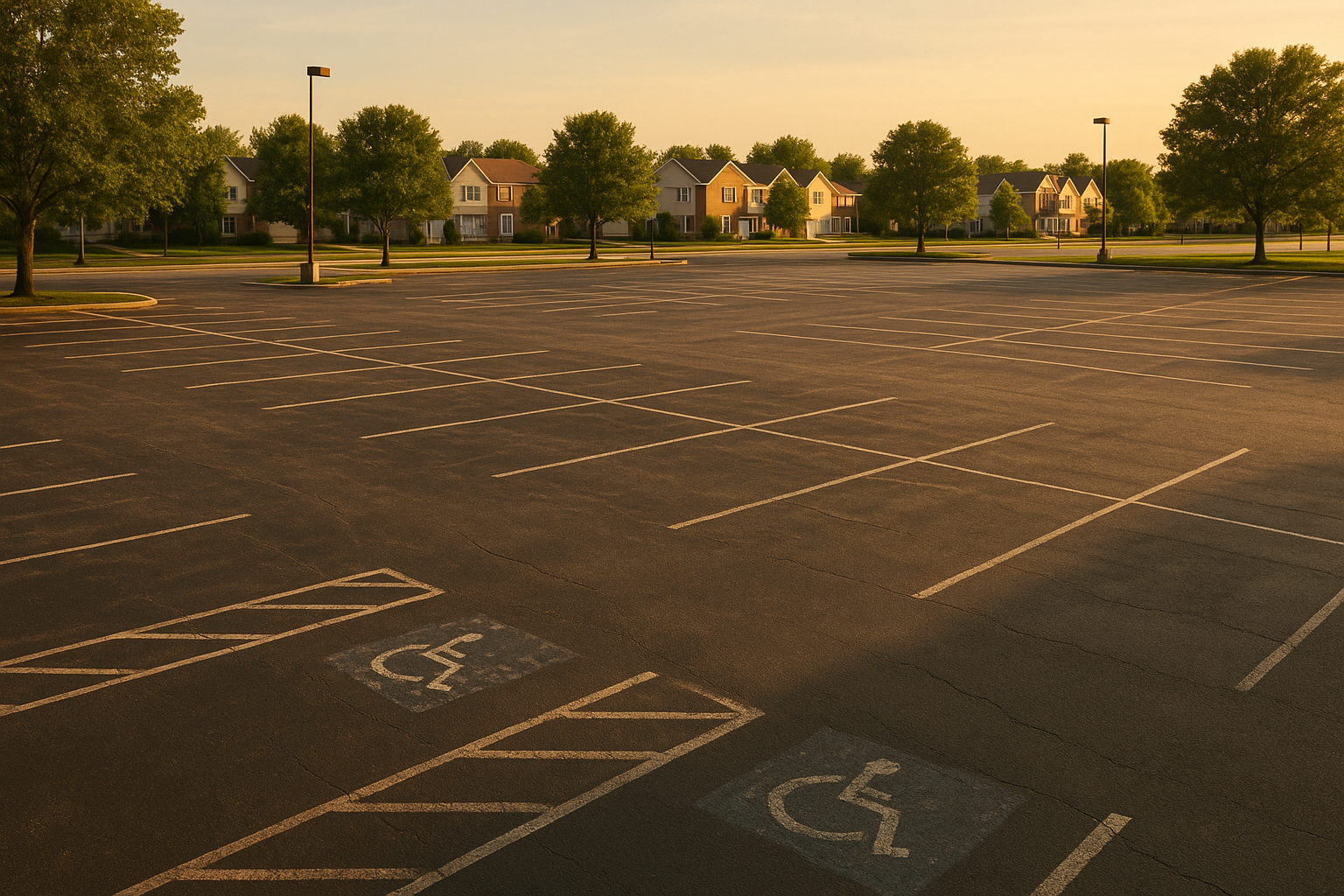
Jim manages a small office park near Castleton. Last winter, the snowplow left the parking lot lines looking like a scrambled egg. Come spring, his tenants complained that no one could tell where to park. He got three quotes—one was $400, another $2,500, and the third $1,200. What’s the real price? If you Google “parking lot striping cost Indianapolis,” you’ll find a mess of answers. So let’s break it down, local-style.
What Goes Into a Striping Job?
First, contractors measure everything in linear feet. That’s the total length of every stripe, arrow border, and symbol outline. A standard parking stall has about 20 linear feet of line. So a 50-stall lot has roughly 1,000 linear feet of striping. Re-striping—painting right over existing lines—is cheaper, usually $0.20–$0.45 per linear foot in the Indianapolis area. A brand-new layout, from scratch, costs more: $0.35–$0.65 per linear foot, because somebody has to measure, snap chalk lines, and mark every stall.
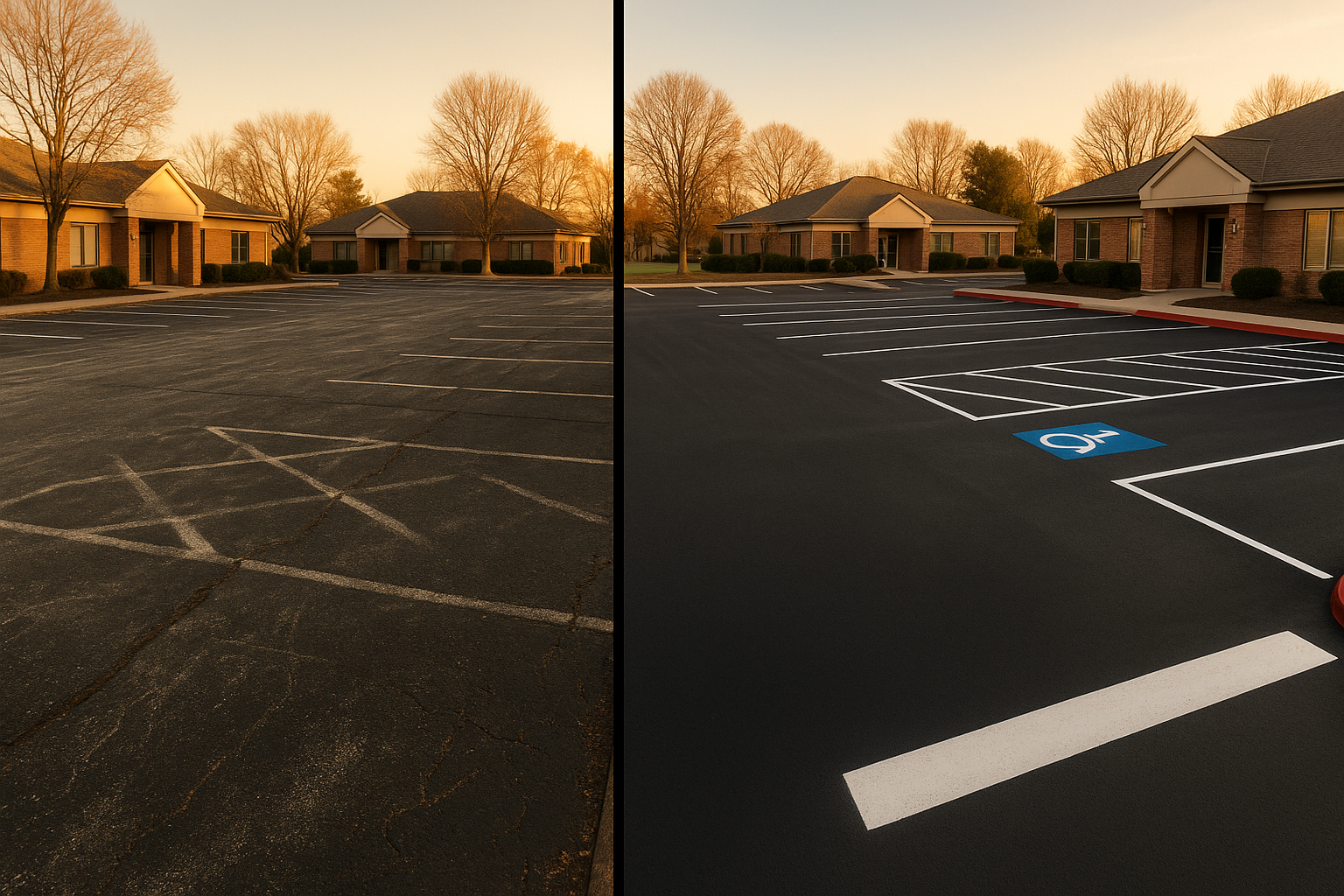
Then there are the specialty items. ADA stalls need a blue background, white border, and the wheelchair symbol. Each one runs $75–$140, installation included. Directional arrows? $30–$75 apiece. Fire lane lettering, stall numbers, or custom text—think “RESERVED” or “15-MINUTE”—add $10–$25 per character or number. Curbs and stop bars are another $12–$22 each.
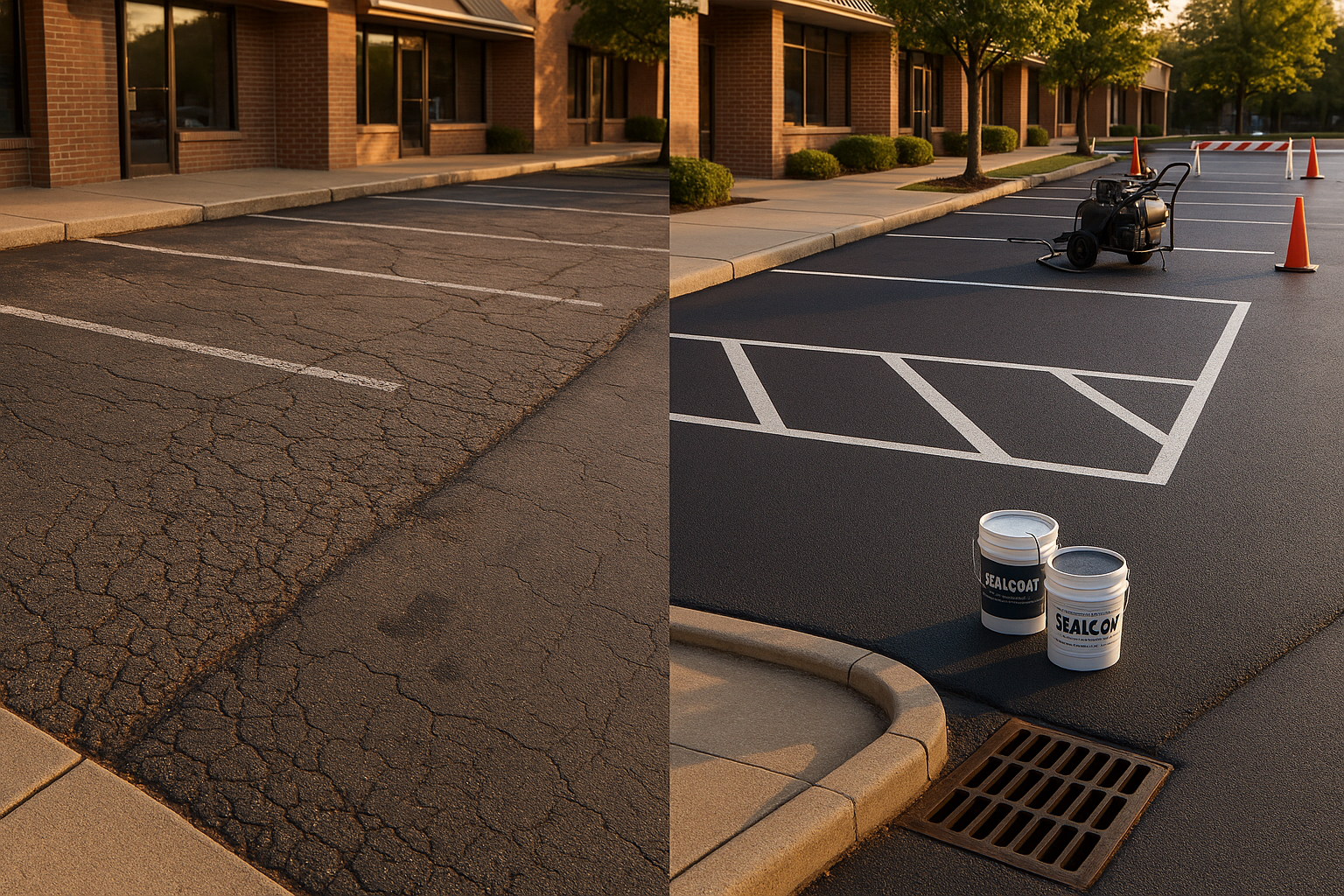
Surface type matters too. Asphalt is the most common around here. Concrete lots—you see them at older retail strips on the southside or near hospitals—need a primer so the paint sticks. That bumps the per-linear-foot cost by 5–10 cents. Heavily oxidized asphalt might need pressure washing or a fresh sealcoat before lines will look crisp and last. (We talked about sealcoating vs. doing nothing here.)
Paint choice makes a difference. We use DOT-grade, low-VOC traffic paint built for Indy’s freeze-thaw cycles and snowplows. You can add reflective glass beads for night visibility; that adds about 10–15% to the line item cost. For really heavy traffic, thermoplastic is an option, but it’s usually 2–3 times the cost of paint, and most commercial property managers around here stick with high-quality paint plus beads. (Thermoplastic isn’t as common for re-stripes because of the cost and installation complexity.)
Mobilization minimums are a thing. Most contractors in Marion County have a project minimum—between $350 and $650. If you only need a few lines painted, you’ll pay that minimum to cover the crew and truck roll. It’s often smarter to bundle with other touch-ups.
Local Factors That Change the Price
Indiana weather is rough on parking lot paint. Salt, plow blades, and freeze-thaw cycles mean you’ll likely re-stripe every 12–24 months. Pairing striping with sealcoating saves money on mobilization and keeps your lot looking sharp. (Read more about sealcoat frequency for commercial lots.)
If your property is on a busy corridor—think Keystone Avenue, 82nd Street, or near Castleton Square—you probably can’t shut down the whole lot during business hours. That means off-hours work. Night and weekend striping is common for restaurants, churches, and retail. It costs a bit more, maybe 15–20%, but it keeps your customers happy. We’ll phase the job, cone off one section at a time, and reopen within about an hour after painting.
ADA compliance isn’t optional. We hear, “Do we really need to update our ADA stalls?” Yes. Outdated layout or faded symbols are a liability. We make sure stall widths, access aisles, and signage meet current ADA requirements for Indiana. It’s not just paint—it’s protecting your business.
Fire lanes are another code requirement. The fire marshal expects clearly marked lanes and curbs. If yours are faded, you’re risking fines. We’ll mark them to local standards.
What’ll This Actually Set You Back?
A realistic example: a 50-stall re-stripe with two ADA stalls, four directional arrows, and a couple fire lane stripes. That job usually lands between $900 and $1,600 before tax, assuming straightforward access and no major prep. A new layout for the same lot might push $1,500–$2,400.
Here’s a quick range of unit costs we see in Indianapolis:
- Standard stall re-stripe: $8–$15 per stall
- New stall layout: $12–$22 per stall
- ADA stall with symbol: $75–$140
- Directional arrow: $30–$75
- Fire lane lettering (per linear foot): same as line striping
- Curb painting: $12–$22
If you add glass beads, bump the line items by about 10–15%. Night work or heavy traffic control? Add 15–20% to the labor.
But remember, you’ll hit the minimum if your job is tiny. So if you just need five lines repainted, it might still cost $400–$600. We’ll help you figure out if bundling is smarter.
How PavementPros Makes It Simple
We don’t do vague quotes. You send us your address and a few photos, and we’ll do a desktop takeoff using satellite maps and your measurements. Then we come on-site to verify before we finalize pricing. You get an itemized scope: every stall, arrow, ADA element, fire lane, and curb stop listed out with quantities and specs. No surprises. From church lots in Zionsville to warehouse complexes in Plainfield, we’ve seen it all.
If you need to keep the lot open, we’ll build a lane-by-lane phasing plan. We text or email you a schedule, set up cones, and tape off sections so your tenants or customers know exactly where to go. We’ve handled jobs in Broad Ripple, Irvington, Southport, and downtown without disrupting Sunday services or Saturday lunch crowds.
A quick note on timing: We really need dry pavement and temps above 50°F. That’s typical from April through October. If it’s colder or wet, the paint won’t cure right. We watch the forecast and schedule accordingly. Most lots can reopen 30–90 minutes after painting.
Common Concerns We Hear
“I’ll just do it myself with hardware store paint.” You can try, but that paint isn’t made for car tires and Indiana winters. It’ll fade in months and track onto floors and carpets. Professional traffic paint lasts years.
“We can’t close the lot.” You don’t have to. We phase or work nights.
“It’s winter—can you stripe at 35°F?” No. Cold paint doesn’t bond. We’ll wait for a warm, dry day or schedule for spring.
“Why is the minimum so high? I only need six lines.” It’s the cost to mobilize a crew. We’ll suggest other touch-ups to make it worth your while.
“Will the paint track onto cars or storefronts?” Not after it’s cured. We time reopening carefully.
“We just sealcoated—can you stripe the same day?” Usually, yes. We coordinate with your sealcoat crew to paint right after, which saves you money and downtime.
“What about snowplow damage?” We can’t stop a plow, but our paint is tough. Pairing with sealcoating and adding glass beads helps lines survive longer. We recommend re-striping every 18–24 months and touching up worst spots after winter.
Ready for a Real Number?
Stop Googling and start with a measured quote that fits your specific lot. Hit the #quote form on our site or give us a call. Send your address, maybe a couple cell phone pics of the lot, and we’ll get back to you fast with a budget breakdown and a phasing plan that keeps your business moving. Need more tips? Check out our blog for practical lot maintenance advice. No guesswork, just straight talk from PavementPros.
Ready for a free lot assessment?
We walk the lot, photograph the problems, and hand you a written plan — no pressure, no obligation.